This week, call it a superstition, but plenty of knitters definitely believe in "the sweater curse." Also, students at Floyd, Virginia’s Handmade Music School take a lesson from Alice Gerrard. And, one in three Appalachian coal miners is affected by black lung. Even though we’ve known how to prevent it for decades.
The Sweater Curse And Alice Gerrard, Inside Appalachia
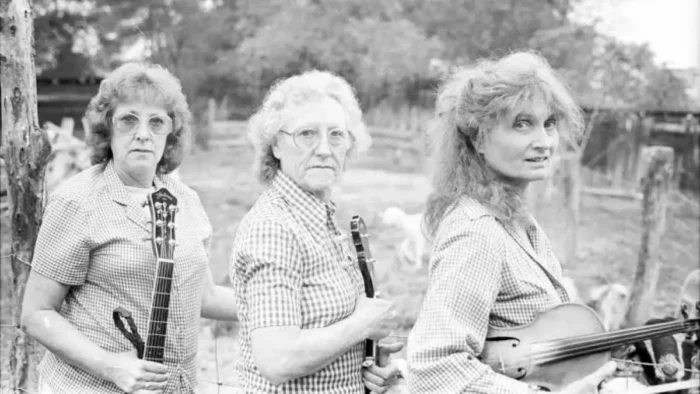
Pulaski banjo player Matokie Slaughter (center) recorded an album with her sister Virgie Worrell Richardson (left) and Alice Gerrard (right) in 1990.Courtesy of Wayne Martin
Listen
Share this Article
Call it a superstition, but plenty of knitters definitely believe in “the sweater curse.”
Also, students at Floyd, Virginia’s Handmade Music School take a lesson from Alice Gerrard.
And, one in three Appalachian coal miners is affected by black lung. Even though we’ve known how to prevent it for decades.
You’ll hear these stories and more this week, Inside Appalachia.
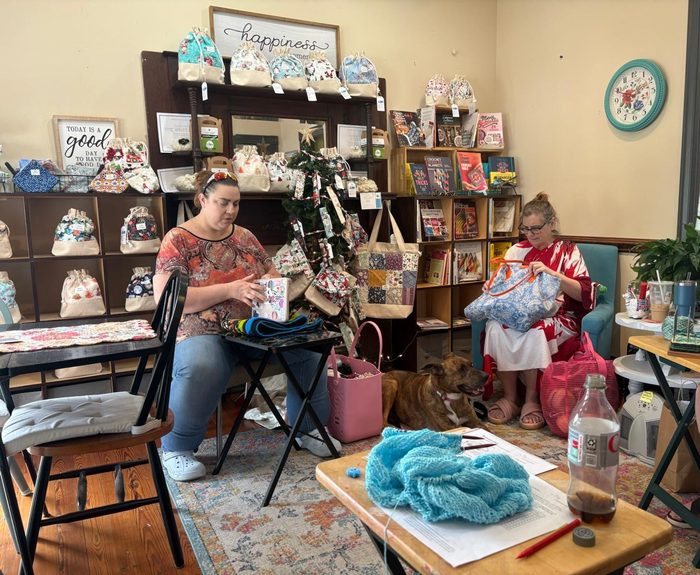
Yvonne Hall, left, made a sweater for her son’s girlfriend and the couple then broke up. Allison Citizen made sweater jackets for beloved friends on the West Coast and then discovered she was moving to the East Coast. Both women advise against taking chances with the “sweater curse.”
Courtesy of Amelia Bland Waller
We’ve spent the last seven years here exploring folk traditions across the region. They’ve run the gamut, from fly-tying to chair-caning to songwriting. And one thing we’ve noticed is a lot of these artists and crafters tend to have certain rituals or even superstitions about what they do.
Folkways Reporter Wendy Welch is a knitter, and she knows yarn work is not immune. In this story, she sat down with a knitting circle in Abingdon, Virginia and spun a yarn about the “sweater curse.”
The Handmade Music School Gets A Lesson From Alice Gerard
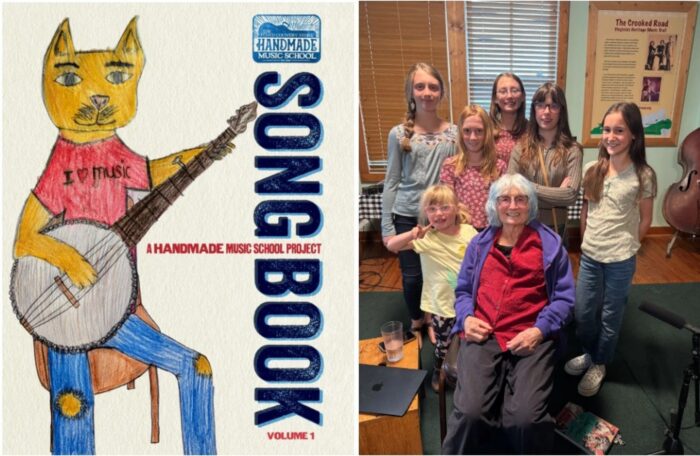
Alice Gerrard teaches Handmade Music School students about Pulaski banjo player Matokie Slaughter.
Photo Credit: Dylan Locke/Handmade Music School
Traditional Appalachian string band music has been passed down for generations. In Floyd County, Virginia, students at the Handmade Music School are compiling a songbook of the music that’s played in their community.
In a story from their songbook project, student Rochelle Grim learns a tune called “Buffalo Gals.” It was taught to her and her fellow students by renowned musician and folklorist Alice Gerrard.
New Episode of PBS Frontline Covers Rise In Black Lung
Lungs riddled with fibrotic tissue from complicated black lung disease are displayed in the office of radiologist Dr. Brandon Crum in Pikeville, Kentucky.
For more than a decade, investigative reporter Howard Berkes has been sounding the alarm about a new rise of deadly black lung cases in central Appalachia. Some of that work was spotlighted in a 2019 special on the PBS series Frontline, titled “Coal’s Deadly Dust.” Berkes recently spoke with some of the same people for a Frontline follow up called “Coal’s Human Cost.”
The episode was directed and produced by Molly Born, a former reporter for West Virginia Public Broadcasting who now edits Folkways stories for Inside Appalachia. Howard Berkes and Molly Born spoke with Producer Bill Lynch about the documentary.
Songs From The Coal Camps
Coal camps in southern West Virginia were home to talented musicians. Their songs were sometimes documented and archived, but the people who played them have largely been overlooked. Chris Haddox is a professor of sustainable design at West Virginia University and a musician who has spent years uncovering more information about those players.
He recently received funding from the Mellon Foundation to continue this work and spoke to WVPB Reporter Chris Schulz about it.
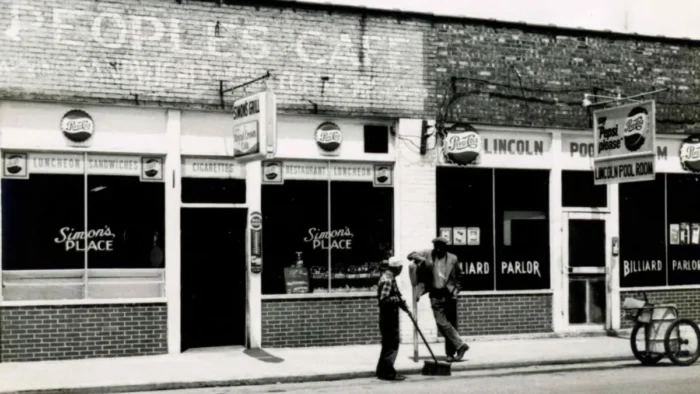
People’s Cafe and Lincoln Pool Room in Bristol, Virginia’s Black Bottom.
Courtesy of Black in Appalachia/Virginia Humanities
Urban renewal was a 20th century movement by local, state and federal governments with the stated goal of revitalizing struggling cities. Often, that meant demolishing dozens of blocks in areas that were considered blighted. And in 20th century America, that usually meant it was Black neighborhoods and business districts that got sacrificed.
In Bristol, Virginia, Black business owners ran barber shops, groceries, and doctor’s offices in “Black Bottom” up until urban renewal leveled it to make way for new streets and civic projects.
“The Souls of Bristol’s Black Bottom” is a partnership between Black in Appalachia and Virginia Humanities, that uses interpretive signs, public art, and digital storytelling to remember the community. Organizer and storyteller Tina McDaniel helps lead the project. Host Mason Adams spoke with McDaniel about revelations she’s had while working on the project.
Religious Exemptions For Artificial Intelligence
Artificial intelligence seems to be everywhere, but not everybody wants to use it. David Durman, a research administrator at the University of Kentucky, got a religious exemption from using AI because he’s a humanist. WEKU’s Lily Burris spoke with him about his decision.
Greenbrier County Startup Seeks To Provide Oasis In West Virginia News Deserts
More than 16-hundred counties in the U.S. are considered news deserts. That means they have little or no local news sources. The majority of counties in West Virginia fall into that category.
On WVPB podcast Us & Them, host Trey Kay visits one online startup in Greenbrier County that’s bucking the trend. Kay talks with pastor and former lawmaker Stephen Baldwin about his venture, called The Real West Virginia.
--
Our theme music is by Matt Jackfert. Other music this week was provided by Hello June, John Blissard and Blue Dot Sessions.
Bill Lynch is our producer. Our associate producer is Abby Neff. Our executive producer is Eric Douglas. Irina Zhorov is our editor. Our audio mixer is Patrick Stephens. We had help this week from Folkways Editors Ibby Caputo, Jennifer Goren and Charlie Kaier.
You can send us an email: InsideAppalachia@wvpublic.org.
Just one day after the midterm elections, Us & Them host Trey Kay brings together eight strangers in Morgantown for a potluck conversation across the political divide. The guests range in age from 19 to 69 and they debate a range of issues including affordability, the war in Iran, immigration, politics on college campuses and the role of faith in public life. Despite some sharp disagreements, the group finds room to listen, challenge one another and leave the table with a better understanding of people who see the country differently.
In the North Carolina foothills, a common dessert in the fall is a sonker. Folkways Reporter Amanda Goins first heard that name when she moved to Surry County, North Carolina. She got curious and shares what she learned about this local dessert whose history goes back centuries.
This week, local fruit gets made into all kinds of desserts, but have you ever heard of a sonker? Also, there are thousands of apple varieties, and each one means something to somebody. And, a beloved West Virginia hotdog restaurant closed in 2018. An annual tribute sale gives people a chance to relive its glory days.