In the North Carolina foothills, a common dessert in the fall is a sonker. Folkways Reporter Amanda Goins first heard that name when she moved to Surry County, North Carolina. She got curious and shares what she learned about this local dessert whose history goes back centuries.
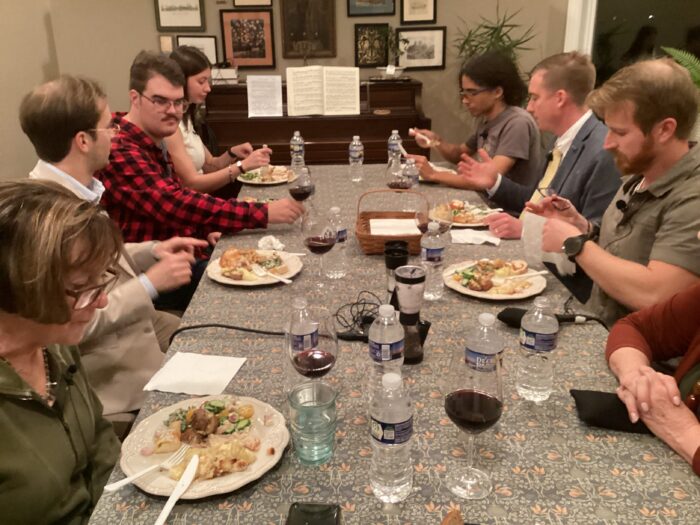
As the nation continues to assess the political reckoning of our recent midterm elections, Us & Them host Trey Kay invites guests from across the divide for a brand new dinner party. This time, the potluck dinner is in Morgantown, West Virginia with guests of all ages and some genuine points of disagreement.
Midterm voters overwhelming pushback against President Trump and many conservative initiatives creates an atmosphere for conversation about a range of topics including the economy, the war in Iran, immigration, politics on college campuses and even the role that faith plays in our political campaigns and elections.
While conservatives and liberals see the midterm election outcome in very different lights, eight strangers at this potluck dinner party show they’re willing to listen and learn and are thankful for finding a way to reach across the divide.
This is the final episode of three Us & Them Dinner Parties across the Mountain State this fall. The earlier events took place before Election Day in Charleston and Huntington.
This episode of Us & Them is presented with support from the CRC Foundation and the Friends of West Virginia Public Broadcasting.
Subscribe to Us & Them on Apple Podcasts, YouTube Music, Spotify, the NPR app and wherever you get your podcasts.
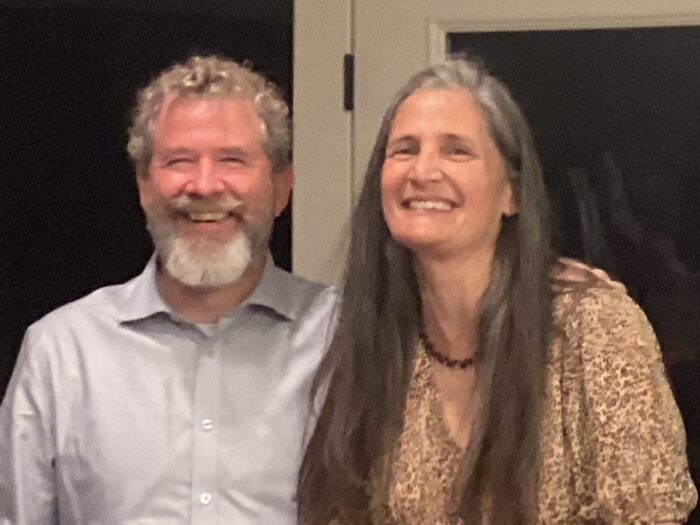
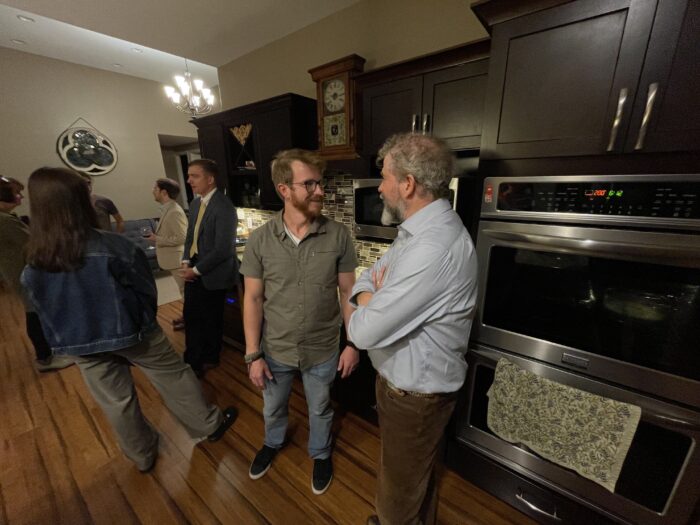
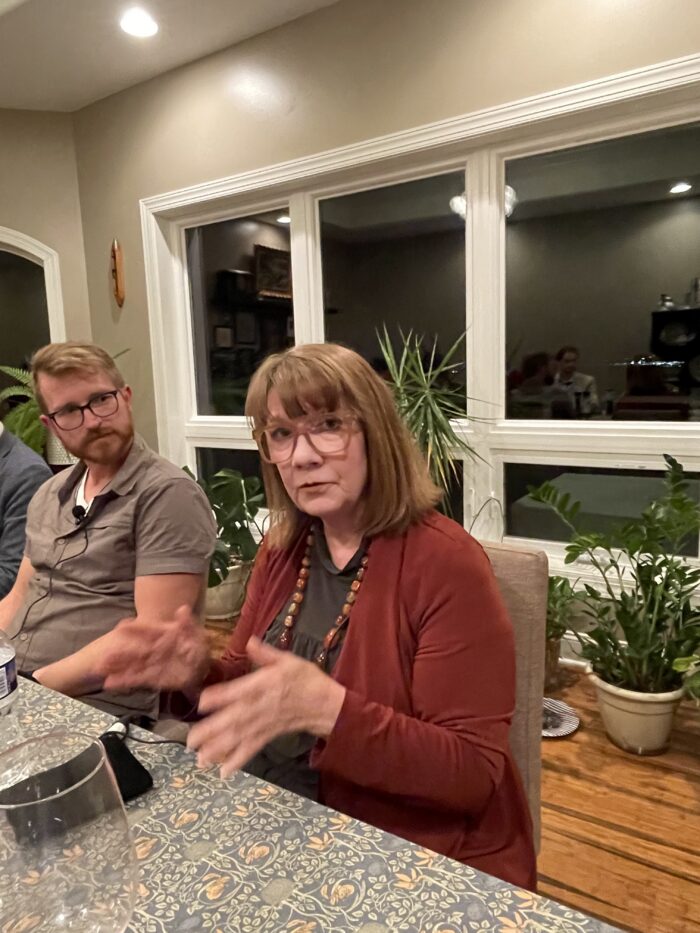
Dr. James Berry, left, a psychiatrist and chair of WVU’s Department of Behavioral Medicine and Psychiatry, and his wife, Cynthia Berry, welcomed guests to their Morgantown home for an Us & Them Dinner Party.
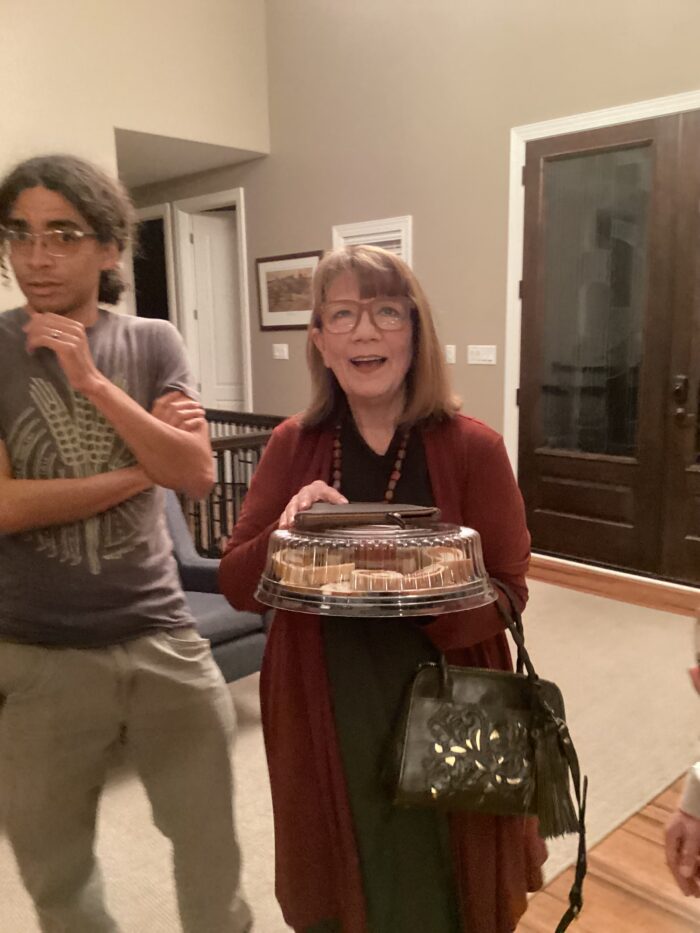
Photo Credit: Trey Kay/West Virginia Public BroadcastingRebecca Thacker, right, arrives with a tray of sliced pepperoni rolls — a West Virginia favorite. Thacker, a West Virginia native who has worked in higher education and served as a political appointee during the first Trump administration, now works with West Virginia University’s Washington Center for Civics, Culture and Statesmanship. Torli Bush is at left.
Photo Credit: Trey Kay/West Virginia Public Broadcasting
“I am from West Virginia, and I am definitely conservative, hard right…I felt like the issue [during the 2026 midterm election campaign] for a lot of people was there wasn’t enough emphasis in the last year particularly on American domestic policy and what’s best for America, and we were too focused on Ukraine and Iran and other parts of the world, and I think that’s what kept a lot of people home.”
— Rebecca Thacker
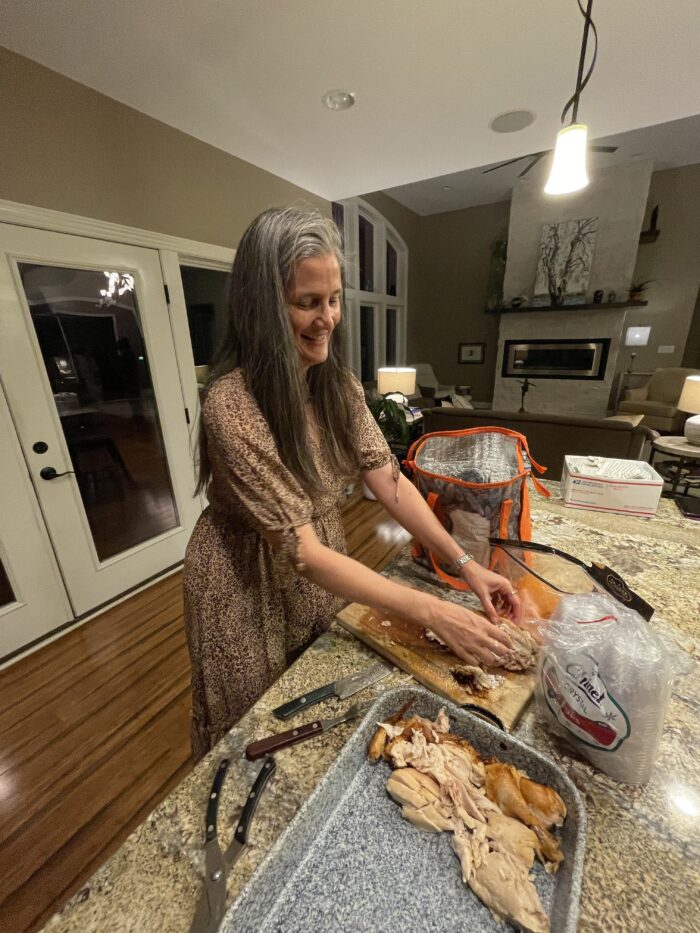
Cynthia Berry carves a roasted chicken as guests arrive for an Us & Them Dinner Party in Morgantown, W.Va.
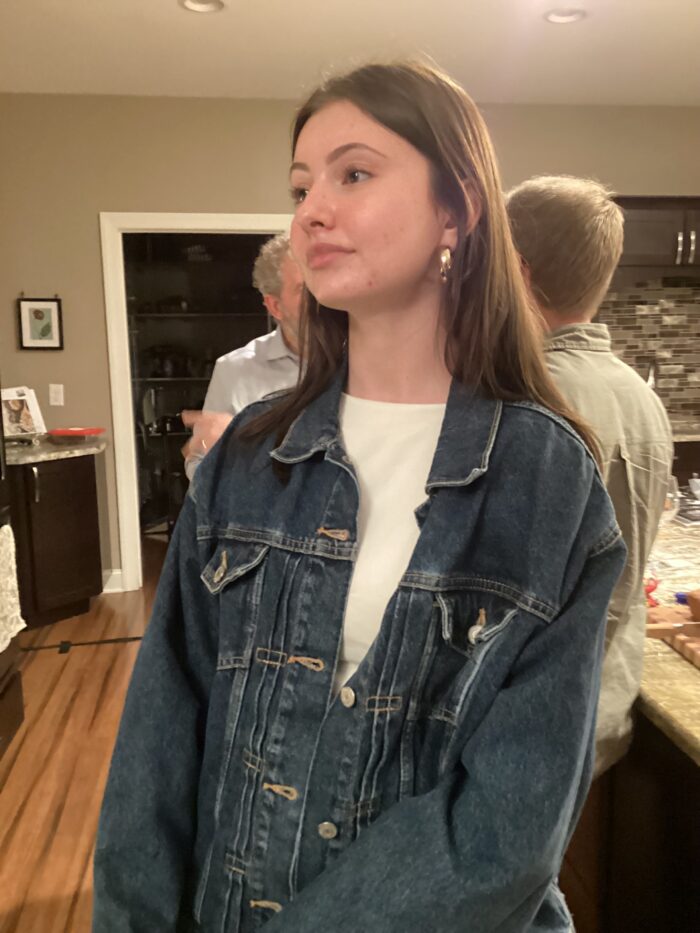
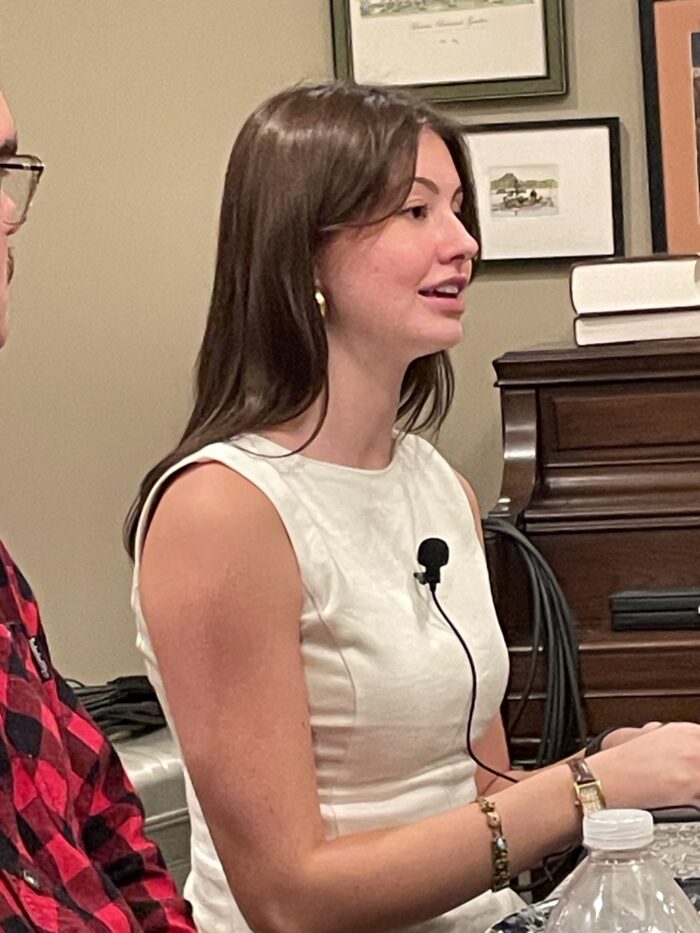
Photo Credit: Trey Kay/West Virginia Public BroadcastingZoe Zatezalo, a Wheeling, W.Va., native and philosophy major at West Virginia University, describes herself as left-leaning. Zatezalo says she is interested in understanding how people arrive at different political beliefs rather than simply trying to win an argument.
Photo Credit: Trey Kay/West Virginia Public Broadcasting
“I think the thing about immigration that really vexes me is I think sometimes it’s used as a scapegoat to get us to hate other people and look at other people negatively instead of looking at the systems that are in place and the government that isn’t supporting the American people.”
— Zoe Zatezalo
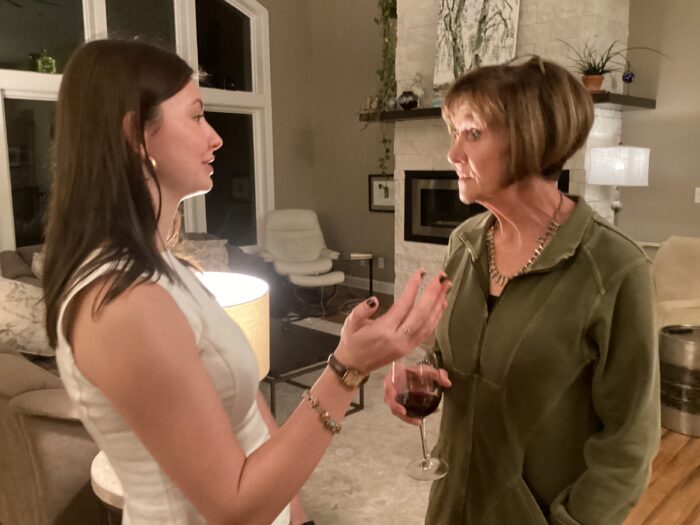
Zoe Zatezalo, left, speaks with Susan Small as guests gather for the Morgantown Us & Them Dinner Party. Small, a longtime West Virginia political operative, spent more than two decades as campaign manager to former Gov. Bob Wise and also served as his state director when he was in Congress. She describes herself as progressive and left-leaning.
Photo Credit: Trey Kay/West Virginia Public Broadcasting
“I got my start in campaigns as an organizer for the National Abortion Rights Action League, so you kinda know where I am on the choice issue. When they outlawed abortions under all circumstances, my youngest kid withdrew her applications to law firms in West Virginia and moved to Connecticut. She said, ‘I’m not gonna live in a place where I have fewer rights than my mom had.’ … I think they vote with their tires, and they’re leaving the state.”
— Susan Small
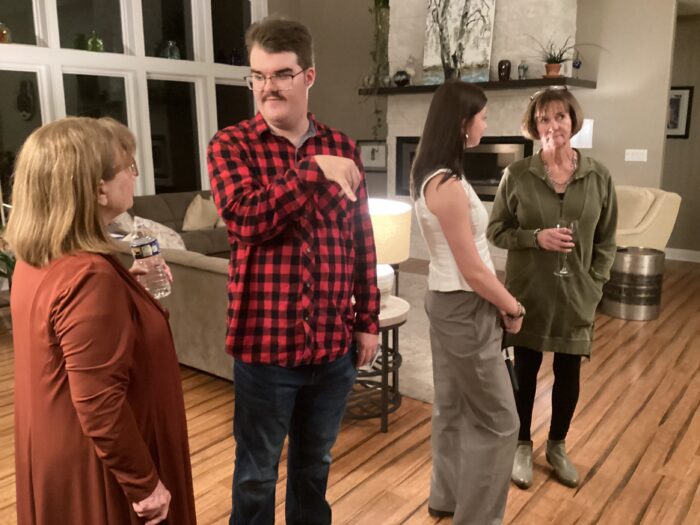
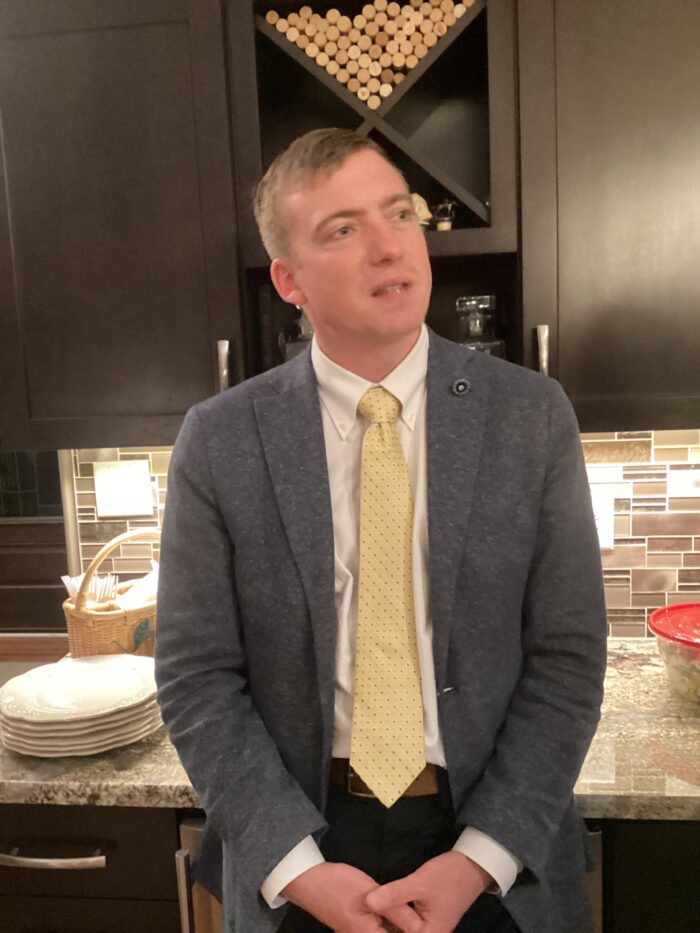
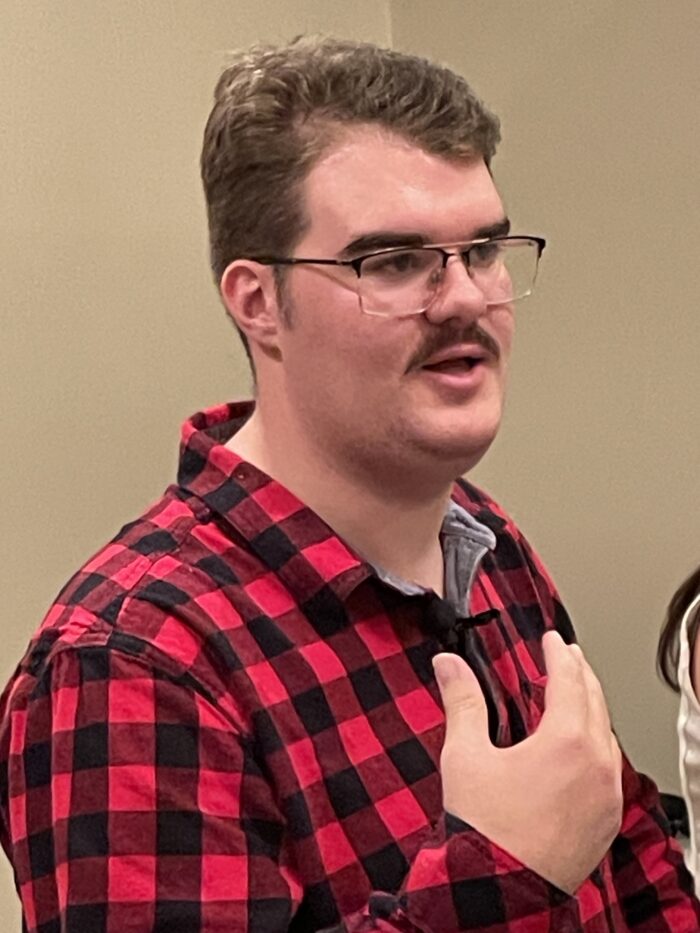
William Kozma (center), a West Virginia University student and former president of the university’s Turning Point USA chapter, talks with Rebecca Thacker (far left) as guests gather for the Morgantown Us & Them Dinner Party. Kozma describes himself as “very right-leaning” and says he values political conversations that are civil, respectful and focused on understanding other points of view. Susan Small and Zoe Zatezalo talk in the background.
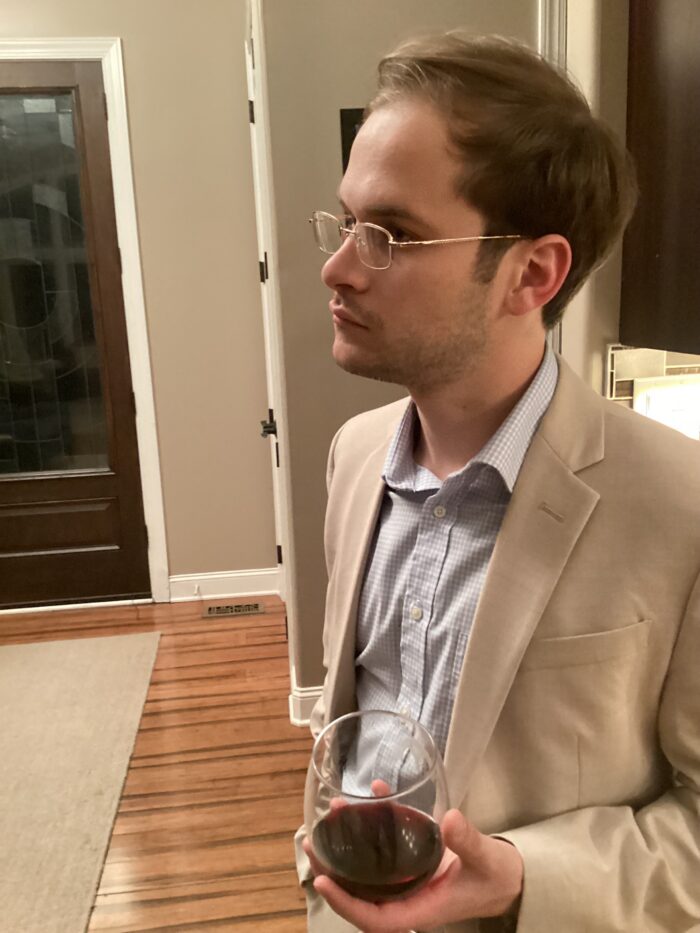
Photo Credit: Trey Kay/West Virginia Public BroadcastingBenjamin Seevers, a fourth-year economics doctoral student at West Virginia University, enjoys a glass of wine as guests gather. Seevers grew up in western Pennsylvania, and his political thinking has moved over time between libertarian and conservative traditions, leaving him with views that do not always fit neatly into a contemporary partisan category.
Photo Credit: Trey Kay/West Virginia Public Broadcasting
“I’m more conservative, a libertarian…Regarding the election, I think one thing to keep in mind is that people seem to have voted, pragmatically. They voted for their welfare, and that’s something I think we can all sympathize with to some extent.”
— Benjamin Seevers
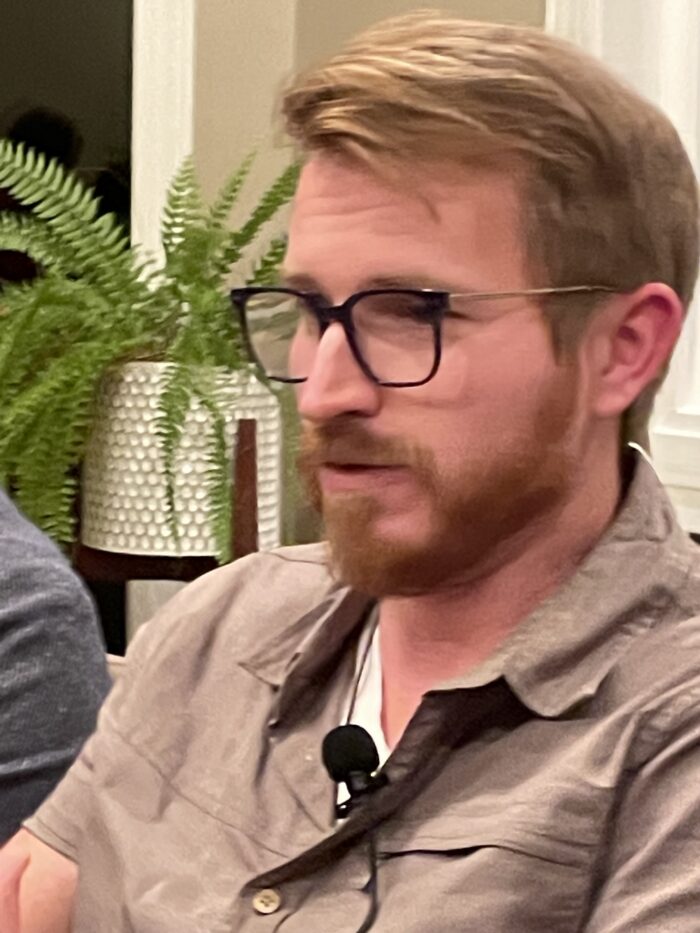
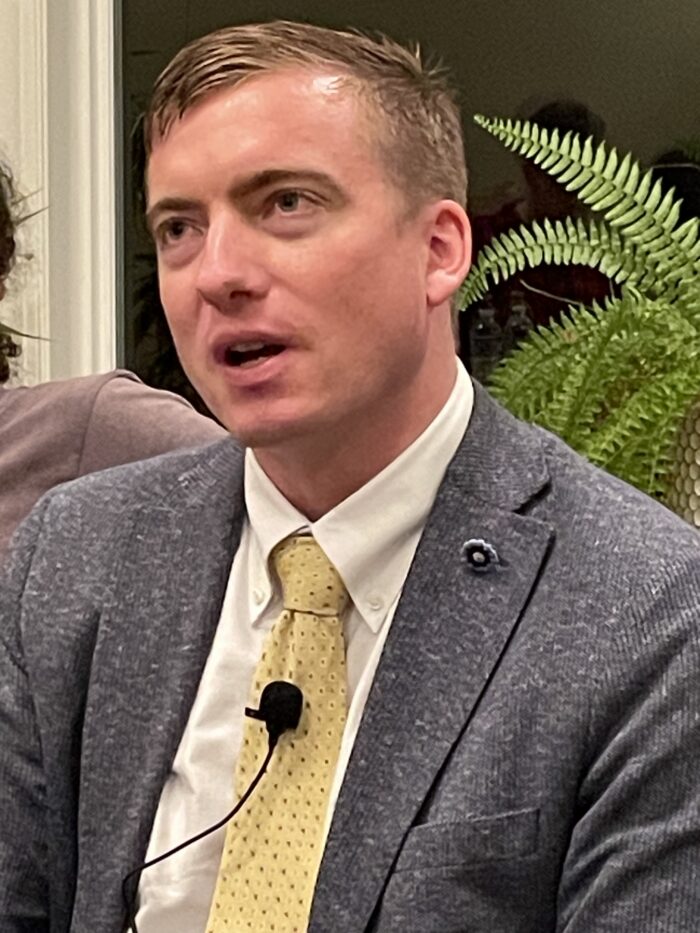
Josiah Lippincott, a former Marine Corps officer and scholar of American political thought and international relations, arrives for the Morgantown Us & Them Dinner Party. Lippincott works with West Virginia University’s Washington Center for Civics, Culture and Statesmanship and describes himself as “a man of the right.”
Photo Credit: Trey Kay/West Virginia Public Broadcasting
“I think a lot of Americans say, ‘American citizenship means something to me. I want it to mean something more than paperwork that represents who we are as a people and as a country.’”
— Josiah Lippincott
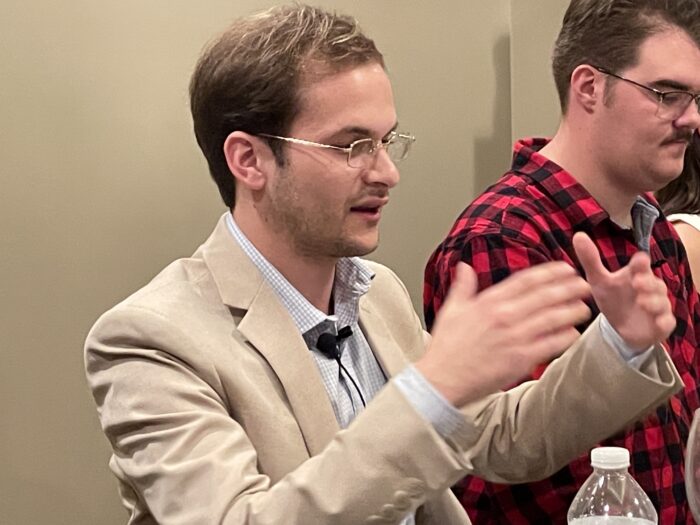
Sean Lawrence, an assistant professor of history at West Virginia University, talks with Dr. Jim Berry as guests gather for the Morgantown Us & Them Dinner Party. Lawrence, who is originally from the Pacific Northwest and describes himself politically as “the squishy left-leaning liberal professor type,” studies European history with a focus on Germany and the Middle East and has made Morgantown his home.
Photo Credit: Trey Kay/West Virginia Public Broadcasting
“I’m thankful genuinely to this place and the community in Morgantown, in West Virginia, in that this is not a place that the rest of the country hears about. And when they hear about it, it’s either negative … But there’s so much. It’s just — everything is here. There’s just more than the handful of stereotypes about this state and this region that sort of get repeated all the time.”
— Sean Lawrence
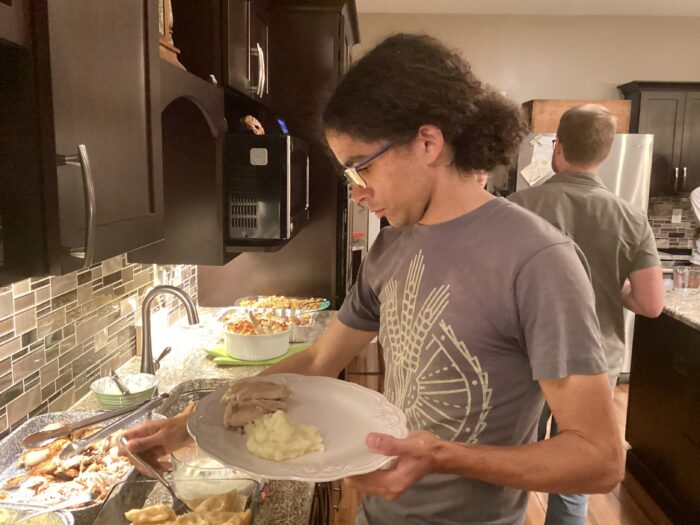
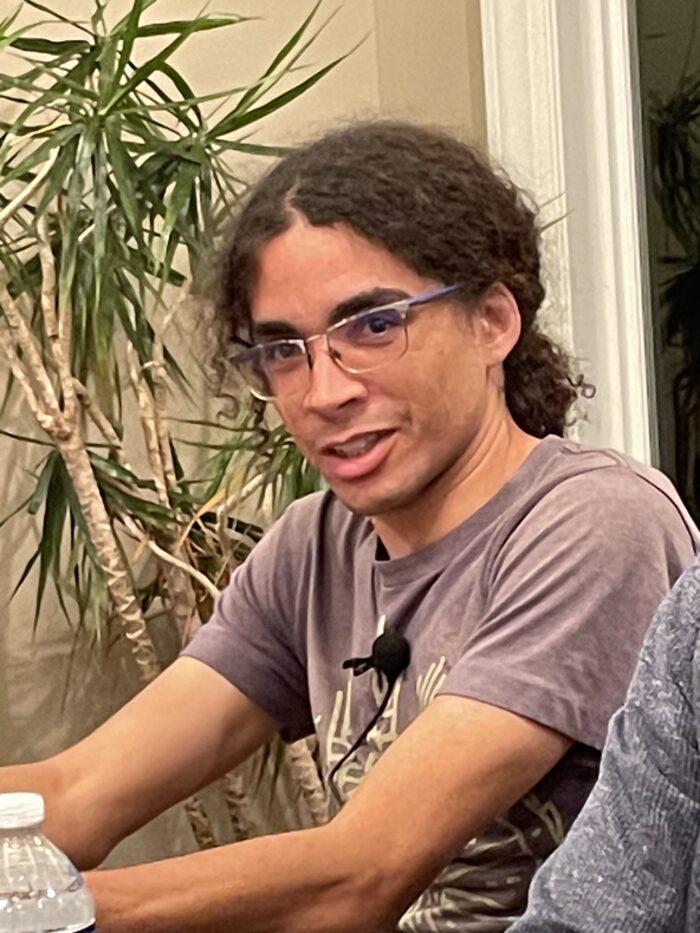
Torli Bush, a poet and writer from Webster Springs who now lives in Westover, dishes up before the Morgantown Us & Them Dinner Party begins. Bush works as a transportation inspector on roadway and bridge projects and describes himself as progressive, but says his politics are increasingly rooted in whether leaders are “for Appalachia.”
Photo Credit: Trey Kay/West Virginia Public Broadcasting
“I’m almost at a point where I’m, like, coming to be beyond party because i’m so concerned with what’s going on here in West Virginia that, I’ve come down to a point of where you’re either for Appalachia or you’re not for Appalachia, and if you’re not for this place, get out.”
— Torli Bush
Members of the Morgantown Us & Them Dinner Party gather around the table with their plates. Clockwise from lower left are Susan Small, Benjamin Seevers, William Kozma, Zoe Zatezalo, Torli Bush, Josiah Lippincott and Sean Lawrence. Rebecca Thacker is just out of frame, with her hands visible at the table.
Photo Credit: Trey Kay/West Virginia Public BroadcastingAs the conversation turns to immigration, Sean Lawrence draws on the post-World War II origins of international asylum law to explain how those protections apply to people seeking asylum in the United States today.
Photo Credit: Trey Kay/West Virginia Public Broadcasting
“There was a problem of stateless people. They had nowhere to go. … The international community put in place a set of laws and agreements that allow people to enter a country, claim asylum. … To me, that says we should amend the system of asylum that exists internationally. But it is not the case that people who enter the United States in order to claim asylum from being persecuted from their government have committed a crime. They have not.”
— Sean Lawrence
On immigration, Benjamin Seevers questions whether the government should determine what constitutes a proper level of immigration — or population — in the first place.
Photo Credit: Trey Kay/West Virginia Public Broadcasting
“What is the proper level of the population? What is the proper level of immigration? Whenever we try to answer the population question, what do we get? We get eugenics. We get people who want to limit the population or increase population. … So I don’t think the government should be determining the proper level of immigration and population.”
— Benjamin Seevers
Looking back on the midterm election, Josiah Lippincott connects voters’ concerns about affordability with his opposition to American involvement abroad, arguing that political leaders should devote more attention to problems at home.
Photo Credit: Trey Kay/West Virginia Public Broadcasting
“I think the biggest takeaway is that the most important questions and problems that we have as a nation today are right here at home. … I care more about what happens to my neighbors than I do about what’s happening on the other side of the world. This was an election where foreign policy and the affordability crisis — or problems that it helped engender — played a decisive role. We need to stop going abroad in search of monsters to destroy, and we need to solve problems here at home. That has to be the focus.”
— Josiah Lippincott
When the conversation turns to faith and politics, William Kozma argues that voters should judge elected officials primarily by their policies rather than by whether politicians publicly share their religious beliefs.
Photo Credit: Trey Kay/West Virginia Public Broadcasting
“I think something we forget: We’re not electing our pastor. We’re not electing our priest. … I care what their policies are. I would like my candidates to reflect my values, but you can kind of just pay lip service to that belief and not actually believe it. Like, I don’t care what my plumber thinks religiously. I care that he’s gonna fix my sink. It’s the same thing with my politicians.”
— William Kozma
For Torli Bush, the midterm results bring mixed feelings: hope for political change nationally, but an expectation that struggles over issues such as clean water will continue in West Virginia. He points to students at Huff Consolidated School in Wyoming County as one reason for optimism.
Photo Credit: Trey Kay/West Virginia Public Broadcasting
“Yeah, I’d say my thoughts on the election are, they’ve been a mixed bag. On the one hand, I’m, I’m thankful and I think change is coming nationally, but, here in West Virginia, I know it’s gonna be the same fight for another two years … Two of the things I’m thankful for, one is, is Morgantown and the community … but two, I, I wanna talk about a real, like, a story that’s, like, really given me hope in terms of the clean water, and that’s the, uh, the kids at Huff Consolidated School in Wyoming County. If you’re not familiar with their story, they won a national design competition in D.C. based off of a very cheap water filtration system that they managed to get to filter out acid mine drainage, and they’re wanting to try to get it to filter out heavy metals.”
— Torli Bush
For Rebecca Thacker, one of the evening’s most meaningful moments is the experience of disagreeing with people politically without feeling personally attacked. She says political conversations at West Virginia University have not always felt that way to her.
Photo Credit: Trey Kay/West Virginia Public Broadcasting
“This is the first time since I have come back to Morgantown and been a member of the staff at West Virginia University that I’ve been able to have a conversation and have people express different viewpoints without me being attacked and called a racist, a misogynist, homophobic. So I am grateful for the opportunity to be able to have a conversation and to hear other people’s viewpoints without being personally attacked. I’m very thankful for that.”
— Rebecca Thacker
Zoe Zatezalo comes away from the conversation convinced that political labels can obscure more than they reveal — and that people with sharply different views can still listen, disagree and better understand one another.
Photo Credit: Trey Kay/West Virginia Public Broadcasting
“People need to stop focusing on political labels and loaded language because it’s meant to divide us. From this podcast, you can see eight of us sat down who have different political views, and we were able to have civic conversation and better understand each other, which I think is key to American culture and furthering our society. … I think in this election, people were forced to look at policy and not just vote based on party, and I think that is very, very important.”
— Zoe Zatezalo
As the evening draws to a close, Susan Small says the conversation left her feeling that she had received more from the other guests than she had contributed herself.
Photo Credit: Trey Kay/West Virginia Public Broadcasting
“I have a few personal morals that I like to live by, and I did not live up to one of them tonight, and that is that I like to give more than I take. And I took much more from this conversation, from each of you, than I felt like I contributed. So thank you for each of you for sharing. This is really a soul-bearing experience, and I’ll carry this with me for a long, long time.”
— Susan Small
Add WVPB as a preferred source on Google to see more from our team
In the North Carolina foothills, a common dessert in the fall is a sonker. Folkways Reporter Amanda Goins first heard that name when she moved to Surry County, North Carolina. She got curious and shares what she learned about this local dessert whose history goes back centuries.
Former governor and U.S. senator Jay Rockefeller's funeral service was announced, the state auditor's legal troubles grew, and StoryCorps is asking you to record conversations during Thanksgiving.
This week, local fruit gets made into all kinds of desserts, but have you ever heard of a sonker? Also, there are thousands of apple varieties, and each one means something to somebody. And, a beloved West Virginia hotdog restaurant closed in 2018. An annual tribute sale gives people a chance to relive its glory days.
Wednesday the Town of Thurmond and the New River Gorge Historical Society filed suit in the Southern District of West Virginia asking the court to temporarily halt the demolitions.