

Donation From Retired Union Leader Supports Preservation Of Labor History
The West Virginia Mine Wars Museum is getting a sizable donation from retired union leader Cecil Roberts.
Continue Reading Take Me to More NewsAlert (09/29/2026): Our Parkersburg TV transmitter is still undergoing maintenance and remains temporarily inoperative. We apologize for the inconvenience.
All our programming is available via our TV livestreams on our website and WVPB Passport. Thank you for your patience!



To Educate, Inform, and Inspire by Telling West Virginia's Story
Mountain Readers 2026 has concluded! Please fill out our volunteer post-survey.
Nominate an exceptional West Virginia K-12 teacher today!

On Demand
On Demand

Stream original productions from WVPB
Watch locally produced documentaries & more.

On Demand
On Demand

West Virginia Morning
Inside Appalachia
West Virginia Week
Mountain Stage
Us & Them
The Legislature Today
The Legislature This Week

Send us your comments and questions.

Stream our board meetings.

Check out the latest WVPB news.

Sign up for our newsletter and get weekly updates.

Meet the WVPB staff.

WV Educational Broadcasting Commission, the WVPB Foundation, and the Friends of WVPB.

Come work with us!

Read our annual report and learn how we educate, inform and inspire with your support.

Sponsor impactful and engaging media and entertainment.

Use your IRA to make a gift to WVPB.

Become a member with your gift of $1,000 or more.

Make WVPB part of your legacy.

Manage your membership account.

Learn how you can Protect and Sustain West Virginia Public Broadcasting.
For this episode of Us & Them, the Dinner Party travels to Huntington.
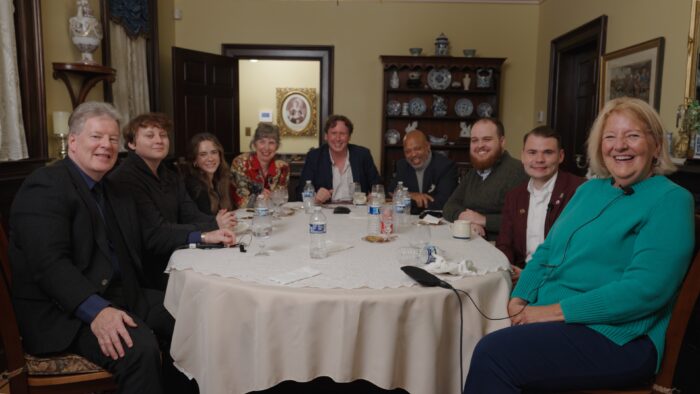
Host Trey Kay brings together eight West Virginians at the historic Coin Harvey House for a potluck meal and a conversation about the issues shaping their lives in the weeks before the midterm elections.
This time, half of Kay’s guests are college-aged. The younger guests share political values that reflect beliefs ranging from conservative Christian Republicans to Democrats, a democratic socialist, with Independent viewpoints as well. The older guests bring equally varied perspectives shaped by public health, business, ministry and community life.
The conversation ranges from immigration and the economy to foreign policy, trust in government, the media and what younger West Virginians look for when they contemplate life after graduation.
During the conversation, the guests repeatedly discover that they sometimes want similar outcomes despite differences in how to reach them.
This is the second of three Us & Them Dinner Parties across the Mountain State this fall. The first took place in Charleston, and the next gathering will be in Morgantown following the midterm elections.
This episode of Us & Them is presented with support from the CRC Foundation, and the Friends of West Virginia Public Broadcasting.
Subscribe to Us & Them on Apple Podcasts, YouTube Music, Spotify, the NPR app and wherever you get your podcasts.
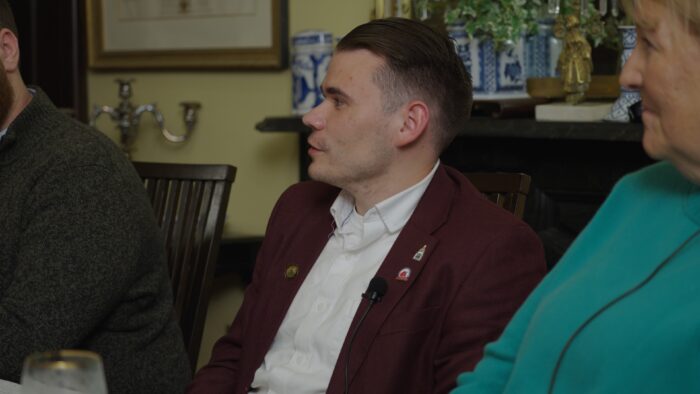
“We’ve lost the ability to see the humility in argument, and I mean, we’re not gonna agree on everything, but the phrase I like to use is ‘disagree better.’ How do we disagree in a way that isn’t just screaming in Facebook comment sections, pointing fingers, swearing at each other, but making disagreement constructive? … I am sitting right next to a Democratic Socialist who happens to be one of my good friends from school. He knows my politics. I know his politics. We don’t agree on anything, likely. But … I can see that person’s position even if I don’t agree on it.”
— Michael Borsuk
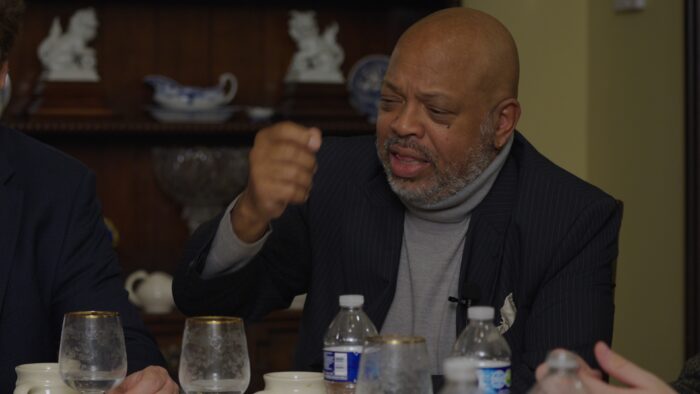
“West Virginia is in the middle of erasing the history of African Americans, when there was a rich legacy and history here. … I come from a legacy of scientists that started here in West Virginia. … I think West Virginia has a very unique opportunity to create this environment that embraces all of that history because it’s so tied to the land.”
— Alan Letton
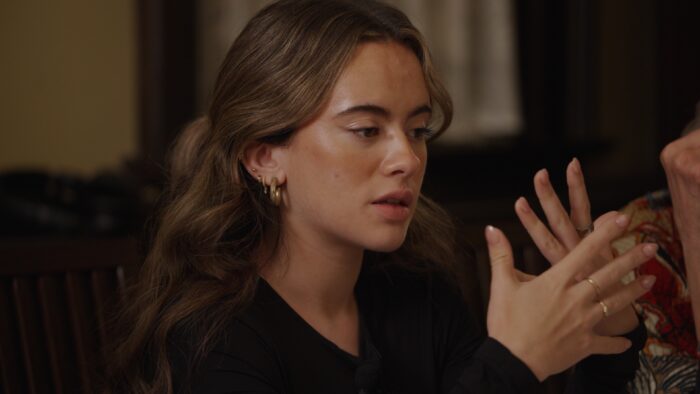
“I think from a Christian perspective the treatment that’s been given to immigrants in our country is not Christian-like. It’s really not. The ideals of Jesus and the ideals that are found in the Bible are based on love and obedience. … The Bible, of course, does command that Christians follow the law, obey the laws of the land. And while I find it very important to be subject to governing authorities and follow what the government has set in place, there are ways to go about that that aren’t so evil and inhumane.”
— Roxy Leonard
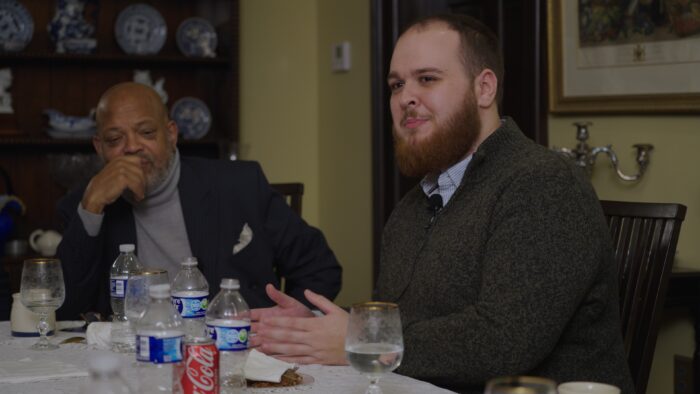
“Not even almost. The reason I went to grad school is because I was terrified of entering the real adult world, so I decided to delay that two more years by getting a graduate degree. No, I am not confident at all about that. Every time I take a look at the job market for just about anything, all I am met with is red numbers going downward saying that less people are getting jobs, there are less jobs available, it’s more expensive to live.”
— Ashton Pack
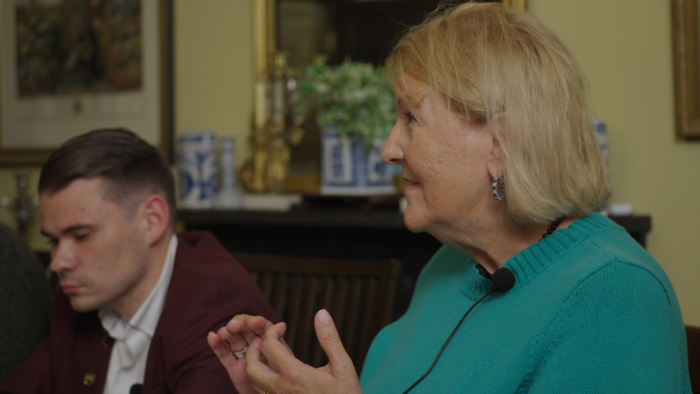
“I think what I’ve learned is that what we’re doing under this administration is bringing back American industry. I think what happened with COVID is we learned how dangerous it is that things are not produced here. I mean, amoxicillin is not produced in the United States today. That’s a critical antibiotic, and other drugs. And I think, since the Cold War, the policy was to outsource everything and get it cheaper, so consumers would be happy and everything would be cheaper. … I just can’t imagine being like in Detroit where all the car manufacturers left, and what they did to those communities and the people and the middle class in those communities. So I’m very thankful that we have an administration that’s bringing back manufacturing and industry.”
— Sharon Lansdale
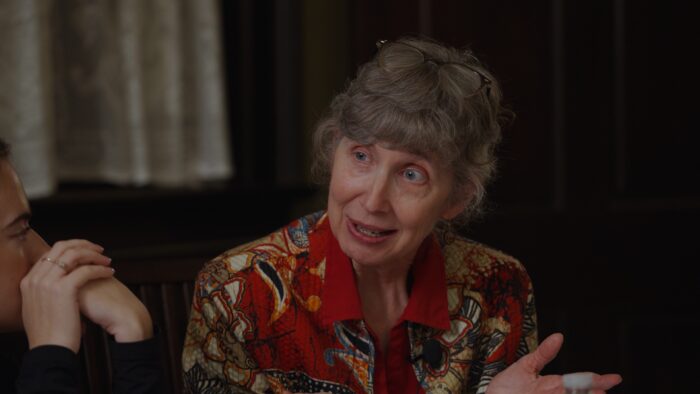
“It’s not just that we don’t have the tools or the attention span, but, you know, one of the things I worry about is we have enormous economic divides in our country. And increasingly, especially here in West Virginia, people are working two jobs. They are raising — trying to raise their kids. … We’ve got substance use issues. You know, it takes a lot of time to be an informed electorate.”
— Dr. Cathy Slemp
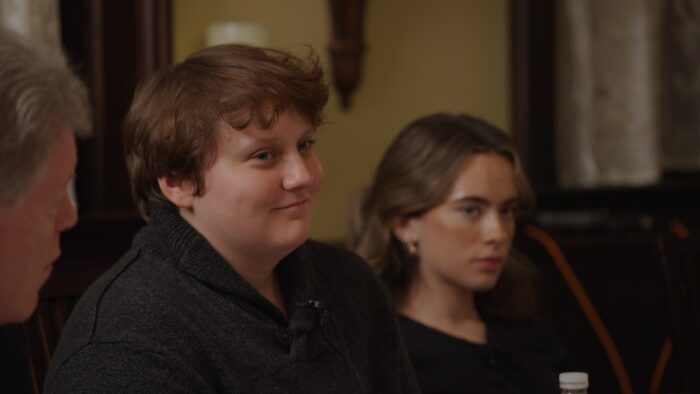
“A theme that stuck with me is that we didn’t really talk much about identity politics tonight. It was all about things like affordability and people’s right to life and right to be treated humanely. None of it was, I think, what a lot of the media talks about, and I’m not really surprised, but I am very pleased.”
— E. Provost
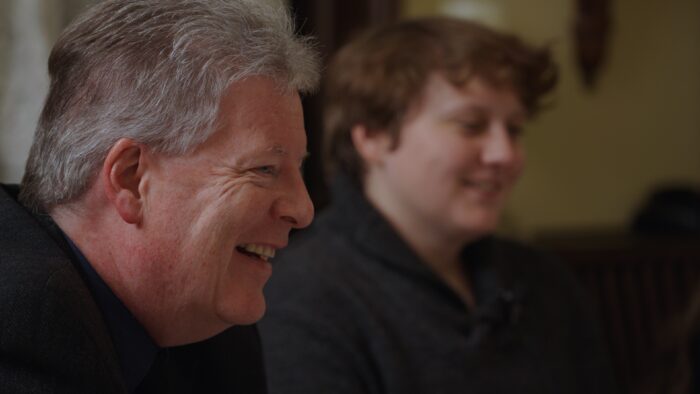
“I am as far from a democratic socialist as you can imagine, but you know what, Ashton [Pack]? I actually see why young people are doing this. The average price of a new home is over $400,000. And so when interest rates just popped over 7%, they say, ‘Well, historically, that’s not high.’ I said, ‘Okay, my first house I paid eight and three-quarter interest, but my first house cost $91,000.’ It wasn’t 7% on $400,000. I see it. Now, I don’t agree with it. I think it doesn’t lead to good places … but I think that’s a beginning of a dialogue. Like, I want your flourishing. I want you to have a lovely life and family and whatever is a blessing to you.”
— Rev. John C. Minihan
Add WVPB as a preferred source on Google to see more from our team
A new study ranks West Virginia in the middle of the states when it comes to measures of freedom.
Continue Reading Take Me to More NewsAs we’re counting down to the midterm election, Us & Them host Trey Kay has invited a new group of guests to a Dinner Party – but this time, the table is in Huntington. Kay’s guests are a mix of conservative and progressive voters, half of whom are under 30 and they share a wide-ranging conversation over a potluck meal. We listen to an excerpt from this episode where a number of guests weigh in on immigration.
Continue Reading Take Me to More NewsWest Virginia Public Broadcasting teamed up with journalism students at the West Virginia University Reed School of Media and Communications to bring you a voter's guide — a free resource with details on each West Virginia candidate for the U.S. Senate, House of Representatives, State Senate and House of Delegates races. Our guide also includes information on the proposed Constitutional Amendment and direct links to voting resources from the West Virginia Secretary of State's office.
Continue Reading Take Me to More NewsThe U.S. Small Business Administration (SBA) is in West Virginia to process low interest disaster loans for businesses, private nonprofit organizations, and residents affected by severe storms and flooding on Aug. 14 –18.
Continue Reading Take Me to More News