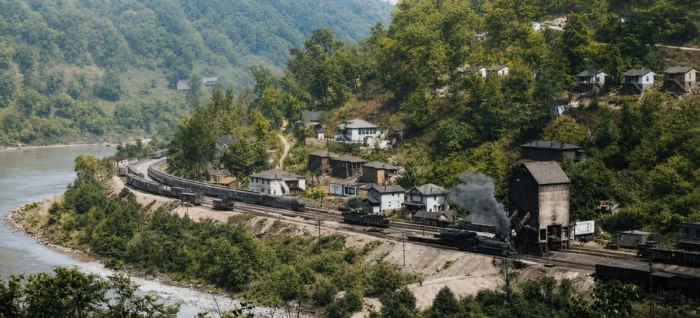
Conservation advocates have filed a lawsuit to stop the demolition of buildings in the Thurmond area of New River Gorge.
Construction and building removal work is scheduled to begin in late November in the Prince, Thurmond and Brookside areas of New River Gorge National Park and Preserve. The projects will receive approximately $36 million from the Great American Outdoors Act Legacy Restoration Fund, established under legislation signed into law by President Donald Trump in 2020, according to a press release from the National Park Service (NPS).
Citizens and groups like Preservation Alliance of West Virginia have protested the demolition of 11 historic buildings in the area.
Wednesday the Town of Thurmond and the New River Gorge Historical Society filed suit in the Southern District of West Virginia asking the court to temporarily halt the demolitions.
Thurmond resident and town council member Tighe Bullock said they are asking for more time to find a way to keep the structures standing.
“We’re just asking for time to have more meaningful input and to look at viable alternatives that we could try to exhaust because an injunction is a temporary thing, but a demolition is a permanent thing,” he said.
According to the NPS, Thurmond was a boom town in the early 1900s as huge amounts of coal flowed into the town from area mines and out to the world via the Chesapeake & Ohio Railway.
“But with the switch to diesel locomotives and the closing of local mines, the town began a steady decline. The many businesses closed down, and most residents moved on,” the NPS website says. “Today, the town of Thurmond remains untouched by modern development.”
Bullock said the fate of the buildings has been a persistent topic of discussion in Thurmond for years, as the NPS is the majority landowner in the town. He stresses that they have been and continue to be good neighbors.
“About three years ago, the Park Service announced its intentions to essentially demolish much of the town. And of course we disagreed with that decision,” Bullock said. “We did participate in the notice and comment process over the years, and we were very articulate that we did not support the proposed plan.”
Bullock said the town council went so far as to approve a vote of no confidence in the proposed plan.
The lawsuit goes a step further, arguing that the planned demolitions violate multiple of the NPS’s own agreements with and commitments to the town of Thurmond. It states that the public was told it would preserve and reuse the buildings but instead allowed the building to deteriorate.
“That decision departs, without acknowledgment or explanation, from NPS’s own 1992 Thurmond Development Concept Plan and Interpretive Prospectus, its 2011 General Management Plan, and the 2022 Historic Resource Survey it commissioned, each of which called for preservation, stabilization, and adaptive reuse of Thurmond’s historic buildings in support of visitor use,” the lawsuit states.
Last week the NPS asked for proposals to lease three historic structures in the historic town. The Dun Glen ark, mini-ark, and boat rack would be spared, but only if a lease agreement is submitted and approved
Bullock said the suit wants to give the community time to put similar lease structures in place for the other buildings slated for demolition and save taxpayers money.
“The millions of dollars that could go into demolishing these buildings could be saved. We don’t have to demolish these buildings and quite the opposite of what we could do,” he said. “This is a tried-and-true process. We’re not trying to reinvent the wheel here. This has happened all across America, across multiple national parks where lease structures are put in place.”