This week, local fruit gets made into all kinds of desserts, but have you ever heard of a sonker? Also, there are thousands of apple varieties, and each one means something to somebody. And, a beloved West Virginia hotdog restaurant closed in 2018. An annual tribute sale gives people a chance to relive its glory days.
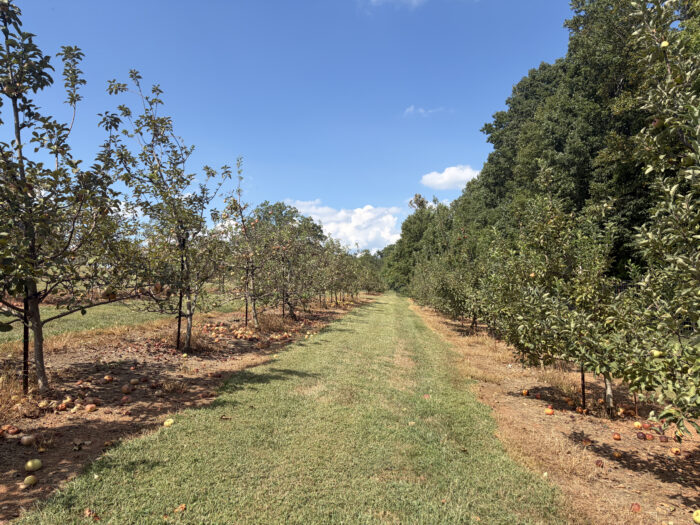
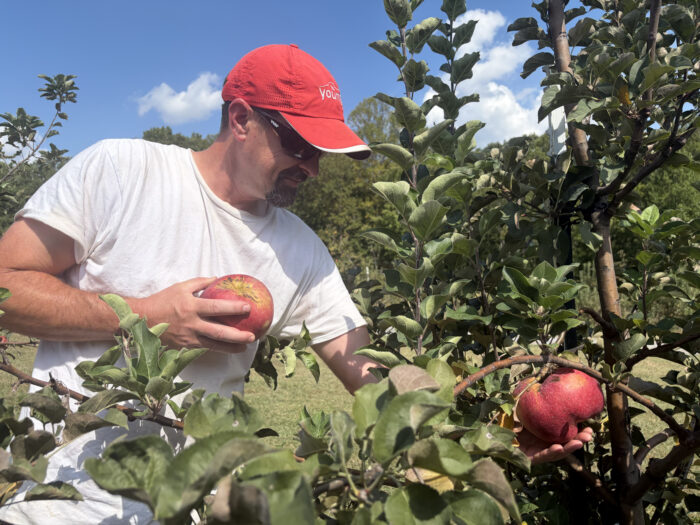
The Southern Heritage Orchard at Horne Creek Farm maintains two copies of trees to preserve rare apple genetics.Andrea "river" Peterson/West Virginia Public Broadcasting
Listen
Share this Article
This week, Associate Producer Abby Neff fills in for regular host, Mason Adams, for a show about the harvest season in Appalachia.
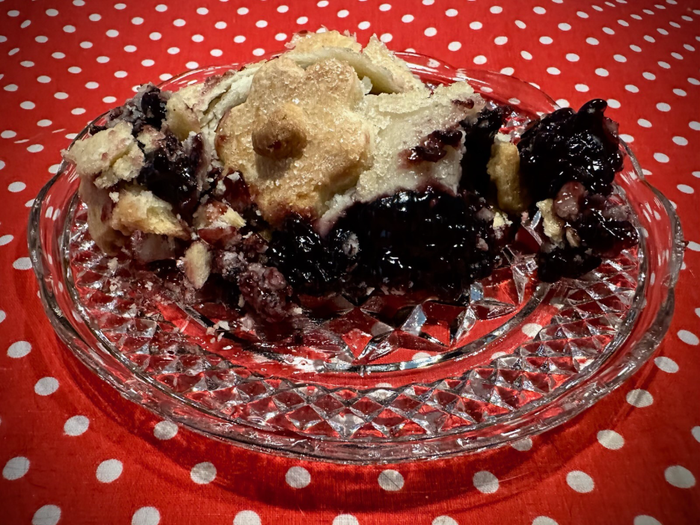
Local fruit gets made into all kinds of desserts, but have you ever heard of a sonker?
Also, there are thousands of apple varieties, and each one means something to somebody.
And, a beloved West Virginia hotdog restaurant closed in 2018, but an annual tribute sale gives people a chance to relive its glory days.
You’ll hear these stories and more this week, Inside Appalachia.
Surry County Residents Take A Shortcut With The ‘Sonker’
Blackberry zonker (sonker) from Miss Angel’s Heavenly Pies, Mount Airy, N.C.
Photo Credit: Amanda Goins/West Virginia Public Broadcasting
Appalachia has so many rich food traditions. And this week’s show is all about food. It’s just a small sampling of the rich foodways in our region.
In the North Carolina foothills, a common dessert in the fall is a sonker. Folkways Reporter Amanda Goins first heard that name when she moved to Surry County, North Carolina. She got curious and shares what she learned about this local dessert whose history goes back centuries.
Heritage Apples Reign Supreme In Appalachia
Horticulturist Jason Bowen helped graft apples at this orchard from trees collected by Lee and Edith Calhoun.
Photo Credit: Andrea “river” Peterson/West Virginia Public Broadcasting
Because of climate and altitude, apples flourish in Appalachia. Have you heard of Arkansas Black apples? Or what about black winesap? Or limbertwig? Apple varieties are seemingly endless here.
Folkways Reporter Andrea “river” Peterson also traveled to Surry County, North Carolina, to learn about some heritage apples and the stories they tell.
How To Bake Bread Like Appalachia’s Ancestors
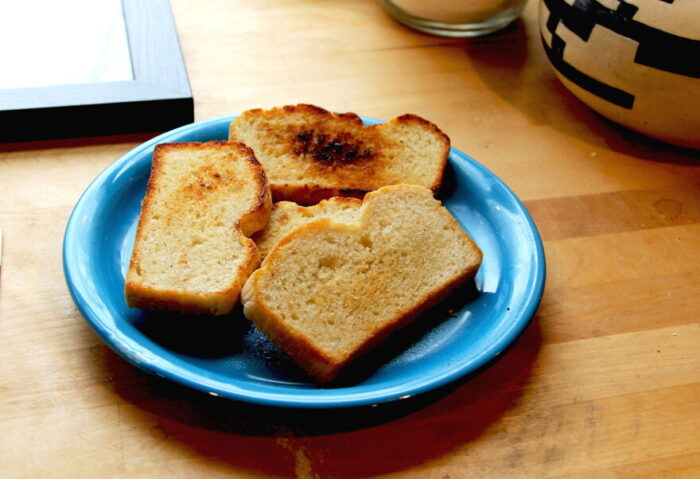
The finished product. Amy’s favorite way to eat salt rising bread is toasted with butter.
Photo Credit: Caitlin Tan/West Virginia Public Broadcasting
Maybe more than anything, during the holidays you see a lot of baking. It’s nice to fire up the oven in cooler months, not just for pies, cakes and cookies, but also bread. In Appalachia, we have our own kind of loaf: salt-rising bread. It’s something people came up with when they didn’t have access to yeast.
In 2019, Reporter Caitlin Tan visited folklife apprentice Amy Dawson at Lost Creek farms, who was studying salt rising bread.
Searching For The Pawpaw’s Indigenous Roots
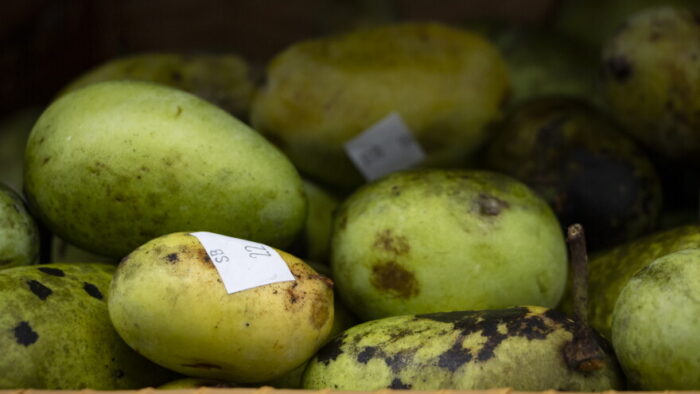
Pawpaws for sale during a short window of availability in September at Kindred Market in Athens, Ohio.
Photo Credit: Brian Koscho/West Virginia Public Broadcasting
Have you ever heard of the pawpaw? It’s a fruit that’s native to Appalachia and it tastes like a mashup of a banana and a mango. In central Appalachia, the yellow-green fruit is usually harvested from late summer to early fall. You can find them in the wild or grow them in your backyard. But pawpaws bruise easily, and have a short shelf life, which tends to keep them out of the produce aisle at your local grocery store.
But they’ve been part of local people’s food systems here for thousands of years. In 2020, Folkways Reporter Brian Koscho filed this story exploring the relationship between Indigenous people and pawpaws.
Skeenies Hot Dogs
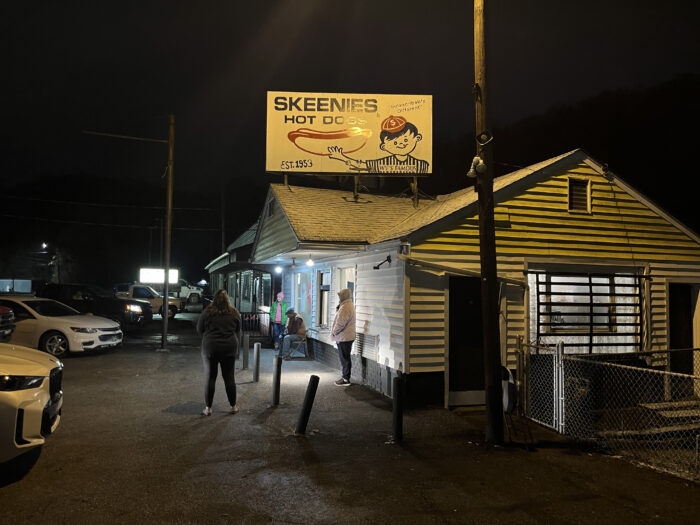
Despite the cold, patrons are willing to wait for a taste of Skeenies Hot Dogs.
Photo Credit: Zack Harold/West Virginia Public Broadcasting
For generations, Skeenies Hot Dogs in Sissonville, West Virginia, was known for serving some of the best slaw dogs around. The restaurant closed in 2018 — but still comes alive for the annual Skeenies Tribute Sale, giving devoted Skeenies fans a few days to make up for lost time.
Our theme music is by Matt Jackfert. Other music this week was provided by Hello June, John Blissard and Blue Dot Sessions.
Bill Lynch is our producer. Guest hosting this week’s show is Associate Producer Abby Neff. Our executive producer is Eric Douglas. Irina Zhorov is our editor. Our audio mixer is Patrick Stephens. We had help this week from Folkways Editors Ibby Caputo, Jennifer Goren and Charlie Kaier.
You can send us an email: InsideAppalachia@wvpublic.org.
Wednesday the Town of Thurmond and the New River Gorge Historical Society filed suit in the Southern District of West Virginia asking the court to temporarily halt the demolitions.