


Folklife Mentor/Apprentice Opportunities Now Open
West Virginia Folklife, a project of the West Virginia Humanities Council, is now accepting applications for its statewide Folklife Apprenticeship Program.
Continue Reading Take Me to More News


The winning stories from the 2026 WVPB PBS KIDS Writers Contest are now available to read!
Learn more about Be My Neighbor Day! And check out our recap from last year.

On Demand

On Demand

Watch locally produced documentaries & more.

On Demand

On Demand






West Virginia Morning

Inside Appalachia

West Virginia Week

Mountain Stage

Us & Them

The Legislature Today

The Legislature This Week

Send us your comments and questions.

Stream our board meetings.

Check out the latest WVPB news.

Sign up for our newsletter and get weekly updates.

Meet the WVPB staff.

WV Educational Broadcasting Commission, the WVPB Foundation, and the Friends of WVPB.

Come work with us!

Read our annual report and learn how we educate, inform and inspire with your support.

Sponsor impactful and engaging media and entertainment.

Use your IRA to make a gift to WVPB.

Become a member with your gift of $1,000 or more.

Make WVPB part of your legacy.

Manage your membership account.

Learn how you can Protect and Sustain West Virginia Public Broadcasting.
This conversation originally aired in the June 28, 2026 episode of Inside Appalachia.
Appalachian communities are no stranger to loss and to having things taken away.
That’s particularly true of Black communities in Appalachia. The urban renewal movement of the 20th century destroyed neighborhoods and business districts to make room for new streets and civic projects.
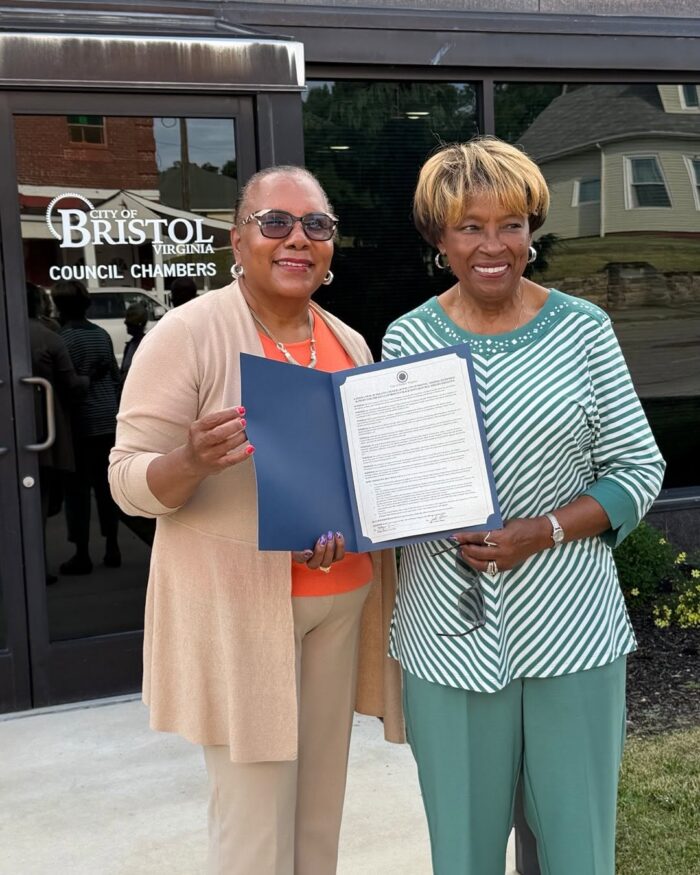
Now, some of that history is being researched and revealed. “The Souls of Bristol’s Black Bottom” is a partnership between Black in Appalachia and Virginia Humanities that uses interpretive signs, public art, and digital storytelling to remember a community that no longer exists today.
Tina McDaniel is a storyteller and community organizer who is helping to lead the project. Inside Appalachia Host Mason Adams spoke with McDaniel.
The transcript below has been lightly edited for clarity.
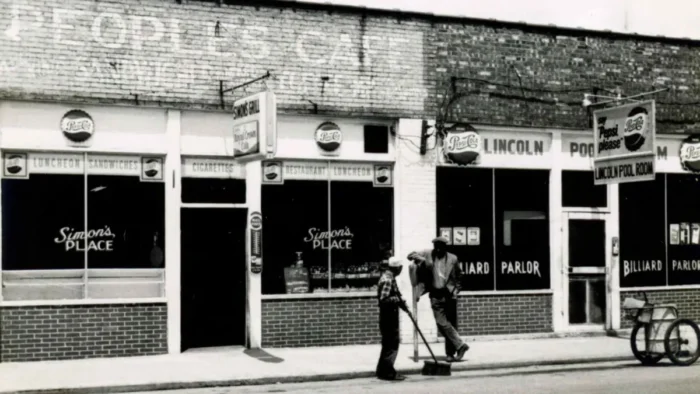
McDaniel: I came to Bristol in 1977. I had not heard of Black Bottom, and Black Bottom was gone at that point, but what I learned was that Black Bottom was a predominantly Black business district, even though there were some white businesses that were located in the area. Looking at Bristol City directories going back to 1896, 1897, there were at least a dozen Black [-owned] businesses in Bristol. Many of those were clustered in Black Bottom, and then when you look at the ‘30s and the ‘40s, look at those city directories, you’ll see that the number of Black businesses doubled during that timeframe.
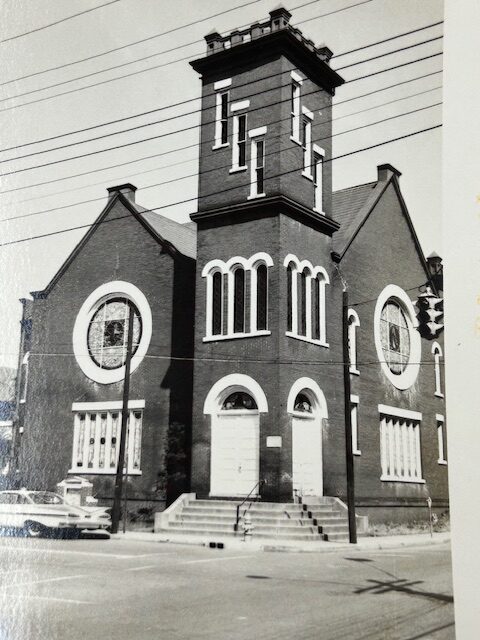
So, I would say that the height of Black Bottom was probably the ’30s and the ’40s. There were a lot of barber shops. There was a beauty shop. There was Masonic Lodge. There was a tailor. There were restaurants, [a] school hall, a funeral home. Lee Street Baptist Church was kind of the anchor in Black Bottom; that was an African American church that was located there, and as early as the 1900s, there was a grocery store called the Bristol Enterprise Trading Company. I think there might have been a doctor’s office in there at one point. But there were several Black businesses that were clustered within that district.
Adams: How did you first become aware of Black Bottom’s history, and what inspired this project?
McDaniel: I learned about Black Bottom through a lady, Ms. Jewel Bell. She was 90 years old, and she was thanking me for the work that I’ve been doing. She was excited about that, and she wanted to tell me about this place where there were these Black businesses. I met with Ms. Jewel Bell and her son, and then a couple of other folks, including William Isom with Black in Appalachia. We met in the parking lot across from the Bristol train station, and Ms. Bell told us about the different businesses that were located in Black Bottom, so she is the inspiration for me.
She also shared that at the Birthplace of Country Music Museum on the second floor, there was a place called the Cumberland Arena. They would bring in big bands like Count Basie, Duke Ellington-type talent. I have a newspaper article where Fats Waller visited, and he was at the Cumberland Arena. She [Bell] loved to dance, so she wanted me to know about this second floor of the Birthplace of Country Music Museum, called the Cumberland Arena, and the different types of talent that would come in, and the opportunities for her to dance. It was really kind of outside the boundaries of Black Bottom, but it was in the periphery.
Adams: Urban renewal affected communities across Appalachia. It devastated blocks of neighborhoods, largely Black neighborhoods. What did that look like in Bristol?
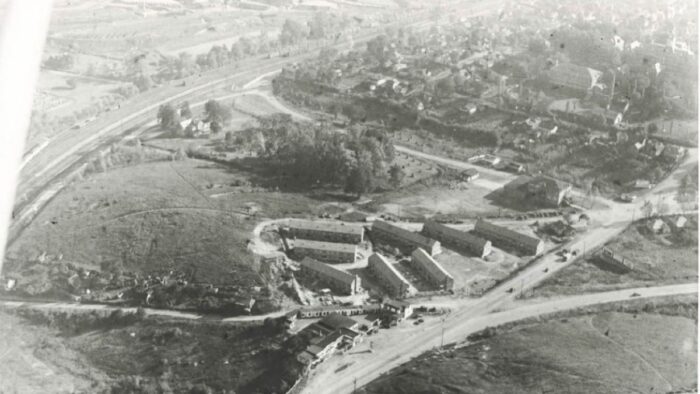
McDaniel: So, Bristol, same thing, of course. We know that Black Bottom was removed during urban renewal. It started in the ‘40s, all the way up until the mid-’60s, when it was completely gone. Now, the courthouse sits on the block that was Black Bottom, and then north of Black Bottom there was an area in Bristol, Virginia, where lot of homes were removed for public housing in the 1940s There was Johnson Court, which was the colored housing unit, and then Rice Terrace, which was for white people. A lot of those homes in the Bristol, Virginia, area were removed to make way for public housing, and then also streets. Same thing happened on the Tennessee side.
When you cross State Street — it’s now Martin Luther King Jr. Boulevard — at one time, it was Edgemont, but it was called the Woodlawn community. Same thing happened. Homes were removed, people were displaced, moved to other areas. Some moved out of town, some moved to other areas within Bristol. And then there was another area on the Bristol, Tennessee, side called Blackley Road. The people who lived there referred to it as their village, and that particular area was removed in the early ‘70s. Urban renewal removed other locations, but it just seems that it was disproportionate in terms of the impact to the Black community.
Adams: Why is it important to remember and celebrate Black Bottom now, in 2026?
McDaniel: I think remembering Black Bottom is really about recognizing the humanity, the people who actually built community in the late 1800s. With very minimal resources, they built something for the Black community, and it was necessary too, because it was a segregated community, and many of the Black folks worked downtown. They ran elevators, they did maintenance, they worked in the hotels, but they didn’t have a place where they could sit down and have a meal and relax. So, Black Bottom served a necessary role.
I think it’s important to remember those who built something at a time when it was very difficult, and they didn’t really have the resources, necessarily, or even the support to do so. Remembering that is important. It honors them, it honors their resilience, their entrepreneurship, the community that they had built. It also allows us to have an honest conversation about Black Bottom, and the fact that Black Bottom did exist, and that it was a necessary part of the community, and then also to talk about urban renewal, and urban renewal did not just remove buildings, it removed culture, it removed community. I think it allows us to talk about some of the policies of the past and how that has shaped who we are today.
Adams: What’s something you’ve taken away from this work? What did you learn about Black Bottom, about urban renewal, maybe about yourself even?
McDaniel: What I learned in Black Bottom — and I’m still learning — I learned from mostly the oral stories, and hearing from those who actually experienced urban renewal. But I’m learning that there are some contradictions whenever I look at Black Bottom. Some of the contradictions, you hear Black people in the oral stories talking about Black Bottom was a beautiful place, it was a safe place, but then whenever you look at the newspaper articles and what was said about Black Bottom, that was contradictory, because the beauty of the place is not really what’s covered in those newspaper articles. It’s more about the vices that were a part of Black Bottom, I guess.
What I’m learning is that Black Bottom was viewed by a single story, and there was more to what Black Bottom was about. It was about community, it was about people coming together, working together. There’s been this paintbrush of a negative story related to Black Bottom, but I think that with my research and the conversations with people, we’re able to paint a more fuller and complete picture of what Black Bottom was about.
Urban renewal was supposed to be focused on redevelopment and modernizing. It didn’t necessarily take into consideration the human element, and one story that just really kind of struck me as being very powerful. It was a gentleman who grew up here in Bristol, he moved to Nashville, and he said he didn’t want to come back, that it was hard for him to come back, because there was nothing to come back to.
So, I have him as part of the advisory team on the Black Bottom Project, and he’s really engaged, and he’s saying that now you know this gives him more of a reason to come back and visit Bristol. Then there was one other story as a young man who is an artist, he’s 21. I was talking to him about doing some art for the project, and he was very quiet and didn’t say much. And then at the end, I was like, “Do you have any questions? Is there anything that you want to say?” He said, “I now feel like I have an origin. I haven’t felt that way growing up here in Bristol. I didn’t know anything about the history. I now feel like I have an origin.” So it just shows you just how powerful this work is.
Add WVPB as a preferred source on Google to see more from our team

West Virginia Folklife, a project of the West Virginia Humanities Council, is now accepting applications for its statewide Folklife Apprenticeship Program.
Continue Reading Take Me to More NewsThe West Virginia Department of Environmental Protection is seeking submissions for the 24th Annual “Roadsides in Bloom” calendar contest.
Continue Reading Take Me to More NewsAt Open Door Café in Wytheville, Virginia, gardening is a way to feed the hungry while breaking down the stigma of homelessness. Folkways Reporter Wendy Welch visited Open Door Café and spoke with the volunteers.
Continue Reading Take Me to More NewsTraditional Appalachian ballads have found new life in the form of an audio drama podcast produced by the Appalachia Book Company. We look at a reimagined story of a traditional railroad disaster ballad.
Continue Reading Take Me to More News