Alert (09/29/2026): Our Parkersburg TV transmitter is still undergoing maintenance and remains temporarily inoperative. We apologize for the inconvenience.
All our programming is available via our TV livestreams on our website and WVPB Passport. Thank you for your patience!
This week, author Silas House returns with a sweeping new novel. Also, some folks say, you have to fake it 'til you make it, even if you're trying to establish a state park. And, the story of the first Mothman sightings as written by a small town journalist in 1966.
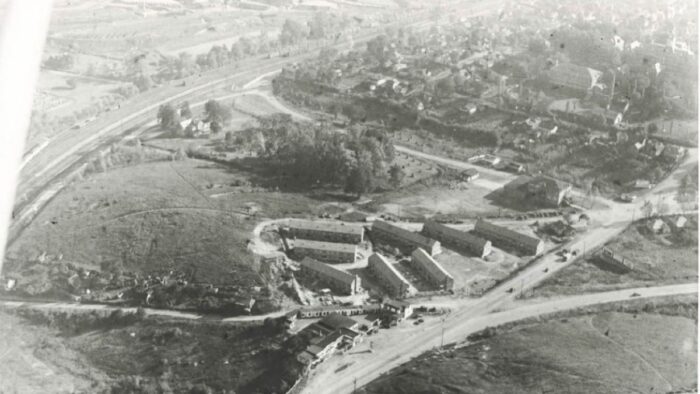
Courtesy of Black in Appalachia/Virginia Humanities
Urban renewal was a 20th century movement by local, state and federal governments to revitalize struggling cities. But Black neighborhoods and business districts were often sacrificed. In Bristol, Virginia, Black business owners ran barber shops, groceries and doctor’s offices in Black Bottom, which was leveled to make way for new streets and civic projects.
“The Souls of Bristol’s Black Bottom” is a partnership between Black in Appalachia and Virginia Humanities. The project uses interpretive signs, public art and digital storytelling to remember the community. Organizer and storyteller Tina McDaniel helps lead the project. She says learning about ‘Black Bottom was a revelation.’
Host Mason Adams spoke to McDaniel about the project.
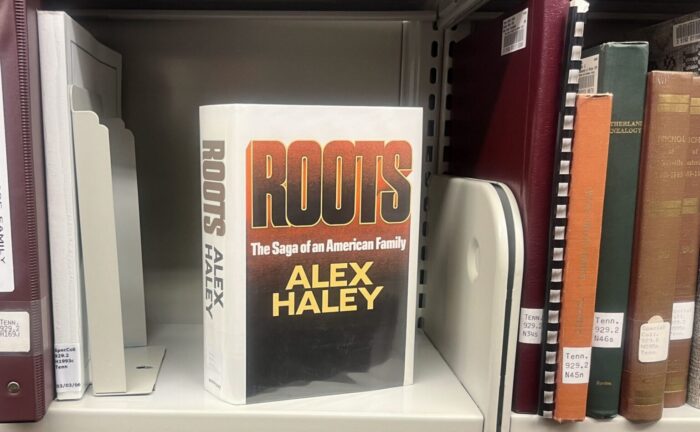
Roots Book Ban Reversed In Knox County, Tennessee
Alex Haley’s 1976 Roots is about the horrors of the slave trade in America and designated an official state book of Tennessee. Knox County recently backtracked its decision to remove the critically acclaimed book from school libraries.
Photo Credit: Camellia Burris/WPLN
Knox County, Tennessee officials have reversed their decision to remove the book Roots from school libraries. In May, just a couple weeks prior, the book was banned by a school board committee.
Written by Alex Haley, the novel follows generations of a Black family from enslavement in America in the 1700s through changes and upheavals to the second half of the 20th century. Roots won a Pulitzer Prize and was adapted into an award-winning television miniseries.
It was one of 124 titles that have been removed from library shelves in Knox County. In particular, school board members objected to a depiction of rape of an enslaved woman by a slaveholder. Public outcry to the ban was immediate.
WPLN’s Camellia Burris reports.
Roadside Farmstand Gets An Upgrade
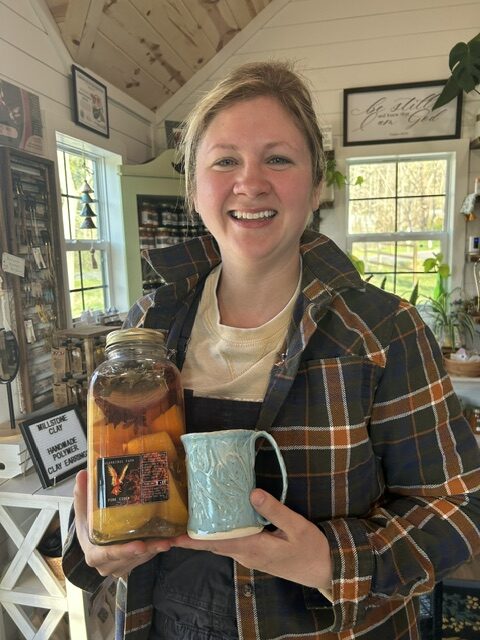
Jessica Camden, owner of Sugarbirds Farm Stand, holds two of the 30 vendors’ products available for sale inside.
Photo Credit: Wendy Welch/West Virginia Public Broadcasting
Roadside farmstands with fresh eggs or tomatoes are a common sight in Appalachia. They can be a way for people, especially rural women with kids at home, to support themselves economically. They often work on the honor system; there’s nobody there. Take a carton of berries and leave some cash. But the humble farm stand is changing to keep up with an increasingly cash-free society.
Folkways Reporter Wendy Welch recently visited a stand in Wythe County, Virginia.
State Regulators Audit Kentucky Power After 20 Years
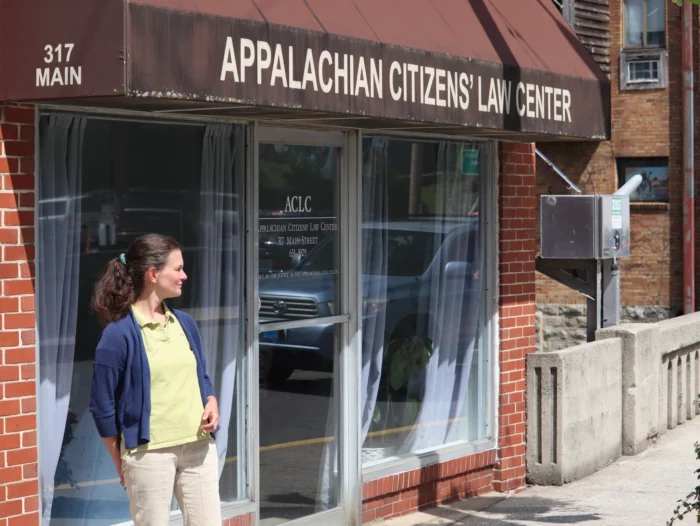
Mary Cromer, deputy director of the Appalachian Citizens’ Law Center, stands outside of their Whitesburg offices.
Photo Credit: Andrew Henderson/AMSN
Power bills have been rising across much of Appalachia. That’s the case in eastern Kentucky, too, and led to state regulators ordering an audit of Kentucky Power for the first time in more than 20 years.
Kentucky Public Radio’s Sylvia Goodman met with a new coalition that hopes the audit could lead to lower bills.
Volunteers Document Species In The Smoky Mountains
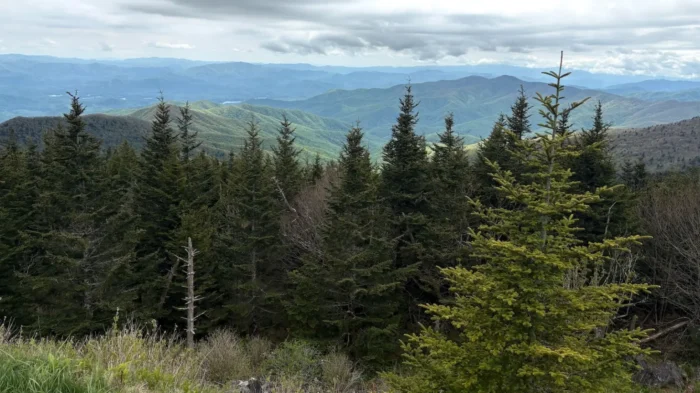
The Great Smoky Mountains are the most biodiverse site in the national park system. Every square foot of the park teems with life, much of which park visitors rarely see.
Photo Credit: Katie Myers/Grist
For years, citizen scientists have been documenting plants and wildlife in the Great Smoky Mountains National Park. They do work the Park may not have capacity for, tracking changes in the ecosystem and helping us better understand Appalachia’s biodiversity.
BPR and Grist reporter Katie Myers tagged along with a group of volunteers into the Smokies.
Black Bears Are Migrating As Climate Change Threatens Habitat
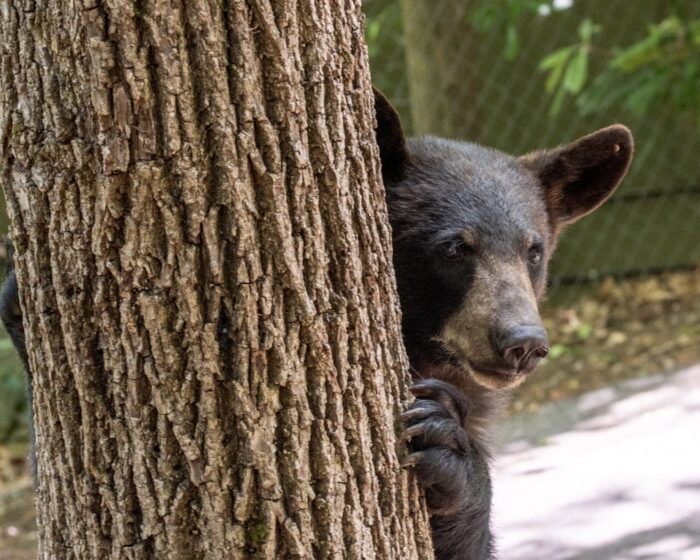
An adolescent bear scales a tree on May 20, 2026.
Photo Credit: Caroline Eggers/WPLN
Black bear encounters are on the rise, and climate change is often a hidden culprit.
WPLN’s Caroline Eggers reports that Tennessee wildlife managers are working to promote peaceful coexistence.
The Vine That Ate The South
Kudzu covers a patch of woods behind an Arby’s in Knoxville, Tennessee on May 8, 2026.
Photo Credit: Jacqui Sieber/WUOT
Kudzu is a leafy vine that has spread through the South and Appalachia, draping whole landscapes with its greenery. Some people find it beautiful, at least at first. But, it’s an invasive plant that can swallow entire sections of forests and choke out other plants.
WUOT’s Jacqui Sieber has more on efforts to tackle the “vine that ate the South.”
Herbicide Drones Are Killing Kudzu
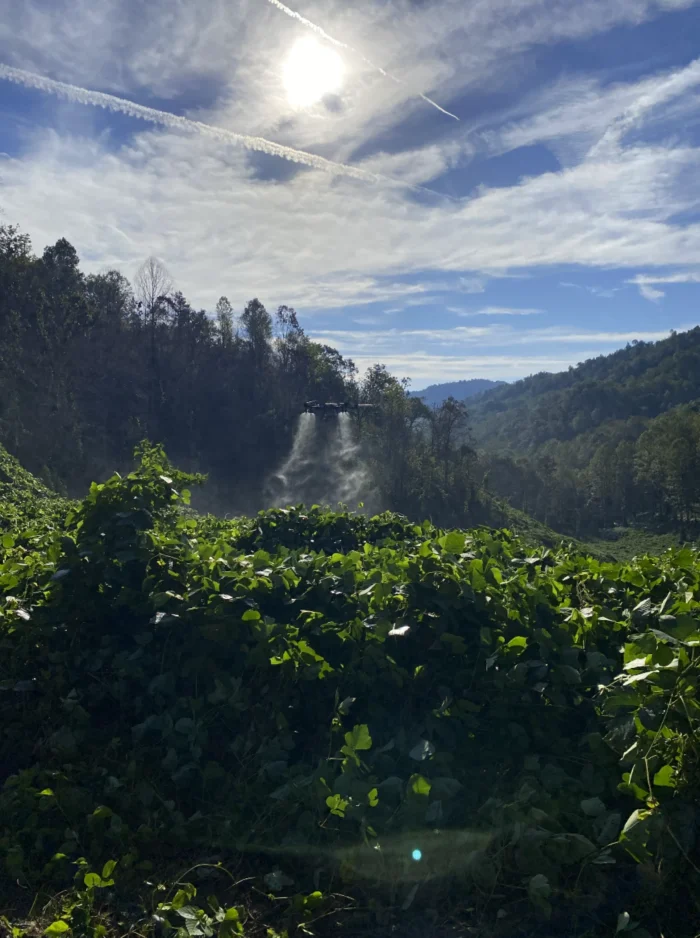
An herbicide-spraying drone douses a thicket of kudzu at one of Kentucky Fish and Wildlife’s study sites last summer. Many sites like this are only accessible on foot or by air due to the vine’s thickness and difficult terrain. Officials say drones like this can turn days or weeks of work into an afternoon.
Photo Credit: Jacob Stewart/Kentucky Fish & Wildlife
Goats aren’t the only tool to keep kudzu in check. In Kentucky, wildlife officials are testing whether new drone technology could help fight kudzu.
Michael Collins with WKYU has more.
Herbalism In Appalachia
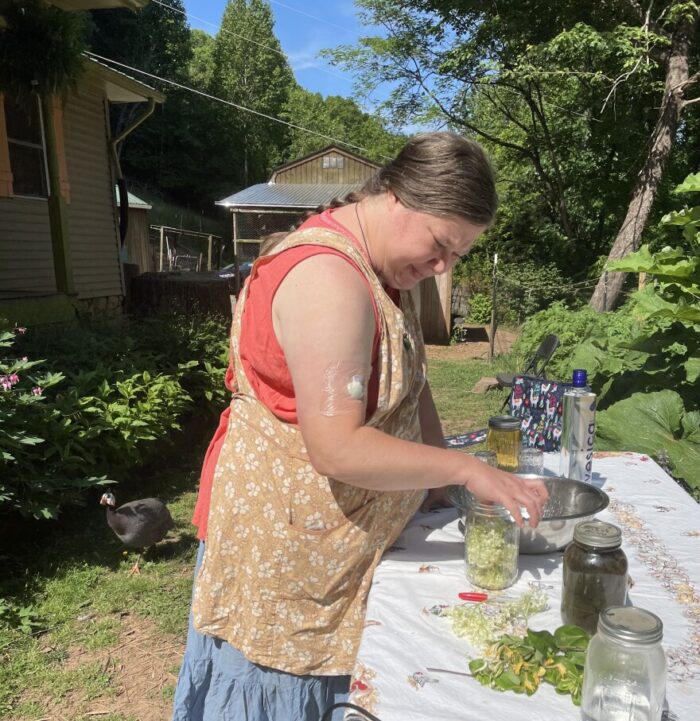
Crystal Wilson adds elderberry flowers to create a fever tincture as her guinea hens fuss around her feet.
Photo Credit: Heather Duncan/West Virginia Public Broadcasting
In the warm months, a lot of people stock up on roots and herbs to use as medicines. Some, they grow, and others, they find in the woods. Here in Appalachia, those remedies have been a path to wellness and independence for centuries.
Folkways Reporter Heather Duncan has more.
--
Our theme music is by Matt Jackfert. Other music this week was provided by Erik Vincent Huey, Tim Bing, John Blissard, Mary Hott, Paul Loomis, Dinosaur Burps and Blue Dot Sessions
This week, we say goodbye to Kelley Libby. Kelley’s been Inside Appalachia’s show editor since 2020 and was also a lead editor for the Folkways project. As much as anyone, Kelley has helped shape Inside Appalachia into the show that it is. Kelley, we can’t thank you enough. Good luck with your next adventure!
And, introducing Irina Zhorov, who will take over as show editor. We’re glad to have her.
Bill Lynch is our producer. Abby Neff is our associate producer. Our executive producer is Eric Douglas. Our audio mixer is Patrick Stephens. We had help this week from Folkways Editors Jennifer Goren and Molly Born.
You can send us an email: InsideAppalachia@wvpublic.org.
This week, author Silas House returns with a sweeping new novel. Also, some folks say, you have to fake it 'til you make it, even if you're trying to establish a state park. And, the story of the first Mothman sightings as written by a small town journalist in 1966.
The annual West Virginia Book Festival, a free event for book lovers of all ages, will be held on Saturday, Oct. 24, at the at the Charleston Coliseum and Convention Center.
West Virginia Attorney General JB McCuskey has launched a broad investigation into many of the state's leading environmental groups, demanding a decade of internal records involving their fundraising and climate change advocacy as part of a probe into “alleged unfair or deceptive acts."
Silas House is a major voice for Appalachia. The Kentucky native has written more than 15 books and served as the state's poet laureate. His latest book is The Tulip Poplars, a sweeping novel about the lives of four people as they navigate friendship and forbidden love throughout the 20th century. Inside Appalachia's Mason Adams spoke with House.