Alert (09/10/2026): Our Parkersburg TV transmitter is undergoing maintenance for a few days and will not be operational. We apologize for any inconvenience.
All our programming is available via our TV livestreams on our website and WVPB Passport. Thank you for your patience!
This week, it’s not easy to find a place to play hockey in Appalachia, and if you happen to be young and ambitious, it can be harder. Also, rappers and musicians across West Virginia come together for a song challenge. And, farmers learn to turn unwanted sheep’s wool into home insulation.
Housing is becoming less affordable for many people. As a result, more cities and towns grapple with growing homeless populations. Hundreds of cities across the nation now have laws that prohibit camping on public property to discourage encampments and illegal activity.
On this episode of Us & Them, host Trey Kay moderates a community conversation in Morgantown about that city’s approach to housing. Morgantown is one of five West Virginia cities with a public camping ban. Local advocates say there are twice as many homeless people as there are shelter beds available.
This year, lawmakers did not have the votes to pass a statewide camping ban, but some leaders say that’s a better approach than patchwork local measures.
This episode of Us & Them is presented with support from the CRC Foundation.
Subscribe to Us & Them on Apple Podcasts, YouTube Music, Spotify, the NPR app and wherever you get your podcasts.
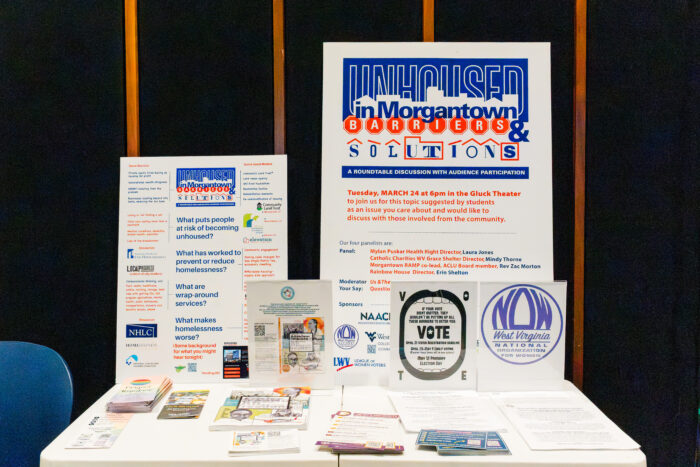
A poster for “Unhoused in Morgantown: Barriers and Solutions” is displayed at an information table during the community forum at West Virginia University’s Mountainlair. The event brought together local service providers and advocates to discuss homelessness, housing barriers and public policy in Morgantown.
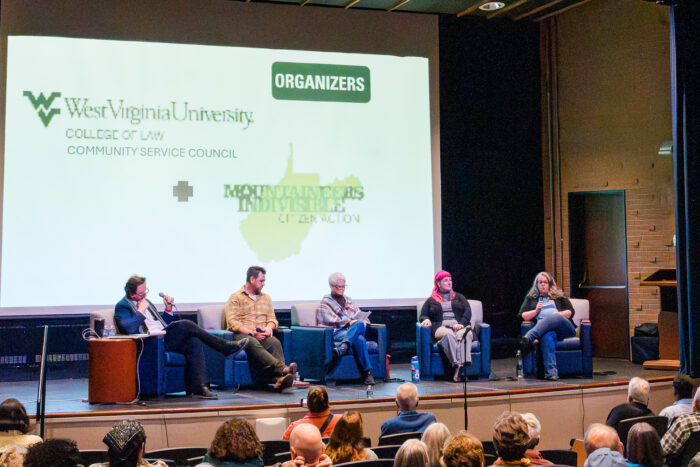
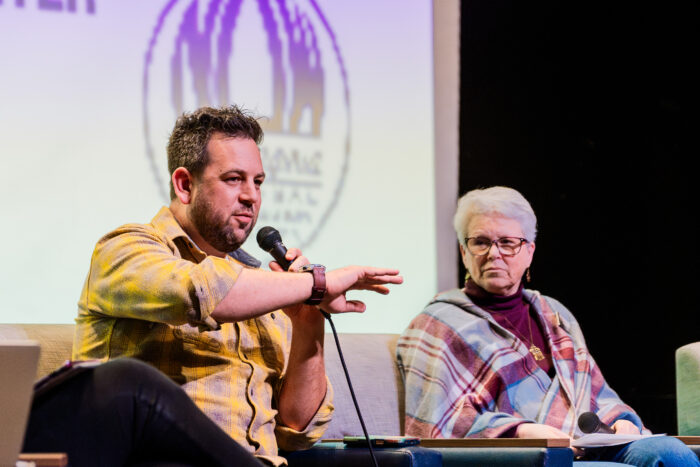
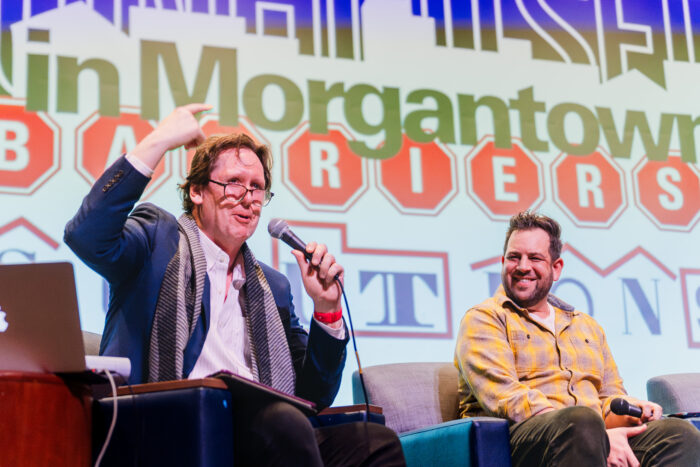
Photo Credit: Mountaineer Indivisible Citizens Action GroupUs & Them host Trey Kay, left, moderates “Unhoused in Morgantown: Barriers and Solutions,” a community forum at the Gluck Theatre in West Virginia University’s Mountainlair. Joining Kay on the panel, from left, are the Rev. Zac Morton of First Presbyterian Church, Laura Jones of Milan Puskar Health Right, Erin Shelton of Project Rainbow and Rainbow House, and Mindy Thorne of Catholic Charities West Virginia.
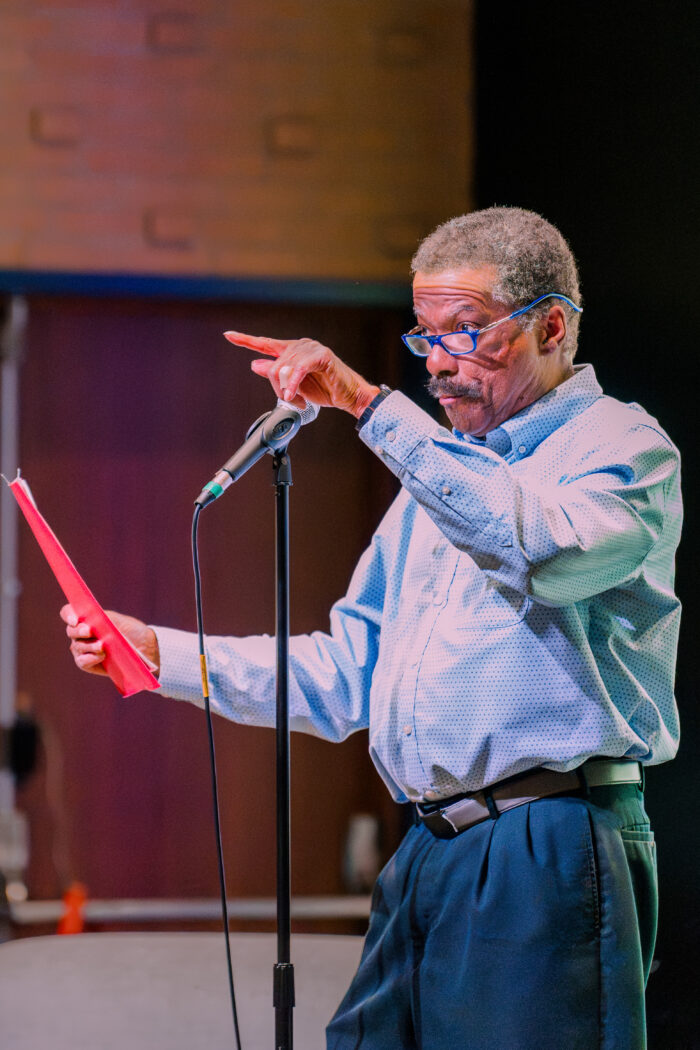
Photo Credit: Mountaineer Indivisible Citizens Action GroupRon Allen, a member of the Mountaineer Indivisible Citizens Action Group and one of the organizers of “Unhoused in Morgantown: Barriers and Solutions,” welcomes the audience to the Gluck Theatre in West Virginia University’s Mountainlair.
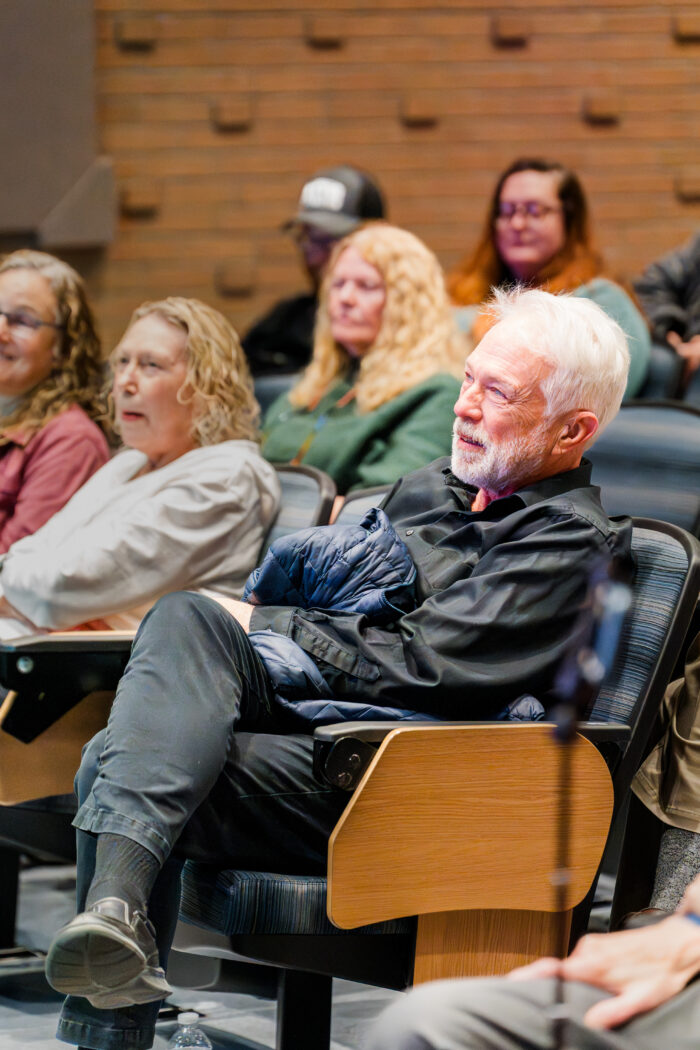
Photo Credit: Mountaineer Indivisible Citizens Action GroupRichard Dennis, a member of the Mountaineer Indivisible Citizens Action Group and one of the organizers of “Unhoused in Morgantown: Barriers and Solutions,” listens to the panel discussion at the Gluck Theatre in West Virginia University’s Mountainlair.
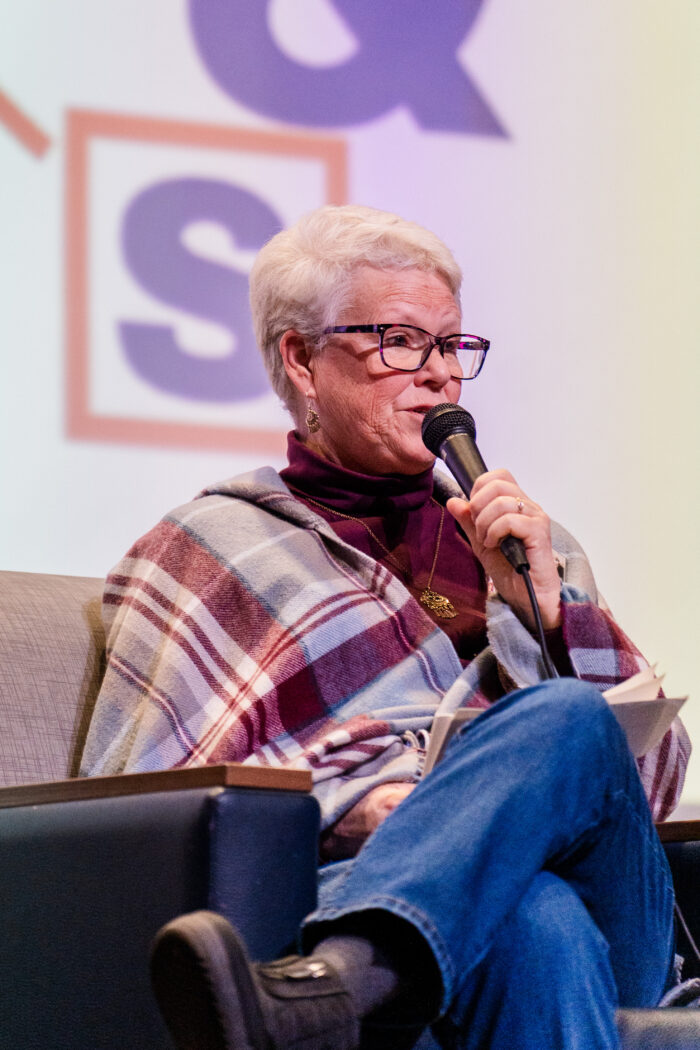
Photo Credit: Mountaineer Indivisible Citizens Action GroupThe Rev. Zac Morton of First Presbyterian Church speaks during “Unhoused in Morgantown: Barriers and Solutions,” a community forum at West Virginia University, as Laura Jones of Milan Puskar Health Right listens. Morton discussed how local churches collaborate to help people experiencing homelessness and the barriers that can make it difficult for them to secure housing.
Photo Credit: Mountaineer Indivisible Citizens Action Group
“We’re seeing a report card on how well our society is doing at caring for other people, and we’re not getting a very good grade. Instead of dealing with that fundamental problem, a lot of people don’t want to examine it because it requires work, introspection and a recognition that decades of bad policy have brought us here.”
— The Rev. Zac Morton
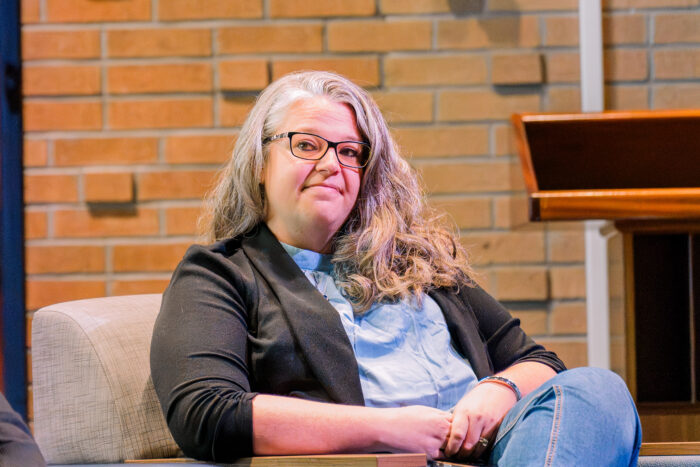
Laura Jones, executive director of Milan Puskar Health Right, speaks during a community forum about homelessness in Morgantown. Jones discussed the connections between unstable housing, trauma and health.
Photo Credit: Mountaineer Indivisible Citizens Action Group
“Every single person who is unhoused is unique. There is no one way people behave and no single reason people end up in this situation, other than the fact that we do not have affordable, low-income housing. Once someone becomes unhoused, that experience itself is often traumatic, making it even harder to do everything required to get back into housing.”
— Laura Jones
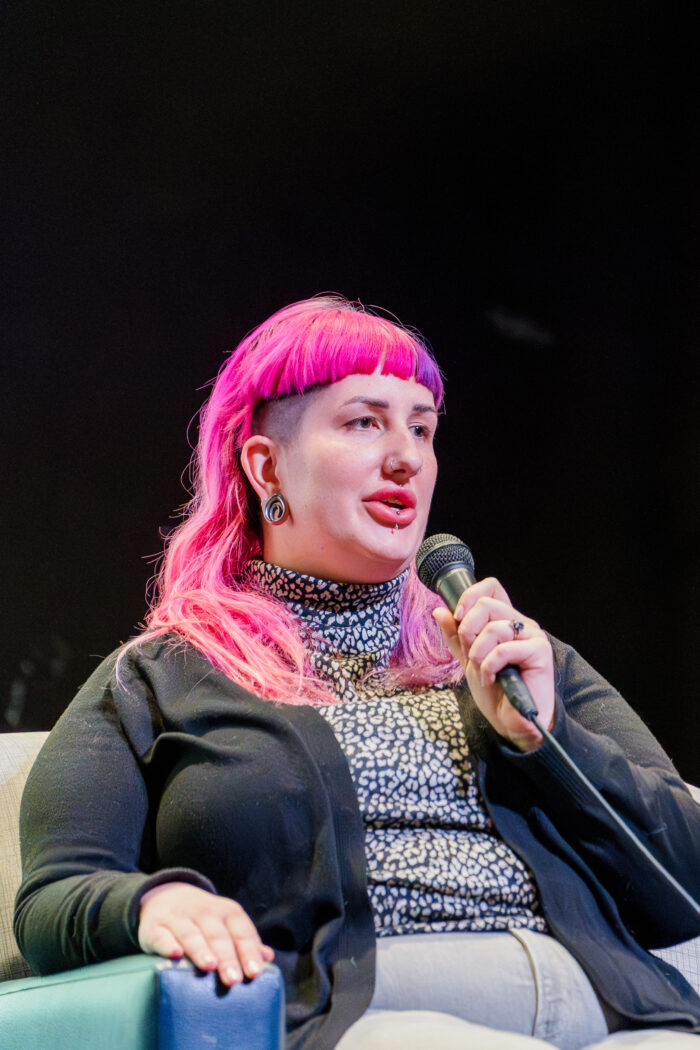
Erin Shelton, founder and board president of Project Rainbow and Rainbow House, speaks during a community forum about homelessness in Morgantown. Shelton advocates for low-barrier services for people who are often excluded from traditional programs.
Photo Credit: Mountaineer Indivisible Citizens Action Group
“A lot of the things people see that make them uncomfortable are symptoms of homelessness. If we educate ourselves and meet people, we humanize them. Once you meet people, they are not scary anymore. They are people. They are your neighbors, your community members and your friends.”
— Erin Shelton
Mindy Thorne, a director with Catholic Charities West Virginia, speaks during a community forum about homelessness in Morgantown. Thorne works with Grace Shelter, a low-barrier shelter at Hazel’s House of Hope that provides emergency housing and individualized case management.
Photo Credit: Mountaineer Indivisible Citizens Action Group
“These policies were made without an understanding of the consequences. There was no plan that said, ‘We are going to put this camping ban in place, and these services will be available instead.’ There was none of that. It was simply, ‘We’re done.’”
— Mindy Thorne
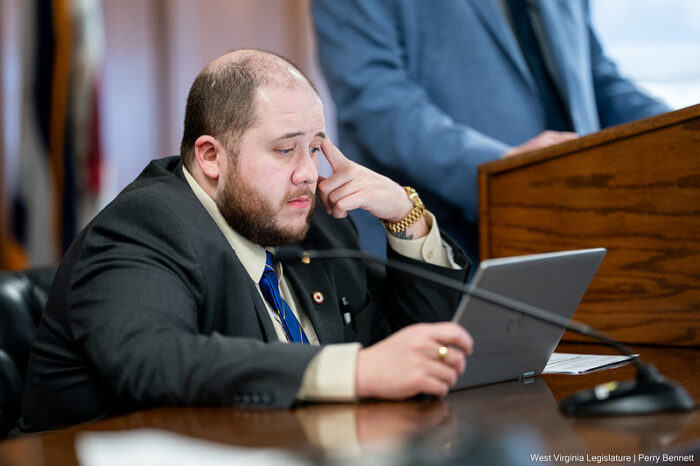
Del. Geno Chiarelli, R-Monongalia, reviews material during a meeting of the House Public Health Subcommittee at the West Virginia Capitol in Charleston on Feb. 4, 2026. Chiarelli sponsored legislation seeking to prohibit syringe service programs and a separate bill proposing a statewide ban on camping on certain public property.
Photo Credit: Perry Bennett/WV Legislative Photography
“I don’t think that more people jailed is necessarily a measure of success. But if vandalism goes down, if syringe litter decreases, if people stop having their homes broken into and their packages stolen, I think those are indicators that the camping ban would be working.”
— Del. Geno Chiarelli
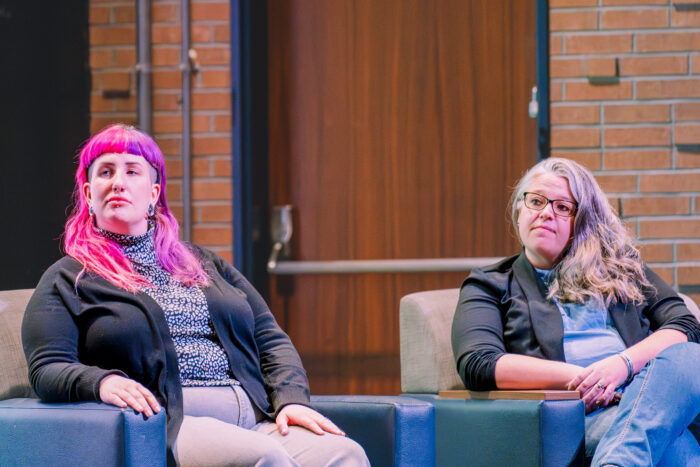
Erin Shelton, left, and Mindy Thorne listen during “Unhoused in Morgantown: Barriers and Solutions,” a community forum at the Gluck Theatre in West Virginia University’s Mountainlair.
Photo Credit: Mountaineer Indivisible Citizens Action Group
“When elected officials make policy in response to a community’s discomfort and fear of people experiencing homelessness, they are not actually responding. They are reacting.”
— Erin Shelton
Us & Them host Trey Kay speaks to the audience during “Unhoused in Morgantown: Barriers and Solutions” as the Rev. Zac Morton listens at the Gluck Theatre in West Virginia University’s Mountainlair.
Photo Credit: Mountaineer Indivisible Citizens Action Group
“Part of the homelessness question is who we are willing to see in our communities, who we turn away from and what kind of community we want to be.”
— Trey Kay
Add WVPB as a preferred source on Google to see more from our team
On this West Virginia Week, a Lincoln County student asks the state supreme court to step in, a state of emergency is declared in several counties, and a new initiative honors Dolly Parton.
This week, it’s not easy to find a place to play hockey in Appalachia, and if you happen to be young and ambitious, it can be harder. Also, rappers and musicians across West Virginia come together for a song challenge. And, farmers learn to turn unwanted sheep’s wool into home insulation.
The suit, filed with the support of the American Civil Liberties Union of West Virginia, asks the court to declare the state’s school funding system unconstitutional and order the state to meet its duty to provide a thorough and efficient education to every child in West Virginia.
Hockey is still finding fans and players in central Appalachia, but just because it’s an emerging sport in this region doesn’t mean we don’t have hockey heroes. Inside Appalachia’s Abby Neff met with Gwyneth Phillips, a goalie for the gold-medal winning U.S. Olympics Women’s team, to learn more.