


Aluminum Plates For Deep Space Win W.Va. 'Coolest' Contest
Aluminum plates that helped keep astronauts on the Artemis II rocket safe won the first ever Coolest Thing Made In West Virginia competition.
Continue Reading Take Me to More NewsAlert (09/29/2026): Our Parkersburg TV transmitter is still undergoing maintenance and remains temporarily inoperative. We apologize for the inconvenience.
All our programming is available via our TV livestreams on our website and WVPB Passport. Thank you for your patience!




To Educate, Inform, and Inspire by Telling West Virginia's Story
Mountain Readers Week will be held Oct. 5-9, 2026! Celebrate and foster a love of reading in children across West Virginia.
Nominate an exceptional West Virginia K-12 teacher today!

On Demand

On Demand

Stream original productions from WVPB

Watch locally produced documentaries & more.

On Demand

On Demand






West Virginia Morning

Inside Appalachia

West Virginia Week

Mountain Stage

Us & Them

The Legislature Today

The Legislature This Week

Send us your comments and questions.

Stream our board meetings.

Check out the latest WVPB news.

Sign up for our newsletter and get weekly updates.

Meet the WVPB staff.

WV Educational Broadcasting Commission, the WVPB Foundation, and the Friends of WVPB.

Come work with us!

Read our annual report and learn how we educate, inform and inspire with your support.

Sponsor impactful and engaging media and entertainment.

Use your IRA to make a gift to WVPB.

Become a member with your gift of $1,000 or more.

Make WVPB part of your legacy.

Manage your membership account.

Learn how you can Protect and Sustain West Virginia Public Broadcasting.
Ballads tell stories about all kinds of real-life events, but after Hurricane Helene, one group of ballad singers felt some topics were still too raw.
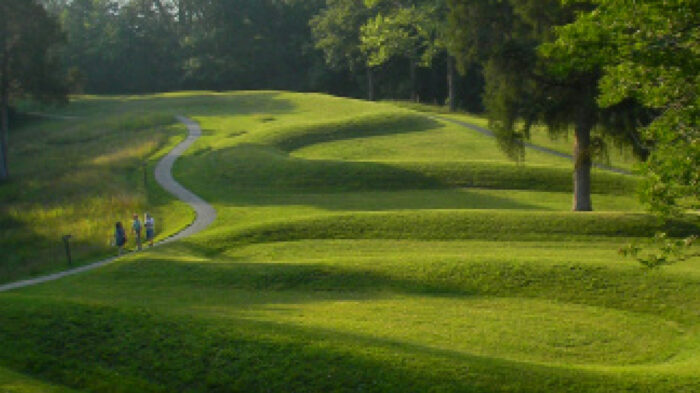
Also, the author of a new book on ancient Ohio credits a former grad student with introducing him to the region’s mysterious earthworks.
And, the legacy of Affrilachian poet Norman Jordan includes a summer camp for teens to study their heritage.
You’ll hear these stories and more this week, Inside Appalachia.
In This Episode:

When Hurricane Helene tore through western North Carolina in 2024, it took lives and upended communities. A community of ballad singers lost a place where they could share their tradition. The storm set them back, but it didn’t stop them. And what might’ve seemed lost could be restored.
From Marshall, North Carolina, Sarah Melotte reports for the Rural Remix, a podcast from the Center for Rural Strategies.
Climate change has affected the seasons and made weather less predictable. And severe storms and flooding are causing damage to wildlife habitat. Kylie Frederick is a journalism student at West Virginia University (WVU), and reports that protecting amphibians, like frogs and salamanders, can start at home.

Researchers have spent nearly 20 years restoring a threatened species of orchid in southern Kentucky. Those efforts were disrupted after a tornado last spring. For the Appalachia + Mid-South Newsroom, WEKU’s Lily Burris went to Mount Victory to learn about the recovery.
Thousands of years ago, Indigenous people created hundreds of earthen monuments in what is now Ohio, Kentucky and West Virginia. Some were burial mounds. Others were curious shapes and designs whose purposes are not entirely understood.
John E. Hancock, a professor of architecture and design at the University of Cincinnati, has spent years studying these earthworks. Recently, he published Traveler’s Guide to Ancient Ohio. If you want to visit these ancient sites, it’s a good place to start.
Producer Bill Lynch spoke with Hancock about the book.
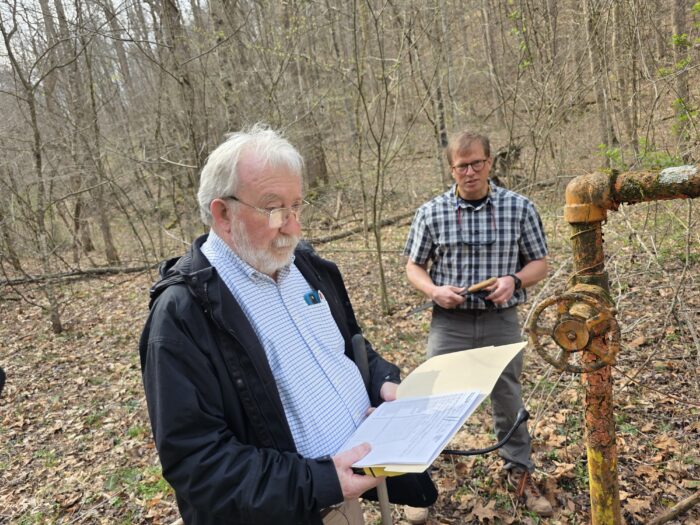
According to the West Virginia Department of Environmental Protection (WVDEP), there are more than 6,000 abandoned or orphaned natural gas wells in the state. But some advocates say that number is low.
WVPB’s News Director Eric Douglas visited a few.
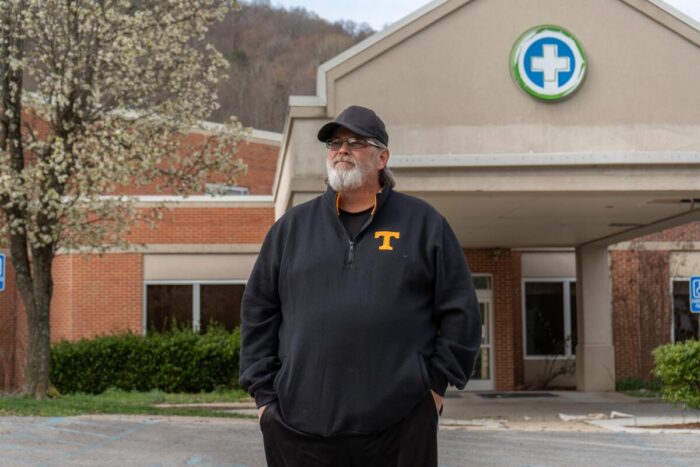
As the health care industry cuts unprofitable rural hospitals, small towns across Appalachia are paying the price.
WPLN’s Pierce Gentry takes us to Jellico, Tennessee, where the local government is struggling to reopen its only hospital.
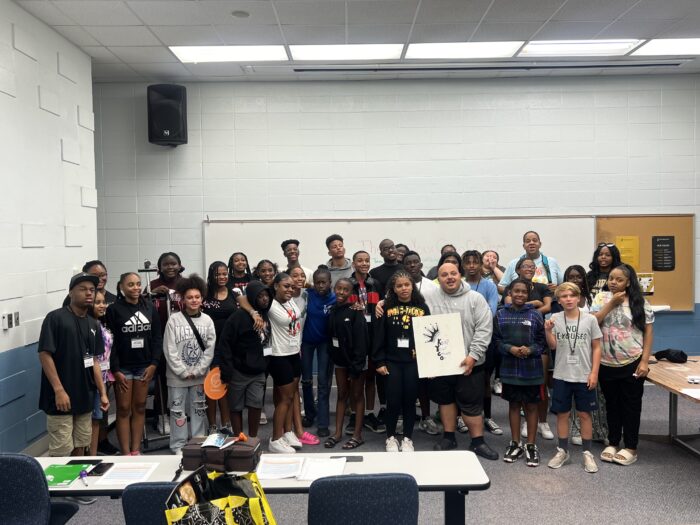
Affrilachian poet and playwright Norman Jordan was a prominent voice in the Black Arts Movement through the 1960s and 1970s. He was also one of the most published poets in the region, anthologized in at least 42 books. He died in 2015 at the age of 77. Along with his writing, Jordan left another legacy: a summer camp for teens to learn music, theater and dance.
Last summer, Folkways reporter Traci Phillips visited the Norman Jordan African American Arts and Heritage Academy in Westover, West Virginia.
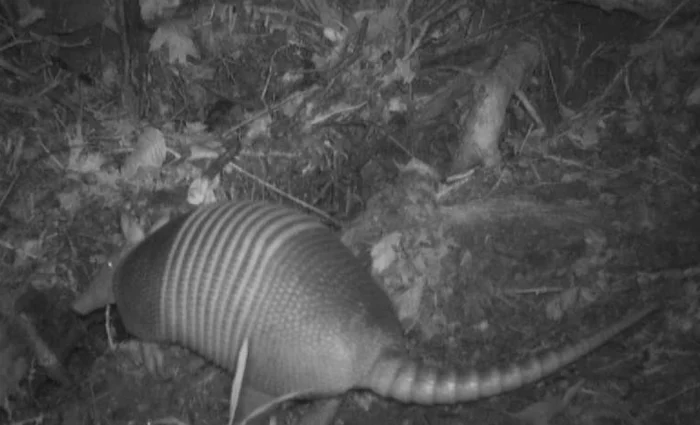
In 2023, we reported on the appearance of armadillos as far north as Virginia. Now, they’re being found in Kentucky, which is seen as another indicator of rising temperatures in the region. For the Appalachia + Mid-South Newsroom, LPM’s Giselle Rhoden has more on how the species has made its way north from South America.
------
Our theme music is by Matt Jackfert. Other music this week was provided by Blue Dot Sessions, Hello June, Paul Loomis, Jeff Ellis and John Inghram.
Bill Lynch is our producer. Abby Neff is our associate producer. Our executive producer is Eric Douglas. Kelley Libby is our editor. Our audio mixer is Patrick Stephens. We had help this week from Folkways Editor Nicole Musgrave.
You can send us an email: InsideAppalachia@wvpublic.org.
You can find us on Instagram, Threads or here on Facebook.
Sign-up for the Inside Appalachia Newsletter!
Inside Appalachia is a production of West Virginia Public Broadcasting.
Add WVPB as a preferred source on Google to see more from our team

Last week, we aired the first part of an interview with a WVSU professor about what is AI. In the second part of that interview, we explore the best way to use AI to get what you want – while avoiding fabricated or false answers that seem real.
Continue Reading Take Me to More NewsDirect-to-consumer tests like full-body scans are marketed as a way to catch diseases early and establish a baseline. But there are financial, physical and psychological risks to all medical tests — and in some cases, not getting a test could be better for your health. From the Appalachia + Mid-South Newsroom, HealthQ hosts Cara Anthony and Blake Farmer speak with UCSF Cardiologist Dr. Rita Redberg.
Continue Reading Take Me to More NewsAluminum plates that helped keep astronauts on the Artemis II rocket safe won the first ever Coolest Thing Made In West Virginia competition.
Continue Reading Take Me to More NewsFor LGBTQ youth in Appalachia, estrangement from their families of origin can be a common and heartbreaking experience. So, some LGBTQ people rely on “chosen family." In Roanoke, Virginia, the culture of ballroom offers the safety and stability of family, along with traditions that are handed down — traditions like vogueing. Mason Adams reported this Folkways story, in collaboration with Brad Kutner and Kelley Libby.
Continue Reading Take Me to More News