Alert (March 14, 2026): Due to recent high winds, our radio/TV tower in Bethany is not operational. Our engineers are working to resolve the issue. Alert (March 11, 2026): Our TV translator in Flatwoods is experiencing technical issues. Our engineers are troubleshooting the problem and expect it to be down for a couple days.
Thank you for your patience.
This week, we meet the woman behind the popular TikTok account “Appalachian Forager.” She makes jam from pawpaws and jewelry from coyote teeth. Also, we sit in on a master class in foraging for wild mushrooms. And, when a West Virginia pastor got assigned to a new church, folks tried to warn him.
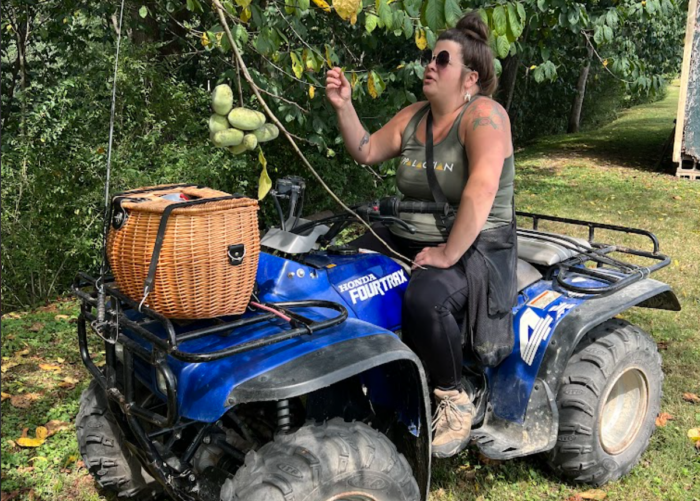
Johnson finds pawpaws on her family’s property in eastern Kentucky.
Photo Credit: Amanda Page/West Virginia Public Broadcasting
Here in central Appalachia, it’s spring planting season. Gardeners are dropping seeds in the ground, with hopes of a good harvest later this year. Folks in the mountains also gather food and medicine from the forest. Foraging is an acquired skill. It’s not easy to learn without someone to guide you. With the internet, it’s become a lot easier to meet folks in online communities devoted to mushroom hunting and using native plants. One woman in eastern Kentucky made a name for herself online as “Appalachian Forager.” And her videos have gone viral.
In 2024, Folkways Reporter Amanda Page visited Appalachian Forager and had this story.
Fun With Foraging For Fungi
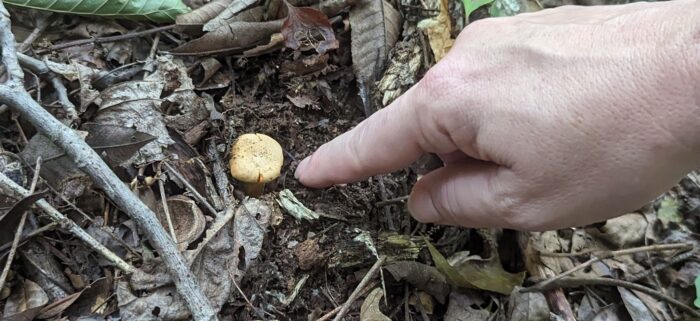
A single, ancient chanterelle on the forest floor proved to be the only mushroom found the day of the hunt.
Photo Credit: Wendy Welch/West Virginia Public Broadcasting
Along the Blue Ridge, it’s almost morel season. Mushroom hunting has always been a part of Appalachian culture, but in recent years, it’s become almost an obsession for some. In 2023, Folkways Reporter Wendy Welch spent time with fungi enthusiasts in Virginia and West Virginia. She brought us this story.
Kentucky Meat Shower
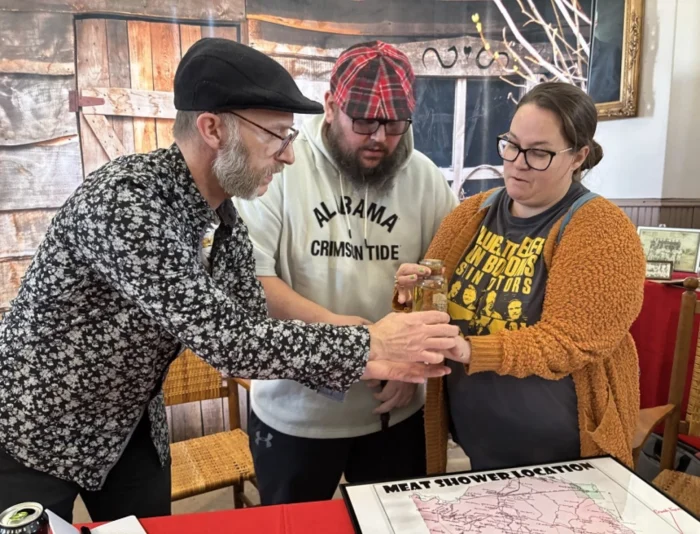
Professor Kurt Gohde, Billy Dawson and Keisha Fielden hold the jar of meat.
Photo Credit: Cheri Lawson/WEKU
We celebrate all kind of things in the lead-up to spring. There’s Groundhog Day, Mardis Gras and St. Patrick’s Day. And then one you probably haven’t heard of. The people of Bath County, Kentucky celebrate an odd bit of history. In 1876, pieces of meat fell out of the sky and onto a farm. A hundred and fifty years later, why that happened is still a mystery.
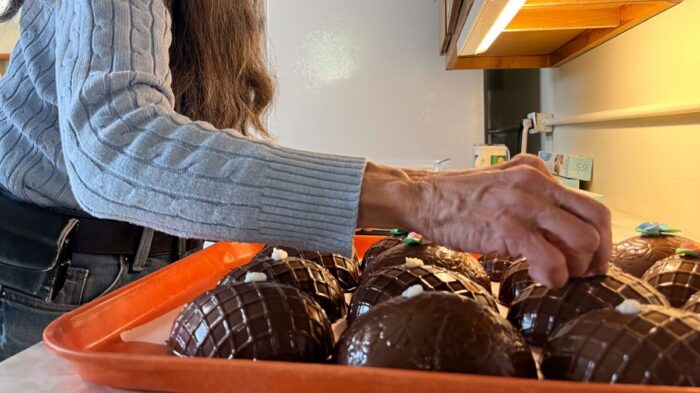
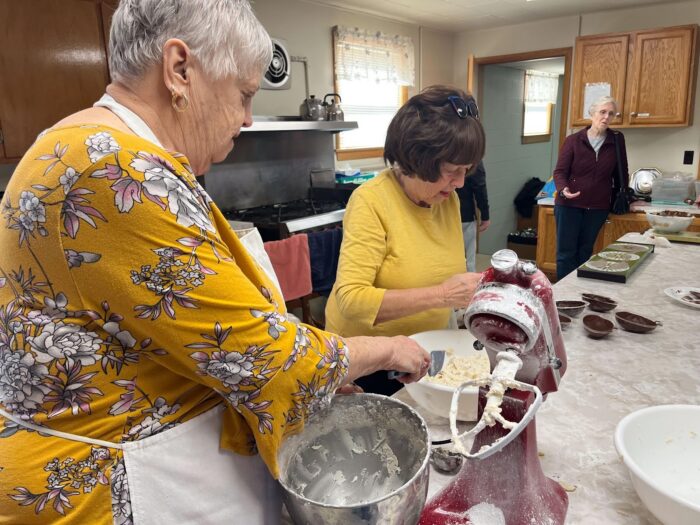
Nadene Holt mixes egg filling while fellow volunteer Nancy Bain stuffs it into coated egg molds.
Photo Credit: Zack Harold/Daily Yonder
A lot of holidays have their own particular kind of candy. At Christmas, you have candy canes. Valentine’s Day has those conversation hearts with sayings on them, like “XOXO” or “Be mine.” At Easter, you might be thinking chocolate bunnies (you’d be right), but it’s also the time of year when you find those big chocolate eggs. Some regional churches sell them before the holiday. One West Virginia church has become known far and wide for its chocolate eggs.
Last year, Zack Harold reported this story for the Rural Remix podcast from the Center for Rural Strategies.
Black Bears Eating Trash In West Virginia
Warm weather brings out critters, which can be a problem. And while people in cities often get their trash picked up at the curb, folks who live in more rural places have to haul it to dumpster sites. Those sites are destinations not just for folks hauling trash, but also for bears seeking an easy meal. Now, some places have made moves to keep the bears out of the trash, which also helps keep them alive.
WVPB’s Eric Douglas has more.
Humans Letting Black Bears Eat Trash In Virginia
In Virginia, some localities have tried using bear boxes but found they can’t seem to train people to use them right, like in Floyd County. Mason Adams reported this story for WVTF.
The Sweet Taste Of Syrup In Virginia And West Virginia
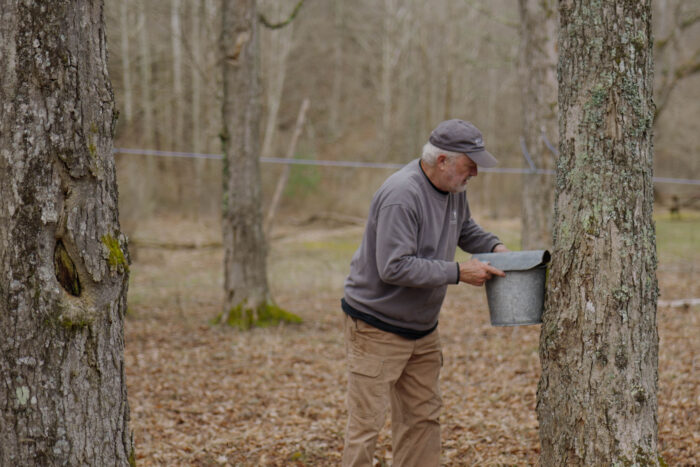
Pat Lowry checks for sap in buckets.
Photo Credit: Clara Haizlett/West Virginia Public Broadcasting
Temperatures this time of the year can be hard to pin down. We have warm days and then a bitter cold snap. This back and forth, which drives sap up and down maple trees, is how we get syrup.
Highland County, Virginia, and its neighbors in West Virginia, are some of the southernmost places in the U.S. to make maple syrup.
Generations of people in these communities have turned tapping trees for syrup into a longstanding tradition, but modern producers are experimenting with new syrups while adapting to changing demands, and a changing climate.
From our Folkways archives, we bring you this story from Clara Haizlett.
——
Our theme music is by Matt Jackfert. Other music this week was provided by Ron Mullennex and Gerry Milnes, John Inghram, Tim and Dave Bing, Jeff Ellis and Hello June.
Bill Lynch is our producer. Abby Neff is our associate producer. Our executive producer is Eric Douglas. Kelley Libby is our editor. Our audio mixer is Patrick Stephens. We had help this week from Folkways Editors Jennifer Goren, Chris Julin, Nicole Musgrave and Mallory Noe-Payne.
You can send us an email: InsideAppalachia@wvpublic.org.
Two films shot and produced on location in West Virginia are at and near the top of this week's list of most popular films on the streaming service Netflix.
Around this time of the year, some area churches get into the business of selling chocolate Easter eggs. These are the kind of eggs that have some weight to them. But one West Virginia church has become known far and wide for its chocolate eggs.
The West Virginia Department of Agriculture earlier this month issued an advisory to poultry owners about the rising number of avian flu cases in surrounding states. So far, it has infected only a small number of poultry farms in West Virginia. But in nearby Pittsburgh, the number of avian flu cases is high.