


Fourth Annual Women Warriors Summit To Feature High Profile Speakers
The fourth annual Women Warriors Summit will take place at the Marshall Health Network Arena in Huntington on Friday, Oct. 23, 2026.
Continue Reading Take Me to More NewsAlert (09/29/2026): Our Parkersburg TV transmitter is still undergoing maintenance and remains temporarily inoperative. We apologize for the inconvenience.
All our programming is available via our TV livestreams on our website and WVPB Passport. Thank you for your patience!




To Educate, Inform, and Inspire by Telling West Virginia's Story

Mountain Readers 2026 has concluded! Please fill out our volunteer post-survey.
Nominate an exceptional West Virginia K-12 teacher today!

On Demand

On Demand

Stream original productions from WVPB

Watch locally produced documentaries & more.

On Demand

On Demand






West Virginia Morning

Inside Appalachia

West Virginia Week

Mountain Stage

Us & Them

The Legislature Today

The Legislature This Week

Send us your comments and questions.

Stream our board meetings.

Check out the latest WVPB news.

Sign up for our newsletter and get weekly updates.

Meet the WVPB staff.

WV Educational Broadcasting Commission, the WVPB Foundation, and the Friends of WVPB.

Come work with us!

Read our annual report and learn how we educate, inform and inspire with your support.

Sponsor impactful and engaging media and entertainment.

Use your IRA to make a gift to WVPB.

Become a member with your gift of $1,000 or more.

Make WVPB part of your legacy.

Manage your membership account.

Learn how you can Protect and Sustain West Virginia Public Broadcasting.
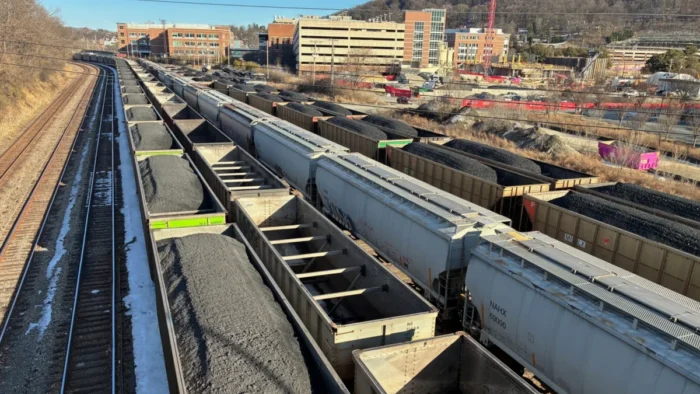
Coal power can be expensive. Utilities run coal-fired power plants harder in the winter and summer when demand is high.
Also, two films made in West Virginia shot to the top of Netflix’s streaming charts. The state wants to encourage even more movies to be made in West Virginia by helping keep production costs down.
And, an Eastern Kentucky pharmacist serves vegan food for the holidays.
You’ll hear these stories and more this week, Inside Appalachia.
In This Episode:
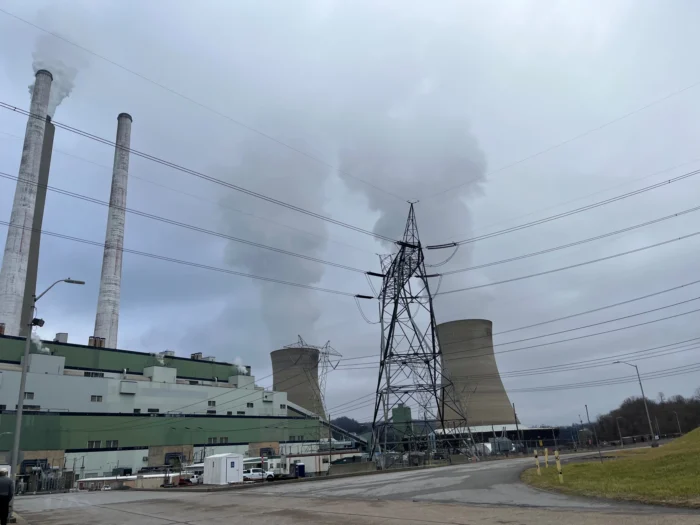
Lawmakers across the country are talking about affordability, especially when it comes to rising power bills. But states are taking different approaches to make that happen. Virginia is pushing for more renewable energy, while West Virginia lawmakers are trying to keep coal plants open.
Host Mason Adams teamed up with Radio IQ reporter Roxy Todd. They talked with economists, politicians and ratepayers to try to learn why tensions between the two Virginias may be driving up costs.
More states are using cameras to aid police and other law enforcement agencies. In Tennessee, state police are exploring the idea of pairing cameras with artificial intelligence (AI) facial recognition software. That’s according to public records obtained by the Appalachia + Mid-South Newsroom. But that technology also comes with privacy concerns.
Managing Editor Ryan Van Velzer spoke with reporters Pierce Gentry and Justin Hicks to learn more.
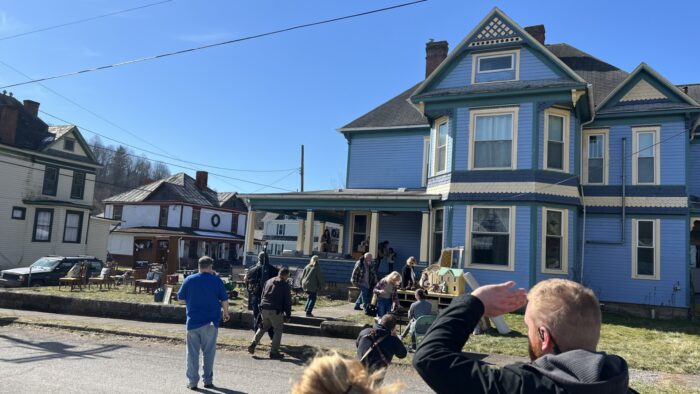
It’s always exciting to recognize parts of Appalachia in movies. Today, more and more films and TV shows shot in Appalachia are turning up on streaming services. In March, two films shot in West Virginia made the Netflix Top Ten list for movies streamed in the U.S. And it’s not just the state’s geography that’s a draw for filmmakers.
WVPB’s Maria Young has more.
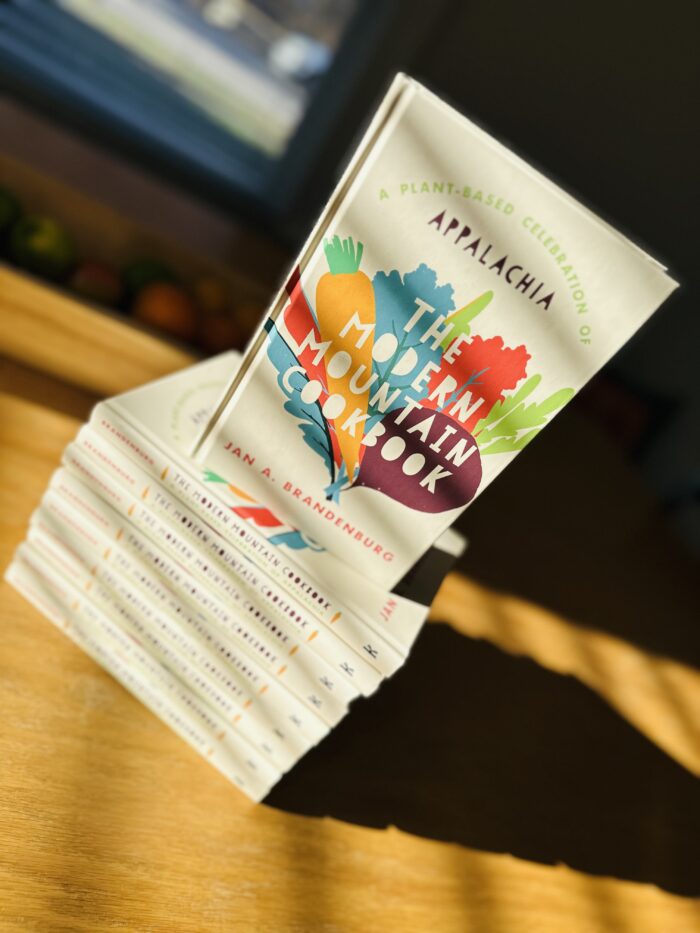
When you think of “Appalachian cooking,” what comes to mind? For a lot of folks, it’s savory comfort foods like biscuits with sausage gravy, crispy fried chicken and mashed potatoes loaded with butter. But, what about folks who want comfort food without involving animals? Jan Brandenburg is a pharmacist and poet in Eastern Kentucky. Over the last 30 years, she’s perfected recipes that take a plant-based approach to the Appalachian table.
Last spring, Bill Lynch spoke with Brandenburg about her new book The Modern Mountain Cookbook: A Plant-Based Celebration of Appalachia.
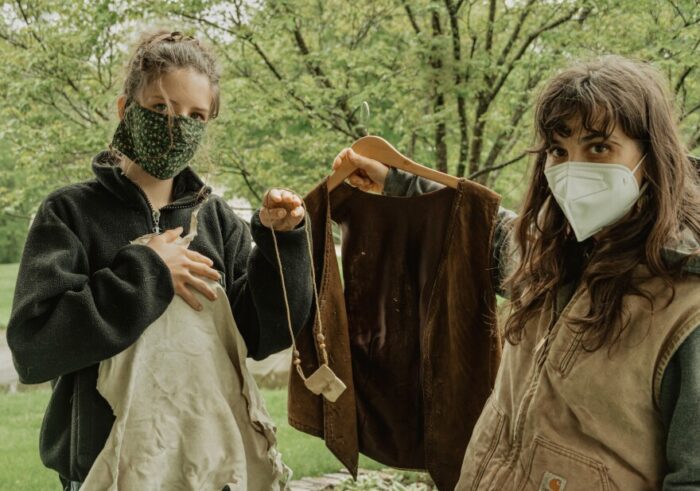
Tanning hides for clothes, blankets, shoes – for all kinds of things – goes back millennia. But over the years, some tanning techniques have become less common, like brain tanning.
As it turns out, women in Appalachia are reclaiming the practice. In 2020, Clara Haizlett, a brain tanner herself, brought us this Folkways story.
------
Our theme music is by Matt Jackfert. Other music this week was provided by Hello June, Dinosaur Burps, Blue Dot Sessions and John Inghram.
Bill Lynch is our producer. Abby Neff is our associate producer. Our executive producer is Eric Douglas. Kelley Libby is our editor. Our audio mixer is Patrick Stephens. We had help this week from guest editor Andrea “River” Peterson and Folkways Editor Nicole Musgrave.
You can send us an email: InsideAppalachia@wvpublic.org.
You can find us on Instagram, Threads and on Facebook.
Sign-up for the Inside Appalachia Newsletter!
Inside Appalachia is a production of West Virginia Public Broadcasting.

Add WVPB as a preferred source on Google to see more from our team

The fourth annual Women Warriors Summit will take place at the Marshall Health Network Arena in Huntington on Friday, Oct. 23, 2026.
Continue Reading Take Me to More NewsThe West Virginia Mine Wars Museum is getting a sizable donation from retired union leader Cecil Roberts.
Continue Reading Take Me to More NewsWith the midterm elections approaching, Us & Them host Trey Kay takes the Dinner Party to Huntington, where eight West Virginians from different generations and political perspectives gather around the table. Half the guests are under 30, and while they disagree on immigration, foreign policy, the media and the direction of the country, they also discover some unexpected common ground.
Continue Reading Take Me to More NewsAs we’re counting down to the midterm election, Us & Them host Trey Kay has invited a new group of guests to a Dinner Party – but this time, the table is in Huntington. Kay’s guests are a mix of conservative and progressive voters, half of whom are under 30 and they share a wide-ranging conversation over a potluck meal. We listen to an excerpt from this episode where a number of guests weigh in on immigration.
Continue Reading Take Me to More News