


Aluminum Plates For Deep Space Win W.Va. 'Coolest' Contest
Aluminum plates that helped keep astronauts on the Artemis II rocket safe won the first ever Coolest Thing Made In West Virginia competition.
Continue Reading Take Me to More NewsAlert (09/29/2026): Our Parkersburg TV transmitter is still undergoing maintenance and remains temporarily inoperative. We apologize for the inconvenience.
All our programming is available via our TV livestreams on our website and WVPB Passport. Thank you for your patience!




To Educate, Inform, and Inspire by Telling West Virginia's Story
Mountain Readers Week will be held Oct. 5-9, 2026! Celebrate and foster a love of reading in children across West Virginia.
Nominate an exceptional West Virginia K-12 teacher today!

On Demand

On Demand

Stream original productions from WVPB

Watch locally produced documentaries & more.

On Demand

On Demand






West Virginia Morning

Inside Appalachia

West Virginia Week

Mountain Stage

Us & Them

The Legislature Today

The Legislature This Week

Send us your comments and questions.

Stream our board meetings.

Check out the latest WVPB news.

Sign up for our newsletter and get weekly updates.

Meet the WVPB staff.

WV Educational Broadcasting Commission, the WVPB Foundation, and the Friends of WVPB.

Come work with us!

Read our annual report and learn how we educate, inform and inspire with your support.

Sponsor impactful and engaging media and entertainment.

Use your IRA to make a gift to WVPB.

Become a member with your gift of $1,000 or more.

Make WVPB part of your legacy.

Manage your membership account.

Learn how you can Protect and Sustain West Virginia Public Broadcasting.
This week, the woman behind the popular TikTok account “Appalachian Forager” makes jam from wild pawpaws … and jewelry from coyote teeth.
We also talk with the hosts of a new podcast that looks at coal dust exposure beyond the mines, affecting people far downstream from Appalachia.
And, in some places, slavery continued in different forms well after the end of the Civil War. A new marker in Western North Carolina acknowledges that history and commemorates a disaster that killed 19 Black prisoners.
You’ll hear these stories and more this week, Inside Appalachia.
In This Episode:
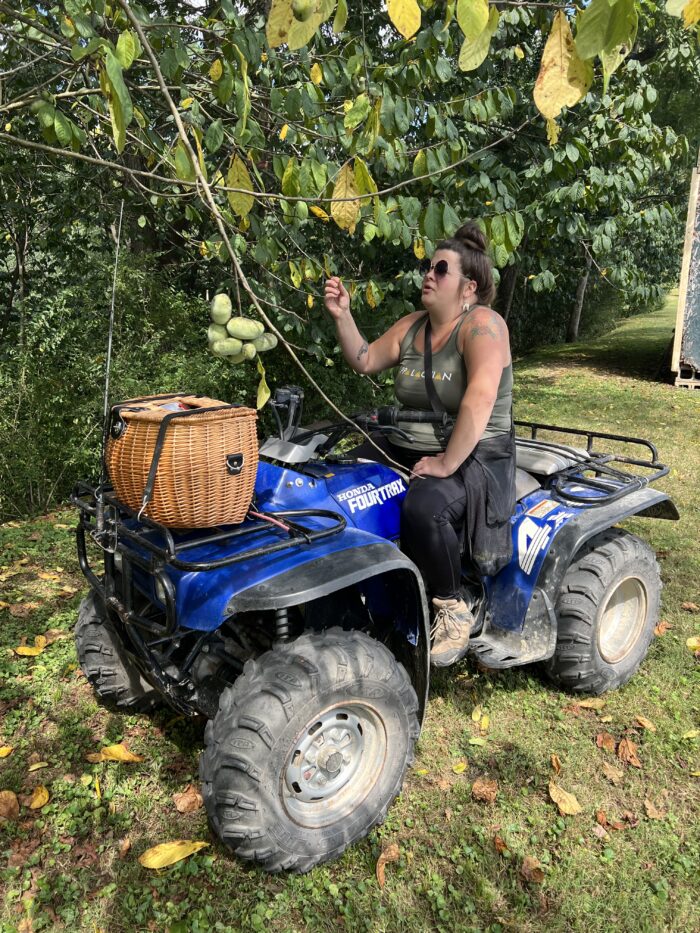
Gathering wild foods has long been a way to put food on the table in the Appalachian mountains. In recent years, the practice has gone digital, with online communities devoted to foraging in the wild, springing up like wild mushrooms after a spring rain.
One woman in eastern Kentucky is sharing what she knows (and some humor) with the TikTok generation through an account called “Appalachian Forager.”
Folkways Reporter Amanda Page has the story.
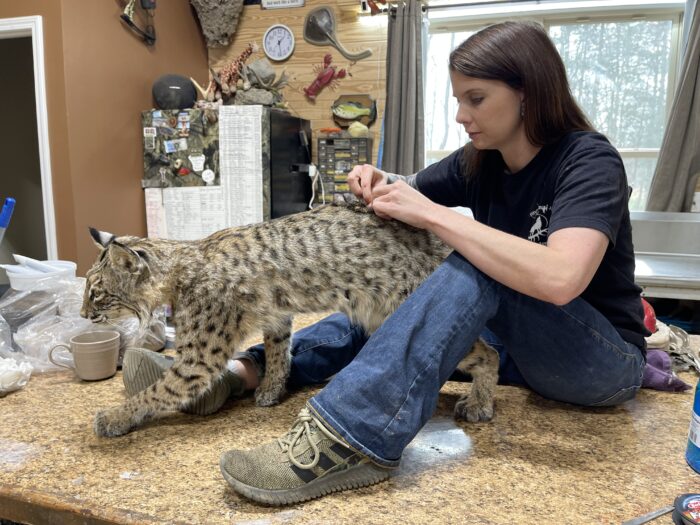
A lot of folks are fascinated by the results of taxidermy. The preservation and mounting of dead animals has been around since at least the middle ages.
In 2023, Folkways Reporter Margaret McLeod Leef visited a modern practitioner in Yadkin County, North Carolina.
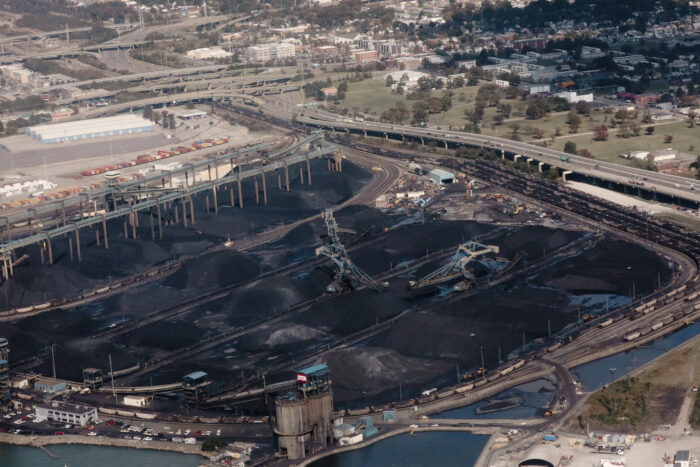
Appalachia plays an important part in the world economy. The region produces less coal than it used to — but it’s still a hot commodity for steel makers. That demand creates problems for people living near the terminals where coal is moved from train to ship, to then be carried overseas. Residents of Norfolk and Newport News, Virginia, say airborne coal dust from export terminals is coating their cars and houses — and getting into their lungs.
A new podcast called Crosswinds links that fight on the coast to communities in West Virginia.
Host Mason Adams spoke with spoke with Crosswinds producer Adrian Wood, and Lathaniel Kirts, a pastor and activist in one of the affected communities.

North Carolina is unveiling a roadside historical marker that officially acknowledges the 1882 Cowee Tunnel disaster. Nineteen prisoners were drowned when their boat capsized in a river west of Asheville.
The marker also acknowledges a form of de facto slavery, used for decades following the Civil War. We heard from Jay Price at WUNC.
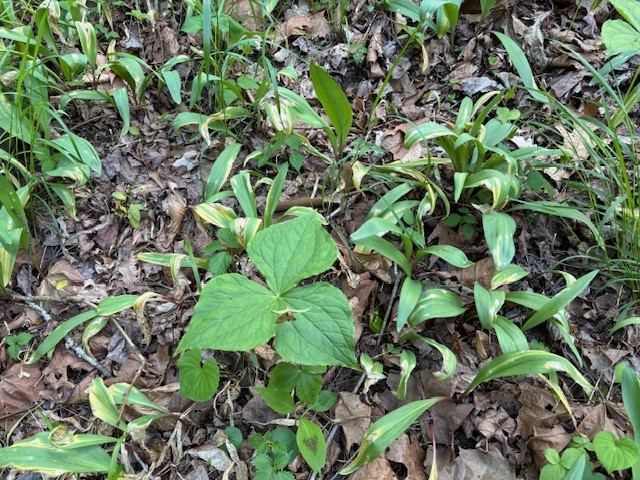
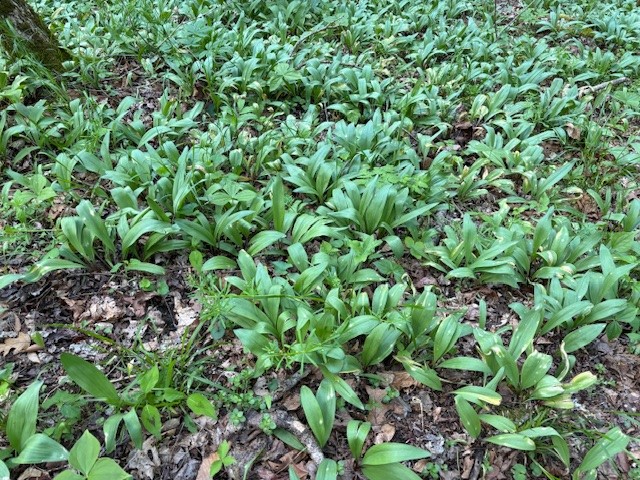
Ramp season is winding down in central Appalachia, but before the last ramp was picked, Producer Bill Lynch followed a friend out for a late harvest at her secret ramp patch.
------
Our theme music is by Matt Jackfert. Other music this week was provided by Tyler Childers, Sierra Ferrell, Bob Thompson, Dinosaur Burps and Tim Bing.
Bill Lynch is our producer. Zander Aloi is our associate producer. Our executive producer is Eric Douglas. Kelley Libby is our editor. Our audio mixer is Patrick Stephens. We had help this week from folkways editor Jennifer Goren.
You can send us an email: InsideAppalachia@wvpublic.org.
You can find us on Instagram, Threads and Twitter @InAppalachia. Or here on Facebook.
Sign-up for the Inside Appalachia Newsletter!
Inside Appalachia is a production of West Virginia Public Broadcasting.
Add WVPB as a preferred source on Google to see more from our team

Direct-to-consumer tests like full-body scans are marketed as a way to catch diseases early and establish a baseline. But there are financial, physical and psychological risks to all medical tests — and in some cases, not getting a test could be better for your health. From the Appalachia + Mid-South Newsroom, HealthQ hosts Cara Anthony and Blake Farmer speak with UCSF Cardiologist Dr. Rita Redberg.
Continue Reading Take Me to More NewsAluminum plates that helped keep astronauts on the Artemis II rocket safe won the first ever Coolest Thing Made In West Virginia competition.
Continue Reading Take Me to More NewsFor LGBTQ youth in Appalachia, estrangement from their families of origin can be a common and heartbreaking experience. So, some LGBTQ people rely on “chosen family." In Roanoke, Virginia, the culture of ballroom offers the safety and stability of family, along with traditions that are handed down — traditions like vogueing. Mason Adams reported this Folkways story, in collaboration with Brad Kutner and Kelley Libby.
Continue Reading Take Me to More NewsMountain Stage is changing locations for its final two live events of 2026. The Sunday, Nov. 15 show will now take place at the Charleston Theater at the Convention Center, and the Sunday, Dec. 6 show will be held at the Capitol Theater in Downtown Charleston.
Continue Reading Take Me to More News