More than 3,000 pumpkins decorate the Pumpkin House in Kenova, an event that has turned into a community carnival but started out with five simple carved pumpkins.
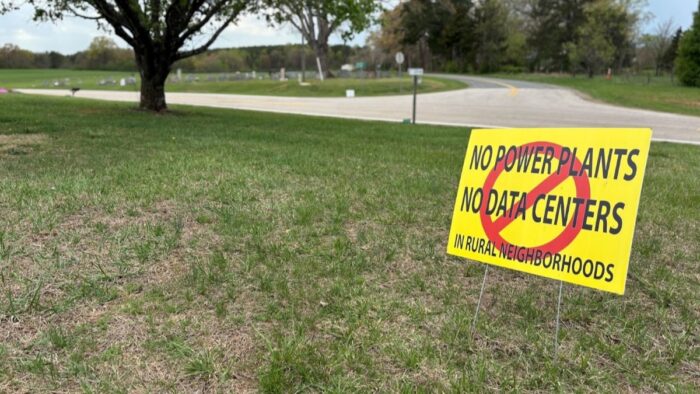
In 2025, Julia Tilton reported on Pittsylvania County, Virginia for the Daily Yonder, where residents organized against data center development. They held community meetings and launched an opposition campaign that included putting yard signs in their neighborhoods. Cornelius Lewis/Southern Environmental Law Center
Listen
Share this Article
Data centers are rapidly expanding into rural parts of Appalachia, and folks say they are having trouble finding information about these projects.
Also, artificial intelligence (AI) is disrupting human art, including fiber arts like crochet.
And, folks are pushing back, like they always have — with song.
You’ll hear these stories and more this week, Inside Appalachia.
This week, Host Mason Adams is talking about data centers with a special co-host: Julia Tilton. She’s an energy, technology and climate reporter who’s been covering AI and data centers in rural America for the past year and a half.
Adams: So, let’s start with the basics. What are data centers? And why are so many of them popping up now?
Tilton: Data centers are warehouse-like buildings that make the modern internet possible. They are filled with racks of servers that house our photo albums and support streaming services. But the reason that so many of them are popping up now is because of artificial intelligence. Training and running AI models requires data centers. So, as more AI is built and scaled up, more and much, much larger data centers are needed.
Adams: What do you mean by larger?
Tilton: The data centers being built today to power AI, are often referred to as hyperscale data centers. Campuses being built now can have multiple Walmart Supercenter-sized buildings.
Hyperscale Data Centers Provoke Bipartisan Outrage Across Kentucky
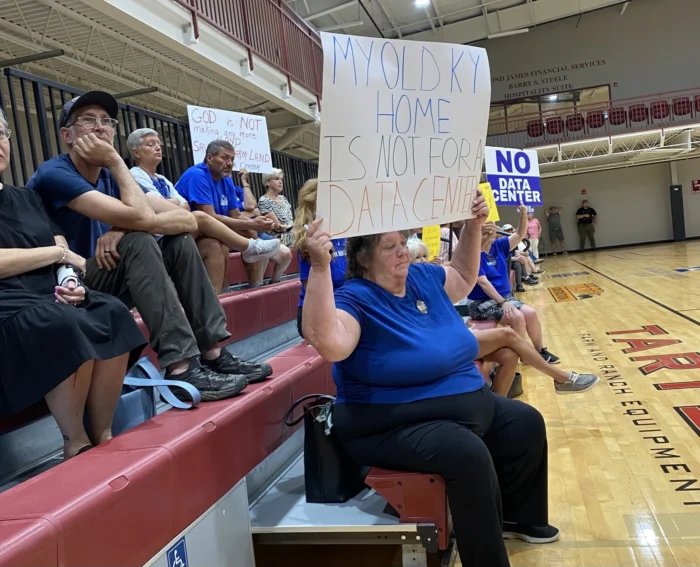
Mercer County residents hold up signs protesting a proposed data center at a planning and zoning commission meeting in Harrodsburg on July 30, 2026.
Country Roads News Covers Data Center Development W.Va. County
Dan Parks has been reporting on data center development in Tucker County, West Virginia. Parks writes a Substack called Country Roads News, which covers a rural county that’s home to Dolly Sods, Canaan Valley, Blackwater Falls and about 6,700 people.
Host Mason Adams spoke to Parks about his reporting.
Appalachian Musicians Are Protesting AI Through Song
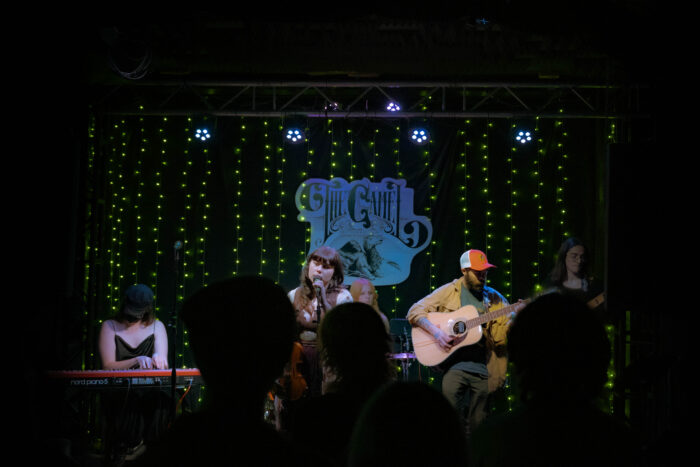
Betsy from Mars call themselves a climate justice folk-rock band.
Courtesy of Betsy from Mars
Appalachia has a rich history of protest music. Today, some regional musicians are using their voices to oppose data centers being built across Appalachia and the artificial intelligence they power.
Folkways Reporter Andrea “river” Peterson has more.
Noise Pollution From Gas-Powered Data Centers Rings Through Surrounding Communities
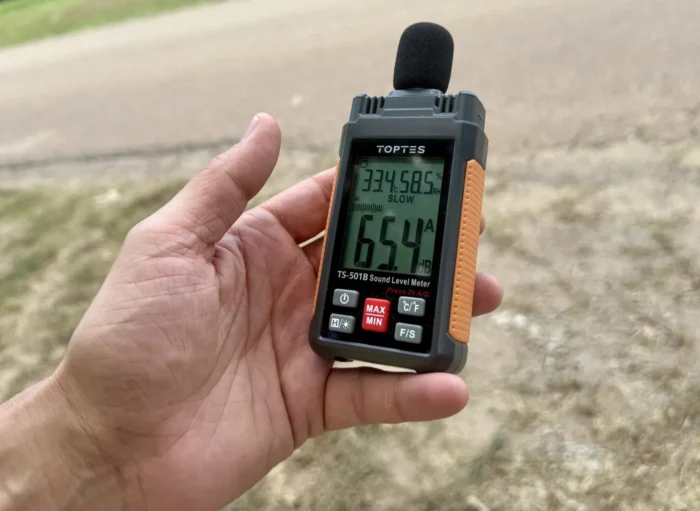
Jason Haley measures noise near xAI’s gas turbines in Southaven, Mississippi, on Aug. 14, 2026.
Photo Credit: Caroline Eggers/WPLN News
Noise pollution has become a growing issue for residents living near the Memphis-Mississippi border, home of Elon Musk’s huge xAI data center – that’s the one we just heard about with the polluting gas turbines. That campus runs Grok, the artificial intelligence chatbot for the social platform X.
The sounds and vibrations from data center complexes are penetrating surrounding towns — with very few regulations in the way and little public awareness about their harms. WPLN’s Caroline Eggers reports.
Crochet Community Tangled Up In Knotty AI Problem
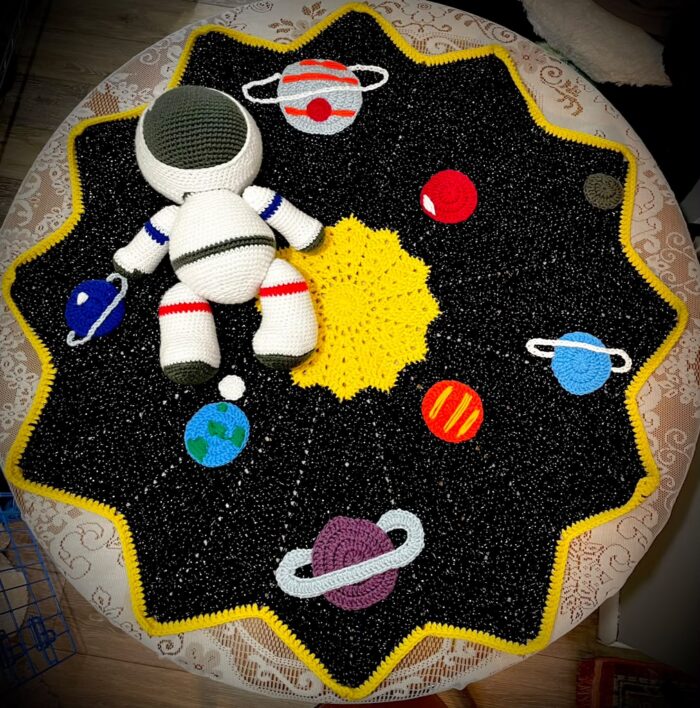
Kimberly Frye said crocheters with experience could make great art, but nobody could make “a fake robot hallucination” like AI patterns produce.
Courtesy of Kimberly Frye
AI proponents say the technology will revolutionize our lives. It’s also started a conversation about creativity and what’s really art. That applies to kinds of expression that seem to have nothing to do with machines, like crochet.
Folkways Reporter Wendy Welch brings us this story of how crocheters found AI invading their communal spaces and what they plan to do about it.
--
Our theme music is by Matt Jackfert. Other music this week was provided by Hello June, Betsy From Mars, Greg Wilder, McLaughlin Darling, Zack Harold and Blue Dot Sessions.
Bill Lynch is our producer. Abby Neff is our associate producer. Our executive producer is Eric Douglas. Irina Zhorov is our editor. Our audio mixer this week is Charlie Kaier. We had help this week from Folkways Editor Molly Born. Radio IQ’s Roxy Todd shared interviews and reporting.
You can send us an email: InsideAppalachia@wvpublic.org.
More than 3,000 pumpkins decorate the Pumpkin House in Kenova, an event that has turned into a community carnival but started out with five simple carved pumpkins.
On this West Virginia Week, urban cryptids get us into the Halloween spirit, a researcher revives forgotten musicians and a conversation with a journalist covering data center development.
The state's latest license plate features a total of nine mysterious creatures with ties to West Virginia locations, most prominently the Mothman and the Flatwoods Monster.
Inside Appalachia this week explores data centers and artificial intelligence (AI). As part of this special episode, host Mason Adams spoke with Dan Parks, a journalist who writes a Substack called Country Roads News. He's been covering data center development in Tucker County. We listen to an excerpt.