


Aluminum Plates For Deep Space Win W.Va. 'Coolest' Contest
Aluminum plates that helped keep astronauts on the Artemis II rocket safe won the first ever Coolest Thing Made In West Virginia competition.
Continue Reading Take Me to More NewsAlert (09/29/2026): Our Parkersburg TV transmitter is still undergoing maintenance and remains temporarily inoperative. We apologize for the inconvenience.
All our programming is available via our TV livestreams on our website and WVPB Passport. Thank you for your patience!




To Educate, Inform, and Inspire by Telling West Virginia's Story
Mountain Readers Week will be held Oct. 5-9, 2026! Celebrate and foster a love of reading in children across West Virginia.
Nominate an exceptional West Virginia K-12 teacher today!

On Demand

On Demand

Stream original productions from WVPB

Watch locally produced documentaries & more.

On Demand

On Demand






West Virginia Morning

Inside Appalachia

West Virginia Week

Mountain Stage

Us & Them

The Legislature Today

The Legislature This Week

Send us your comments and questions.

Stream our board meetings.

Check out the latest WVPB news.

Sign up for our newsletter and get weekly updates.

Meet the WVPB staff.

WV Educational Broadcasting Commission, the WVPB Foundation, and the Friends of WVPB.

Come work with us!

Read our annual report and learn how we educate, inform and inspire with your support.

Sponsor impactful and engaging media and entertainment.

Use your IRA to make a gift to WVPB.

Become a member with your gift of $1,000 or more.

Make WVPB part of your legacy.

Manage your membership account.

Learn how you can Protect and Sustain West Virginia Public Broadcasting.
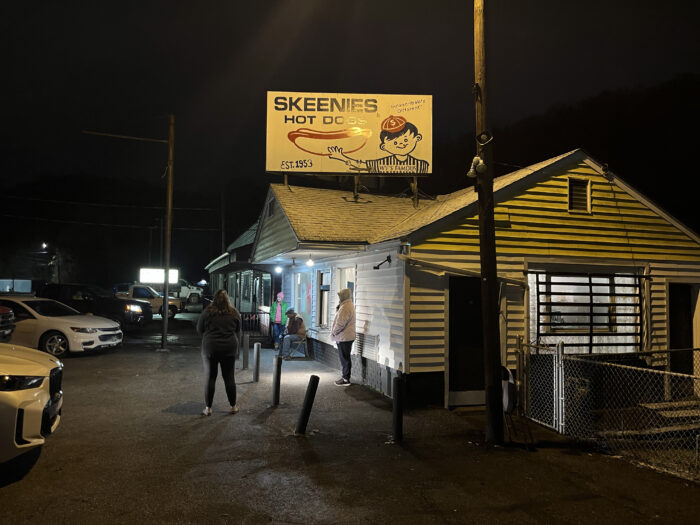
A beloved West Virginia hotdog restaurant closed in 2018. An annual tribute sale gives people a chance to relive its glory days.
Also, a West Virginia town can trace its beginnings to the first place its founders lived — a giant stump.
And, a few people still farm the way folks did before tractors — with horses.
You’ll hear these stories and more this week, Inside Appalachia.
In This Episode:
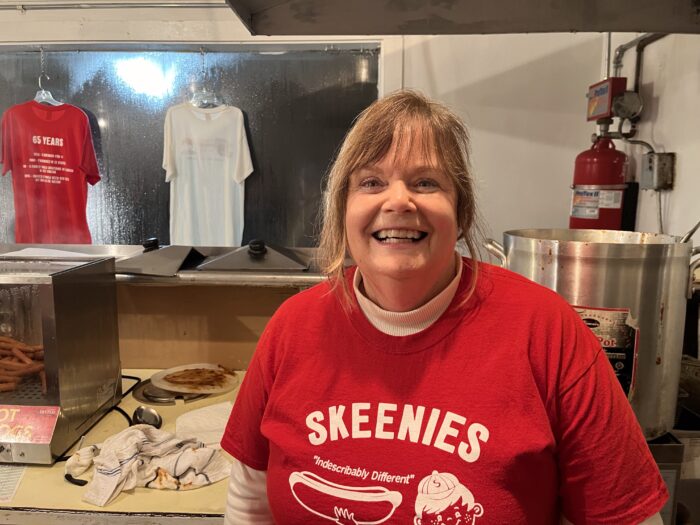
For generations, Skeenies Hot Dogs in Sissonville, West Virginia, was known for serving some of the best slaw dogs around.
The restaurant closed in 2018 — but still comes alive for the annual Skeenies Tribute Sale. Giving devoted Skeenies fans a few days to make up for lost time.
Folkways Reporter Zack Harold has this story.
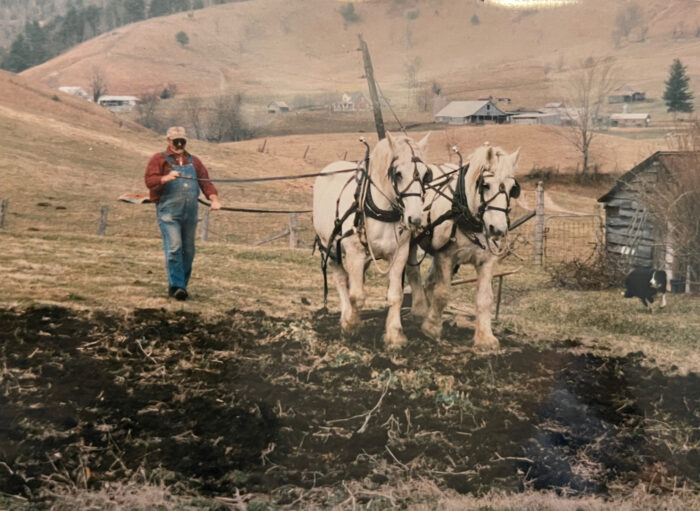
Before the tractor, farmers in Appalachia relied on workhorses to plow fields and pull their wagons. In southwestern Virginia, the practice has mostly disappeared, often along with the farms themselves. But some farmers? never let go of farming with a horse.
Folkways Reporter Connie Bailey Kitts has this story.
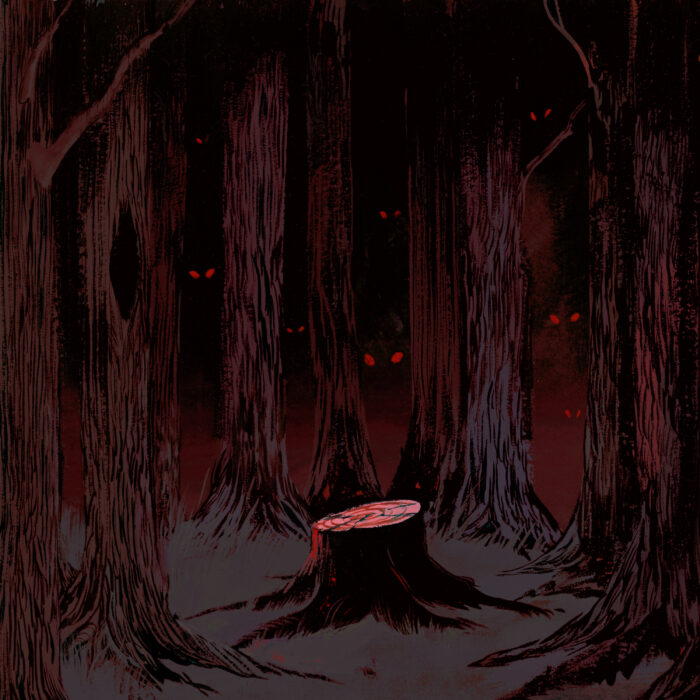
Host Mason Adams and his family are big fans of a podcast called Terrestrials, on Radiolab for Kids. In an episode last year, Terrestrials featured a piece of Revolutionary war history that led to the founding of a city in West Virginia. The story was part of an episode about stumps.
We hear from Terrestrials creator and host, Lulu Miller.

In 2022, nature artist Rosalie Haizlett set out on a trip to illustrate parts of the Appalachian Mountains that often get overlooked — that is, the tiny birds, reptiles and other critters hiding beneath leaves or up in the trees.
Her illustrations came together as Tiny Worlds of the Appalachian Mountains, an Artist’s journey. The book is full of colorful images and thoughts Haizlett recorded as she spent hours exploring the mountains.
Last fall, Producer Bill Lynch spoke with Haizlett about the book.
------
Our theme music is by Matt Jackfert. Other music this week was provided by Chris Stapleton, Sierra Hull, Steve Earle, Dinosaur Burps, Hazel Dickens, Harvey & Copeland, Tyler Childers and Blue Dot Sessions.
Bill Lynch is our producer. Abby Neff is our associate producer. Our executive producer is Eric Douglas. Kelley Libby is our editor. Our audio mixer is Patrick Stephens.
You can send us an email: InsideAppalachia@wvpublic.org.
You can find us on Instagram, Threads and X @InAppalachia. Or here on Facebook.
Inside Appalachia is a production of West Virginia Public Broadcasting.
Add WVPB as a preferred source on Google to see more from our team

Direct-to-consumer tests like full-body scans are marketed as a way to catch diseases early and establish a baseline. But there are financial, physical and psychological risks to all medical tests — and in some cases, not getting a test could be better for your health. From the Appalachia + Mid-South Newsroom, HealthQ hosts Cara Anthony and Blake Farmer speak with UCSF Cardiologist Dr. Rita Redberg.
Continue Reading Take Me to More NewsAluminum plates that helped keep astronauts on the Artemis II rocket safe won the first ever Coolest Thing Made In West Virginia competition.
Continue Reading Take Me to More NewsFor LGBTQ youth in Appalachia, estrangement from their families of origin can be a common and heartbreaking experience. So, some LGBTQ people rely on “chosen family." In Roanoke, Virginia, the culture of ballroom offers the safety and stability of family, along with traditions that are handed down — traditions like vogueing. Mason Adams reported this Folkways story, in collaboration with Brad Kutner and Kelley Libby.
Continue Reading Take Me to More NewsMountain Stage is changing locations for its final two live events of 2026. The Sunday, Nov. 15 show will now take place at the Charleston Theater at the Convention Center, and the Sunday, Dec. 6 show will be held at the Capitol Theater in Downtown Charleston.
Continue Reading Take Me to More News