


Aluminum Plates For Deep Space Win W.Va. 'Coolest' Contest
Aluminum plates that helped keep astronauts on the Artemis II rocket safe won the first ever Coolest Thing Made In West Virginia competition.
Continue Reading Take Me to More NewsAlert (09/29/2026): Our Parkersburg TV transmitter is still undergoing maintenance and remains temporarily inoperative. We apologize for the inconvenience.
All our programming is available via our TV livestreams on our website and WVPB Passport. Thank you for your patience!




To Educate, Inform, and Inspire by Telling West Virginia's Story
Mountain Readers Week will be held Oct. 5-9, 2026! Celebrate and foster a love of reading in children across West Virginia.
Nominate an exceptional West Virginia K-12 teacher today!

On Demand

On Demand

Stream original productions from WVPB

Watch locally produced documentaries & more.

On Demand

On Demand






West Virginia Morning

Inside Appalachia

West Virginia Week

Mountain Stage

Us & Them

The Legislature Today

The Legislature This Week

Send us your comments and questions.

Stream our board meetings.

Check out the latest WVPB news.

Sign up for our newsletter and get weekly updates.

Meet the WVPB staff.

WV Educational Broadcasting Commission, the WVPB Foundation, and the Friends of WVPB.

Come work with us!

Read our annual report and learn how we educate, inform and inspire with your support.

Sponsor impactful and engaging media and entertainment.

Use your IRA to make a gift to WVPB.

Become a member with your gift of $1,000 or more.

Make WVPB part of your legacy.

Manage your membership account.

Learn how you can Protect and Sustain West Virginia Public Broadcasting.

During a pandemic, where do you give birth?
Also, we’ll have the story of a family that cultivated an heirloom tomato in West Virginia. It took a lot of work.
And, a musical tradition brought people together — even when they couldn’t gather in person.
You’ll hear these stories and more this week, Inside Appalachia.
In This Episode:
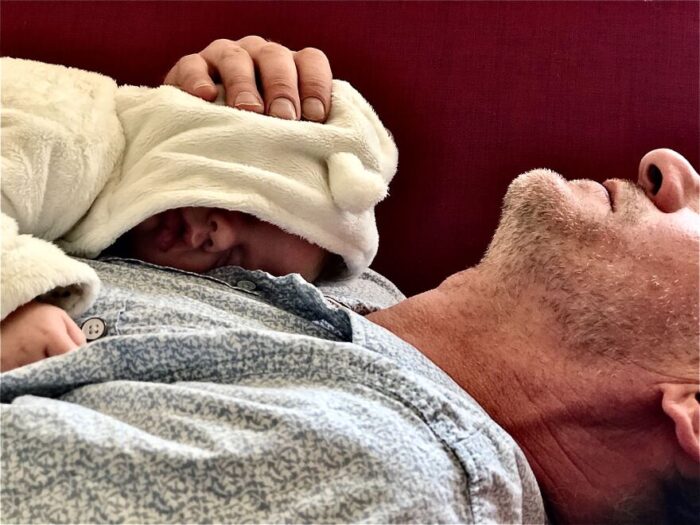
In June of 2020, former West Virginia Public Broadcasting videographer Chuck Kleine and Pennsylvania resident Joe Buckland recorded their experiences with having children during the pandemic.
Buckland and his wife had a baby in mid-February, nearly a month before the lockdowns.
Kleine and his wife, Glynis Board, WVPB’s assistant news director at the time, had a baby in March, about a week after most staff were sent home.
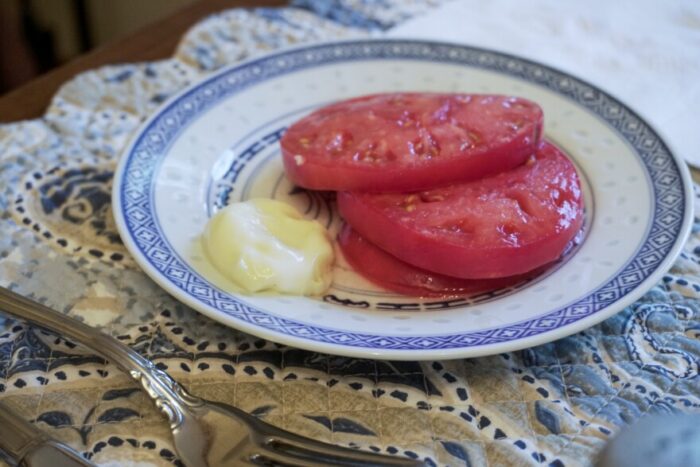
One of Inside Appalachia Host Mason Adam’s friends hates tomatoes — but started growing them in 2020 because he “wanted to be part of it.” It being growing a garden, complete with a swath of heirloom tomatoes. Like a variety called Radiator Charlie’s Mortgage Lifter tomato. This heirloom breed got its start in Logan County, West Virginia.
A guy known as Radiator Charlie bred two varieties of tomato together to get a giant, juicy fruit. Word spread, and eventually so many people bought his $1 tomato plants that he was able to pay off his house. That’s how the “mortgage lifter” got its name.
But in 2020, Folkways Reporter Zack Harold brought us a story about another West Virginia tomato plant, also called “mortgage lifter.” And it’s even older.
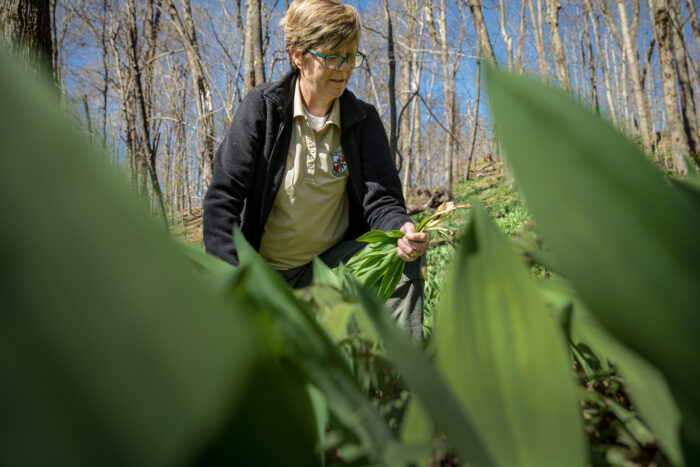
A lot of big events were canceled in 2020 — high school proms, baseball games, and even family reunions — but some annual traditions would not be stopped. Like foraging for ramps.
People still went out to their favorite ramp patches in early spring. In 2020, we aired this story of a ramp-hunting expedition, led by Maryland park ranger Caroline Blizzard.
Photographer and filmmaker Michael Snyder tagged along to record her for “The Mountain Traditions Project.”

One of the oldest European musical traditions in Appalachia is shape note singing. It’s also called Sacred Harp singing. It’s sung acapella, often in large groups, with singers facing each other in a square.
Social distancing made shape note singing a lot harder, but a group figured out a way to continue to sing through the pandemic. Inside Appalachia Editor Kelley Libby — then a Folkways Reporter — filed this story in 2020.
------
Our theme music is by Matt Jackfert. Other music this week was provided by Jeff Ellis, John Inghram, Joe Dobbs and the 1937 Flood, Mary Hott and the Cornelius Eady Trio.
Bill Lynch is our producer. Abby Neff is our associate producer. Our executive producer is Eric Douglas. Kelley Libby is our editor. Our audio mixer is Patrick Stephens. We had help this week from Folkways Editors Chris Julin and Caitlin Tan.
You can send us an email: InsideAppalachia@wvpublic.org.
You can find us on Instagram, Threads and X @InAppalachia. Or here on Facebook.
Inside Appalachia is a production of West Virginia Public Broadcasting.
Add WVPB as a preferred source on Google to see more from our team

Direct-to-consumer tests like full-body scans are marketed as a way to catch diseases early and establish a baseline. But there are financial, physical and psychological risks to all medical tests — and in some cases, not getting a test could be better for your health. From the Appalachia + Mid-South Newsroom, HealthQ hosts Cara Anthony and Blake Farmer speak with UCSF Cardiologist Dr. Rita Redberg.
Continue Reading Take Me to More NewsAluminum plates that helped keep astronauts on the Artemis II rocket safe won the first ever Coolest Thing Made In West Virginia competition.
Continue Reading Take Me to More NewsFor LGBTQ youth in Appalachia, estrangement from their families of origin can be a common and heartbreaking experience. So, some LGBTQ people rely on “chosen family." In Roanoke, Virginia, the culture of ballroom offers the safety and stability of family, along with traditions that are handed down — traditions like vogueing. Mason Adams reported this Folkways story, in collaboration with Brad Kutner and Kelley Libby.
Continue Reading Take Me to More NewsMountain Stage is changing locations for its final two live events of 2026. The Sunday, Nov. 15 show will now take place at the Charleston Theater at the Convention Center, and the Sunday, Dec. 6 show will be held at the Capitol Theater in Downtown Charleston.
Continue Reading Take Me to More News