


The Old Louisville Demon Leaper’s Mischief In One Of America’s Largest Victorian Neighborhoods
In the late 1800s, tales of a creature that bounds between rooftops emerged in Old Louisville — The Demon Leaper.
Continue Reading Take Me to More NewsAlert (10/27/2026): Our 88.5 FM signal in Charleston is experiencing intermittent outages. Our engineers are working with our provider to find a solution. We apologize for the inconvenience.
Our radio livestream is available at wvpublic.org and through the WVPB app. Thank you for your patience.




To Educate, Inform, and Inspire by Telling West Virginia's Story

Mountain Readers 2026 has concluded! Please fill out our volunteer post-survey.

Nominate an exceptional West Virginia K-12 teacher today!

On Demand

On Demand

Stream original productions from WVPB

Watch locally produced documentaries & more.

On Demand

On Demand






West Virginia Morning

Inside Appalachia

West Virginia Week

Mountain Stage

Us & Them

The Legislature Today

The Legislature This Week

Send us your comments and questions.

Stream our board meetings.

Check out the latest WVPB news.

Sign up for our newsletter and get weekly updates.

Meet the WVPB staff.

WV Educational Broadcasting Commission, the WVPB Foundation, and the Friends of WVPB.

Come work with us!

Read our annual report and learn how we educate, inform and inspire with your support.

Sponsor impactful and engaging media and entertainment.

Use your IRA to make a gift to WVPB.

Become a member with your gift of $1,000 or more.

Make WVPB part of your legacy.

Manage your membership account.

Learn how you can Protect and Sustain West Virginia Public Broadcasting.

A new memoir explores the struggle to stay in Appalachia and the struggle to leave.
Also, an exhibit in Kings Mountain, North Carolina, documents the contributions of the Catawba Nation to the American Revolutionary War.
And, grab some sunscreen as we make a visit to the Nelsonville Music Festival in Ohio.
You’ll hear these stories and more this week, Inside Appalachia.
In This Episode:

Virginia writer Emilee Hackney has a complicated relationship with her home. She loves the place where she’s from, in Tazewell County — her friends, family, the swimming holes and mountains and wild places — but she also felt stifled. Her new memoir All That’s Unseen: An Appalachian Memoir explores this tension and her experience when she did leave.
Host Mason Adams spoke with Hackney about the book.

Appalachia loves its hotdogs. You can sometimes even clock where someone is from, based on how they eat their dogs — whether they get them with sauce, chili or coleslaw. Sometimes even how they’re cooked.
In 2021, Folkways Reporter and noted hotdog afficionado Zack Harold filed this story about Yann’s hotdogs in Fairmont, West Virginia, following the passing of its owner, Russell Yann.

This year, the Eastern Hellbender became Kentucky’s first-ever state amphibian. The mammoth salamander was once abundant along Appalachia’s waterways, but it’s struggled to maintain healthy populations amid climate change and human activity. In 2024, the U.S. Fish and Wildlife Service proposed listing the animal as endangered under the Endangered Species Act.
WKYU’s Hope Heffley has more on conservationists’ efforts to preserve the hellbender.
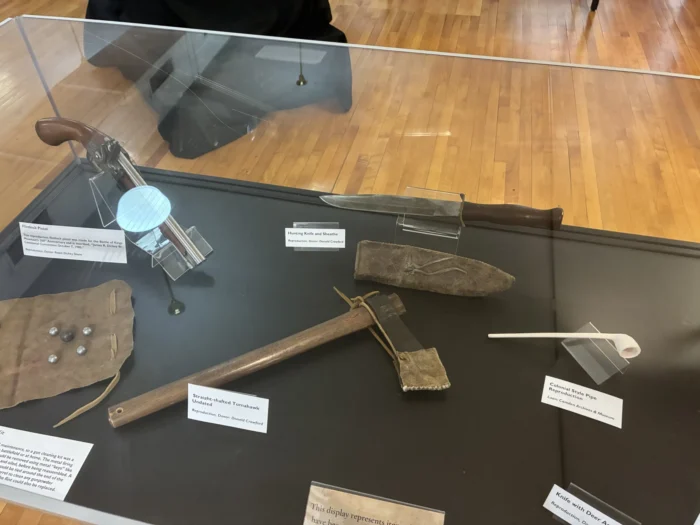
With the nation’s 250th birthday, there’s been a lot of remembrance of the War for Independence. Including the battles that took place in the South, in multiple states that make up Appalachia. In Kings Mountain, North Carolina, an exhibit highlights the role of the Catawba Nation in the Revolutionary War. The tribal group lived in the Charlotte area and supported the colonial army at almost every major battle and skirmish that took place in the South.
WFAE’s Marshall Terry reports.

As with other Appalachian states, Pennsylvania’s population is getting older. This will likely create new healthcare challenges. In the series “Designing Dignity,” WESA’s Kiley Koscinski visited Japan, a country with an aging population, to learn how it’s preparing.
This week, Koscinski explores chronic care, a major driver of healthcare spending. Japan has tried to reduce hospitalizations by providing care in the patient’s home, but a workforce shortage could threaten the program’s success.
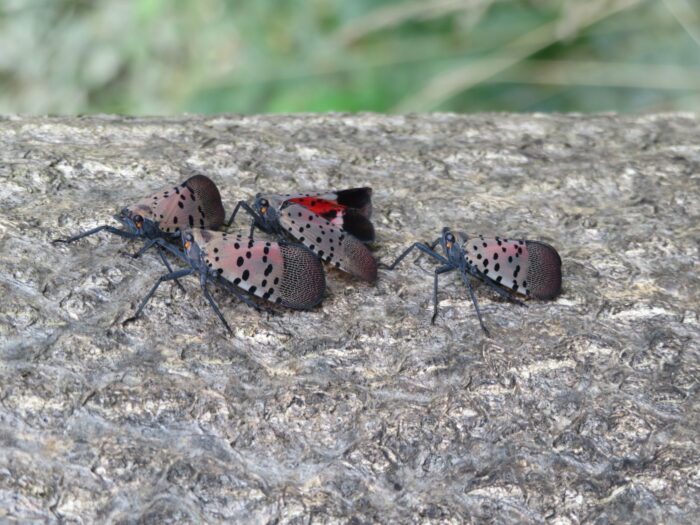
With its distinctive Dalmatian pattern and splash of red, the spotted lanternfly stands out as a threat to dozens of plants. The insect is well on its way to becoming one of the worst pests American agriculture has ever seen, with the potential to cause millions, perhaps billions of dollars in losses to crops.
WVPB’s Chris Schulz spoke with WVU Extension entomologist Carlos Quesada to learn more about the insect and how to stop its spread.

For more than 50 years, east Tennessee’s Connie Jordan Green has written everything from young adult novels to a long running newspaper column about gardening. Her poetry explores the natural world, living on a farm and growing up in a secret Tennessee city built during World War II.
Producer Bill Lynch spoke with Green about her childhood and her latest collection of poetry, Nameless as the Minnows.
This summer, the Nelsonville Music Festival in Southeast Ohio celebrated its 20th anniversary. The festival has functioned as a showcase, especially for bands from Ohio, the Ohio River Valley and greater Appalachia. This year’s lineup included performances from Wednesday, Geese, S.G. Goodman and others.
Associate Producer Abby Neff went to the festival.
--
Our theme music is by Matt Jackfert. Other music this week was provided by Blue Dot Sessions, Flatt and Scruggs, Tim Bing, Paul Loomis, John Inghram and Mary Hott and Hello June.
Bill Lynch is our producer. Abby Neff is our associate producer. Our executive producer is Eric Douglas. Irina Zhorov is our editor. Our audio mixer is Patrick Stephens. We had help this week from Folkways Editor Chris Julin.
You can send us an email: InsideAppalachia@wvpublic.org.
You can find us on Instagram, Threads or here on Facebook.
Inside Appalachia is a production of West Virginia Public Broadcasting.

Add WVPB as a preferred source on Google to see more from our team

From The Allegheny Front, a public radio program based in Pittsburgh, brings us their latest story on the return of black lung disease to Appalachian coal miners.
Continue Reading Take Me to More NewsIn the late 1800s, tales of a creature that bounds between rooftops emerged in Old Louisville — The Demon Leaper.
Continue Reading Take Me to More NewsAround campfires in Dickson County people tell passed-down tales of two local cryptids — one a werewolf and the other the White Bluff Screamer.
Continue Reading Take Me to More NewsSilas House is a prolific writer who is a vital voice in Appalachia. House’s new book is "The Tulip Poplars." It’s a sweeping novel that chronicles the lives of four people as they navigate friendship and forbidden love in 20th century Kentucky. Inside Appalachia Host Mason Adams recently spoke with House.
Continue Reading Take Me to More News