Alert (09/29/2026): Our Parkersburg TV transmitter is still undergoing maintenance and remains temporarily inoperative. We apologize for the inconvenience.
All our programming is available via our TV livestreams on our website and WVPB Passport. Thank you for your patience!
This week, ballroom culture offers LBGTQ folks a chance to be as fabulous as they want to be. Also, national media reports on the deaths of notable people, but small, hometown papers add a more personal touch. And, alpha-gal syndrome takes red meat off the menu, but what about ostrich?
Once a Foodie Fruit, Could Pawpaws Have Economic Impact in Appalachia?
Listen
Share this Article
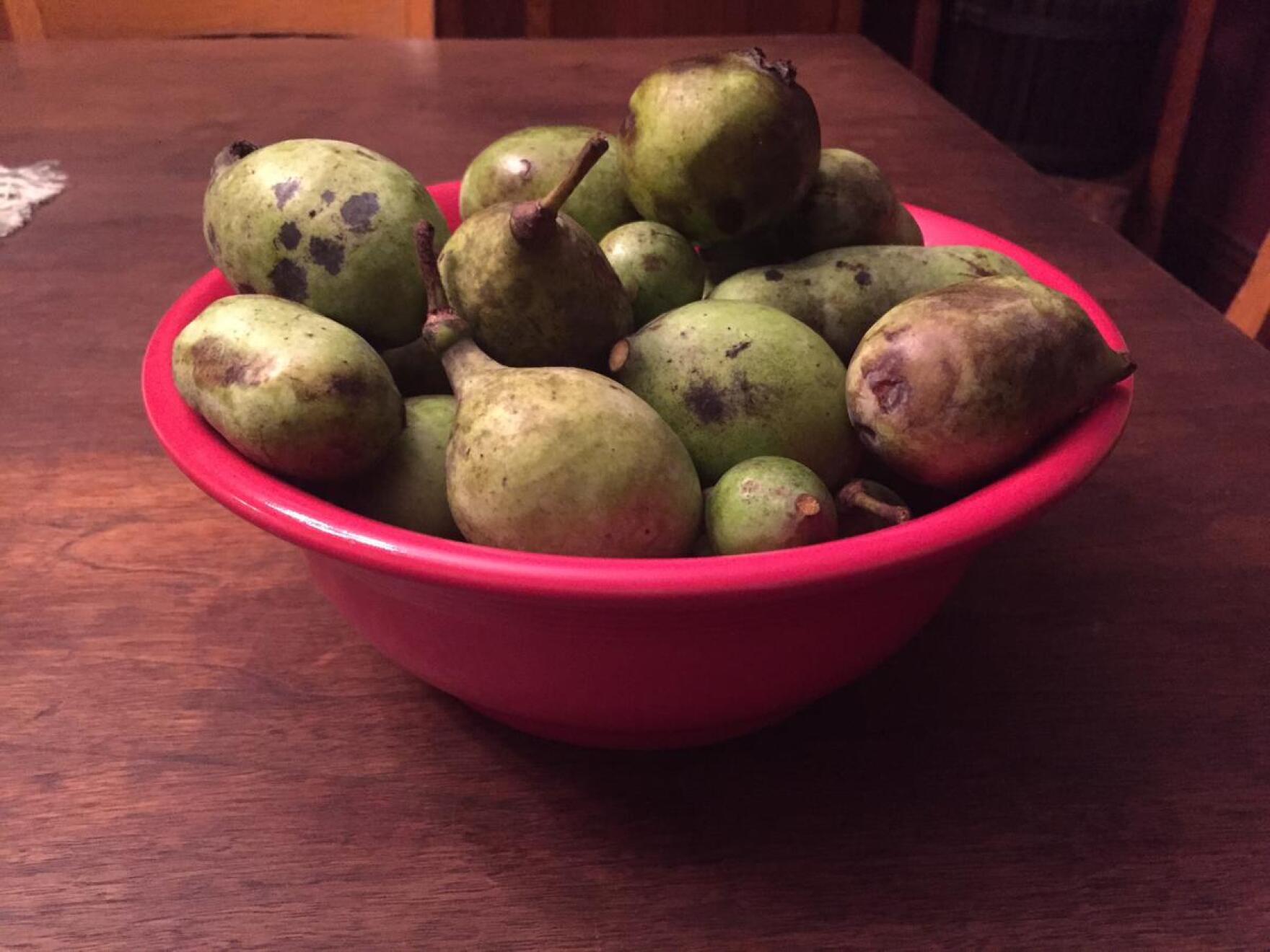
Those who’ve eaten a pawpaw before often say that the creamy, tropical fruit resembles a mix of a mango and a banana, or a mango and an avocado. They often can’t believe that the fruit is native to Appalachia.
“It’s creamy, but you get that tropical fruit taste,” said Katie Wight, a resident of Athens, Ohio, upon eating her first paw-paw. “It’s not really mango, but mango-papaya – that kind of genre.”
To the rest of the country, the pawpaw is little-known. It’s not commercially grown, in part because it’s so tricky to eat – it’s not ripe until it looks rotten on the outside, and ingesting the seeds or the skin causes some to fall ill. But the Appalachian fruit is showing potential.
Credit Anne Li/ WVPB
/
Katie Wight holding first pawpaw at the Ohio Pawpaw Festival
In Charleston, a locally-owned ice cream shop called Ellens Homemade Ice Cream increased its supply of pawpaw ice cream this fall due to increased demand. And every year, thousands flock to Athens, Ohio, to celebrate the Pawpaw Festival, where they can learn about the pawpaw and buy pawpaw art, saplings and raw pawpaws.
“At my place, a Belgian gentleman comes and buys all my seeds,” said one attendee who traveled from his home in the Netherlands for the eighteenth annual Pawpaw Festival this year. He spoke of the growing market for pawpaws in Europe. “Before that I threw them away but he pays me 15 cents a piece. I ask him (why) and he says he (uses it) for curing cancer.”
pawpaw teapot by artist, on display at the Ohio Pawpaw Festival
According to Andy Moore, a writer who recently published a book called Pawpaw: In Search of America’s Forgotten Fruit, pawpaws have been consumed in the United States for generations. Towns are named after the fruit, and folk songs, like “Way Down Yonder in the Pawpaw Patch,” have been written about them.
Writer Andy Moore in Phyllis, Kentucky at the Lucky Penny General Store. Credit courtesy Andy Moore
In the last few years, pawpaws have started to be cultivated on a very small scale. “People are growing them in orchards now, just like you would any other crop, which will hopefully give people more opportunity to taste it and experience it,” Moore said.
Credit courtesy Katie Wight
/
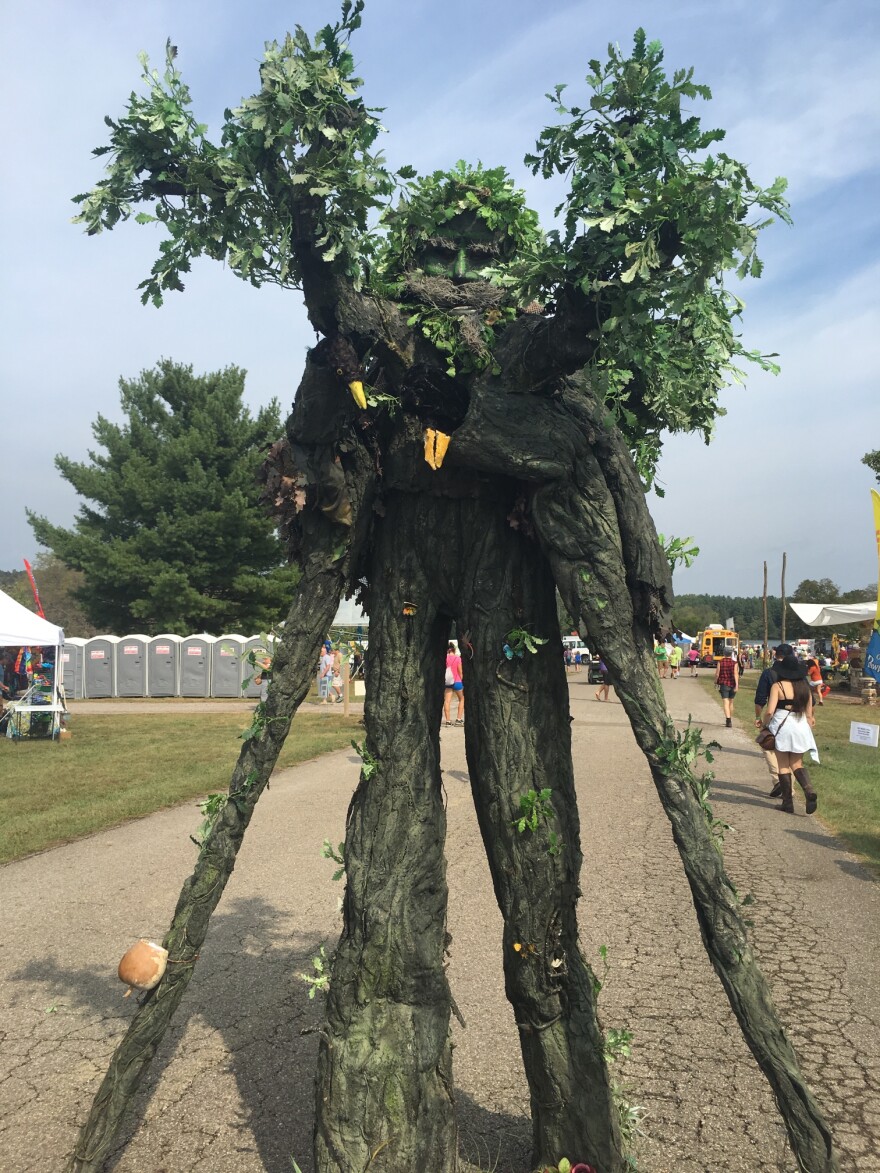
A man dressed as a tree was available to take photos with children at the Ohio Pawpaw Festival
Some pawpaw fans hope that pawpaws can be included in the forest farming or agroforestry movement, which means growing and harvesting crops like ramps or pawpaws in the forest that many West Virginians landowners own. Walt Helmick, the West Virginia Commissioner of Agriculture, says that they haven’t looked into pawpaws as a commercial fruit yet, even though they are unique to the Appalachian region.
“We need to see what we can do with agriculture in the forest more than we have in years gone by,” Helmick said.
Add WVPB as a preferred source on Google to see more from our team
This week, ballroom culture offers LBGTQ folks a chance to be as fabulous as they want to be. Also, national media reports on the deaths of notable people, but small, hometown papers add a more personal touch. And, alpha-gal syndrome takes red meat off the menu, but what about ostrich?
Local leaders continue to promote the state's aviation industry as the country continues to face a shortage of specialized workers including mechanics, technicians and air traffic controllers.
A specific style of ballroom dance is helping disenfranchised young people find community in Appalachia. In our latest episode of Inside Appalachia, we explore LGBTQ ballroom culture and community in Roanoke, Virginia. Mason Adams has this excerpt.
Steel stairs lead to the top of the Red Oak Fire Tower where there's a 14-foot square cabin with panoramic windows and a metal catwalk. There's electricity, but no water.





































 Writer Andy Moore in Phyllis, Kentucky at the Lucky Penny General Store.