Alert (09/10/2026): Our Parkersburg TV transmitter is undergoing maintenance for a few days and will not be operational. We apologize for any inconvenience.
All our programming is available via our TV livestreams on our website and WVPB Passport. Thank you for your patience!
News Director Eric Douglas sat down in a classroom studio with Marshall's Chuck Bailey, the student news director Emma Johnson, and the Director of the Marshall School of Journalism and Mass Communications Rob Quicke, to learn more.
Inside Appalachia Associate Producer Eric Douglas began his journalism career in Matewan, West Virginia nearly 30 years ago. He recently revisited the town and sat down with Inside Appalachia Host Jessica Lilly to discuss what has changed and efforts to revitalize the town with tourism.
The downturn of the coal industry hurt Matewan, like much of southern West Virginia. Government records show that there were 3,000 people working in coal mining 30 years ago in Mingo County, bringing in $130 million dollars in wages. Coal accounted for about one-third of all the jobs in the county and more than half of the total income.
Today there are about 1,300 people working in the coal mining industry in Mingo, and $107 million worth of income. Adjusting for inflation, that income level is less than half of what it was in 1991.
Douglas spoke to a number of people and visitors in the town to get their take on the efforts. David Hatfield owns the bed and breakfast in town.
Credit Eric Douglas / WVPB
/
WVPB
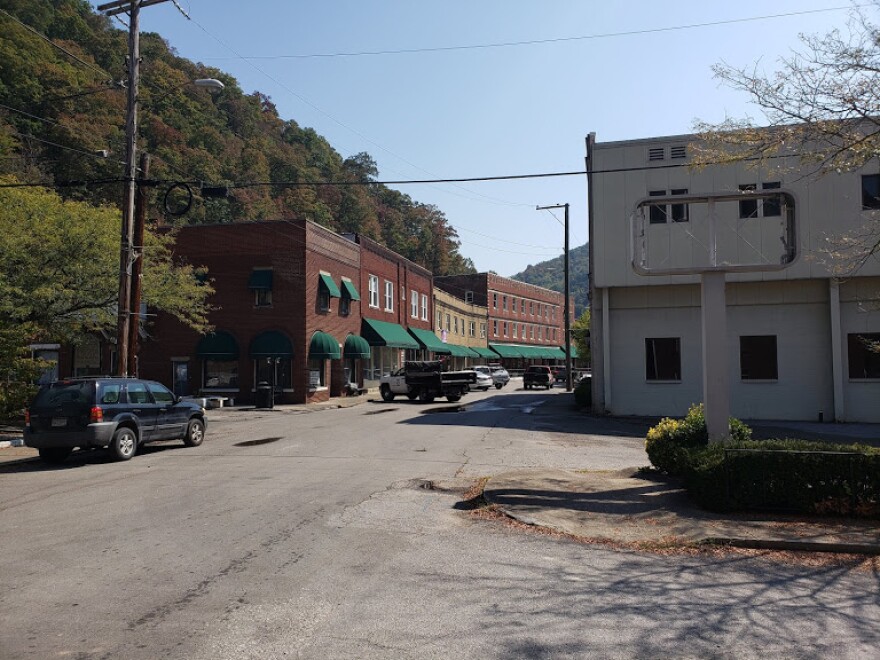
Coal trucks regularly made their way through downtown Matewan, but the creation of the flood wall reoriented the town.
“Thirty years ago, you had coal trucks running up and down the street here, because the main highway came right through the middle of Mate Street,” he said. He explained they town had all of the traditional businesses, restaurants, and retail.
Hatfield said as coal mining declined in the area, the businesses that served the miners did too.
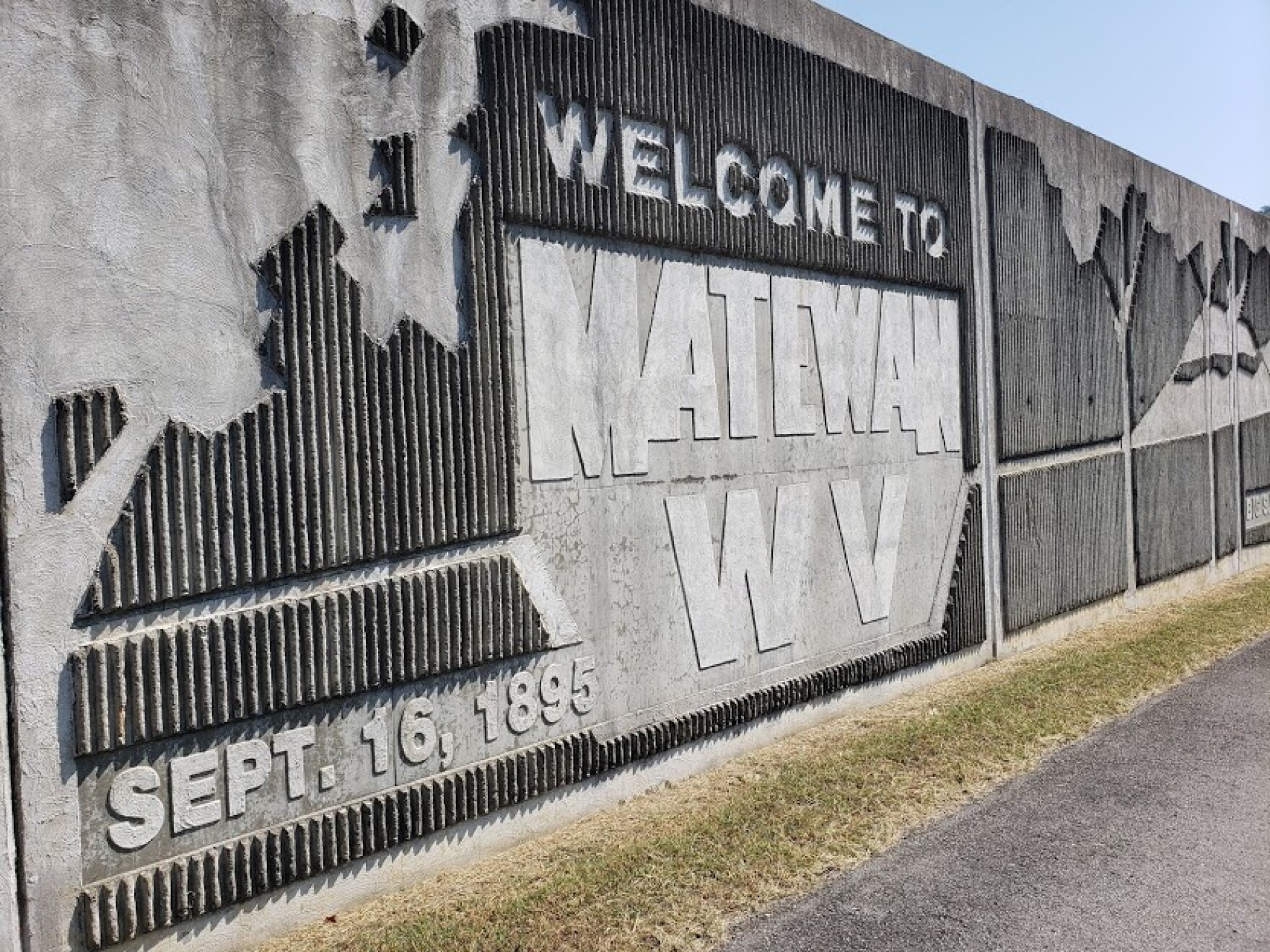
In 1997, the US Army Corps of Engineers completed a floodwall to protect the town from floods on the Tug River. It stands 30 feet high and surrounds the town as a massive concrete shield.
“When the floodwall was done, they moved the road to main highway back here on the other side of town, so it took the traffic out of the main street here in town and that’s what killed downtown Matewan,” he said.
Now, he said, he views the floodwall as an eventual blessing. Now tourists will be able to walk the downtown area without heavy traffic flowing through town.
On a recent Monday afternoon, father and daughter duo, Bill and Gwynn Powell, from Georgia ate lunch in the Mexican restaurant in Matewan. They were visiting the town for its rich history.
“We came specifically to Matwan because I’d wanted to see the site of the bloody Matewan business,” Bill said. “We will work our way back to Bramwell and to Coalwood and some places like that.”
The “bloody Matewan business” he’s referring to is the Matewan Massacre in 1920, a gunfight on the town streets during a particularly nasty coal mine strike.
Gwynn said she was surprised by the variety of things to see and do as they traveled to places in McDowell and Mingo counties.
“We’ve enjoyed having all the different foods,” she said. “We found an authentic Greek restaurant right there in the middle of Kimball. We pulled off and saw a coal being taken out and put on the train cars and had found abandoned cities.”
Rich Roach from Hagerstown, Maryland has been coming to Matewan for the last several years. He was originally inspired to make the visit by the film Matewan.
The film “Matewan” depicts the strike and the gunfight that Bill Powell referred to. It was directed by John Sayles and premiered in 1987.
“When we got down here, we got more interested in the Hatfields and McCoys component as well as as the Matewan component,” he said.
This story is part of an episode of Inside Appalachia that explores tourism in southern West Virginia and the lasting impacts the Hatfield and McCoy feud has had on the region’s identity.
Add WVPB as a preferred source on Google to see more from our team
The student-led team that produces the news for WMUL radio at Marshall University learned in August that they won a collegiate Edward R. Murrow award for Outstanding Newscast for the second year in a row.
News Director Eric Douglas sat down in a classroom studio with Marshall's Chuck Bailey, the student news director Emma Johnson, and the Director of the Marshall School of Journalism and Mass Communications Rob Quicke, to learn more.
A new book called "Appalachian Plants: In the Garden, In the Yard, and In the Wild" explores some of the history and lore of plants that have been used by many in the region. Inside Appalachia’s Mason Adams spoke with author Linda Hager Pack and illustrator Pat Banks about their book.