Alert (06/23/2026): Our Bluefield FM 88.5 signal is experiencing technical difficulties and is off the air. Our engineers are actively addressing the issue. Thank you for your patience.
This week, some folks are working to preserve the memory of Bristol, Virginia’s Black Bottom, a largely African American community wiped out by urban renewal. Also, small food producers embrace digital technology for the humble farm stand. And, kudzu; it’s coming for us.
Transportation and fuel provided the foundation of a large glass industry in central Appalachia at the beginning of the 19th century, but changes to the industry nearly destroyed it. To survive, Blenko Glass in Milton, West Virginia adapted its business.
The factory floor was once the exclusive domain of experienced glass workers. Now Blenko brings the public into the workshop to inspire a new generation of collectors and enthusiasts. Groups register weeks in advance to participate, and the programs typically sell out. On a recent weekend, more than 200 people showed up to create their own glass water bottles.
Credit Eric Douglas, WVPB
/
Kaitlin Jordan making her unique glass bottle at Blenko Glass.
And that leads to a one-of-a-kind experience for participants like Kaitlin Jordan. “It was exciting. I feel like I made a one-of-a-kind Kaitlin Jordan original. I think, honestly, my favorite memory of the day was standing by the furnace watching mom do it with the anticipation that I was about to,” she said.
The art of making glass by hand is nothing new for West Virginians. In fact, the glass industry was once booming across the state, according to Dean Six, the Vice President and General Manager at Blenko Glass. Six said the first glass business was located in the Northern Panhandle and opened in 1813.
The most expensive part of making glass is the fuel needed to produce it. The discovery of natural gas in the state was a huge boost to the glass industry, providing a cleaner, more affordable and more portable fuel source.
Over the years, there have been hundreds of glass manufacturers in the West Virginia, but only a few remain today, including Marble King in Paden City which makes marbles and Wissmach in Paden City. “They’ve been there since 1903 and make flat glass similar to what we do, but they use a mechanized process and ship it all over the world for architects, crafts, stained glass windows,” Six said.
Credit Eric Douglas, WVPB
/
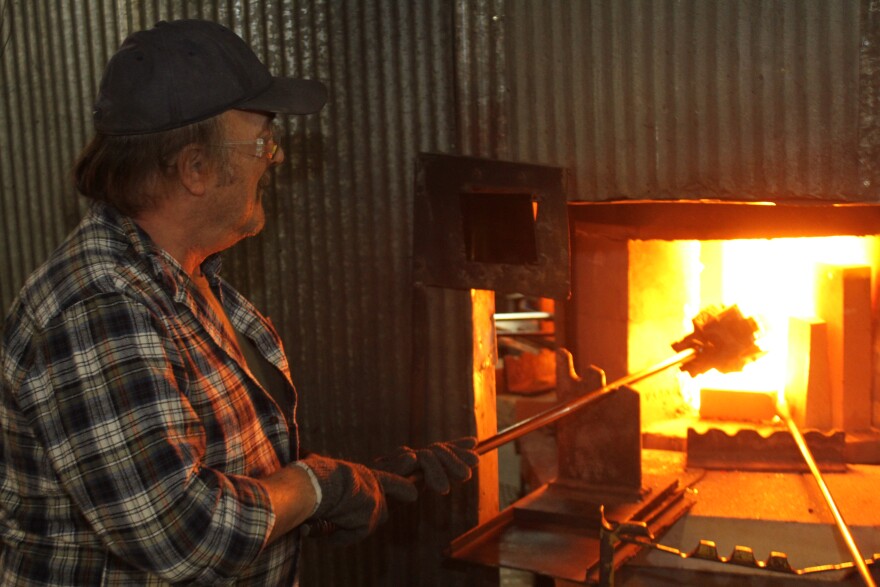
A glass worker at Blenko Glass places a blown water bottle back into the furnace for finishing.
There’s also Davis Glass in Morgantown, which produces glass for lamps. Several individual artisans like Hinkle Glass in Upshur County operate in the state as well.
Blenko Glass went through bankruptcy more than a decade ago. One thing that helped them recover and thrive was doing more outreach events. Today, they have 10 activites a year that target potential glass enthusiasts.
Through online sales and community outreach efforts, Blenko is in the best shape they’ve been in for years. They plan to continue making glass well into the future, Six said.
Add WVPB as a preferred source on Google to see more from our team
This week, some folks are working to preserve the memory of Bristol, Virginia’s Black Bottom, a largely African American community wiped out by urban renewal. Also, small food producers embrace digital technology for the humble farm stand. And, kudzu; it’s coming for us.
Urban renewal in the last century was supposed to revitalize struggling cities, but it often sacrificed Black neighborhoods and business districts, like Black Bottom in Bristol, Virginia. Inside Appalachia’s Mason Adams spoke with organizer Tina McDaniel about “The Souls of Bristol’s Black Bottom,” a project in Bristol that remembers the community through interpretive signs, public art and digital storytelling. McDaniel says learning about Black Bottom was a revelation.
Construction is underway for the America 250 Wheel, the world's largest portable Ferris wheel and a centerpiece of West Virginia's America250 celebration.