Alert (09/29/2026): Our Parkersburg TV transmitter is still undergoing maintenance and remains temporarily inoperative. We apologize for the inconvenience.
All our programming is available via our TV livestreams on our website and WVPB Passport. Thank you for your patience!
Middle Tennessee’s Dickson County is known for being the filming location for Ernest Goes to Camp, which grossed upwards of $20 million in the late 1980s. For the Appalachia + Mid-South Newsroom, WPLN’s Jewly Hight looked into the area’s earlier lore about mysterious creatures of the night.
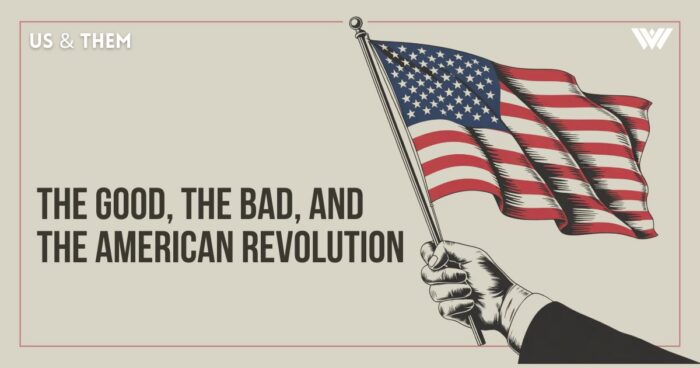
Us & Them: The Good, The Bad, And The American Revolution
Listen
Share this Article
The 250th anniversary of the Declaration of Independence arrives at a moment when Americans are arguing not just about politics — but about our nation’s history.
As President Donald Trump calls for the removal of what he labels “divisive” history from public institutions, a new documentary from Ken Burns revisits the American Revolution with all of its complexity, contradiction and competing visions of freedom.
In this episode of Us & Them, host Trey Kay brings together professors and students at Marshall University in Huntington, West Virginia along with community members for a public conversation. There’s talk about what the revolution meant then, who it was for, and what it means now — at a time when questions about executive power, citizenship and belonging feel anything but settled.
This episode of Us & Them is presented with support from WETA and the CRC Foundation.
Subscribe to Us & Them on Apple Podcasts, YouTube Music, Spotify, the NPR app and wherever you get your podcasts.
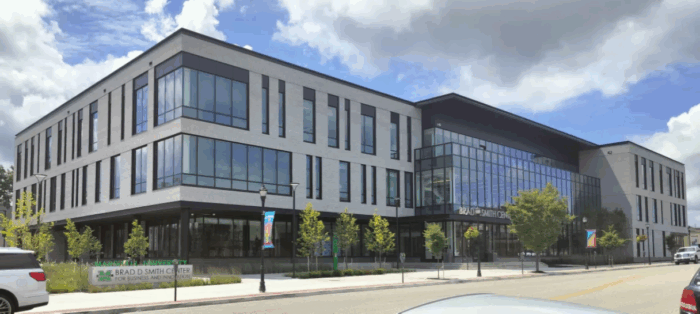
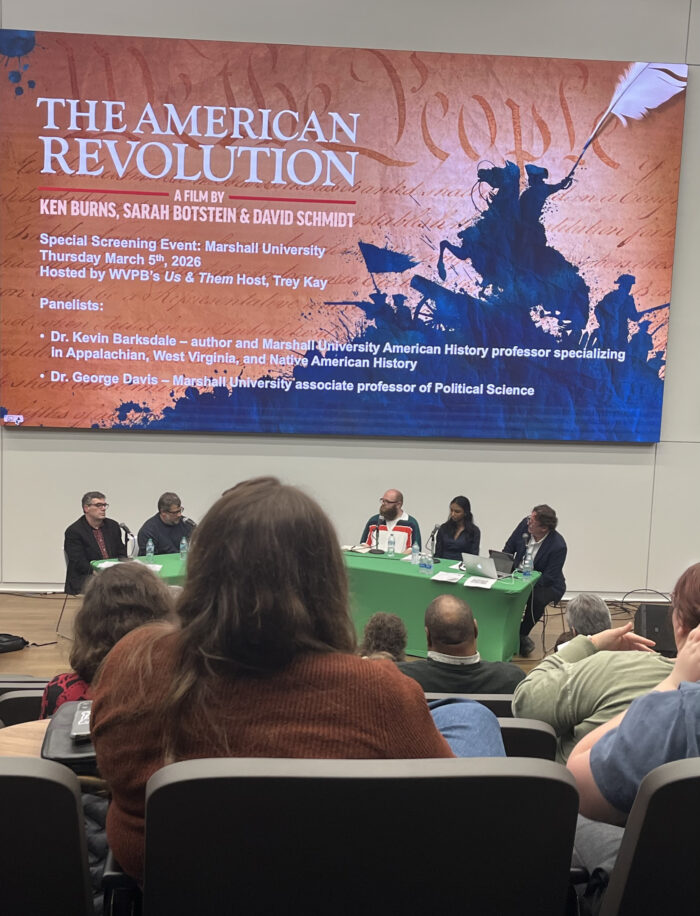
The PBS documentary series The American Revolution, produced by Ken Burns, Sarah Botstein and David Schmidt, premiered Nov. 16, 2025, on the eve of the 250th anniversary of the war’s start. The eight-year project traces how 13 British colonies rebelled, won independence and formed a new government that reshaped the continent and inspired democratic movements worldwide.West Virginia Public Broadcasting hosted a community screening and discussion of The American Revolution, on Thursday, March 5, 2026, at the Brad D. Smith Center for Business and Innovation at Marshall University in Huntington, West Virginia.
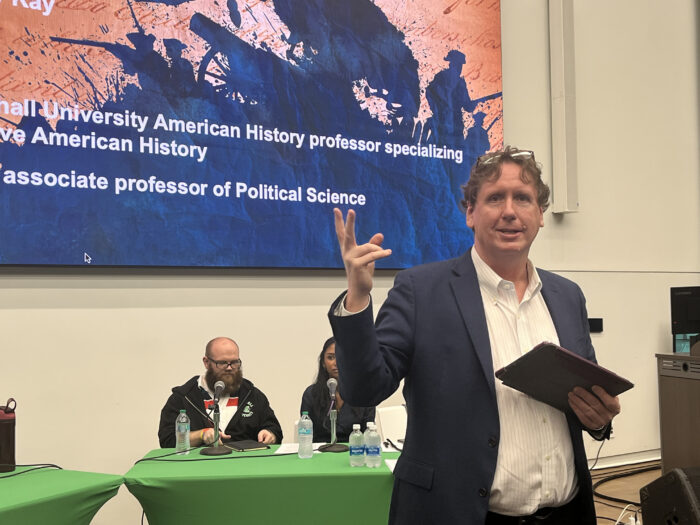
Before the program begins, Us & Them host Trey Kay welcomes the audience and outlines the evening’s format ahead of a live taping and discussion of The American Revolution.
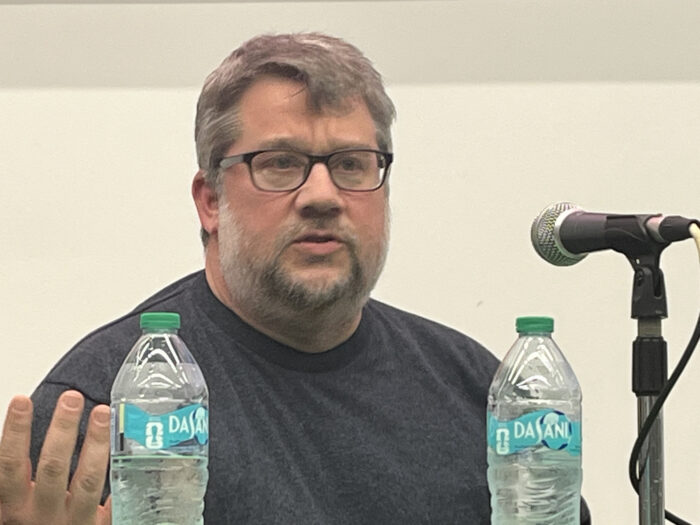
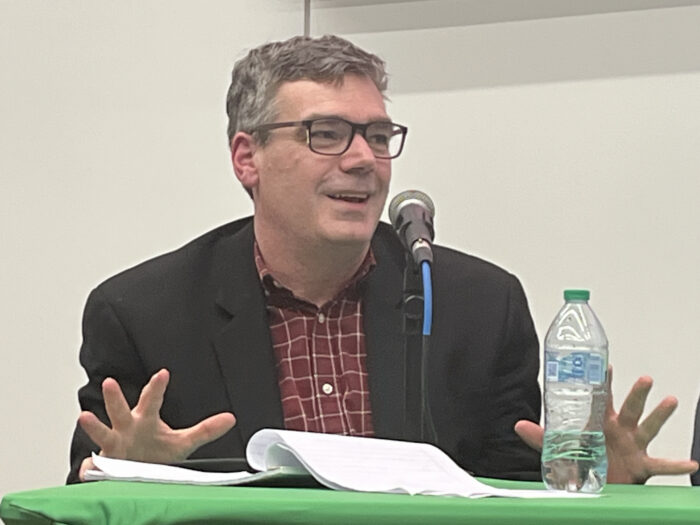
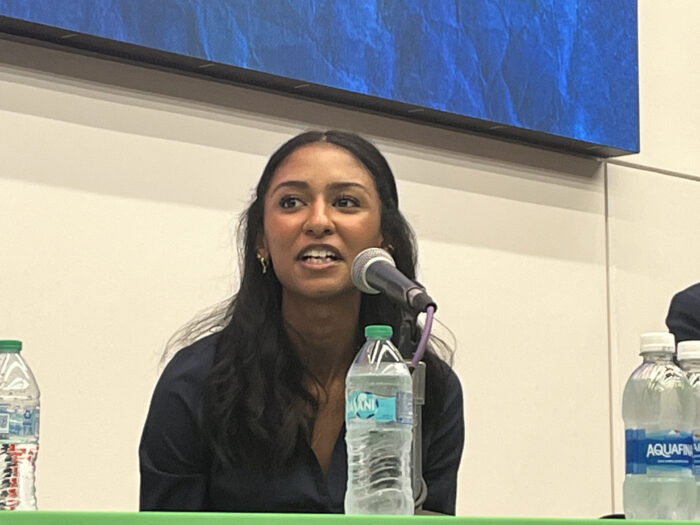
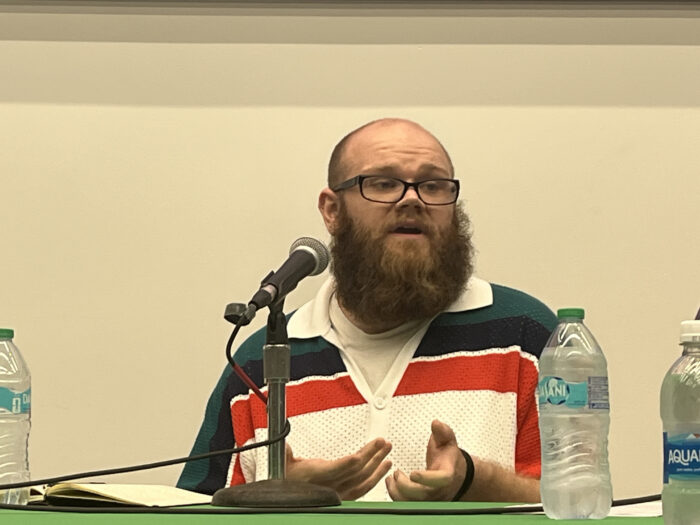
Photo by Nolan DuncanMembers of a five-person panel — two Marshall University professors and three students — gather for a community discussion before an audience in the Encova Auditorium at Marshall University’s Brad D. Smith Center for Business and Innovation in Huntington, West Virginia, ahead of a screening of excerpts from The American Revolution.
Photo by Nolan DuncanKevin Barksdale is a professor of early American history at Marshall University whose research focuses on the Appalachian frontier during the Revolutionary era and on Native American history in the Southeast.
Photo by Nolan Duncan
“My experience with students is that students want unvarnished history. They don’t want the Disney version of American history. That’s boring, right? And that’s not the way it works.
I try to point out that these are people that we’re talking about. They’re flawed humans with different kinds of ambitions and desires and counter-ambitions. And if you think about the past in that kind of way, it allows you to put yourself back there, maybe relate to what’s going on and think about those sorts of things.
I’ve never experienced students coming up to me and saying, ‘Look, I want you to simplify this, romanticize this, and I don’t want any of the most unsavory aspects of it to come about because it hurts my feelings.’ I don’t have that experience. I don’t understand that experience.”
George Davis is a professor of political science at Marshall University whose work focuses on American political development, constitutional law and the evolution of democratic institutions.
Photo by Nolan Duncan
“It’s easy sometimes in academia to look at the revolution or the founding and say this was terrible, and ask if there’s hypocrisy there.
But it’s really important to think about how the ideals that come out of the revolution—the founding, the Declaration of Independence—have been used for multiple social justice issues since then.
Part of the American story is believing in things like liberty and equality and self-determination. And we don’t take a lot of time to really think about what those terms mean. Unless we interrogate our history—what they meant to the colonists, and how they didn’t always live up to them—it forces us to ask what we actually mean when we use those words today. Without telling these stories, we can’t have a sense of what those ideas mean.”
Adriana Raymore is a political science student at Marshall University with an interest in public policy, civic engagement and questions of equity in American society. Her academic work focuses on how historical narratives shape contemporary debates about justice, citizenship and belonging.
Photo by Nolan Duncan
“I feel like watching the documentary definitely changed my perspective on how I would fit into the nation’s origin story.
Being a young Black American woman, it’s hard to see where we would fit in. As they mentioned, it was more often about what wealthy white women did.
I feel like our part of history goes unnoticed and we’re kind of hidden from that. So we don’t really know what victories we had or what we did during that period of time.”
— Adriana Raymore
William Harrison is a physics major at Marshall University whose academic interests include the intersection of science, public policy and democratic decision-making. He is part of Marshall’s Class of 2029 and brings a perspective shaped by both scientific inquiry and a curiosity about political systems and history.
Photo by Nolan Duncan
“Growing up here in West Virginia, they romanticized the American Revolution very heavily. We focused on what we won—our battles—rather than how we treated the people that helped us along the way.
I think we need to teach everything—the good, the bad, the ugly—all of it, rather than just the one version, the American hero narrative.”
— Benjamin Harrison
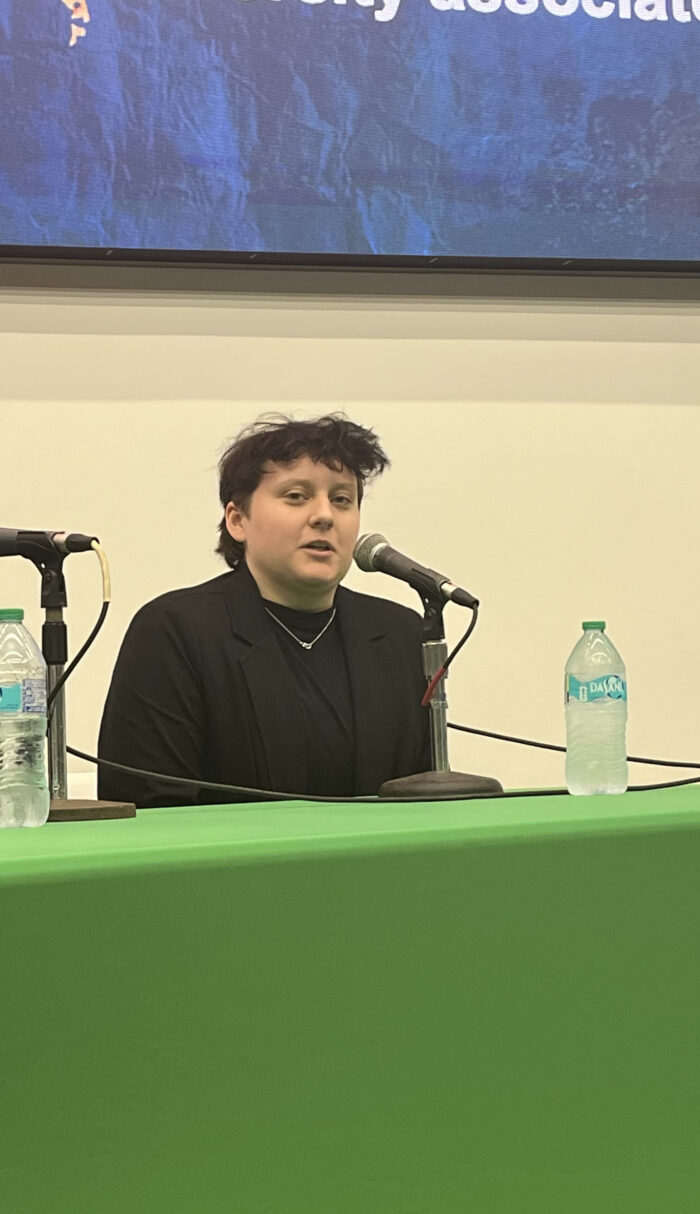
E. Provost is a political science student at Marshall University focused on government, history and the role of education in shaping civic understanding. Their work reflects an interest in how historical complexity and competing narratives influence the way people interpret the past and engage with the present.
Photo by Nolan Duncan
“I think the part that makes me feel the most uncomfortable is when they said that Native Americans probably would have been better off if we had never come here.
That’s a really uncomfortable truth to sit with. It’s hard to reconcile it — because here we are on this land, and we’re reaping the benefits of their injustices.
I feel like the sanitized version of history that people think they want is unproductive and uninvolving. It creates apathy.
This is an experiment — the American experiment — and we have to keep refining what that means.”
— E. Provost
Lio Frye, a fourth-year Marshall University student majoring in classics and classical languages, reflects on the enduring philosophical questions raised by the American Revolution and their parallels in ancient civilizations.
Photo by Nolan Duncan
“These are all the same questions: What right do I have to speak? What right do I have to think? What right do I have to tell somebody else what to do?
I think it’s important that we never stop revisiting those issues—because the tides of history will never stop.”
— Lio Frye
John Maher, vice president for research at Marshall University and executive director of the Marshall University Research Corporation, has a background in chemistry and industry leadership, including more than 20 years at Union Carbide Corp.
Photo by Nolan Duncan
“You created a system that was perhaps the best in the world at creating wealth. Through that period, you went from landed wealth to a tremendous expansion of mercantile wealth, and then industrial wealth through manufacturing and transportation — now into an era of digital wealth.And this system, with all its warts and bubbles and difficulties, has been able to manage that tremendous transition and address issues with the distribution of that wealth.”
— John Maher
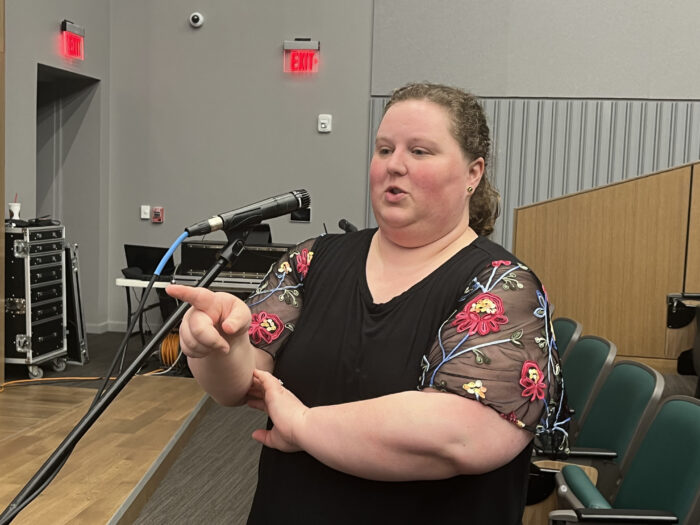
Lacey Vinegar, a Marshall University employee, speaks about the role of higher education in expanding perspectives and fostering open discussion.
Photo by Nolan Duncan
“I think part of the role of universities and colleges is to expand the worldview of people, because sometimes what we do learn in K-12 is very limited and the perspective is very limited.
Part of the role of universities and colleges is allowing people to expand their worldview but then also create a safe space to have these discussions.”
— Lacey Vinegar
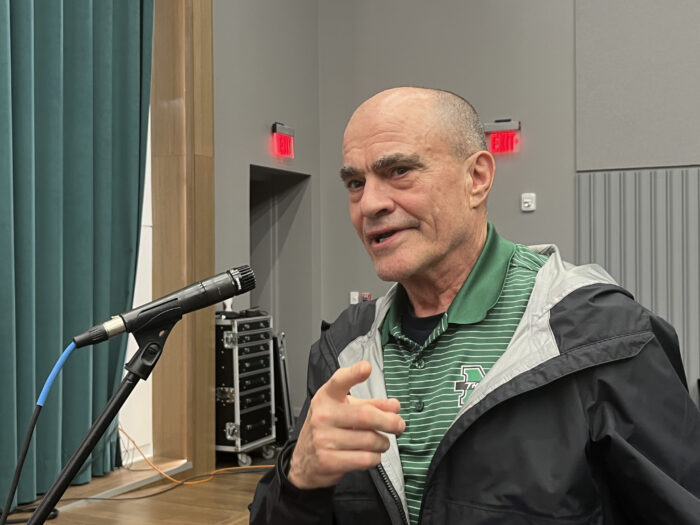
Helen Zublic Fain, an employee of Cabell County Schools, reflects on the importance of civic dialogue and the responsibility of citizens to engage respectfully across differences.
Photo by Nolan Duncan
“Benjamin Franklin said, ‘Now we have a republic, if you can keep it.’
And to me, that means we have to be bold. We have to not only have these debates within academia, but we also have to have those moments when you are sitting next to somebody who you disagree with—and learn how to respectfully speak to them.
We have to have the courage to stand up and say something.”
— Helen Zublic Fain
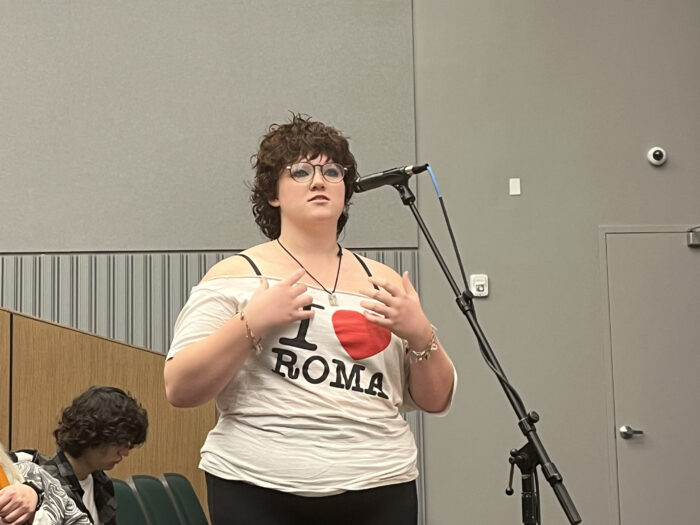
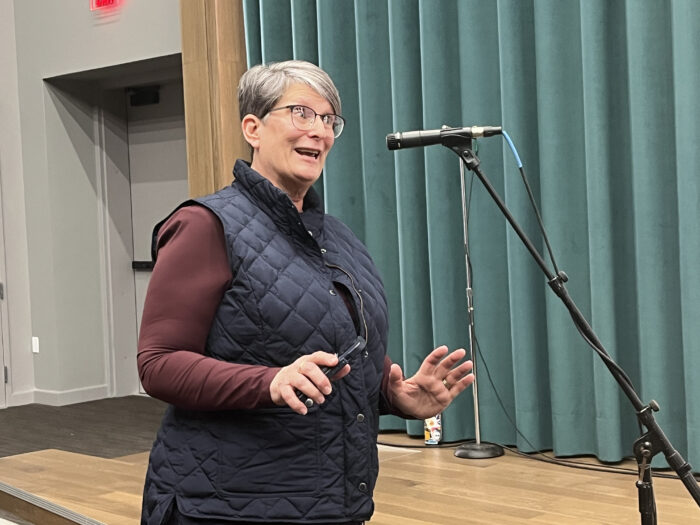
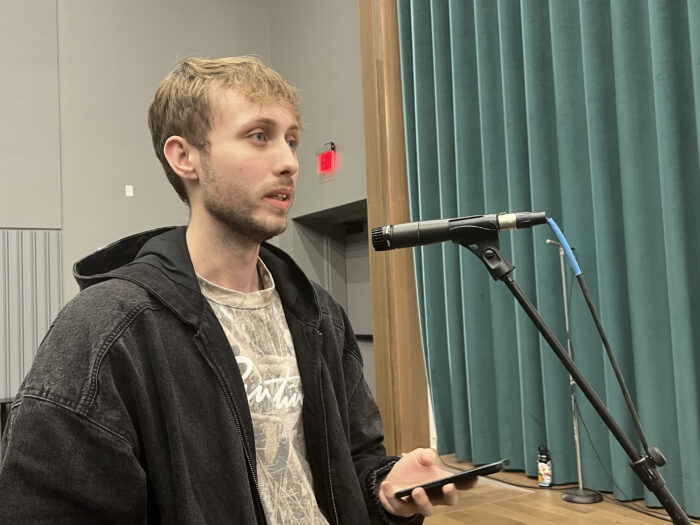
Mason Skidmore, a Marshall University biochemistry student, asks about the enduring influence of Revolutionary-era ideas and how they continue to resonate with younger generations.
Photo by Nolan Duncan
“I don’t know if I could say any specific image, but I think the Revolution—absolutely, the ideas.
It wasn’t based off of ancient ideas, it wasn’t based off ancient peoples—it was based on the idea that we’re creating something new for the people.
And I think that we should continue that in our democracy.”
— Mason Skidmore
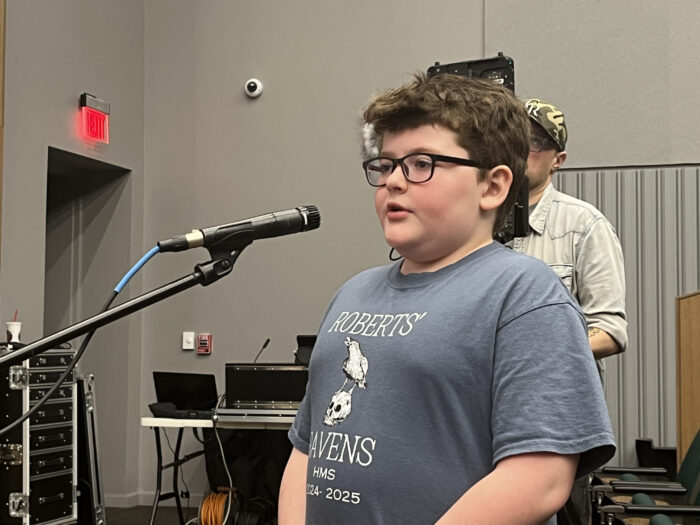
Jones McKee, a student at Huntington Middle School, asks about the role of France and international alliances in the American Revolution.
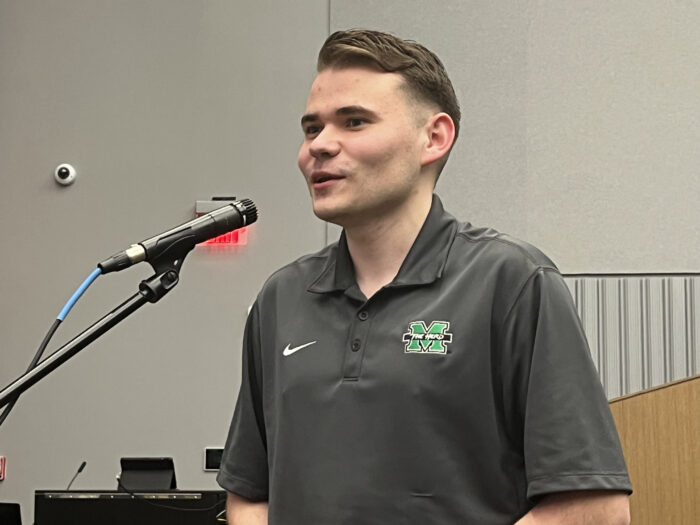
Photo by Nolan DuncanMichael Borsuk, a Marshall University student, raises questions about perceptions of higher education, media influence and their potential impact on democracy.
Photo by Nolan Duncan
“With the perception that colleges are indoctrinating per se, do you believe that some of that comes from the fact that, and I mean here in West Virginia, that not half our population has a college education?
Do you believe it’s a threat now with social media playing an influence in kids that are 13 years old seeing political content and not understanding how to process it or what they are exactly seeing, and what do you think that means for the future of democracy?”
— Michael Borsuk
Add WVPB as a preferred source on Google to see more from our team
Middle Tennessee’s Dickson County is known for being the filming location for Ernest Goes to Camp, which grossed upwards of $20 million in the late 1980s. For the Appalachia + Mid-South Newsroom, WPLN’s Jewly Hight looked into the area’s earlier lore about mysterious creatures of the night.
On this West Virginia Week, rules are in the works for data centers, lawmakers request a meeting with Flock, and the fate of West Virginia's chestnuts.
This week, ballads tell stories about all kinds of real-life events, but after Hurricane Helene, one group of ballad singers felt some topics were still too raw. Also, the author of a book on ancient Ohio credits a former grad student with introducing him to the region’s mysterious earthworks. And, the legacy of Affrilachian poet Norman Jordan includes a summer camp for teens to study their heritage.