Alert (09/29/2026): Our Parkersburg TV transmitter is still undergoing maintenance and remains temporarily inoperative. We apologize for the inconvenience.
All our programming is available via our TV livestreams on our website and WVPB Passport. Thank you for your patience!
This week, Barbara Kingsolver’s new novel takes on issues of class and classical music. Also, kudzu warriors band together to fend off invasive plants and take back the land. And, it’s pawpaw season, but a new bug could be harming the trees.
More Coal To Make Electricity Could Mean Higher Bills In Coal Country
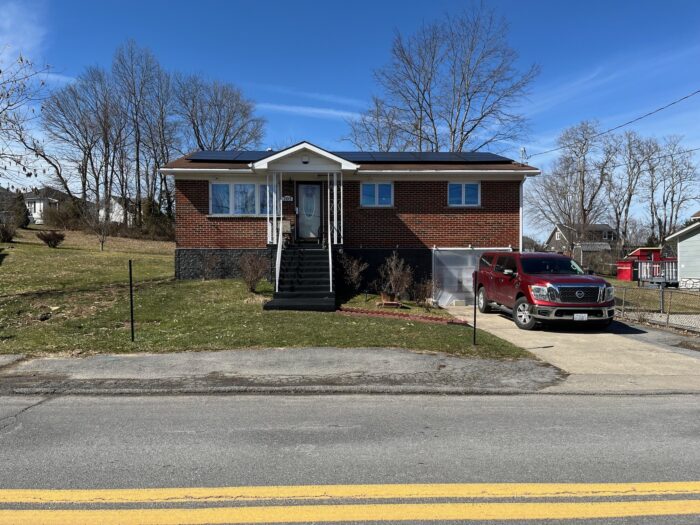
Mary West has solar panels installed on her home in Beckley.Curtis Tate / West Virginia Public Broadcasting
Listen
Share this Article
President Donald Trump wants the country to use more coal, a fuel utilities have turned away from in recent decades. One exception: West Virginia, which produces and consumes a lot of coal. That’s made electricity more expensive there. Some residents have turned to alternative ways to power and heat their homes.
Mary West is an Army veteran who lives in Beckley, in southern West Virginia’s coalfield. She used to work in the mines locally, in about 1980.
West called it hard and dangerous work. An injury put an end to her brief career in mining.
“They released me to go back to work, and I told them I was not going to go back, because the Lord hid it underground for a reason, and didn’t intend for my crazy butt to keep going down there, finding it,” she said.
Her past in coal isn’t obvious when looking at her red-brick home. The roof is lined with solar panels. Most months, she pays nothing for electricity.
For others, it’s a struggle. Tom Moseley is a retired postal worker.
“Most families in Raleigh County are living to pay bills,” he said. “They can’t go out and enjoy life. They can’t go out and spend money at the movies. Every dollar they make is to pay their bills.”
“We think under this new political leadership and with the industries and government working hand in hand,” he said, “we can get back to that 165 million tons of coal.”
He says with power plants burning more coal, they should become more efficient, which in turn could lower electricity costs.
Other state leaders say coal is needed to power the growth of data centers. West Virginia Republican Sen. Shelley Moore Capito was at the White House when Trump championed coal.
“It also helps us with that baseload energy that we so much need when we hear about energy shortages for AI, data centers and the creation of a more electrified economy,” she said.
Utilities plan for the next 40 years, he says, not the next four.
“I do not see a coal plant, a new coal plant ever being built in the United States,” Wamsted said. “They’re too expensive.”
A $500 Bill
The major utility in southern West Virginia, Appalachian Power, is asking regulators to raise rates to make up for inflation and storm repair costs. Residents, meanwhile, are finding ways to save money.
Gary Bolen, a disabled Navy veteran who lives on a fixed income, tries to use power sparingly.
“I keep my thermostat set at 65 so I don’t have a power bill that high,” he said.
And he switched his heating source.
“I had to transfer it over to gas because the electric heat was running way too high,” Bolen said. “At one time, I had a $500 bill.”
West, the former coal miner, says she’d encourage anyone to switch to solar in West Virginia.
“Well, you know, God’s sun is out every day,” she said.
State regulators will consider Appalachian Power’s rate increase this summer.
Mary West has solar panels on her rooftop. Most months, she pays nothing for electricity.
Add WVPB as a preferred source on Google to see more from our team
The Public Service Commission of West Virginia wants to ensure that if discontinuation of the current landline system is approved, an adequate service will be continue to be available to both new and existing customers.
West Virginia has seen the largest population decline in the nation - nearly 1.5% - and many of those leaving are young people. In an episode that aired last month, Us & Them host Trey Kay heard from some young people who think they may stay in the state to launch their futures. This month, Kay talks with those who say living their dreams may well require moving away from the Mountain State. We listen to an excerpt from the latest Us & Them.
They love West Virginia, but love alone may not be enough to keep them here. In the second of two Us & Them episodes, Trey Kay talks with young West Virginians who say they may need to leave in search of careers, community and a place where they can imagine their futures. Their decisions reveal what the Mountain State risks losing when young people cannot see a place for themselves at home.