Two groups are speaking out against the Public Service Commission of West Virginia’s decision to allow First Energy to build a new power plant at ratepayer’s expense.
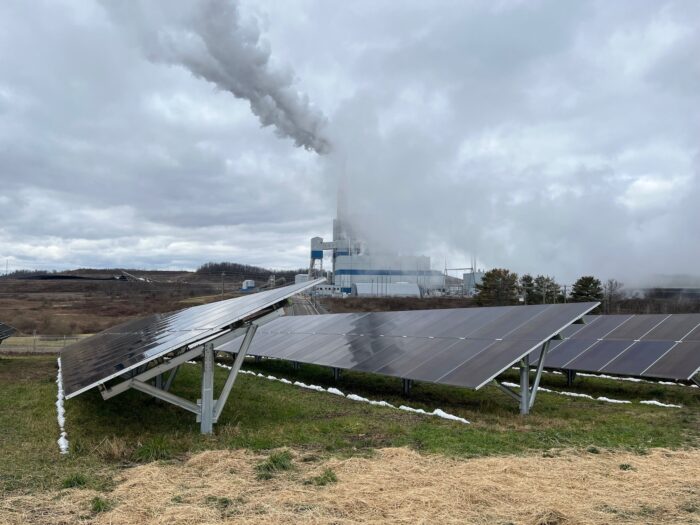
The PSC gave Monongahela Power Company and the Potomac Edison Company approval Tuesday to move forward with a 1,200-megawatt combined-cycle natural gas plant at the Fort Martin Power Station in Monongalia County.
The companies also received approval to add a surcharge of approximately $1.20 a month to ratepayers’ bills to recover financing costs. That is for the first year and rates could go up.
According to exhibits from the company presented with testimony for the PSC, a residential customer would have paid $508.52 between September 2026 and the end of 2031 when the power plant goes online. The surcharge at that point is calculated at $15.39 a month.
In testimony to the PSC, a First Energy employee said that would only be the case if a data center didn’t make a catch-up payment. He said he would only expect that “worst-case scenario” if there were no data centers.
Emmet Pepper, policy director for Energy Efficient West Virginia (EEWV) said in a statement that “This decision is bad for ratepayers.”
“Let’s be clear: a power plant of this size is not needed for existing ratepayers,” Pepper said. “But it is getting built nonetheless, with current ratepayers on the hook for it. Let’s be clear: a power plant of this size is not needed for existing ratepayers. but it is getting built nonetheless, with current ratepayers on the hook for it.”
Pepper said the plant is being built for data centers, and there is no requirement that those data centers cover the costs. The request from FirstEnergy, and the PSC order approving it, are in direct conflict with President Trump’s Ratepayer Protection Pledge.
Pepper continued that data centers need to pay for every piece of infrastructure, including power plants, that are built for them.
“In fact, data centers should be required to go further than that -- they should be required to benefit ratepayers through community benefits agreements that provide support to communities through weatherization, battery backups, roadway infrastructure repairs, etc. None of these benefits are included in this order,” he said.
In a separate statement, the United Mine Workers of America levied objections against the PSC’s order.
“The fix was in from day one, and West Virginia ratepayers and coal miners are the ones getting their pockets picked,” United Mine Workers of America International President Brian Sanson said. “The PSC, the governor and state politicians who voted for HB 2014 just handed utilities a blank check to jack up working families’ electric bills so out-of-state billionaires can power their data centers. The truth is West Virginia’s governor, and his political allies, have continued to destroy coal jobs, allowed tech companies to write legislation that eliminated citizens’ rights to say no to data centers, and are now slapping everyday West Virginians with the first of many new monthly rate hikes to pay for it all.”
Sanson noted that the utilities say the new gas plant will run side by side with the existing coal-fired Fort Martin power station. But, he said “that is simply false. Once the new gas plant opens, the Fort Martin coal plant will sit idle for days and weeks or close completely.”
“It is a lopsided trade: coal plants and mines sustain thousands of permanent union jobs, while gas plants run on skeleton crews,” Sanson said. “It is a fact that natural gas companies employ only a tiny fraction of the workers that supply our power today. Customers and taxpayers have already paid for the building and upgrades performed on West Virginia’s coal fleet to ensure they are running in compliance with environmental requirements.”
Sanson said last year “politicians and state regulators scrapped the rules that encouraged power companies to use our most abundant resource and keep thousands of West Virginian’s working in career jobs.”
He is referring to a requirement originally inserted into HB 2014, that would “require” coal-fired power plants to run at 69% capacity. The legislature changed that to “encourage” and a later rule from the PSC confirmed that guidance.
“The governor and political leaders love to talk up West Virginia coal when the cameras are rolling, but then they go behind closed doors to fast track and subsidize data centers and utility projects that wipe out mining jobs, gut county schools, and ship profits out of state,” Sanson said. “Coal built West Virginia, and our miners kept the lights on for generations. They still can. We will not sit quietly while utilities, data centers, AI tech moguls and natural gas companies buy politicians and sell our workers and ratepayers down the river.”
Pepper also called on the legislature to get involved.
“Governor Morrisey should call a special session to protect electric customers from continued rate hikes due to data centers,” he said. “This is just the first multi-billion-dollar power plant to be paid for by Mon Power and Potomac Edison customers in West Virginia, and FirstEnergy has said that more are coming. And now Governor Morrisey announced that a $17 billion proposal is on the way for AEP customers in West Virginia. AEP customers can’t afford to bear the brunt of $17 billion in data center costs, and they should not have to.”