Alert (March 14, 2026): Due to recent high winds, our radio/TV tower in Bethany is not operational. Our engineers are working to resolve the issue. Alert (March 11, 2026): Our TV translator in Flatwoods is experiencing technical issues. Our engineers are troubleshooting the problem and expect it to be down for a couple days.
Thank you for your patience.
This week, a new novel about two girls and an astronomy textbook draws inspiration from one of the quietest places in West Virginia. Also, author Annette Saunooke Clapsaddle talks about growing up as part of the Eastern Band of Cherokee Indians. And, a Kentucky tattoo artist practices traditional tattooing and traditional music. He says they’re not too different.
RFK Jr. Supports Tightening SNAP Benefits, With W.Va. Leading Charge
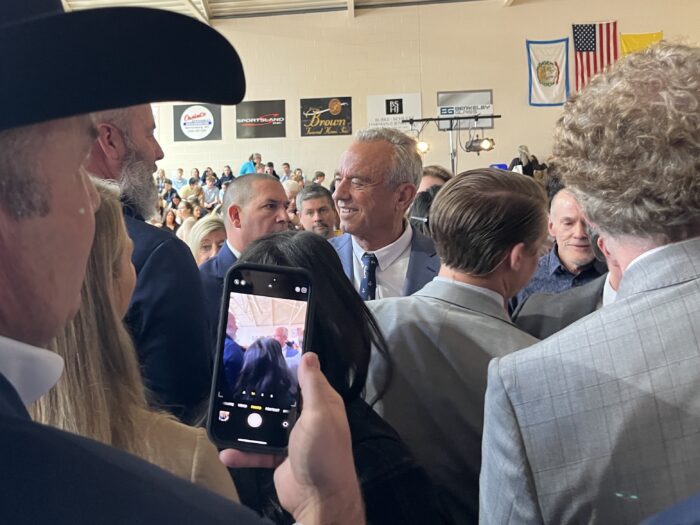
Robert F. Kennedy Jr. greets attendees following a media event at Martinsburg’s St. Joseph School. He voiced support for state officials’ efforts to clamp down on food additives and SNAP spending.Jack Walker/West Virginia Public Broadcasting
Listen
Share this Article
Robert F. Kennedy Jr. said Friday that the Trump administration will support state-led efforts to expand restrictions on the Supplemental Nutrition Assistance Program, or SNAP, following West Virginia officials’ attempt to pare down program eligibility and qualifying purchases.
Kennedy currently serves as the nation’s highest-ranking health official, overseeing the U.S. Department of Health and Human Services under President Donald Trump. He joined Gov. Patrick Morrisey at a school in Martinsburg Friday to endorse recent legislative efforts in the state regarding health and nutrition.
Earlier this week, Morrisey signed into law a bill banning certain food dyes from school meals, making West Virginia the first state in the country to do so. Kennedy called it an early step in the effort to “Make America Healthy Again” — a Trump-backed health policy agenda that generally focuses on individual, rather than institutional, approaches to wellness.
“We all need to stand up for ourselves and take care of ourselves. It’s an act of patriotism,” Kennedy told attendees. “If you love this country, you need to start taking care of yourself.”
During his remarks Friday, Morrisey announced additional administrative priorities to “realign SNAP [benefits]” in West Virginia — moves that White House officials say could have an impact beyond state lines.
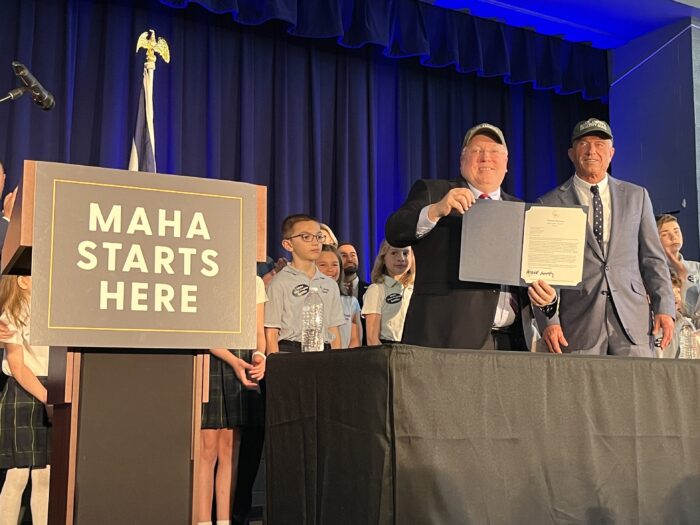
Gov. Patrick Morrisey (left) displays a request for the Trump administration to exempt West Virginia from accepting SNAP purchases of sugary beverages. He is joined by Robert F. Kennedy Jr. (right).
Photo Credit: Jack Walker/West Virginia Public Broadcasting
Weighing new restrictions
Scaling down government regulation over health has figured prominently in the early days of Morrisey’s governorship. Since taking office in January, the governor has prioritized things like broadening student vaccine exemptions and reducing state oversight on the establishment of new health care facilities.
On Friday, Morrisey signed a letter of intent requesting that the Trump administration allow West Virginia to bar SNAP participants from purchasing soda and sugary beverages through the program.
“Why should hard-earned federal and state tax dollars be allowed to ignore nutrition?” Morrisey said. “Taxpayer dollars should be targeted toward nutritious foods.”
Kennedy gave the proposal his nod of approval, endorsing efforts to raise standards for food and beverage ingredients at large.
“It’s supposed to be nutrition,” Kennedy said. “It’s not supposed to be food-like substances that are actually poisoning us.”
West Virginia appears to be laying the groundwork for greater state discretion over what qualifies as a SNAP purchase. But it is not alone in weighing changes to the program from a purported public health lens.
Calley Means, a senior health advisor for the White House, told reporters Friday that numerous other governors are considering similar moves. SNAP is not part of the U.S. Department of Health and Human Services, meaning Kennedy would lack the authority to change it, Means said.
But United States Secretary of Agriculture Brooke Rollins does. She oversees the U.S. Department of Agriculture, which administers SNAP on a federal level. And Means said Rollins is receptive to the proposed changes.
“Brooke Rollins has fully, this week, said she’s willing to accept them,” Means said.
Morrisey also said he seeks to expand work and education requirements for SNAP benefit eligibility in West Virginia. This week, the West Virginia Senate passed Senate Bill 249 to do just that, although opponents of the bill worry it could make support harder to access for residents in need.
“I think we can all agree, work is good,” Morrisey said. “Outside of limited exceptions, if you have the ability to work, you should.”
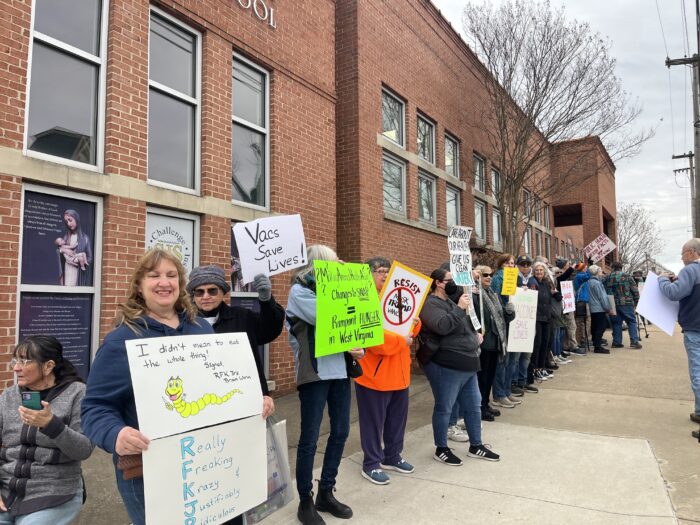
Some opponents worry SNAP changes could harm low-income residents or beverage companies. Others picketed in Martinsburg to express discontent with Trump’s approach to health in general.
Photo Credit: Jack Walker/West Virginia Public Broadcasting
‘White-hot’ industry pushback
While Kennedy and Morrisey’s views on nutrition seem to align, expanding SNAP restrictions will not come without opposition. Picketers lined the road outside Martinsburg’s St. Joseph School in protest of the event Friday, some brandishing signs calling for the program’s protection.
Meanwhile, Means said raising standards for food and beverage ingredients domestically has received an “absolutely white-hot” response from industry leaders.
Critics include the American Beverage Association, a lobbying group representing the domestic beverage industry.
Senior Vice President Merideth Potter told West Virginia Public Broadcasting that beverage manufacturers have already made strides to improve the nutritional value of their products, with alternatives like “sparkling waters” and “zero-calorie sports drinks.”
Potter added that, aside from Red No. 3, food dyes banned under the new West Virginia bill are deemed safe by the U.S. Food and Drug Administration. She also disputed the idea that restricting beverage purchases would save taxpayers money, because the proposed change does not constitute “reforming or cutting the program.”
“You’re not changing the amount of benefit that beneficiaries receive each month. You’re just telling them what they can and can’t buy,” Potter said. “We really think conversation around restrictions is a sound bite. It’s not an actual solution.”
Potter said companies are concerned other states may follow West Virginia’s charge in expanding SNAP restrictions, which she said would hurt the beverage market as a whole.
Kennedy said representatives from food and beverage companies have asked him to prevent state officials from clamping down on food additive and SNAP restrictions. But he maintained that changes like these are key to public health, and have the full support of the Trump administration.
“They’re terrified of this, of what you’re doing,” Kennedy told audience members. “The message that I want to give the country today, and to all the other governors, is to get in line behind Gov. Morrisey.”
Add WVPB as a preferred source on Google to see more from our team
Christina Mullins, who has served as deputy director has been appointed to serve as the acting secretary. Alex Mayer, the former secretary of the Department of Human Services, has resigned his position, effective Sunday.
The 2026 state Legislative session stretched all the way to midnight Saturday night. WVPB reporters Randy Yohe, Chris Schulz and Maria Young were in the rotunda as the session concluded and brings us this recap.
On this West Virginia Week, a group sues over SNAP waivers, the coal forecast for next year is gloomy, and we learn how online gambling is affecting college students.