


The Old Louisville Demon Leaper’s Mischief In One Of America’s Largest Victorian Neighborhoods
In the late 1800s, tales of a creature that bounds between rooftops emerged in Old Louisville — The Demon Leaper.
Continue Reading Take Me to More NewsAlert (09/29/2026): Our Parkersburg TV transmitter is still undergoing maintenance and remains temporarily inoperative. We apologize for the inconvenience.
All our programming is available via our TV livestreams on our website and WVPB Passport. Thank you for your patience!




To Educate, Inform, and Inspire by Telling West Virginia's Story

Mountain Readers 2026 has concluded! Please fill out our volunteer post-survey.
Nominate an exceptional West Virginia K-12 teacher today!

On Demand

On Demand

Stream original productions from WVPB

Watch locally produced documentaries & more.

On Demand

On Demand






West Virginia Morning

Inside Appalachia

West Virginia Week

Mountain Stage

Us & Them

The Legislature Today

The Legislature This Week

Send us your comments and questions.

Stream our board meetings.

Check out the latest WVPB news.

Sign up for our newsletter and get weekly updates.

Meet the WVPB staff.

WV Educational Broadcasting Commission, the WVPB Foundation, and the Friends of WVPB.

Come work with us!

Read our annual report and learn how we educate, inform and inspire with your support.

Sponsor impactful and engaging media and entertainment.

Use your IRA to make a gift to WVPB.

Become a member with your gift of $1,000 or more.

Make WVPB part of your legacy.

Manage your membership account.

Learn how you can Protect and Sustain West Virginia Public Broadcasting.
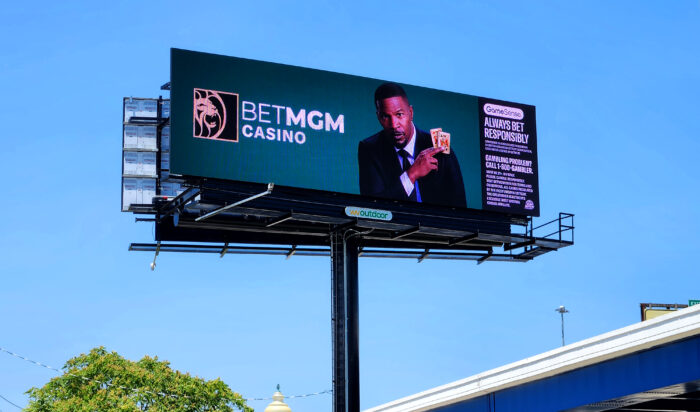
Online gambling commercials seem to dominate the television and radio airwaves. It also seems messages to get bet real money are not lost on our college students.
Marshall University Broadcast Journalism senior Abigail Ayes just completed an impactful story on student online gambling for the campus news program, MU Report.
Randy Yohe, who is also Ayes’ instructor, spoke with the student reporter about her eye-opening research, interviews and findings.
This story has been lightly edited for clarity.
Yohe: Abby, what prompted you to pursue a story about college student online gambling?
Ayes: This story really had an impact on me, just because it hits so close to home. I don’t personally do online gambling, but I know countless of my friends, of my friends’ boyfriends, they all are into all of the apps. There’s different types of things, such as sports betting, online casinos and it’s scary, because it’s all available to you at the click of a button. You no longer have to go physically to a casino. You can gamble from anywhere in the world, as long as you have a cell phone.
Yohe: Just in your circle here at Marshall University, you know countless friends into gambling online?
Ayes: Countless. I mean, I could definitely name over 20 people, easily, that are involved and invested in online gambling.
Yohe: What stood out to you as you conducted your research on online gambling?
Ayes: Really, just how common it is. It is such a new thing. When I was in high school, this was not a resource readily available to us, as was with most of the people I interviewed. But now there’s even become a fine line of how old you even have to be to gamble. In some of the studies that I looked at, such as the National Library of Medicine, study adolescents 11 to 21. You think about those ages, your brain is still developing, and I think that makes it one, scary, and two, really dangerous for other online gambling disorders.
Yohe: Tell me about the students you interviewed and their experiences with online gambling.
Ayes: I interviewed two different students. One of them, his name was Nathaniel Reidenhauer. He definitely did a lot of online gambling, not even just in sports betting, but in online casinos. And he would actually wake up and almost feel a sort of anxiety if he wasn’t getting on and logging on to these apps and placing just even a $5 bet. On the other hand, I spoke with a student, Trey Miller, who does occasionally gamble, but can kind of hold himself back from making bets that aren’t as responsible. But it’s not easy to do, and I feel that it is going into a direction where people just have this access on their phones. They don’t even think twice about making a bet like that.
Yohe: Do you think students understand that gambling can become an addiction?
Ayes: I think students understand that traditional gambling can become an addiction, but I think that people almost don’t even view these apps as real gambling. I mean, no longer do you have to go to an ATM and physically get $20 out. You can just get it connected to your bank account. It is a very instant hit of dopamine in your brain. And I think that is so scary. The resources available for traditional gambling, I don’t know if they’re going to overlap with online gambling, considering how easy it is to just continue to download these apps and continue this addiction.
Yohe: That leads me to my next question, what can students do if they get in too deep and want to quit?
Ayes: There are resources available for students that may see that they or a friend are having problems with this. We do have 1-800-GAMBLER. It is our national hotline here in the USA for people that may feel like they’re going too far or don’t have any more control. There’s also some local hotlines and crisis lines, as well as some self help books that a lot of people have credited towards overcoming a gambling addiction, of course, there’s gamblers anonymous, all of these resources are available. But again, this is such a new topic, it’s very hard to distinguish what will be the best resource.
Yohe: Do you think that Marshall, its administration, its counseling department, understands this problem, and do they offer any recourse?
Ayes: I honestly do not think that Marshall University knows enough about this problem to even think it’s a concern. It’s still so new, and students almost play it like a game and like it’s fun. But in reality, once it gets past a certain point, you are in very dangerous territory, and it’s important to recognize those lines and make sure you don’t cross a boundary with yourself and continue.
In West Virginia, you can visit or call the West Virginia Problem Gambling Help Network at 1800Gambler.net, or call the West Virginia Problem Gambling Help Network 1-800-GAMBLER which provides 24-hour ability to talk with a professional problem gambling counselor.
Add WVPB as a preferred source on Google to see more from our team

Nearly $1.4 million in funds from the state's Rural Health Transformation Program will be used to help replace a mobile cancer screening unit that serves rural communities.
Continue Reading Take Me to More NewsFlu cases are still low nationwide -- but beginning to increase much sooner than is typical.
Continue Reading Take Me to More NewsStories about cryptids are revived every October in the lead-up to Halloween. Oftentimes, these monsters are said to live in the woods – or some other dark area where they’re difficult to find. Few, if any, can be found leaping along rooftops in one of the country's largest historic preservation districts. For the Appalachia + Mid-South Newsroom, LPM’s Roberto Roldan brings us the story of the Old Louisville Demon Leaper.
Continue Reading Take Me to More NewsOn this West Virginia Week, our voter's guide is out, and it has all the information you need to know about the upcoming general election in the state. Also, another lawsuit targets the state's public school funding formula. And, a million dollar giant troll is making its way to the woods of West Virginia.
Continue Reading Take Me to More News