


Aluminum Plates For Deep Space Win W.Va. 'Coolest' Contest
Aluminum plates that helped keep astronauts on the Artemis II rocket safe won the first ever Coolest Thing Made In West Virginia competition.
Continue Reading Take Me to More NewsAlert (09/29/2026): Our Parkersburg TV transmitter is still undergoing maintenance and remains temporarily inoperative. We apologize for the inconvenience.
All our programming is available via our TV livestreams on our website and WVPB Passport. Thank you for your patience!




To Educate, Inform, and Inspire by Telling West Virginia's Story
Mountain Readers Week will be held Oct. 5-9, 2026! Celebrate and foster a love of reading in children across West Virginia.
Nominate an exceptional West Virginia K-12 teacher today!

On Demand

On Demand

Stream original productions from WVPB

Watch locally produced documentaries & more.

On Demand

On Demand






West Virginia Morning

Inside Appalachia

West Virginia Week

Mountain Stage

Us & Them

The Legislature Today

The Legislature This Week

Send us your comments and questions.

Stream our board meetings.

Check out the latest WVPB news.

Sign up for our newsletter and get weekly updates.

Meet the WVPB staff.

WV Educational Broadcasting Commission, the WVPB Foundation, and the Friends of WVPB.

Come work with us!

Read our annual report and learn how we educate, inform and inspire with your support.

Sponsor impactful and engaging media and entertainment.

Use your IRA to make a gift to WVPB.

Become a member with your gift of $1,000 or more.

Make WVPB part of your legacy.

Manage your membership account.

Learn how you can Protect and Sustain West Virginia Public Broadcasting.
Updated: March 13, 2026 at 9:45 a.m.
Gov. Patrick Morrisey’s office released the following statement about the challenge to the SNAP Waivers.
“Taxpayer-funded benefits should support nutrition, not subsidize products like sugary soda that contribute to chronic disease, weaken our workforce, and drive up healthcare costs. While we do not comment on pending litigation, we are confident in the legality of our efforts to innovate within the SNAP program. We will continue working with our federal partners to defend these initiatives and improve health outcomes for West Virginia families.”
Original Story
A national group has sued the Trump administration over Supplemental Nutrition Assistance Program (SNAP) food waivers like the one granted to West Virginia.
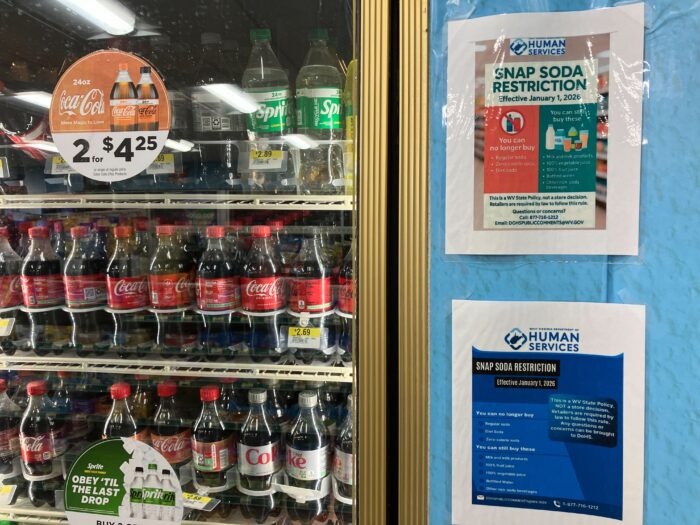
Last May, Gov. Patrick Morrisey requested a waiver to remove sugary drinks from the foods that SNAP recipients could purchase. The American Heart Association supported the request. It was granted in August and the change went into effect on Jan. 1.
Now, the National Center for Law and Economic Justice has filed suit in federal court to stop the waivers. Colorado, Iowa, Tennessee and Nebraska have similar program waivers and all five states are named in the lawsuit.
According to a statement from the group, “These food restriction waivers were introduced under a provision that allows for experimental “demonstration projects” to test changes to improve SNAP and better support SNAP recipients.”
The suit alleges that regulations require the USDA to provide notice and allow public comment before approval of new demonstration projects, but that didn’t happen.
It says the USDA is using this as a backdoor method to restrict the SNAP program.
According to the statement, for more than 60 years, a simple and stable definition of “food” has allowed SNAP participants to buy the groceries they need without confusion or complication but with this move “the USDA has taken steps to scale back SNAP benefits by granting food restriction waivers.“
Approximately 275,000 people in West Virginia, or about 16% of the population, receive the benefits.
Morrisey’s office did not respond to a request for comment by deadline.
Add WVPB as a preferred source on Google to see more from our team

The West Virginia Extension service is asking volunteer firefighters why departments are struggling to recruit and maintain members and what support firefighters need.
Continue Reading Take Me to More NewsHuntington is one of eight communities nationwide to be awarded a $3-million federal grant to strengthen efforts to help struggling residents.
Continue Reading Take Me to More NewsWest Virginia Health Right (WVHR) will host its third annual #WeCareWV Day on Oct. 17, a free walk-in medical, dental, and vision clinic for anyone in need.
Continue Reading Take Me to More NewsDirect-to-consumer tests like full-body scans are marketed as a way to catch diseases early and establish a baseline. But there are financial, physical and psychological risks to all medical tests — and in some cases, not getting a test could be better for your health. From the Appalachia + Mid-South Newsroom, HealthQ hosts Cara Anthony and Blake Farmer speak with UCSF Cardiologist Dr. Rita Redberg.
Continue Reading Take Me to More News