


Aluminum Plates For Deep Space Win W.Va. 'Coolest' Contest
Aluminum plates that helped keep astronauts on the Artemis II rocket safe won the first ever Coolest Thing Made In West Virginia competition.
Continue Reading Take Me to More NewsAlert (09/29/2026): Our Parkersburg TV transmitter is still undergoing maintenance and remains temporarily inoperative. We apologize for the inconvenience.
All our programming is available via our TV livestreams on our website and WVPB Passport. Thank you for your patience!




To Educate, Inform, and Inspire by Telling West Virginia's Story

Mountain Readers Week will be held Oct. 5-9, 2026! Celebrate and foster a love of reading in children across West Virginia.

Nominate an exceptional West Virginia K-12 teacher today!

On Demand

On Demand

Stream original productions from WVPB

Watch locally produced documentaries & more.

On Demand

On Demand






West Virginia Morning

Inside Appalachia

West Virginia Week

Mountain Stage

Us & Them

The Legislature Today

The Legislature This Week

Send us your comments and questions.

Stream our board meetings.

Check out the latest WVPB news.

Sign up for our newsletter and get weekly updates.

Meet the WVPB staff.

WV Educational Broadcasting Commission, the WVPB Foundation, and the Friends of WVPB.

Come work with us!

Read our annual report and learn how we educate, inform and inspire with your support.

Sponsor impactful and engaging media and entertainment.

Use your IRA to make a gift to WVPB.

Become a member with your gift of $1,000 or more.

Make WVPB part of your legacy.

Manage your membership account.

Learn how you can Protect and Sustain West Virginia Public Broadcasting.
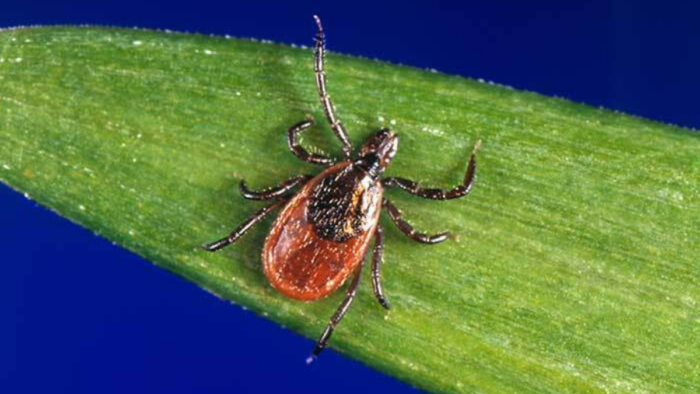
As temperatures rise and people start heading outside, the chance of contracting a tick-borne illness goes up. Cases of Lyme disease have seen a sharp rise in recent years, so reporter Chris Schulz recently spoke with Dr. Kane Maiers, associate medical director for UPMC GoHealth Urgent Care in West Virginia to learn more.
This interview has been lightly edited for clarity.
Schulz: Are we, in fact, seeing more ticks these days? Or is that a symptom of better diagnostic tools?
Maiers: It’s a little bit of both. There is truth to the fact that we are seeing more ticks. I believe that they’re relating that to milder winters. When it gets really cold, gets below freezing, that helps dampen the tick population. Except for last winter, we did have kind of a pretty, pretty rough winter. But aside from that, most of our winters have been milder than they were historically, and that’s resulting in an uptick in the number of ticks we’re seeing. Also, the more people get outside and are doing outside activities, that increases the exposure risk.
It’s a good thing that we’re getting education out there so people are more aware of the dangers of tick bites, and we’re getting better at diagnosing it, so people are coming in for it, and we’re diagnosing it more frequently.
Schulz: What are the risks of a tick bite?
Maiers: Probably the most commonly known risk factor with a tick bite is Lyme disease, that is also the most common complication of a tick bite that we see in West Virginia. There are other tick-borne, or zoonotic, illnesses we call them, that ticks can spread. That includes things like Rocky Mountain Spotted Fever, anaplasmosis, babesiosis. Those aren’t quite as common in our area, but Lyme disease is certainly a risk. You can also get local infection from a tick bite, just like with any insect bite, spider bites. They can become infected with bacteria just because it’s a break in the skin. And it’s not necessarily specific to a tick bite or going to give long-term complications, but that could be treated in and of itself.
Schulz: What about pets? I know that folks sometimes come into contact with ticks on their dogs or on their cats.
Maiers: That is another source that people get exposed to ticks. Their pets will go out, run around through the weeds, they will pick up ticks, and it takes a while for ticks to embed themselves. A lot of times, they will crawl around on the host, be it animal or a person, until they actually latch on. And if they’re not embedded in the animal, in the dog or the cat who may be outside, and you are petting the dog, or the dog is up against you, that tick can transfer from the animal to you, and then it can embed in you.
Schulz: If they’re coming to you or one of your colleagues, is that really just when there’s a suspected bite or a confirmed bite?
Maiers: Yes, if you find a tick that is just crawling on you and hasn’t embedded itself, there is no risk of infection. There’s no risk of Lyme disease or other tick-borne illness. Now that can be a cue that you may want to check yourself really well for ticks, because if you found one crawling on you, there may be others. A lot of times they like to embed in areas like the hairline that can be difficult to see, in your axilla area — your armpits — down around your belt line, so they can be kind of hard to see. But you want to do a thorough check if you find one on you.
Schulz: How should people be checking for ticks?
Maiers: When you’re going outside, if you could wear light colored clothing, ticks tend to be dark. They’re like a dark brown or even black. So if you have light colored clothing on, it makes them easier to spot if they’re crawling on your clothes. And then when you come back inside, you remove your clothing, put it in the wash, dry it on high heat that will kill any that may be on your clothes. And then you need to do a thorough check yourself. And like I said, those areas that I mentioned, the axillary area, around the belt line, the hairline, in the groin area, even, they can attach. And sometimes it can be hard to see those areas. And you know, we do recommend that you use a mirror or have somebody else help you check for those areas and remove them as soon as possible.
Schulz: Does it matter to know what kind of tick you were bitten by if you happen to dispose of it before you see a medical professional?
Maiers: Yes, there is value to knowing what kind of tick it is. If the ticks look different, that means they’re a different species. They can be different sizes. They start in like a nymph stage, and then they’ll grow to an adult stage. But the characteristic coloring that they have does help determine what species of tick it is. The black legged tick that is common in West Virginia, we refer to that as a deer tick a lot of times. It is very small, has a characteristic look to it, that is the number one spreader of Lyme disease that we see. And then there are other ticks like the Lone Star tick that we do see in West Virginia that spreads something called Alpha-gal. I don’t know if you’ve heard of that before, the meat allergy that you can get from tick bites.
If you can either bring the tick in, you know, put it in a bag or a container to bring it in so the healthcare provider can see it, or if you just take a picture of it, you know that that works well too.
Schulz: Can you tell me a little bit more about some of these other infections? Alpha-gal, and you mentioned Rocky Mountain Spotted Fever.
Maiers: They are legitimate concerns. We do see cases of those in West Virginia, just not as common as Lyme disease. The statistics that I have for Lyme, specifically from the Department of Epidemiology and Statistics in West Virginia, show that we had about 300 cases of Lyme disease in West Virginia in 2016. That increased to about 1,500 in 2021, so that kind of gives you an idea of a pretty dramatic increase that we’ve had.
The other ones, Rocky Mountain Spotted Fever is similar to Lyme. It presents with a rash, fever, chills, body aches. The rash doesn’t look exactly like the rash with Lyme disease, but it’s a very similar disease process. The babesiosis, anaplasmosis, Alpha-gal, that does not present with a rash, so they’re a little bit harder to diagnose. They can present with just flu-like symptoms. That’s why it’s important to see a healthcare professional, because one, we can help determine if you’re at risk for tick disease, and if we feel you are, we can do testing that can determine if you have one of those and direct treatment.
Schulz: How can people prevent being bitten? You mentioned light clothing earlier. Are there any other steps that people should take?
Maiers: If you can avoid having a lot of underbrush or tall grasses in the areas you frequent, be that around your house. You’d want to keep your lawn short, not have a lot of underbrush that you’re walking through around your house. And then too, when you’re out on trails, you want to stick to the trails. Don’t be going in areas where grass is going to be brushing up against your legs, underbrush is going to be brushing up against you and kind of stay off of the ground where ticks are, because they just they lay and wait for an animal or a person to brush by them on the grass or the shrub that they’re on, and then that’s how they attach to you. And certainly wearing long pants, long sleeve shirts. I know a lot of us don’t like to do that in the summertime, but that does make it more difficult for the ticks to get access to you. You can also use bug sprays that contain DEET, things like that.
Schulz: Is there anything that I haven’t given you a chance to discuss with me, or anything that we did touch on that you’d like to highlight at this time?
Maiers: I would say that if you do find a tick that is embedded on you, it is important to remove it as soon as possible. The less time they spend embedded, the less likely they are to transmit a tick-borne illness. So don’t be afraid to remove it on your own at home. Just take some tweezers, apply some gentle pressure and try to get the tick out. Now, sometimes there may be some tick parts, or the mouth parts may be stuck in there. That is okay. You’d want to come in to see us or another healthcare provider that can get those out for you and make sure that it doesn’t develop into a secondary infection. But removing the tick, even though those mouth parts are in there, will reduce your risk of contracting a tick-borne illness. There is also preventive medication that you can take if you were bitten by a high-risk tick in an endemic area, which West Virginia is an endemic area for tick-borne illness. We could prescribe antibiotics that help prevent you from developing Lyme disease, even without testing or you developing symptoms.
Add WVPB as a preferred source on Google to see more from our team

The West Virginia Extension service is asking volunteer firefighters why departments are struggling to recruit and maintain members and what support firefighters need.
Continue Reading Take Me to More NewsHuntington is one of eight communities nationwide to be awarded a $3-million federal grant to strengthen efforts to help struggling residents.
Continue Reading Take Me to More NewsWest Virginia Health Right (WVHR) will host its third annual #WeCareWV Day on Oct. 17, a free walk-in medical, dental, and vision clinic for anyone in need.
Continue Reading Take Me to More NewsDirect-to-consumer tests like full-body scans are marketed as a way to catch diseases early and establish a baseline. But there are financial, physical and psychological risks to all medical tests — and in some cases, not getting a test could be better for your health. From the Appalachia + Mid-South Newsroom, HealthQ hosts Cara Anthony and Blake Farmer speak with UCSF Cardiologist Dr. Rita Redberg.
Continue Reading Take Me to More News