This week, we remember the one and only Dolly Parton. Dolly used her musical success to help others. She started the Imagination Library, a free book program for children that included some of her favorites, like the "Little Engine that Could." And, Dolly’s kindness touched people from all walks of life.
In recent years, provisional CDC data have shown a sharp national decline in overdose deaths — even as public officials warn the street drug supply remains volatile and some communities see signs of a rebound.
That uncertainty is also reshaping the recovery world — especially around opioids. Some people find abstinence-based recovery works best. Others rely on medication-assisted treatment (MAT), using prescribed medicine like methadone or buprenorphine to stabilize a person and reduce the risk of relapse. But MAT has long divided the recovery community, fueling a stigma around a deceptively simple question:
When is someone sober?
In this encore episode of Us & Them, Trey Kay visits the Clarksburg Mission in Clarksburg, West Virginia — a Christian-centered recovery facility where people pursue different paths toward sobriety — and where debates about medication, morality and survival are never abstract.
This episode of Us & Them is presented with support from the Claude Worthington Benedum Foundation, the CRC Foundation and the West Virginia Humanities Council.
Subscribe to Us & Them on Apple Podcasts, NPR One, Spotify or wherever you get your podcasts, or listen to Us & Them on WVPB Radio.
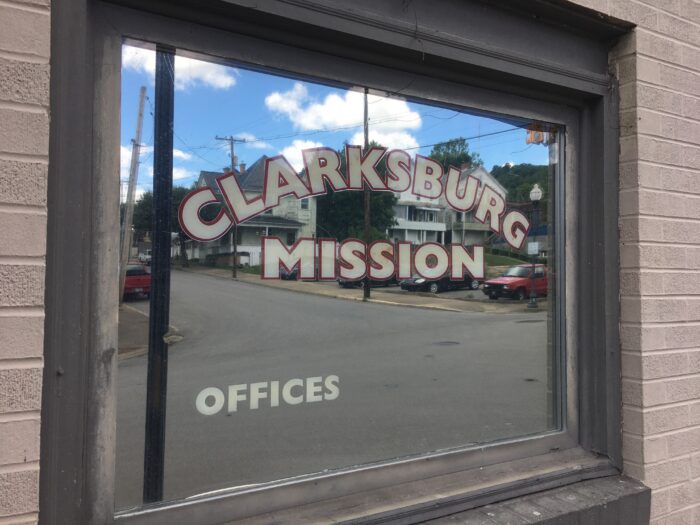
A window at the Clarksburg Mission reflects a street scene outside the Christian-centered recovery facility in Clarksburg, W.Va. The mission supports residents pursuing abstinence-based recovery as well as medication-assisted treatment.
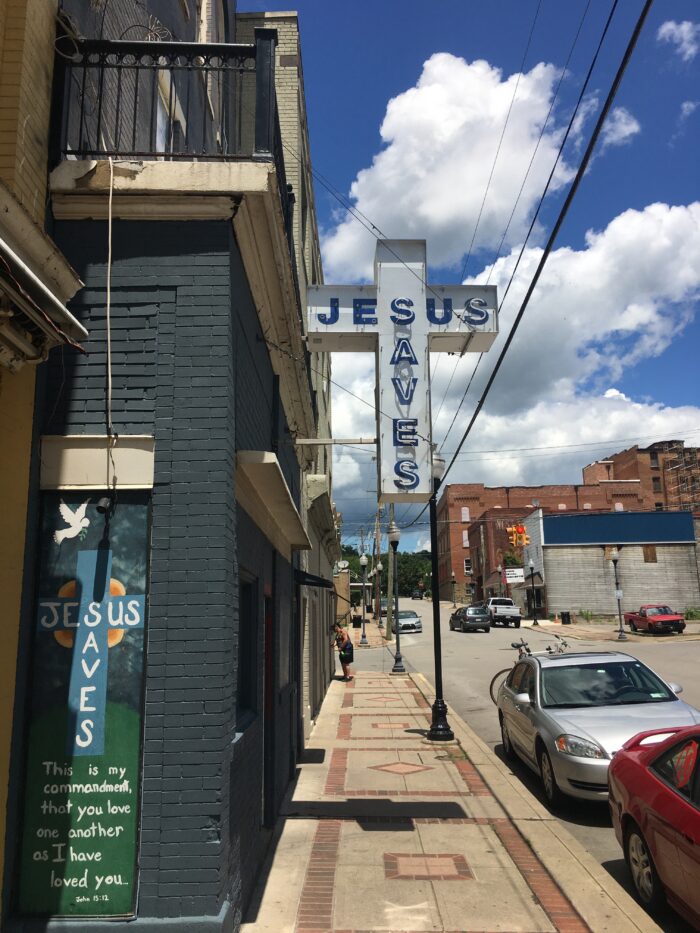
Photo Credit: Trey Kay/West Virginia Public BroadcastingA neon cross outside the Clarksburg Mission carries the message “Jesus Saves” at the Christian-centered recovery facility in Clarksburg, W.Va.
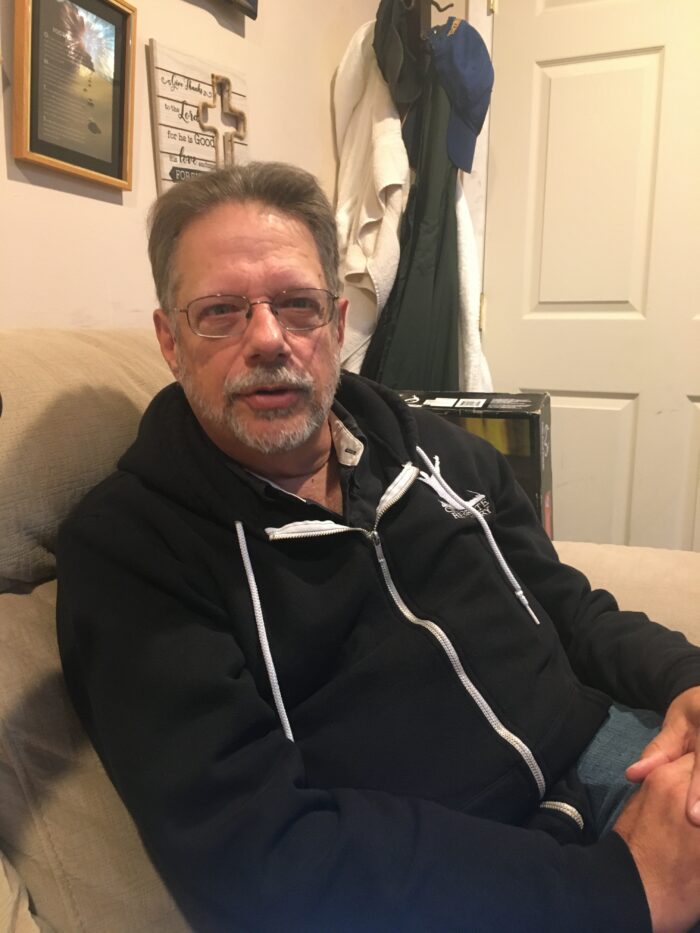
Photo Credit: Trey Kay/West Virginia Public BroadcastingLou Ortenzio, then executive director of the Clarksburg Mission in Clarksburg, W.Va., speaks with Us & Them in 2021.
Photo Credit: Trey Kay/West Virginia Public Broadcasting
“It was magic. It was euphoria. It was incredible. It was energizing. I was 10 feet tall and bulletproof and it felt really good. I could just grab it and take it and no one would know. … It just continued and then it just progressed. And then it was an every night thing. And then slowly I had to have something to get out of bed in the morning because I felt so bad. … It is madness. I was crazed and it was all about pills. It was all about trying to feel better. I couldn’t stop because if you stopped, you were sick. I mean, you’d vomit and have diarrhea and have chills and be anxious and stressed and all those other symptoms would come back.”
— Lou Ortenzio, former Clarksburg physician who lost his medical license after becoming addicted to opioid pain pills
Read the Atlantic feature “Physicians Get Addicted Too” for more on Lou Ortenzio’s journey from West Virginia doctor to opioid addiction and loss of his medical license, and his work in recovery.
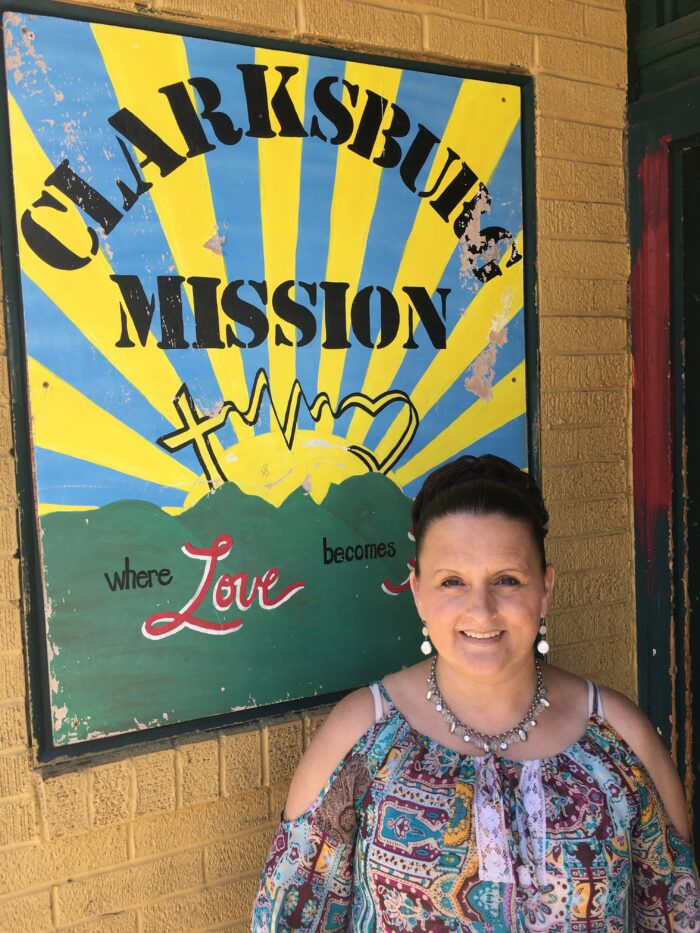
Melissa Carter, who was a recovery coach at the Clarksburg Mission in Clarksburg, W.Va., at the time of this 2021 reporting, shares her experience with recovery.
Photo Credit: Trey Kay/West Virginia Public Broadcasting
“I’ve just watched people get rejected because of what they’re doing. And I know what that feels like and I know what they go through. And I’m the one that’s got to scoop them back up, put them back on their feet and encourage them. … We’re not supposed to push anybody out of a room. The most important person in the room is the newcomer. Whether they’re using or not, that’s what we’re supposed to do, right. To keep them in the rooms, not push them out of the room. So if we’re rejecting them or, you know, using all that stigma against them because of what they’re doing, like we’re pushing, we’re pushing people away. People don’t feel comfortable. … There really is something at stake here. … If you can’t feel comfortable in your recovery and what you’re doing, and know that you’re doing the best you can and you’re not using drugs, you’re not sticking needles in your arms, you’re not at risk of overdosing and dying and people support you through that, then what do you do? Because abstinence-based is not for everybody.”
— Melissa Carter
Angela Knight, then program manager at the Clarksburg Mission in Clarksburg, W.Va., speaks with Us & Them in 2021.
Photo Credit: Trey Kay/West Virginia Public Broadcasting
“For the people that know that I’m on medicated assisted treatment, there is labels and I do get put down and shamed from certain members of the recovery community. … That I’m not really in recovery, I’m not clean. I’m substituting — my recovery doesn’t count. I’m still using. … It made me question, am I really in recovery? Is what they’re saying true? I felt shamed. And so then I felt ashamed of myself. … I wanted to run, to be perfectly honest. Luckily, I didn’t. I continued going to meetings because I worked really hard to get in that seat and I want to be in recovery more than anything. So I stuck with it.”
— Angela Knight
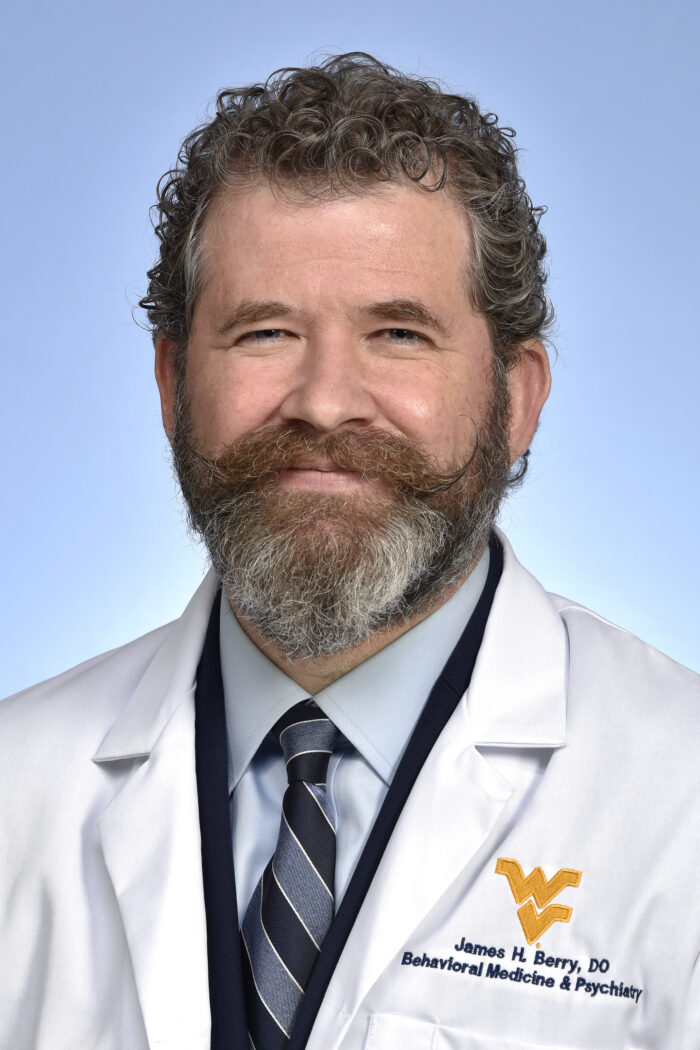
Dr. James Berry, chair of behavioral medicine and psychiatry at West Virginia University’s Rockefeller Neuroscience Institute, speaks about medication-assisted treatment.
Photo courtesy of West Virginia University
“I’ve been steeped in this tension from day one when we first started using it [medication-assisted treatment]. … We realized that there were too many people who needed help and there were too many people who were dying without it. … When somebody will say to me, ‘Aren’t you just trading one drug for another?’ I would say, ‘look at the result.’ … We see enough people over the 20 years we’ve been doing this that it has made a dramatic and drastic difference in their lives. People get their lives back in ways that as a physician I don’t see in other areas of medicine. … Time and time again, we have stories of people who come off the medication because of something they’ve heard from somebody else in the community, then they end up relapsing and sadly dying because of that. People’s lives are at stake when it comes to this.”
— Dr. James Berry
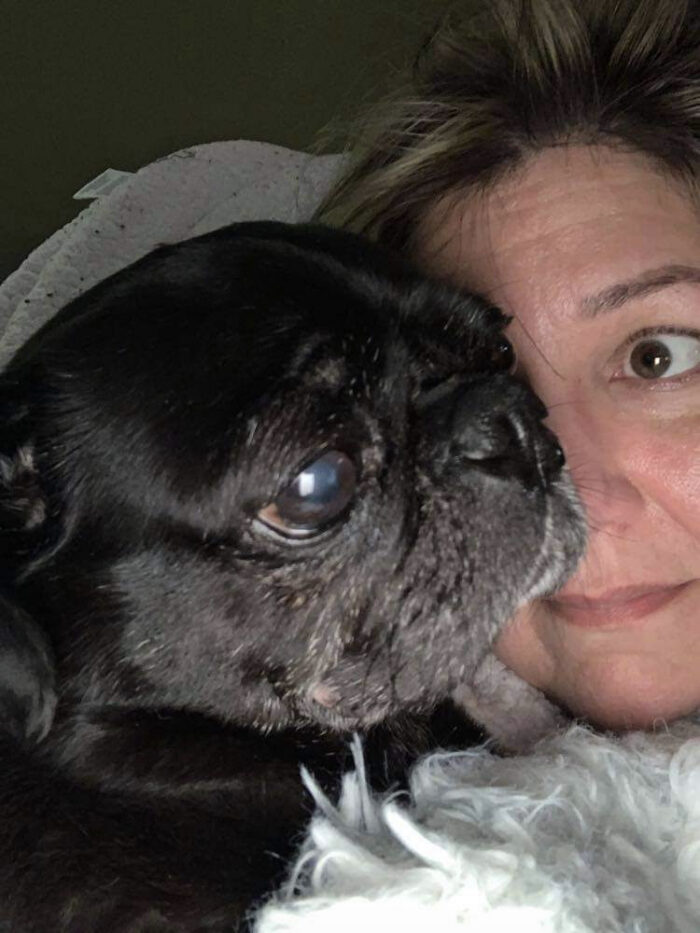
Gabriella Dahalia-Jarrett, an assistant professor at BridgeValley Community and Technical College in Charleston, W.Va., and a person in recovery, is pictured with her dog Sid, whose distinctive “murfing” is heard during her interview about sobriety and medication-assisted treatment.
Photo courtesy Gabriella Dahalia-Jarrett
“I don’t have an issue – like medically assisted treatment can help some people. I do think also, though, like what is sobriety for people who have that issue just in terms of, are you sober if you’re taking suboxone? … Is it OK to take one pharmaceutical, let’s say, the opioid that was given as a form of healing and treat it with another pharmaceutical? … That’s a really difficult question. Honestly. … My mother was an IV drug user and went on methadone for the last six or seven years of her life and she was a different human. So can I see that with suboxone? Yes, I can see that with suboxone. Do I sometimes feel as though we are just treating one addiction with another? Sometimes I feel that way, too. It is something I wrestle with.”
— Gabriella Dahalia-Jarrett
Add WVPB as a preferred source on Google to see more from our team
The West Virginia Department of Human Services (DoHS), in partnership with the Department of Education, announced Wednesday they are expanding Medicaid school-based health services.
As one of the hardest hit states in the country's opioid crisis, communities across West Virginia have started spending their portion of the roughly $1 billion in settlements from pharmaceutical companies and distributors. Schuyler Mitchell, assistant news director at nonprofit newsroom Mother Jones, reported last month on the use of the funds to purchase automated license plate readers, or ALPRs, from companies like Flock. She spoke to Chris Schulz about her findings.
Sept. 8 is National 988 Day, a time to remind West Virginians if they or someone they know is in crisis, the 988 Suicide & Crisis Lifeline is available 24/7.
The mayor of Gallatin, Tennessee, says a Meta hyperscale data center is the city’s largest taxpayer, but residents still have concerns about its effect on utilities, the environment and property values. Travel up I-65 and data center fights are playing out in several Kentucky communities. Lisa Autry from the Appalachia + Mid-South Newsroom went to Gallatin to find out if Big Tech is a good neighbor.


































 Rita Crisafi