


Fourth Annual Women Warriors Summit To Feature High Profile Speakers
The fourth annual Women Warriors Summit will take place at the Marshall Health Network Arena in Huntington on Friday, Oct. 23, 2026.
Continue Reading Take Me to More NewsAlert (09/29/2026): Our Parkersburg TV transmitter is still undergoing maintenance and remains temporarily inoperative. We apologize for the inconvenience.
All our programming is available via our TV livestreams on our website and WVPB Passport. Thank you for your patience!




To Educate, Inform, and Inspire by Telling West Virginia's Story
Mountain Readers 2026 has concluded! Please fill out our volunteer post-survey.
Nominate an exceptional West Virginia K-12 teacher today!

On Demand

On Demand

Stream original productions from WVPB

Watch locally produced documentaries & more.

On Demand

On Demand






West Virginia Morning

Inside Appalachia

West Virginia Week

Mountain Stage

Us & Them

The Legislature Today

The Legislature This Week

Send us your comments and questions.

Stream our board meetings.

Check out the latest WVPB news.

Sign up for our newsletter and get weekly updates.

Meet the WVPB staff.

WV Educational Broadcasting Commission, the WVPB Foundation, and the Friends of WVPB.

Come work with us!

Read our annual report and learn how we educate, inform and inspire with your support.

Sponsor impactful and engaging media and entertainment.

Use your IRA to make a gift to WVPB.

Become a member with your gift of $1,000 or more.

Make WVPB part of your legacy.

Manage your membership account.

Learn how you can Protect and Sustain West Virginia Public Broadcasting.
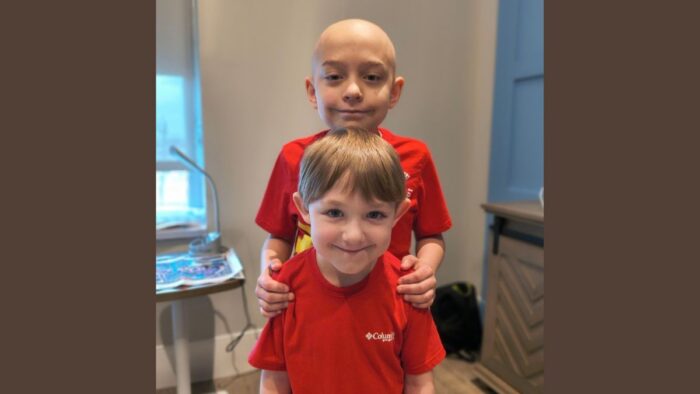
This conversation originally aired in the April 26, 2026 episode of Inside Appalachia.
The community in Scott County, Virginia, has seen a growing number of children who have been diagnosed with cancer.
A local oncology nurse has counted 14 cases since 2023 and has become an advocate for families.
Marina Waters is a local reporter who’s been covering the issue, including for the Virginia Mercury. Inside Appalachia host Mason Adams spoke with Waters to learn more.
The transcript below has been lightly edited for clarity.
Adams: Your story in the Virginia Mercury is headlined, “In Southwest Virginia, Scott County, Parents Search For Answers Amid Children’s Cancer Diagnoses.” What’s going on?
Waters: Well, it seems like there’s a lot going on in Scott County with this. The community really gathered together and said, “Hey, we’ve got an uptick of childhood cancer cases here.” It’s not a very large county. It’s about, give or take, about 500 miles, and so you’ve got a lot of kids there that have gotten these cancer diagnoses. The community basically gathered together and said, “Hey, we’ve seen an uptick. What’s happening? Why is this happening? Hey, we have an issue here.” It’s been all over social media, things like that. And so, families have gathered together to say, let’s take a closer look at what’s going on here.
Adams: Megan Smith is an oncology nurse who plays an important role in your story. Can you tell me about Megan and what she’s been doing?
Waters: Megan’s been spearheading this whole thing. Really, she has been such an important part of this. She’s gathered data. She has talked to families. She’s helped gather resources so people can kind of know what’s going on with these families, and shared GoFundMe links and whatnot. Andrew’s family found out that Andrew might have cancer thanks to some of Megan’s posts about the symptoms and what to look for. So that’s been a really important thing that she’s done in addition to everything else. She also started the Southwest Virginia Mountain Valley Coalition that’s been really helpful to try to get some testing done, raising money for some of these independent tests for air quality, water quality, things like that, to hopefully get some answers for the families out in southwest Virginia.
Adams: Can you kind of give me the gist of what she thinks might be going on and why she started tracking this information?
Waters: There are a lot of theories out there, and no one really knows for sure at this point, but they’ve tested for radon. They’ve tested for water and air quality, all sorts of things like that. There’s some people that believe that it could be the water, but the families I spoke to told me that they’re on well water. So it does make you wonder, could it be something in the ground? Could it be pesticides? That’s something Megan and I talked about. It’s a very rural area, southwest Virginia, and Scott County is very rural. So it could be some sort of pesticide. Or could this be the impacts of something that happened decades ago or several years ago, that we’re just kind of seeing the impacts from it? That’s something else that’s kind of been interesting, that Megan mentioned, was there have been some cases of autoimmune disorders that have cropped up that look like a cancer, they appear as a cancer. Maybe have some symptoms like that. Then, you come to find out it’s autoimmune. So could that be related to these cancer diagnoses. It’s a big question mark as of right now. But there are a lot of theories too, so we’re not really sure.
Adams: It sounds like this community took their findings to the Virginia Department of Health. What was the response from the state?
Waters: The state conducted a study to see if Scott County has a cancer cluster. According to the CDCs definition, Scott County isn’t considered a cancer cluster. Megan and some other community members really pushed for that study to be done from the Virginia Cancer Registry and the Virginia Department of Health. Eventually, they did that study, and they found that it’s not considered a cancer cluster. They had the town hall meeting as well in Scott County, and basically they told the community what they had found.
From there, you had some frustration from parents and community members. I think the main frustration comes from the data lag. It seemed like the most cases in the past few years have come up in 2024 and 2025, and that data was not included in the study. That was the frustration that a lot of parents had, and you’ll see that throughout the story from different families and people that I spoke to.
According to Megan Smith, since 2023, there have been 14 children diagnosed with cancer of some sort in Scott County. Two of those cases were in 2023, five were in 2024, and seven in 2025. So just hearing those numbers, it sounds like it’s going up. It’s trending upward in numbers. So the question is, why aren’t the 2024 and 2025 numbers included? So I asked the Virginia Department of Health, and they explained that any provider has up to about six months to report a cancer diagnosis. They want to have that room to really make sure they have the numbers correct. You can also have duplicate numbers of the same case, things like that. So they said that they need a little more time to get all of the numbers as correct as they can get it. That’s kind of been where they’re at. The Virginia Department of Health is working to get those numbers, and I believe they should have them in 2026, so that’s something that the community is definitely looking ahead for.
Adams: I can understand why they’re frustrated, though, with that data lag. I notice in your story, it mentions that some of these families are turning to go fund me to raise money for these treatments, which can get really expensive. So, can you tell me a little bit about some of the families you spoke to, and what’s the latest there?
Waters: It was a pleasure to talk to these families. They are in such a tough season of their life, and they were so gracious to talk to me, and to think back on those really tough times. That really meant a lot to me. It’s not lost on me that they would share and trust me with their stories. That always means a lot to me as a journalist.
I talked to two families. They’re both in Scott County, so this was andrick Williams and avin Culbertson, and I talked to their mothers. So Kelsey Williams was the first mom I talked to, and her son is 10 years old. His name is Andryk. He’s out of Fort Blackmore, Virginia, and Rick was diagnosed with Ewing sarcoma, which is an aggressive bone cancer. Andrick is very much in the middle of his treatment. Him and his mom have been in St Jude for quite a while, and Kelsey shared with me they are actually reassessing his case, that he was diagnosed with Ewing sarcoma to begin with, but they are looking to see if it’s metastatic Ewing sarcoma, which could be a little more widespread and maybe call for a different sort of treatment. Kelsey is also a single mom and has a son that is at home in Scott County with her mom.
Then I talked to Avyn Culbertson’s Mom, Ashley Culbertson. Avyn was diagnosed with B-cell leukemia in 2024 and she is hoping to ring the bell that says, “Hey, we’re done with cancer. We’re done with with our treatment in October,” if everything goes right. So that family is really, really hoping that they can end their cancer journey and come back home. It was kind of nice to talk to two families that went through a very similar struggle, of course, and had been in St. Jude and had very similar questions about what’s causing this issue in the county, but are also at different points in their journey. So it was nice to speak to both of them.
Adams: Marina, you worked on this story as a freelancer, but you’ve spent time in that area editing and writing for the local newspapers. You were rooted in your community there in northeast Tennessee, southwestern Virginia. Can you talk a little bit about that rootedness in the community, and how that helped you to cover this story, versus somebody swooping in to cover it from, say, one of the big East Coast publications. You know your community, and you got to spend time with these folks over an extended period. Can you discuss that a little bit?
Waters: Sure. So, I live probably, I’d say 15 minutes maybe from Gate City — very, very close to Scott County. I have some family members out that way. My family spends a lot of time out in Scott County. We love the Carter Fold and the beautiful outdoors in Scott County. So very, very familiar with it, and I had just seen so many posts on social media, so many people asking me if I had heard about the uptick in childhood cancer cases in Scott County. It feels really close to my heart, and I think there’s nothing like local coverage when you have a local journalist that is working hard to cover the community but also tell the story and not exploit it.
It’s important to remember that you are being trusted with these stories, like the Culbertsons and the Williams — they’ve definitely trusted me with those stories. But also this community has really been grateful for any coverage. They’ve really been excited to see that people are asking questions and that it’s reaching beyond just their neighbors. It’s reaching other parts of of the county, of the state, of the region of the world, hopefully to help them get some answers. I think that’s where they’re at right now. They’re wanting any answers they can get. And I think they see that. Awareness is a way that they could get some help. From my perspective, I think northeast Tennessee can be forgotten about, and I think southwest Virginia, it seems the same way. It seems like it’s forgotten about. So I think it’s really important for me to share the stories of the people that are here, and share the stories of home, and talk about what’s happening, what’s going on, and share those untold stories that are important to me for sure.
Add WVPB as a preferred source on Google to see more from our team

This week, in author Willie Carver, Jr.’s new book, he reconsiders a negative childhood experience with a neighborhood girl who might have just been looking for a friend. Also, a southwestern Virginia community rang the alarm after more and more of its children were diagnosed with cancer. A local journalist is trying to unravel the cause. And, the city of Asheville has a new crusading reporter. He’s a puppet.
Continue Reading Take Me to More NewsThe 53rd annual Charleston Distance Run kicks off Saturday with more than 800 racers from 25 states, Puerto Rico and Canada.
Continue Reading Take Me to More NewsA West Virginia physician has been named the 2026 Patient Advocate of the Year for the work she does with a prominent free and charitable clinic.
Continue Reading Take Me to More NewsThe heir to property donated for a community hospital in McDowell County is suing in hopes of keeping the hospital open.
Continue Reading Take Me to More News