Alert (09/29/2026): Our Parkersburg TV transmitter is still undergoing maintenance and remains temporarily inoperative. We apologize for the inconvenience.
All our programming is available via our TV livestreams on our website and WVPB Passport. Thank you for your patience!
This week, Barbara Kingsolver’s new novel takes on issues of class and classical music. Also, kudzu warriors band together to fend off invasive plants and take back the land. And, it’s pawpaw season, but a new bug could be harming the trees.
America’s housing shortage continues to put affordable homes out of reach for people across the country — from small towns to big cities.
While West Virginia has the nation’s highest level of homeownership overall, many residents still struggle to find something that works for their budget. In fact, nearly 140,000 West Virginians spend more than 30 percent of their income on housing costs.
In this episode of Us & Them, host Trey Kay looks at the squeeze in two places—Philadelphia and southern West Virginia—finding that while inventory has improved, costs remain well above pre-pandemic levels and even manufactured homes, once an entry point for many, are slipping out of reach.
This episode of Us & Them is presented with support from the West Virginia Humanities Council and the CRC Foundation.Subscribe to Us & Them on Apple Podcasts, NPR One, RadioPublic, Spotify, Stitcher and beyond.
Claudia Aiken, director of the Housing Initiative at the University of Pennsylvania.
Photo Credit: University of Pennsylvania
“Housing became really important during the pandemic … not only because we were home all the time and working from home, but because housing itself was suddenly at stake in a way it hadn’t been. People who were doing fine before were still doing fine—many even did better with stimulus checks and the homeownership boom, as rising values benefited those with assets. But on the other side of the spectrum, the pandemic hit service workers hard. Many of them are renters, and suddenly they had no income; they couldn’t pay rent and had to ask, ‘Can I stay in my home another month?’”
— Claudia Aiken, director, Housing Initiative, University of Pennsylvania
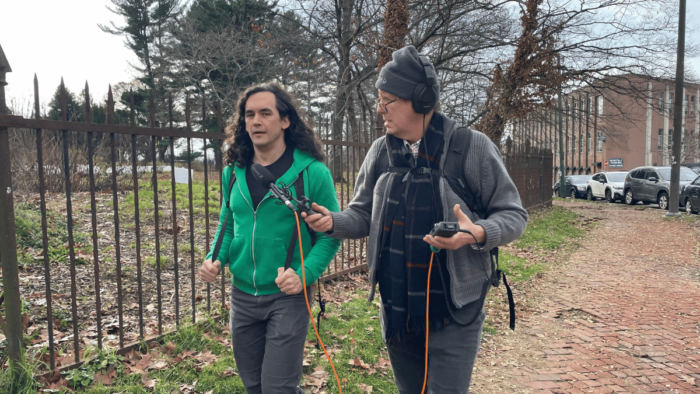
Taylor Kessinger (left), a researcher in the University of Pennsylvania’s Biology Department, walks with Us & Them host Trey Kay (right) in West Philadelphia.
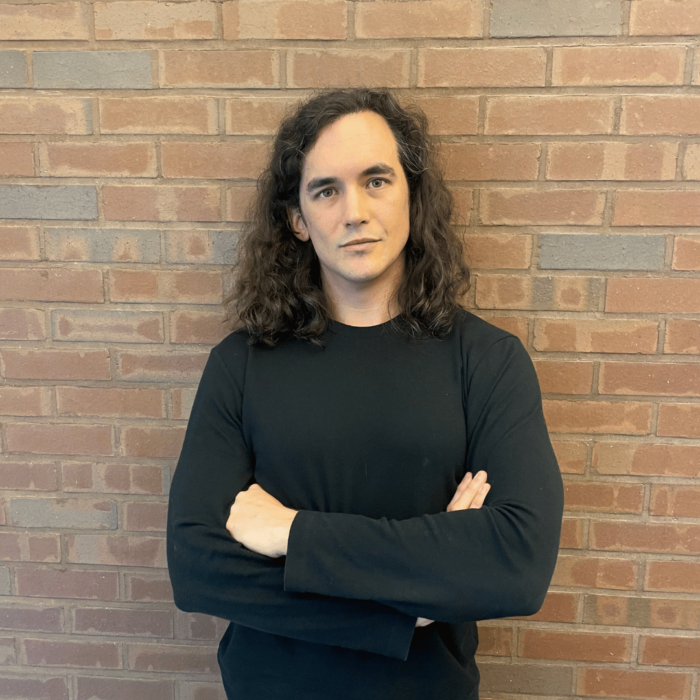
Photo Credit: Christina StellaTaylor Kessinger, is also a housing development advocate in Philadelphia, who often attends zoning board meetings in his West Philadelphia neighborhood of Squirrel Hill.
Photo Credit: Trey Kay/West Virginia Public Broadcasting
“A lot of people genuinely believe housing costs are out of control … and that if you want to rein them in, you need to allow more homes to be built — the market has a role to play. … Opposition and support don’t line up neatly with left-right politics: some folks are NIMBY (not in my backyard) for explicitly right-wing reasons — they don’t want apartments in exclusionary suburbs because they associate them with lower-income residents or crime … while others are NIMBY or anti-YIMBY (yes in my backyard) from the left because they fear development will raise land values and rents, putting people at risk of displacement. … You’ll see people oppose development because it might lower property values, and you’ll also see opposition because it might raise property values — and therefore property taxes — especially in a city like Philadelphia, where there’s a high rate of lower-income Black homeownership.”
— Taylor Kessinger
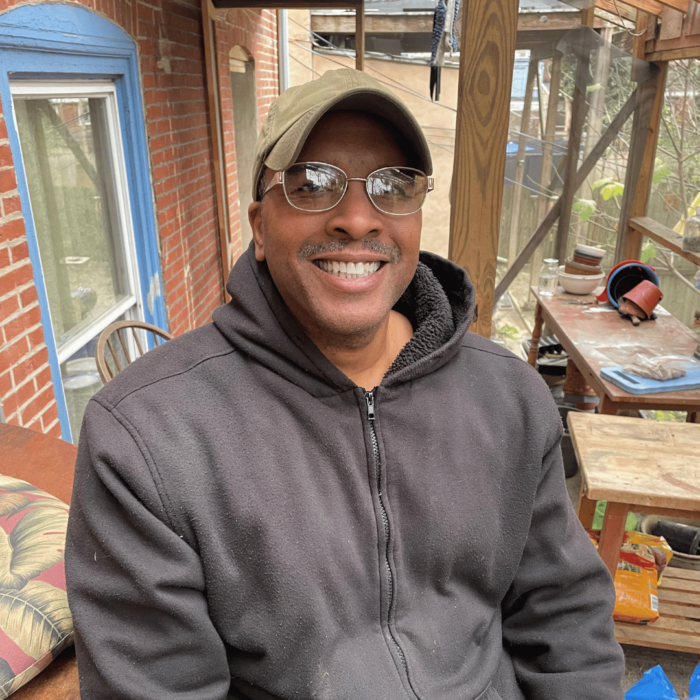
Ron Whyte, a lifelong Philadelphian and housing activist, sits on the back porch of the Victorian house he shares with five roommates in West Philadelphia’s Squirrel Hill. He says he was priced out of a previous apartment by “ren-o-viction” — moderate renovations followed by steep rent hikes.
Photo Credit: Trey Kay/West Virginia Public Broadcasting
“I think they call it ‘renoviction’, where they decide to renovate the building. And that’s a way that they push people out is by saying, ‘Look, we have added this amenity, or we have fixed the doors, we have painted,’ or something like that. ‘And now, because we painted, we have to raise the rent by $500 a month,’ which for a lot of people living there wasn’t really affordable.”
— Ron Whyte
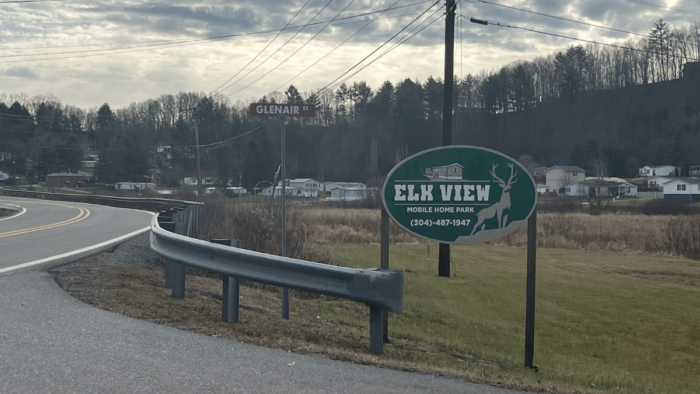
Elk View Mobile Home Park in Mercer County, West Virginia. About 22 million Americans live in manufactured homes for their relative affordability, but residents are facing new pressures: sudden lot rent increases, often after new ownership and capital improvements. Elk View residents say the same squeeze is happening here.
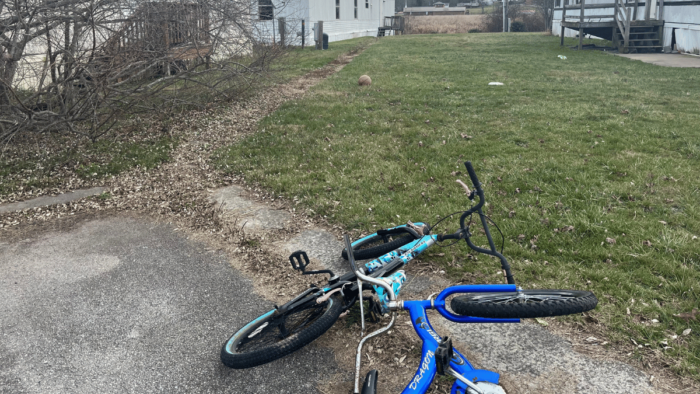
Photo Credit: Jessica LillyBicycles lie in a yard between manufactured homes at Elk View Mobile Home Park in Mercer County, West Virginia.
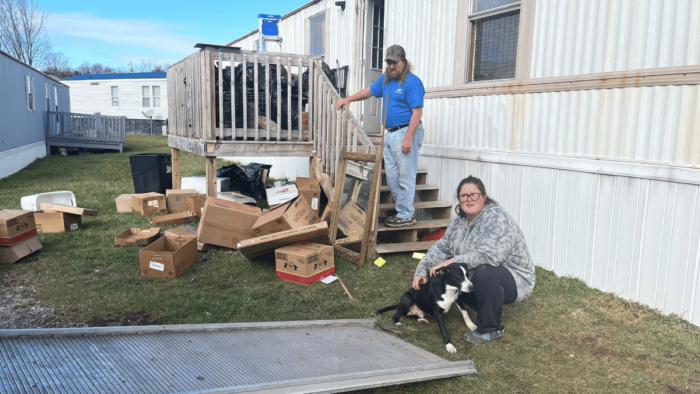
Photo Credit: Jessica LillyOn a cold December day, 19-year-old Kayla Thompson and her stepfather, Eddie Woodward, pause while loading most of their belongings into a moving truck at Gardner Estates Mobile Home Community in Mercer County, West Virginia. They’re leaving after living without electricity and heat for about six weeks; they say the electrical problem took a month and a half to fix. Homes of America, LLC — which in the past year purchased five manufactured home parks in Mercer County, including Gardner Estates — now owns the property. Sandy Kinney, an attorney for the company says, “It is making substantial investments to improve these long-neglected properties, so the residents live in places they are proud to call home.”
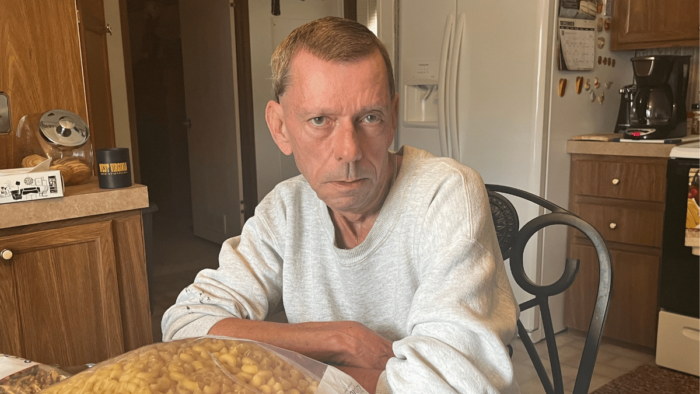
Photo Credit: Jessica LillyGary Cooper sits in his kitchen with a bag of macaroni from the food bank at Delaney Mobile Home Park in Mercer County, West Virginia. Now owned by Homes of America, his park faces rent hikes of more than 200 percent; Cooper says he wants to stay in the home he takes pride in.
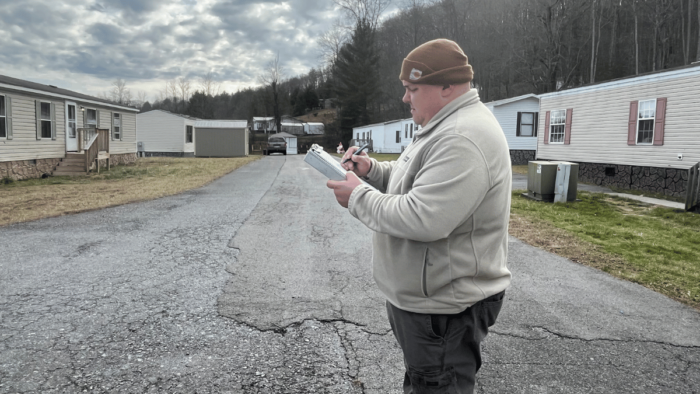
Photo Credit: Jessica LillyOn a bitterly cold day in late December, Matthew Bragg — lead sanitarian for the Mercer County Health Department for about seven years — conducts a rare winter inspection at Elk View Mobile Home Park in Mercer County, West Virginia. The court-ordered visit asks him to check water conditions, specifically drainage and sewage issues, and verify health and safety compliance.
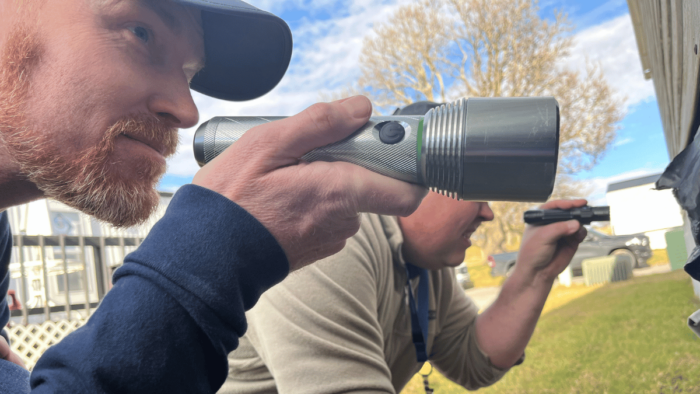
Photo Credit: Jessica LillyAdam Wolfe, a staff attorney with the nonprofit Mountain State Justice, joins Mercer County Health Department inspector Matthew Bragg at Elk View Mobile Home Park in Mercer County, West Virginia, to review drainage and other health-and-safety concerns. Residents had contacted the firm after receiving letters saying their lot rents would more than double in roughly 60 days.
Photo Credit: Jessica Lilly
“These are people who can’t fight for themselves … who may not be sophisticated enough to know what to ask for from a billion-dollar, out-of-state corporation with tons of lawyers.”
— Adam Wolfe, Mountain State Justice
Add WVPB as a preferred source on Google to see more from our team
On this West Virginia Week, a mine operation in Kanawha County gets a WARN Notice, three Wyoming County Schools will remain closed until next week, and we learn the origins of the Flatwoods Monster.
This week, Barbara Kingsolver’s new novel takes on issues of class and classical music. Also, kudzu warriors band together to fend off invasive plants and take back the land. And, it’s pawpaw season, but a new bug could be harming the trees.
Barbara Kingsolver is one of Appalachia’s foremost writers. She’s written a string of bestsellers, like "The Poisonwood Bible" and "Demon Copperhead," which won her the Pulitzer Prize. Inside Appalachia’s Mason Adams met Kingsolver at her home outside Abingdon, Virginia, to talk art, writing and her latest book, "Partita." We listen to an excerpt from that interview.
West Virginia has seen the largest population decline in the nation - nearly 1.5% - and many of those leaving are young people. In an episode that aired last month, Us & Them host Trey Kay heard from some young people who think they may stay in the state to launch their futures. This month, Kay talks with those who say living their dreams may well require moving away from the Mountain State. We listen to an excerpt from the latest Us & Them.