


Two W.Va. Turkeys To Be Pardoned By Trump
Two white-feathered birds from a Pendleton County, W.Va. farm have been selected for the traditional White House pardon.
Continue Reading Take Me to More News



To Educate, Inform, and Inspire by Telling West Virginia's Story

Mountain Readers 2026 has concluded! Check out our classroom resources.

Nominate an exceptional West Virginia K-12 teacher today!

On Demand

On Demand

Stream original productions from WVPB

Watch locally produced documentaries & more.

On Demand

On Demand






West Virginia Morning

Inside Appalachia

West Virginia Week
Mountain Stage
Us & Them

The Legislature Today
The Legislature This Week

Send us your comments and questions.

Stream our board meetings.

Check out the latest WVPB news.

Sign up for our newsletter and get weekly updates.

Meet the WVPB staff.

WV Educational Broadcasting Commission, the WVPB Foundation, and the Friends of WVPB.

Come work with us!

Read our annual report and learn how we educate, inform and inspire with your support.

Sponsor impactful and engaging media and entertainment.

Use your IRA to make a gift to WVPB.

Become a member with your gift of $1,000 or more.

Make WVPB part of your legacy.

Manage your membership account.

Learn how you can Protect and Sustain West Virginia Public Broadcasting.
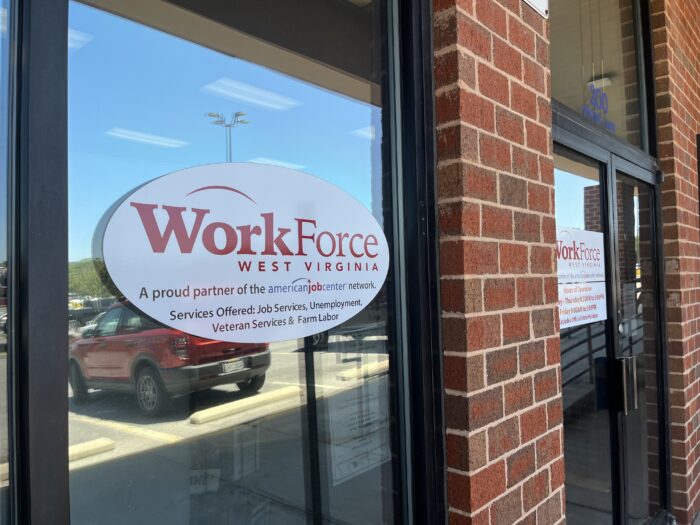
West Virginia’s seasonally adjusted unemployment rate was 4% in October, the same as it was in September. Nationally, the seasonally adjusted unemployment rate decreased from 4.2% to 4.1%.
Unemployment is calculated based on the number of people working or seeking work. Those who have dropped out of the workforce are not included.
West Virginia’s seasonally adjusted labor force participation rate was unchanged at 53.8 percent in October. That is the lowest in the nation. The national average is 61.9%. If West Virginia’s labor force participation was equal to the national average, that would mean more than 100,000 more people in the workforce.
According to a press release from Workforce West Virginia, the total number of employed state residents increased by 400 over the month – rising to 741,800 – while the number of unemployed state residents decreased by 200 to 30,500.
Total nonfarm payroll employment decreased by 1,700 from September to October. The goods-producing sector declined by 400 over the month while the service-providing sector dropped by 1,300.
Manufacturing scaled back 300 and mining and logging slid by 100; meanwhile, construction did not see any changes in October.
The service-providing sector saw its largest loss in professional and business services, down 500 over the month. Leisure and hospitality (-300); total government (-300); trade, transportation, and utilities (-200), and information (-100) all saw decreases as well.
Financial activities and private education and health services did not change over the month. Only “other services” gained any employment, gaining 100 in October.
Over the year, total nonfarm payroll employment lost 2,500. Construction saw the biggest decline, losing 1,600, followed by professional and business services, which lost 900, and financial activities, which lost 800. Mining and logging, as well as other services, each slid by 700. Manufacturing dropped by 500; information fell by 400; and trade, transportation, and utilities decreased by 300.
The largest increase came from private education and health services at 1,900. Total government grew by 800, and leisure and hospitality gained 700.
Add WVPB as a preferred source on Google to see more from our team

Washington National Cathedral will host the funeral service for West Virginia Governor and Senator Jay Rockefeller who died on Nov. 6.
Continue Reading Take Me to More NewsA partnership between a government agency and Appalachian prison inmates is proving helpful to both sides – and to hundreds of orphaned animals.
Continue Reading Take Me to More NewsNASA expects to welcome its first class of 300 students by 2028. An academy building will not be completed for occupation then, but Gov. Patrick Morrisey announced alternative lodgings are ready to go at West Virginia University.
Continue Reading Take Me to More NewsMoving is a daunting experience for most of us. In addition to the packing, searching for a new home and getting settled, there’s a lot to do. Something a lot of young people don’t put on the list: a series of health decisions that need to be made.
Continue Reading Take Me to More News