Alert (09/29/2026): Our Parkersburg TV transmitter is still undergoing maintenance and remains temporarily inoperative. We apologize for the inconvenience.
All our programming is available via our TV livestreams on our website and WVPB Passport. Thank you for your patience!
This week, Barbara Kingsolver’s new novel takes on issues of class and classical music. Also, kudzu warriors band together to fend off invasive plants and take back the land. And, it’s pawpaw season, but a new bug could be harming the trees.
There’s a nationwide rift among farmers over the use of dicamba, a popular herbicide. A 2024 federal court ruling has halted dicamba’s use, but the Environmental Protection Agency (EPA) has given the green light for farmers to use existing supplies this year.
In this episode of Us & Them, we revisit a story from our archives that delves into the intense battle unfolding in farm country. Originally designed to help soybean farmers combat ‘pigweed,’ dicamba has proven controversial because it drifts from where it’s sprayed, causing harm to desirable plants. The legal fallout has reached a point where farmers and gardeners hesitate to speak out about crop or plant damage due to fear.
On the flip side, those advocating for dicamba have taken the matter to court, challenging the authority over pesticide use rules in some states. In a departure from the typical tight-knit atmosphere of rural farm communities, where issues are often resolved locally, Arkansas is experiencing an un-neighborly atmosphere, with tensions escalating.
This episode of Us & Them is presented with support from the Fund for Investigative Journalism, the West Virginia Humanities Council and the CRC Foundation.
Subscribe to Us & Them on Apple Podcasts, NPR One, RadioPublic, Spotify, Stitcher and beyond.
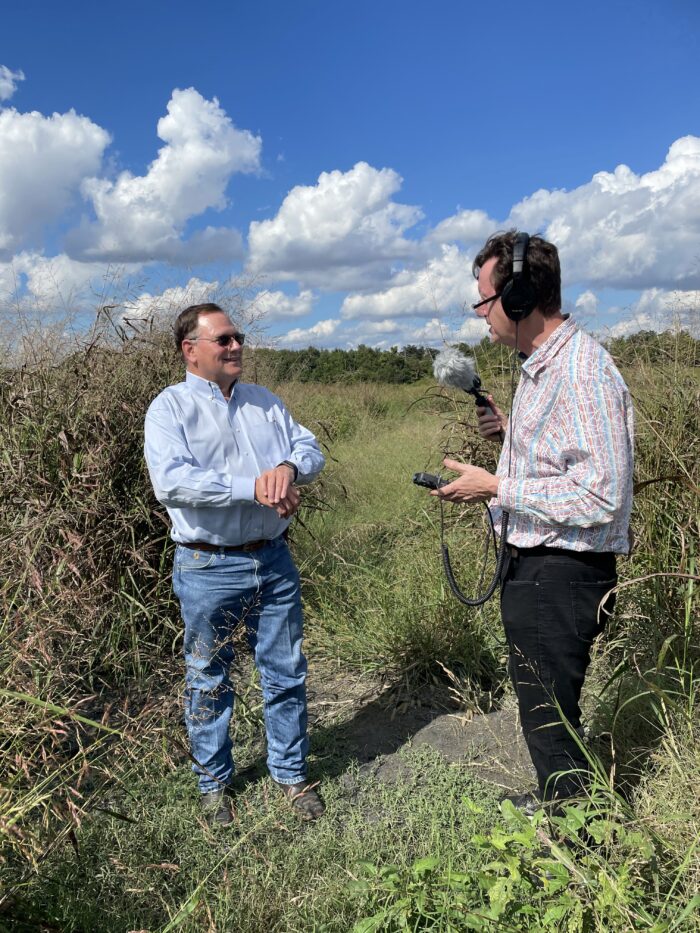
Terry Fuller, former member of the Arkansas Plant Board, shows Us & Them host Trey Kay the place where several of his hay bales were set ablaze not long after he made public statements calling for limitation on the use of a special formulation of dicamba during the growing season. Fuller also says that two of his tractors were vandalized which caused more than $60,000 worth of damage.
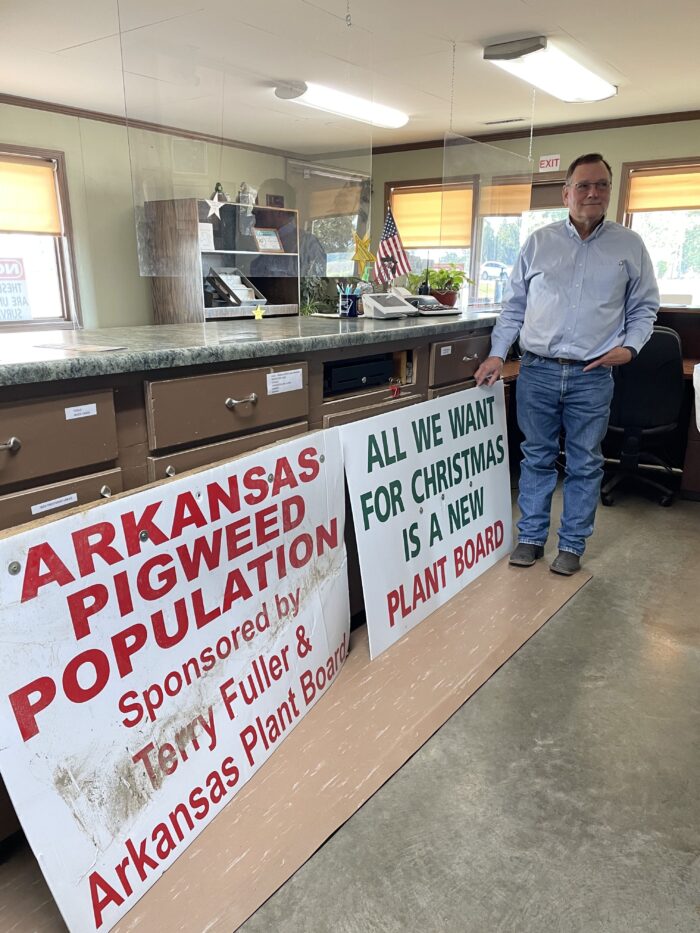
Photo Credit: Loretta WilliamsTerry Fuller, former member of the Arkansas Plant Board, displays a couple of signs that have repeatedly been posted alongside the roads near his house. One sign could be seen from his daughter’s bedroom window on Christmas Day.
Photo Credit: Loretta WilliamsRichard Coy’s family has been in the honey producing business since the 1960s. Over the years, Coy’s Honey Farm became the largest commercial bee business in Arkansas. Coy claims dicamba has had an adverse effect on the plant life necessary for honey bees to thrive and produce honey. He says the conditions got so bad that he and his family had to move their business from Arkansas to Mississippi.
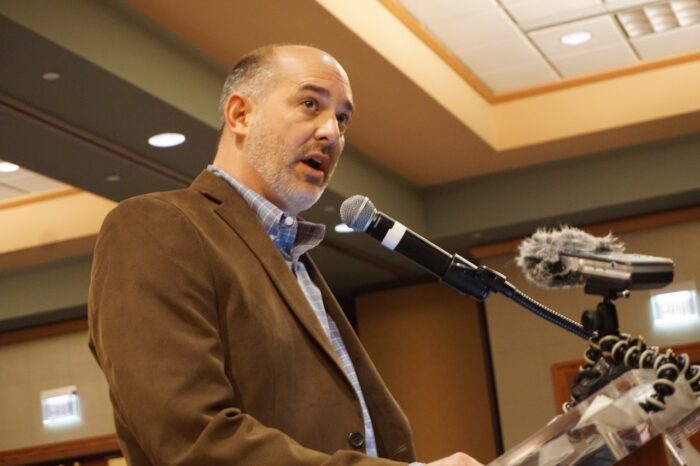
Photo Credit: Loretta WilliamsFranklin Fogelman, a soybean farmer in Arkansas, speaking at a special session of the Arkansas Plant Board in 2019. He believes farmers like him need to be able to use dicamba during the growing season to control weeds in their fields.
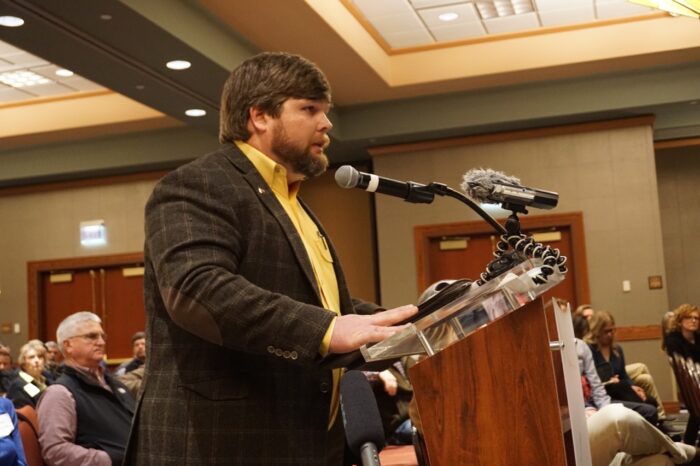
Photo Credit: Loretta WilliamsReed Storey, a soybean and cotton farmer, opposes the use of the newer formulations of dicamba during the growing season because he believes the herbicide can harm the crops of neighboring farmers. He sees this as “big agriculture against smaller growers.”
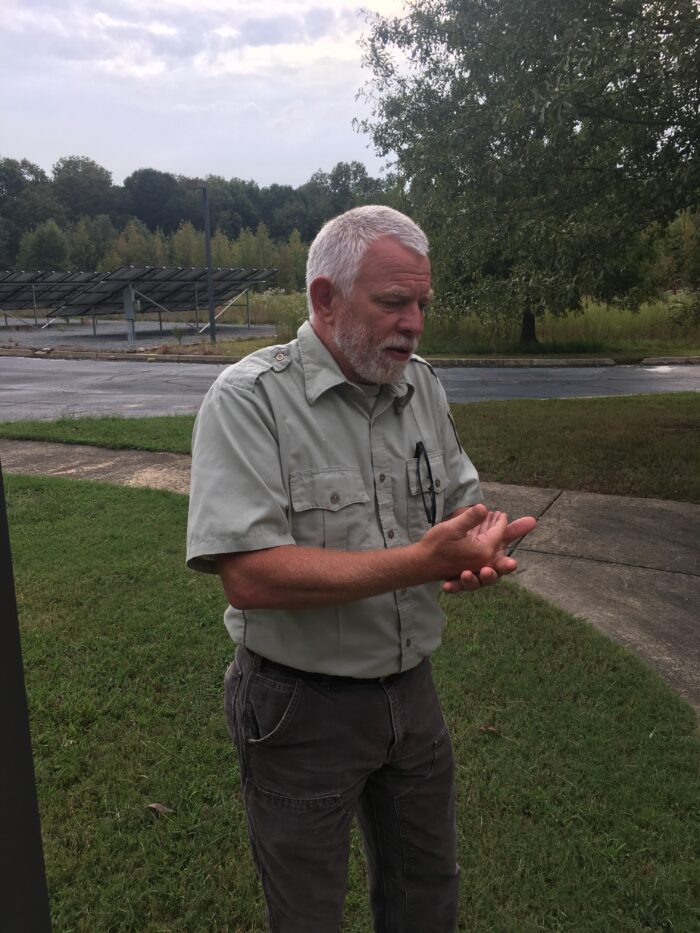
Photo Credit: Loretta WilliamsCharles “Bo” Sloan is the manager of the Dale Bumpers White River Wildlife Refuge in Arkansas. He says dicamba has a tendency to volatilize when the weather gets above 85 degrees. When the chemical transforms into a gas, it can drift away from its intended targets. Sloan has heard the complaints that dicamba might adversely impact agriculture, and is also worried that it might be harming the environment in some of the nation’s protected lands.
Photo Credit: Trey Kay/West Virginia Public Broadcasting
Check out the original Farm Wars episode the Us & Them team produced for Reveal in 2019.
Add WVPB as a preferred source on Google to see more from our team
This week, Barbara Kingsolver’s new novel takes on issues of class and classical music. Also, kudzu warriors band together to fend off invasive plants and take back the land. And, it’s pawpaw season, but a new bug could be harming the trees.
One hundred nine miners and operators at the Panther Creek Mine in Eskdale, in southeastern Kanawha County, are slated to lose their jobs just before Christmas.