


'Haunted' Town Already Celebrating Spooky Season
Halloween is still several weeks away, but one West Virginia town is already celebrating the season.
Continue Reading Take Me to More NewsAlert (09/29/2026): Our Parkersburg TV transmitter is still undergoing maintenance and remains temporarily inoperative. We apologize for the inconvenience.
All our programming is available via our TV livestreams on our website and WVPB Passport. Thank you for your patience!




To Educate, Inform, and Inspire by Telling West Virginia's Story
Mountain Readers Week will be held Oct. 5-9, 2026! Celebrate and foster a love of reading in children across West Virginia.
Nominate an exceptional West Virginia K-12 teacher today!

On Demand

On Demand

Stream original productions from WVPB

Watch locally produced documentaries & more.

On Demand

On Demand






West Virginia Morning

Inside Appalachia

West Virginia Week

Mountain Stage

Us & Them

The Legislature Today

The Legislature This Week

Send us your comments and questions.

Stream our board meetings.

Check out the latest WVPB news.

Sign up for our newsletter and get weekly updates.

Meet the WVPB staff.

WV Educational Broadcasting Commission, the WVPB Foundation, and the Friends of WVPB.

Come work with us!

Read our annual report and learn how we educate, inform and inspire with your support.

Sponsor impactful and engaging media and entertainment.

Use your IRA to make a gift to WVPB.

Become a member with your gift of $1,000 or more.

Make WVPB part of your legacy.

Manage your membership account.

Learn how you can Protect and Sustain West Virginia Public Broadcasting.
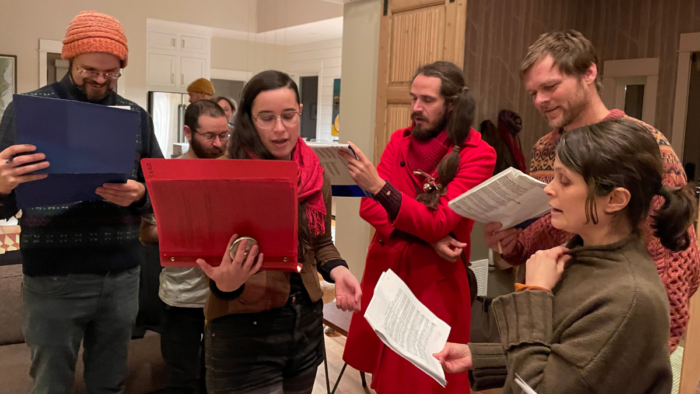
This week, we go a-wassailing in Asheville, North Carolina. It’s kind of like Christmas caroling, with a kick.
We also visit Kentucky’s Minnie Adkins. She’s had a long career as a folk artist, which began with a pocket knife.
And, family recipes bring generations together. But what happens when you’ve got grandma’s potato candy recipe, and it doesn’t have exact measurements?
You’ll hear these stories and more this week, Inside Appalachia.
In This Episode:
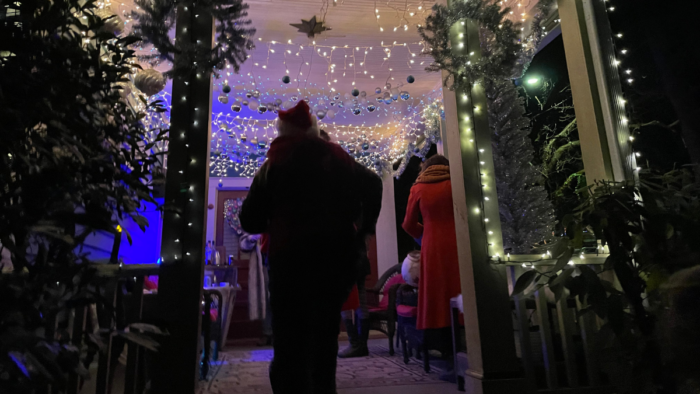
It’s the time of year when merrymakers roam the streets to sing and bring good cheer. In Asheville, North Carolina, one group of friends has taken up the English tradition of wassailing to connect to their roots.
Folkways Reporter Rebecca Williams has this story.
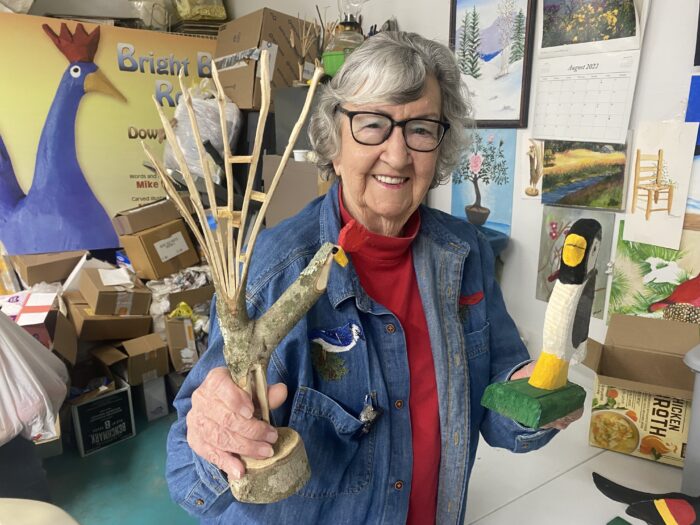
Minnie Adkins has elevated whittling to an art. In fact, some people have even described the 89-year-old Kentucky woodcarver as “the matriarch of Appalachian Folk Art.” But Adkins? She says she’s just a whittler.
Randy Yohe sat down with Adkins to talk with her about her craft.
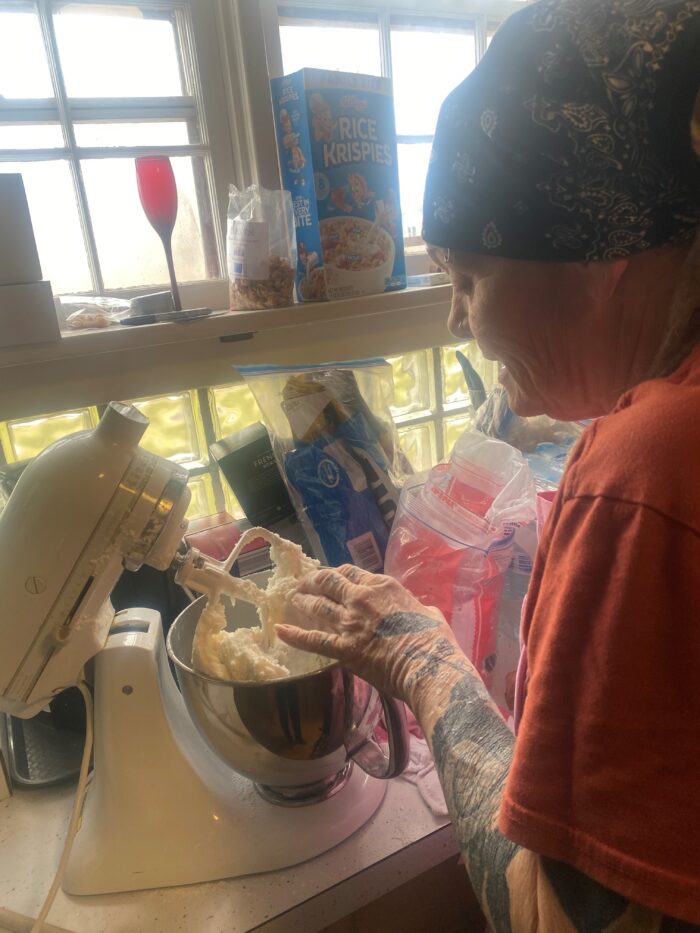
Treasured family recipes get passed down, but not all of these old recipes used standard measurements. So how do you know you’re getting the mix right, especially if you’ve never tried it?
For Brenda Sandoval in Harper’s Ferry, West Virginia, an old family recipe involved some trial and error – and an assist from a cousin. Folkways Reporter Capri Cafaro has more.
Over the holidays, lots of people break out the party games. West Virginia native Harrison Reishman has developed a card game he’s hoping becomes a favorite at your next get-together. It’s called Story Wars, where players try to come up with the wildest, craziest story. Bill Lynch has more.
------
Our theme music is by Matt Jackfert. Other music this week was provided by The Sycomores, Bela Fleck and the Flecktones, the Cappella Bell Choir and Bob Thompson. Special thanks to Roxy Todd for recording Jim Bartlett playing the pipe organ with an assortment of goats.
Bill Lynch is our producer. Zander Aloi is our associate producer. Our executive producer is Eric Douglas. Kelley Libby is our editor. Our audio mixer is Patrick Stephens.
You can send us an email: InsideAppalachia@wvpublic.org.
You can find us on Instagram, Threads and Twitter @InAppalachia. Or here on Facebook.
Sign-up for the Inside Appalachia Newsletter!
Inside Appalachia is a production of West Virginia Public Broadcasting.

Add WVPB as a preferred source on Google to see more from our team

Halloween is still several weeks away, but one West Virginia town is already celebrating the season.
Continue Reading Take Me to More NewsWest Virginia has seen the largest population decline in the nation - nearly 1.5% - and many of those leaving are young people. In an episode that aired last month, Us & Them host Trey Kay heard from some young people who think they may stay in the state to launch their futures. This month, Kay talks with those who say living their dreams may well require moving away from the Mountain State. We listen to an excerpt from the latest Us & Them.
Continue Reading Take Me to More NewsThey love West Virginia, but love alone may not be enough to keep them here. In the second of two Us & Them episodes, Trey Kay talks with young West Virginians who say they may need to leave in search of careers, community and a place where they can imagine their futures. Their decisions reveal what the Mountain State risks losing when young people cannot see a place for themselves at home.
Continue Reading Take Me to More NewsLast week, we aired the first part of an interview with a WVSU professor about what is AI. In the second part of that interview, we explore the best way to use AI to get what you want – while avoiding fabricated or false answers that seem real.
Continue Reading Take Me to More News