Alert (09/29/2026): Our Parkersburg TV transmitter is still undergoing maintenance and remains temporarily inoperative. We apologize for the inconvenience.
All our programming is available via our TV livestreams on our website and WVPB Passport. Thank you for your patience!
This week, author Silas House returns with a sweeping new novel. Also, some folks say, you have to fake it 'til you make it, even if you're trying to establish a state park. And, the story of the first Mothman sightings as written by a small town journalist in 1966.
The logo for the comic strip “Barney Google and Snuffy Smith.” Snuffy is shown on the left.
Courtesy of John Rose/King Features Syndicate
Like it or not, the hillbilly stereotype still permeates American pop culture. It’s been used to degrade and shame folks in the mountains, but there are gentler versions. Like “Snuffy Smith,” the long-running comic strip character who still appears in newspapers. Although these days, it’s easier to find Snuffy online.
He originally started out as a supporting character in his comic strip, which first launched in 1919 when Billy DeBeck created “Barney Google.” Artist Fred Lasswell was brought in during the ‘30s to create Snuffy Smith and his friends. And now the strip is written and drawn by John Rose, who lives in Virginia’s Shenandoah Valley.
Host Mason Adams spoke with Rose.
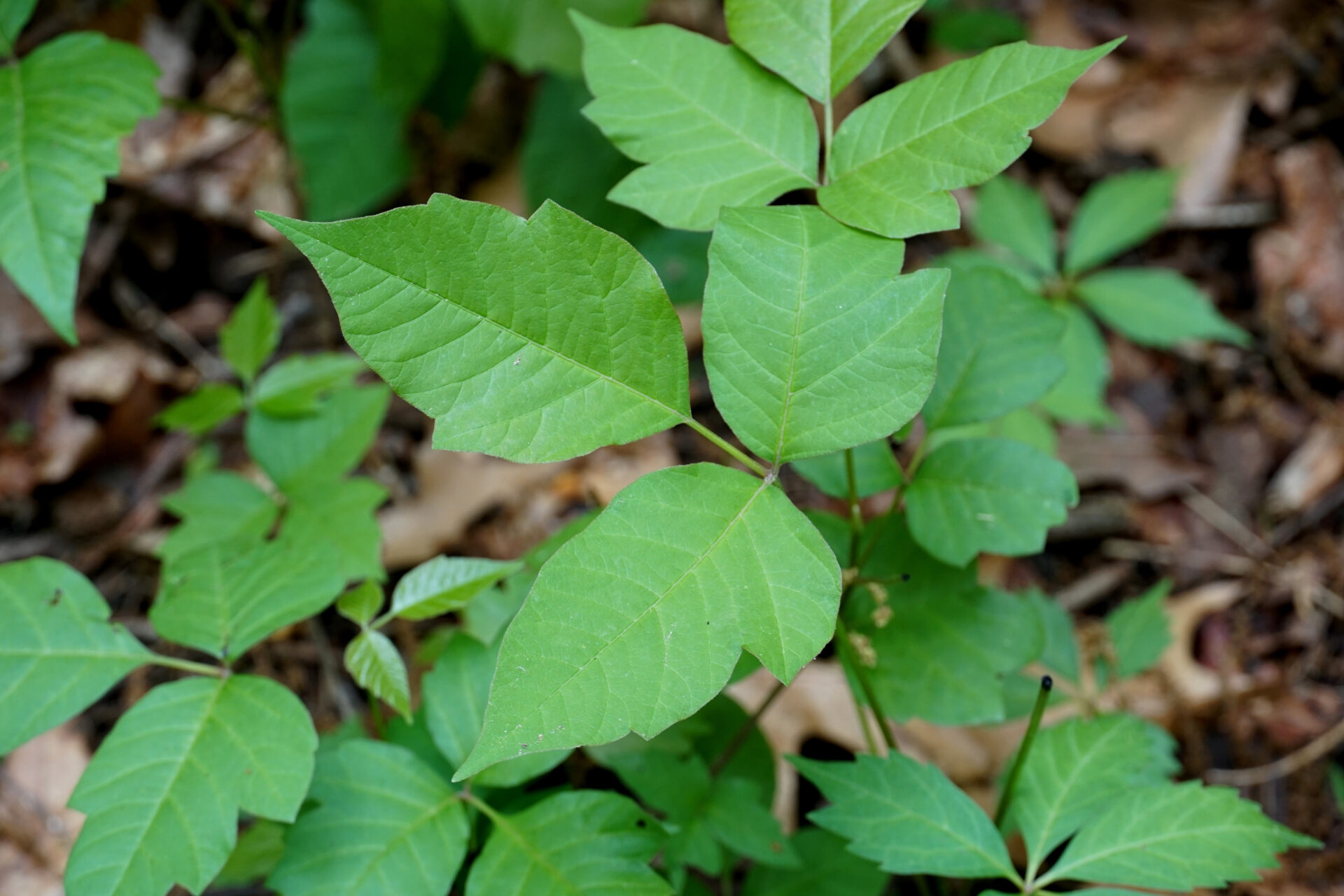
Folk Cures For Poison Ivy
About 80% of people will develop an itchy series of blisters from poison ivy, but about 15% will have a reaction so severe, it resembles chemical burns.
strawberrymochi/Adobe Stock
With warmer weather, more folks are spending time in the woods or yards, and it’s just a matter of time before some will get into a patch of poison ivy.
You can find ways to treat the itchy rash that comes from poison ivy at the pharmacy, but there are plenty of people who still use folk remedies.
Folkways Reporter Wendy Welch explored the intersection of folk cures and mainstream medicine.
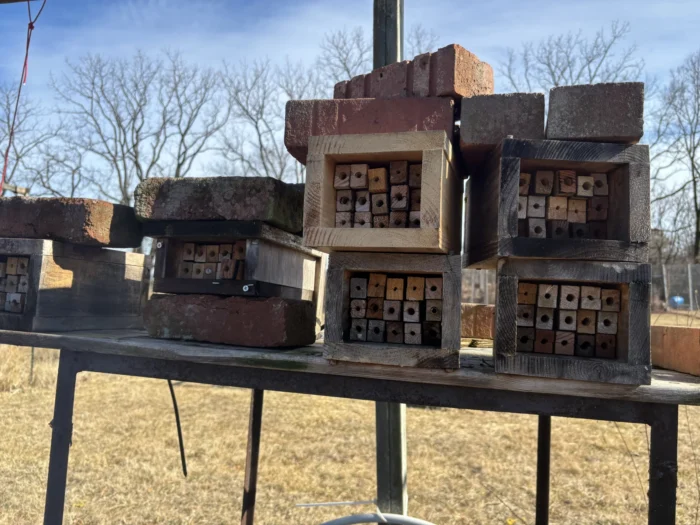
What’s The Buzz With Bees?
Mason bee habitat at the Blandy Experimental Farm in Boyce, Virginia.
Ayse Pirge/WMRA
When we think of livestock, we might think of animals like cattle and sheep. But, what about honeybees? Both honeybees and native bee species face challenges some in common, and some not.
WMRA’s Ayse Pirge reports.
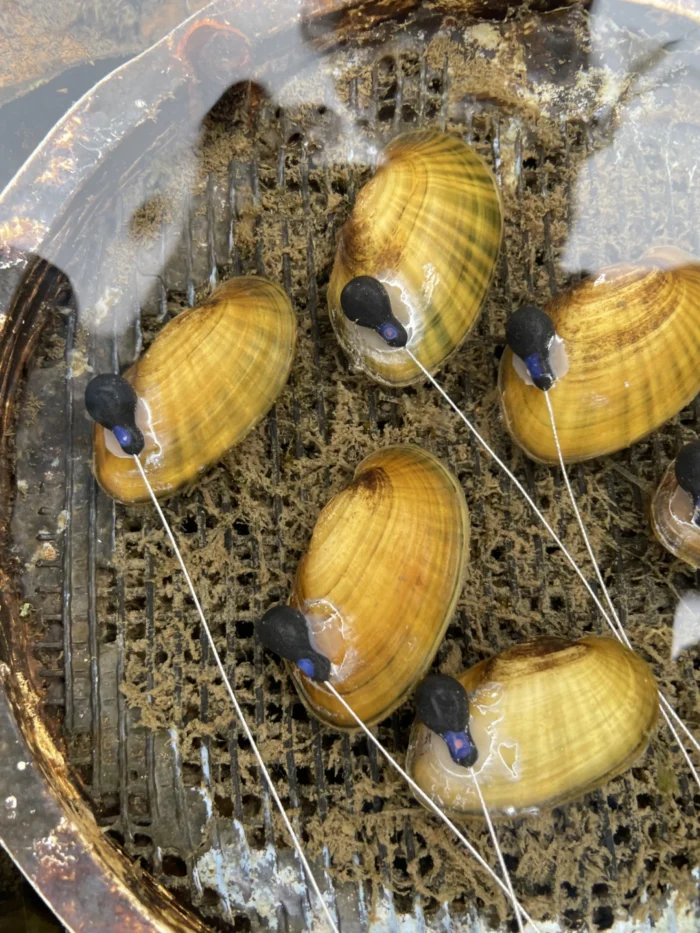
Mussel Restoration In Tennessee River
Tracking tags developed for freshwater mussels.
Photo Credit: Michael McKinney/University of Tennessee, Knoxville
The Tennessee River runs like an artery through Knoxville, Tennesee. It feeds the recreation and tourism business and also a rich ecosystem. And some of the river’s biggest protectors are really very small: freshwater mussels. They live on the riverbed and clean up the river. But their numbers have been declining for generations.
WUOT’s Heather Haley spoke to a group working to protect these creatures.
Preserving The Music Of The Mountains
Murphy Campbell plays a ballad in the Blue Ridge Public Radio studios.
Photo Credit: Gerard Albert III/BPR News
North Carolina musician Murphy Campbell is trying to preserve old ballads from Yancey and Mitchell counties. And some of them come from her family. Blue Ridge Public Radio’s Gerard Albert III has more.
Campbell’s performance in the BPR studios can be found here.
Big Emma: Remembering Appalachia’s Steam Locomotive
Big Emma 1977 hauls empty coal cars from Winchester to Ravenna, Kentucky, in June 1956. The big locomotive was retired that year and scrapped in 1959.
Photo Credit: Robert F. Collins/L&N Historical Society Collection
Railroad writer Charlie Castner died in February at the age of 97. Castner worked for the public relations department at the Louisville & Nashville railroad and authored several railroad books. In 2024, he co-wrote Big Emma: The Story of Louisville & Nashville’s M1 2-8-4s. The powerful engine hauled passengers, freight and coal in eastern Kentucky.
WEKU’s Curtis Tate spoke with one of Castner’s co-authors, Ron Flanary, about the book that was 50 years in the making.
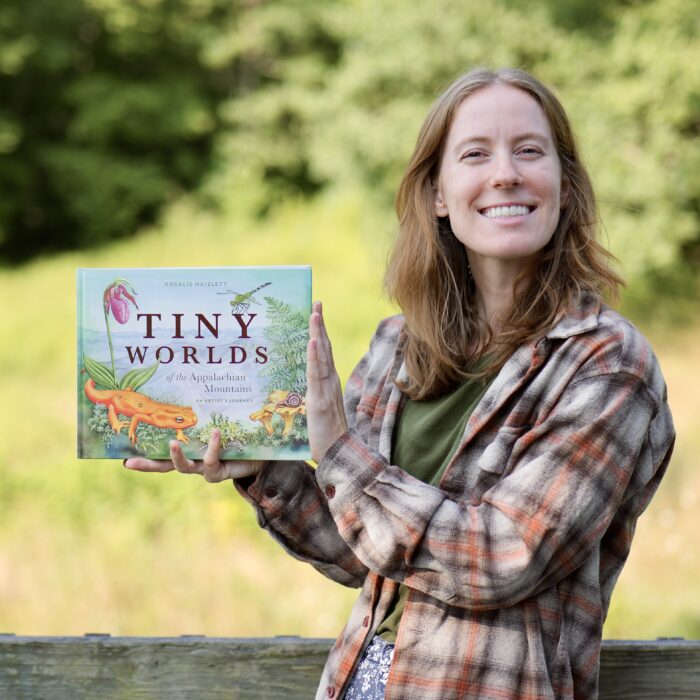
Rosalie Haizlett Explores Tiny Worlds
Rosalie Haizlett with her book, Tiny Worlds of the Appalachian Mountains, an Artist’s journey.
Courtesy of Rosalie Haizlett
In 2022, artist Rosalie Haizlett set out on a trip to illustrate parts of the Appalachian Mountains that often get overlooked – that is, the tiny birds, reptiles and other critters hiding beneath leaves or up in the trees.
Her illustrations came together as Tiny Worlds of the Appalachian Mountains, an Artist’s Journey. It’s a stunning book, full of colorful images and thoughts Haizlett recorded as she spent hours exploring the mountains.
In 2024, Producer Bill Lynch spoke with Haizlett about the book.
------
Our theme music is by Matt Jackfert. Other music this week was provided by Tim Bing, Dave Odell and Dave Bing, John Blissard, John Inghram, Larry Rader and Blue Dot Sessions.
Bill Lynch is our producer. Abby Neff is our associate producer. Our executive producer is Eric Douglas. Our audio mixer is Patrick Stephens.
You can send us an email: InsideAppalachia@wvpublic.org.
On this West Virginia Week, our voter's guide is out, and it has all the information you need to know about the upcoming general election in the state. Also, another lawsuit targets the state's public school funding formula. And, a million dollar giant troll is making its way to the woods of West Virginia.
This week, author Silas House returns with a sweeping new novel. Also, some folks say, you have to fake it 'til you make it, even if you're trying to establish a state park. And, the story of the first Mothman sightings as written by a small town journalist in 1966.
The annual West Virginia Book Festival, a free event for book lovers of all ages, will be held on Saturday, Oct. 24, at the at the Charleston Coliseum and Convention Center.
Silas House is a major voice for Appalachia. The Kentucky native has written more than 15 books and served as the state's poet laureate. His latest book is The Tulip Poplars, a sweeping novel about the lives of four people as they navigate friendship and forbidden love throughout the 20th century. Inside Appalachia's Mason Adams spoke with House.