This week, before emancipation, Appalachia provided pathways to freedom for enslaved people trying to escape bondage. A new project identifies more than two dozen previously unknown underground railroad sites. Also, the Fly Around Music & Arts Festival in North Carolina was inspired by the hard work that followed Hurricane Helene. And, a ballad about floods recorded a generation ago still provides solace for people today.
Encore: What Is Appalachia? We Asked People From Around The Region. Here’s What They Said.
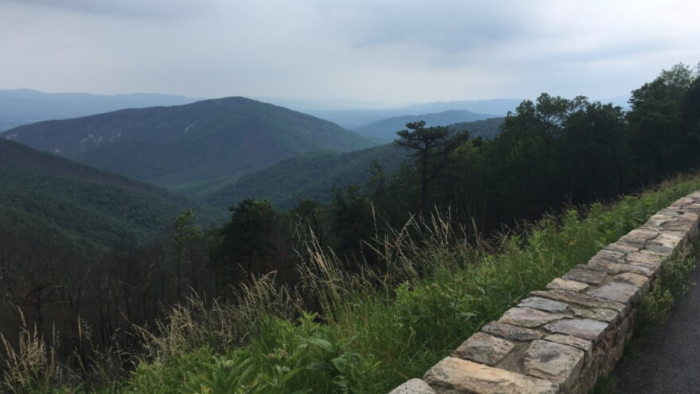
The Shenendoah Valley in Virginia.
Mason Adams/West Virginia Public Broadcasting
Listen
Share this Article
This week, we’re revisiting our episode “What Is Appalachia?” from December 2021.
Appalachia connects mountainous parts of the South, the Midwest, the Rust Belt and even the Northeast. The Appalachian Regional Commission (ARC) defined the boundaries for Appalachia in 1965 with the creation of the Appalachian Regional Commission, a part of Lyndon B. Johnson’s War on Poverty. It was legislation that sought to expand social welfare, and some localities were eager for the money, while others resisted the designation. The boundaries and definition of Appalachia can now only be changed by an act of Congress.
Politically, Appalachia encompasses 423 counties across 13 states — and West Virginia’s the only state entirely inside the region.
That leaves so much room for geographic and cultural variation, as well as many different views on what Appalachia really is.
For Inside Appalachia, we turned our entire episode over to the question, “What is Appalachia?” With stories from Mississippi to Pittsburgh, we asked people across our region whether they consider themselves to be Appalachian.
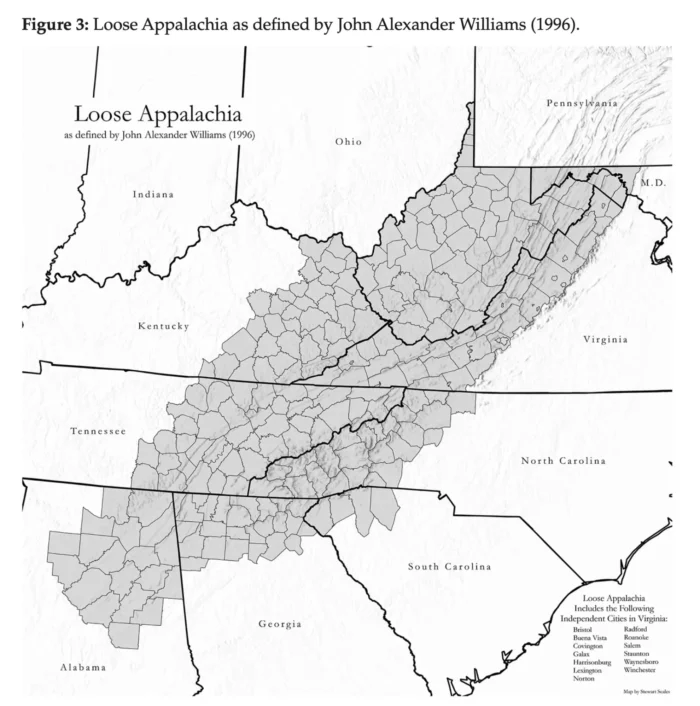
A 1996 map that shows the southern part of Appalachia, as defined by John Alexander Williams.
Mississippi
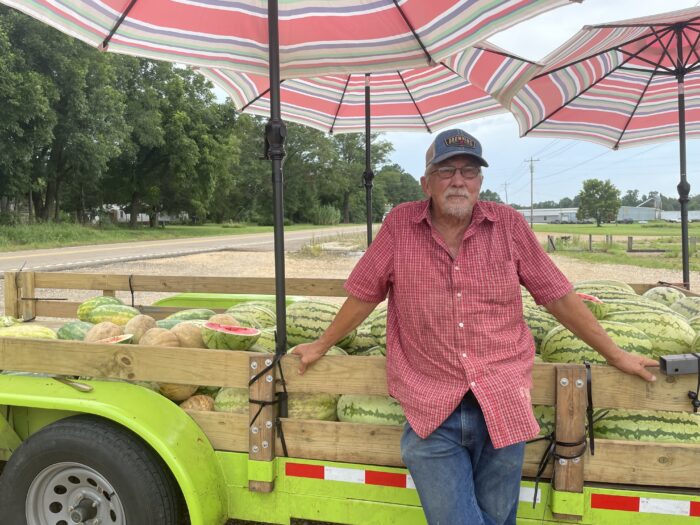
Bob Owens — locally known as ‘Pop Owens,’ stands in front of his watermelon stand outside New Houlka, Mississippi. Pop says he was aware that Mississippi is part of Appalachia, but that no one in the state would consider themselves Appalachian.
Credit: Caitlin Tan/West Virginia Public Broadcasting
Bob Owens is a watermelon farmer outside New Houlka, in the northeastern part of Mississippi. Owens said he was aware that Mississippi is part of Appalachia, but that no one in the state would consider themselves Appalachian. “I consider myself the worst redneck you’ve ever seen,” Owens said. “I live in the area of the Appalachian mountain range — not part of it, but close to it. So I guess you call me a redneck Appalachian.” This is the general consensus among the people in Mississippi who Inside Appalachia spoke to.
Geographically, the foothills of the Appalachian mountain range are located in northern Mississippi. The state’s tallest point is Woodall Mountain, 806 feet in elevation. For reference, the highest point in North Carolina, Mount Mitchell, is more than 6,600 feet in elevation, eight times higher than Woodall Mountain.
Co-host Caitlin Tan spoke with Texas State University history professor Justin Randolph, who wrote an essay for “Southern Cultures” called “The Making of Appalachian Mississippi.” Randolph argues in his essay that Mississippi became part of Appalachia for political and racial reasons, as well as economic advantages the designation brought to the 24 counties in Mississippi that were included in the ARC’s boundaries.
Shenandoah Valley
In the 1960s, while some localities were clamoring to get into Appalachia, on the eastern edge of the region, some lawmakers fought to keep their counties outside the boundaries, including politicians in Roanoke, Virginia and the Shenandoah Valley.
Appalachian Studies associate professor Emily Satterwhite said explaining to her students why some counties in Virginia are included in Appalachia, but others aren’t, is confusing. “The students in front of me are wondering why they’re not included,” White said.
Pittsburgh
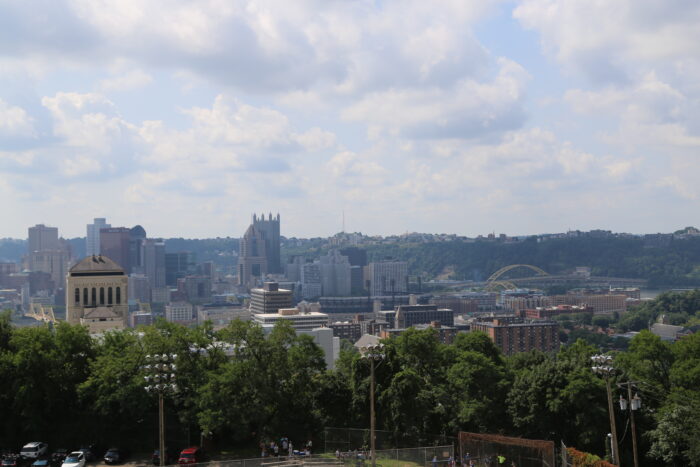
The Pittsburgh, Pennsylvania skyline.
Courtesy
Appalachia’s largest city is Pittsburgh, Pennsylvania. When we asked people from that city to tell us if they consider it a part of Appalachia, about half said no. “I definitely do not feel that I am Appalachian culturally,” said Mark Jovanovich, who grew up just outside Pittsburgh’s city limits in the Woodland Hills area. “Personally, I would consider the city of Pittsburgh is sort of like a mini New York City. I guess we’d probably be lumped in as like a Rust Belt city, which makes enough sense, but definitely not Appalachian culturally.”
An editor advised him to change the title of his book to a phrase that he said is sometimes used to refer to Pittsburgh derisively. “I couldn’t figure out why that should be a putdown, because Paris is nice. And Appalachia is a beautiful part of the world. And if we were called the Paris of the Rockies, we wouldn’t run from that. So why would we run from this? Why don’t we embrace it? So that became the title of my book.”
He said that geographically, Pittsburgh is clearly in the Appalachian Mountains. “I mean, this is one mountain range that stretches from Georgia to Maine. And the idea that it belongs only to the southern part of the mountain range defies logic to me,” O’Neill said.
What Do You Think?
How about you? Do you call yourself an Appalachian? Why or why not? Send an email to InsideAppalachia@wvpublic.org.
------
Our theme music is by Matt Jackfert. Other music this week was provided by John Wyatt, John R Miller, Alan Cathead Johnston, and Dinosaur Burps. Roxy Todd originally produced this episode. Bill Lynch is our current producer. Our executive producer is Eric Douglas. Zander Aloi is our associate producer. Kelley Libby is our editor. Our audio mixer is Patrick Stephens.
This week, before emancipation, Appalachia provided pathways to freedom for enslaved people trying to escape bondage. A new project identifies more than two dozen previously unknown underground railroad sites. Also, the Fly Around Music & Arts Festival in North Carolina was inspired by the hard work that followed Hurricane Helene. And, a ballad about floods recorded a generation ago still provides solace for people today.
On this West Virginia Morning, a Marshall University historian discusses documenting previously unknown underground railroad sites throughout the region.
Every week, more than two newspapers close in the United States, leaving whole communities without local coverage. On this encore Us & Them, Trey Kay visits West Virginia communities trying to hold onto local journalism — from the long-running Hurricane Breeze in Putnam County to The Real WV, a relatively new digital news outlet with roots in Greenbrier County. What happens to a place when the news that helps a community see itself begins to disappear?
More than 1,600 counties in the U.S. are so-called news deserts - places with limited options for local news. Most of West Virginia’s 55 counties fall into that category. In this encore episode of Us & Them, host Trey Kay visits one online startup in Greenbrier County that’s bucking the trend.