This week on Inside Appalachia, we talk with East Tennessee’s Amythyst Kiah. Her new album contemplates the cosmos. Also, hair salons are important gathering places where Black women can find community. And, West Virginia poet Torli Bush uses story to tackle tough subjects.
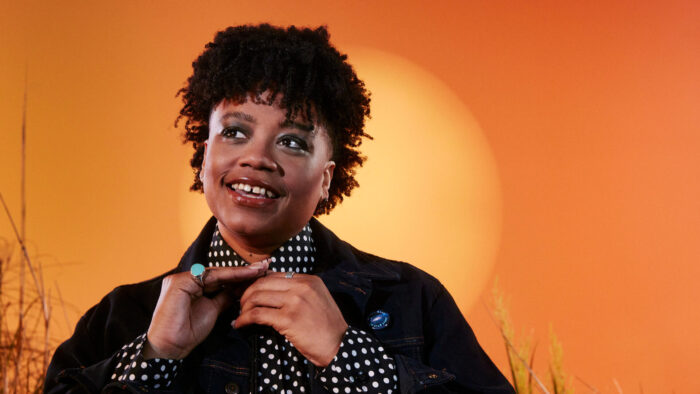
“Play God and Destroy the World” is the opening track from Amythyst Kiah’s new album, Still + Bright. The album follows 2021’s Wary + Strange, and features guest spots by S.G. Goodman, Billy Strings and others.
Amythyst Kiah spoke with Inside Appalachia from her home in Johnson City, Tennessee.
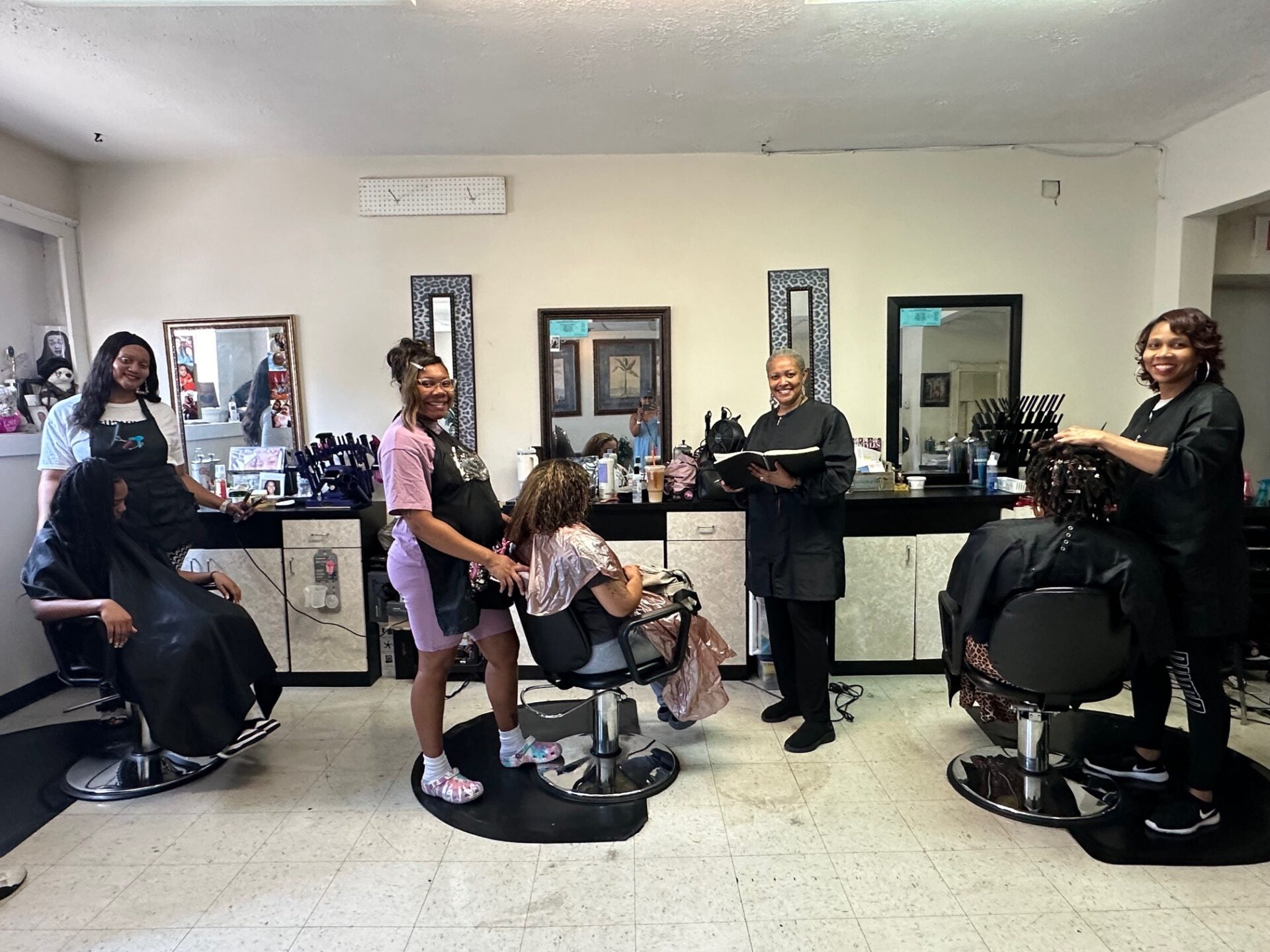
Nappy By Nature Hair Salon
A normal day at Nappy By Nature Salon with sisters styling hair with their daughters. From left to right: Tunisia Beatty, Rakyra Bonner, Tina Beatty and Robin Bonner.
Photo Credit: Traci Phillips/West Virginia Public Broadcasting
We spend a lot of our lives at home or at work, but there are other spots that are just as important to who we are. They’re Third Places.
A third place can be a coffee shop or a basketball court, or any place where people get together and connect. In Black communities, hair salons can be spaces where women feel united and accepted.
Folkways Reporter Traci Phillips takes us to a hair salon in Charleston, West Virginia’s west side.
Filipino Hospitality With A North Carolina Flair
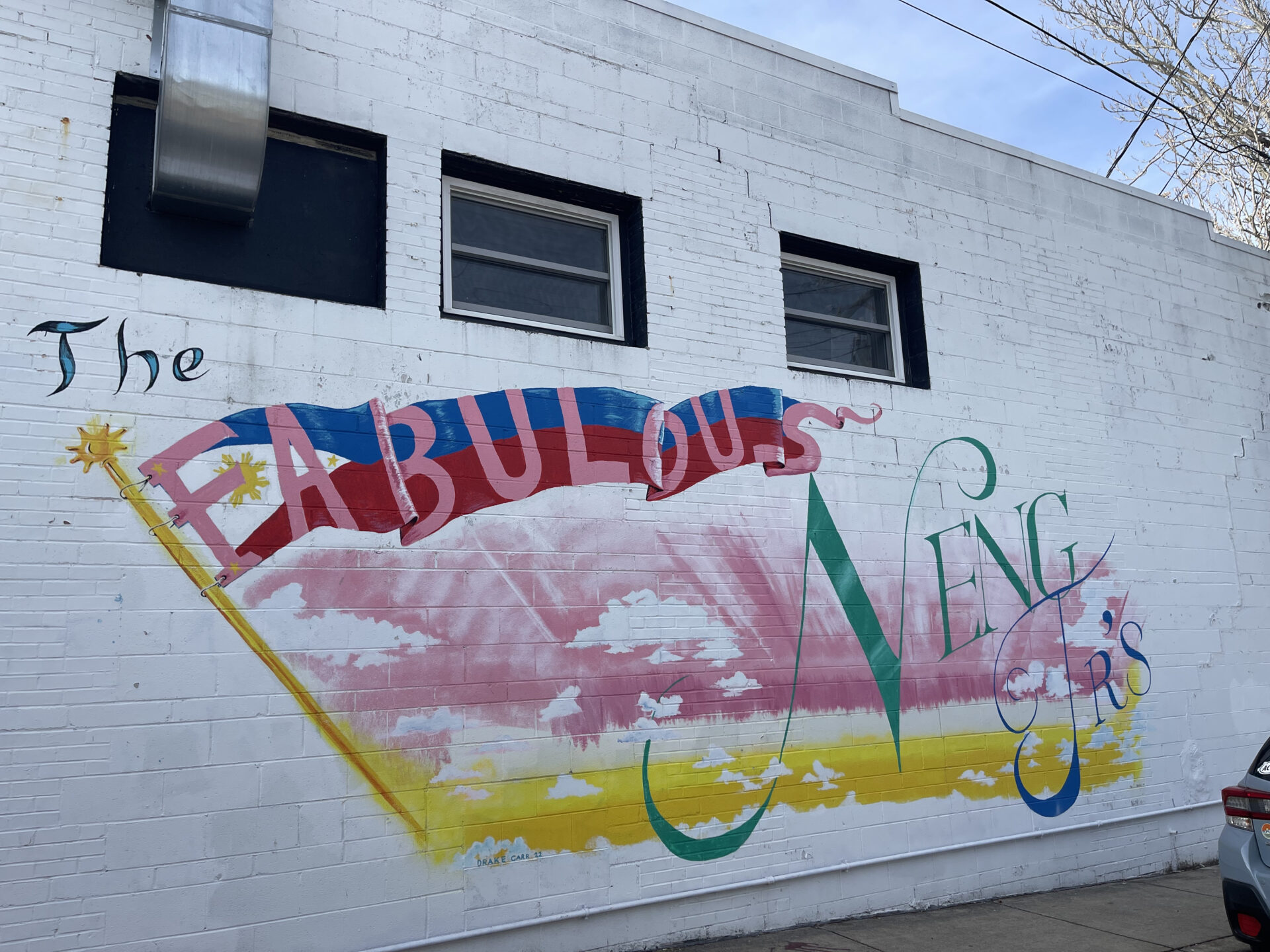
Hidden away from the main streets of Asheville, Neng Jr.’s is getting noticed nationally.
Photo Credit: Margaret McLeod Leef/West Virginia Public Broadcasting
Asheville, North Carolina, is known as one of Appalachia’s cultural hubs — and that extends to the city’s dining scene. But Asheville was hit hard by Hurricane Helene. Dozens of its restaurants and bars were drowned in water, mud and debris.
Some may never reopen, while others are beginning to find their way back — including Neng, Jr’s, which serves up Filipino cuisine. After several months of hard work, Neng Jr.’s reopened in January.
Last spring, Folkways Reporter Margaret McLeod Leef found her way to the restaurant, which is tucked away in an alley. She brought us this story.
Torli Bush’s Book, Requiem For A Redbird
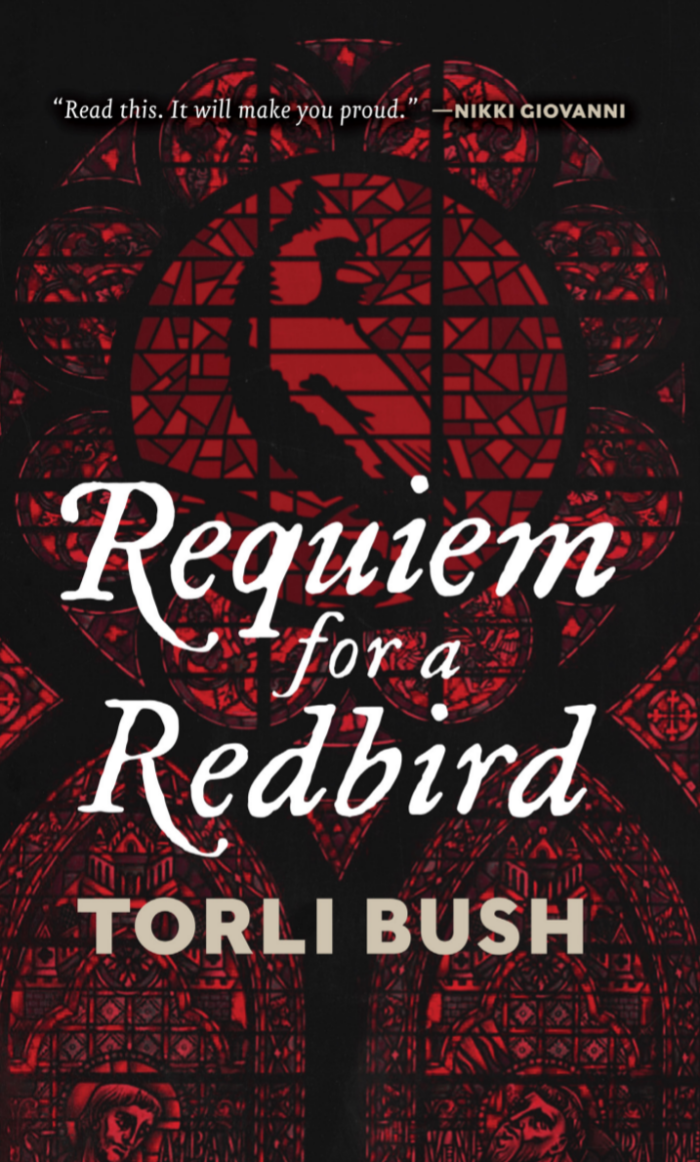
Requiem for a Redbird by Torli Bush.
Courtesy Photo
There is a rich tradition of Black Appalachian poets and writers. One of the newest is Torli Bush, who grew up in Webster Springs, West Virginia. Bush has won poetry slams in the region, and now has a new book, Requiem for a Redbird.
Producer Bill Lynch spoke with Bush about the book.
——-
Our theme music is by Matt Jackfert. Other music this week was provided by Amythyst Kiah, John Blissard, Mary Hott, John Inghram, Jeff Ellis and Dinosaur Burps.
Bill Lynch is our producer. Abby Neff is our associate producer. Eric Douglas is our executive producer. Kelley Libby is our editor. Our Audio Mixer is Patrick Stephens. We had help this week from Folkways Editor Jennifer Goren.
You can send us an email: InsideAppalachia@wvpublic.org.
On this episode of The Legislature Today, in this school year alone, the state Board of Education has been asked to approve 19 school closures or consolidations. News Director Eric Douglas speaks with Sen. Mike Oliverio, R-Monongalia, a member of the Senate Education Committee, and Sen. Mike Woelfel, D-Cabell, a member of the Senate Finance Committee, to discuss what needs to be done to fix the issue.
Acclaimed singer-songwriter Amythyst Kiah released "Still + Bright" last year, which featured guests like S.G. Goodman and Billy Strings. Inside Appalachia host Mason Adams spoke with Kiah from her home in Johnson City, Tennessee at that time. We listen to an encore of that conversation.
America continues to wrestle with racial division, but music has often been a space where those barriers are challenged. In this episode of Us & Them, host Trey Kay revisits a 1960s moment when a band refused to perform unless a mixed-race couple was allowed to dance — and paid the price for taking that stand. It’s a story about courage, consequences and the uneasy intersection of music and race in America.
The struggle against racial discrimination has hundreds of years of history in the United States. On the next episode of Us & Them, Trey Kay looks at the intersection of music and race in the 1960s. It’s about a band that took a stand against racism – and musicians who suffered the consequences.