Alert (09/29/2026): Our Parkersburg TV transmitter is still undergoing maintenance and remains temporarily inoperative. We apologize for the inconvenience.
All our programming is available via our TV livestreams on our website and WVPB Passport. Thank you for your patience!
Inside Appalachia Host Mason Adams met with author Barbara Kingsolver at her home outside Abingdon, Virginia, a couple weeks before her new novel "Partita" was set to publish.
What to Know About the Blue-Green Algae in the Ohio River
Listen
Share this Article
The West Virginia Department of Health and Human Resources’ Bureau for Public Health issued a Public Health Advisory in response to the blue-green algae blooms in the Ohio River and in some of its tributaries.
In a release, Commissioner of the Bureau for Public Health Dr. Rahul Gupta said his office is working with public water systems and the state’s Department of Environmental Protection to monitor water supplies. A this point his office is simply warning citizens to avoid contact with the blooms.
From West Virginia’s Bureau for Public Health:
Public water systems are being advised to remain vigilant and tests performed, where appropriate, have been acceptable.
Citizens should avoid water that:
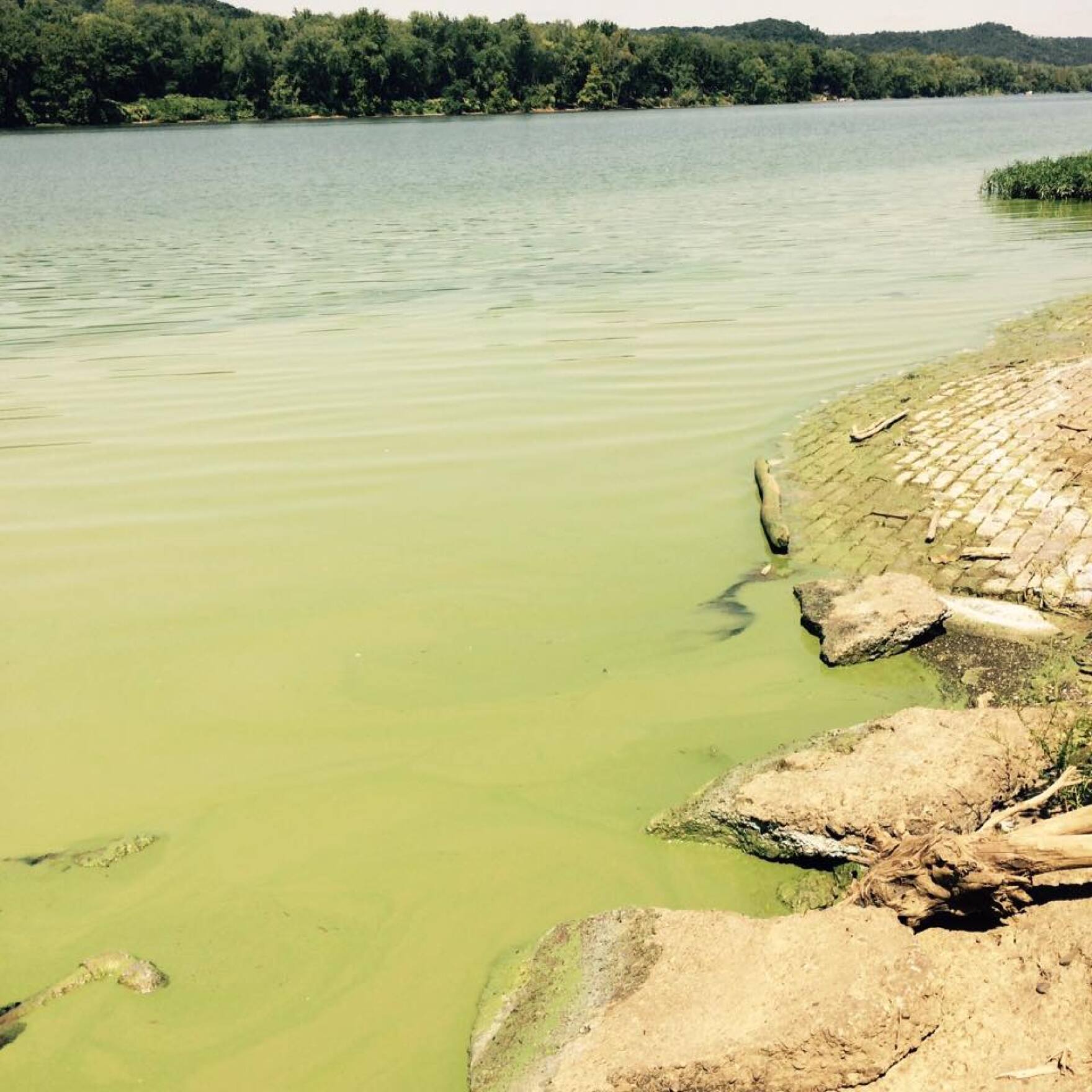
Looks like spilled paint
Has surface scums, mats or films
Is discolored or has colored streaks
Has green globs floating below the surface
The following guidelines are recommended to avoid exposure to harmful algal blooms (HABs):
Direct contact with affected water -- including swimming, wading, fishing, paddling, diving and water skiing -- may result in symptoms. Avoid swallowing river or lake water.
Prevent pets and livestock from coming into contact or ingesting water containing algal blooms.
People who are prone to respiratory allergies or asthma should avoid areas with algal blooms. Children may be particularly sensitive.
If contact has been made with water containing algal blooms, wash off with clean water. In some cases, skin irritation will appear after prolonged exposure. If symptoms persist, consult your health care provider.
Fish fillets (not organs) may be consumed after the fillets have been rinsed in clean water.
https://www.youtube.com/watch?v=JkZr2iqAlB0 Cyanobacteria, also called blue-green algae, are microscopic organisms found naturally in all types of water. But some give off what are called cyanotoxins. Symptoms from contact are wide ranging. They include everything from loss of appetite to stumbling, tremors, convulsions, diarrhea, and skin irritation. Gupta says more serious or life-threatening reactions can occur if someone has an allergic reaction but no such cases have been reported in West Virginia.
The blooms are historically uncommon in the Ohio River. A series of circumstances likely led to the organisms flourishing in the river and tributaries including:
slight drops in water temperature
low water flow
abundance of nutrients which could be from agricultural runoff and sewage
clear skies (blue-green algae love sunshine)
Credit West Virginia Department of Environmental Protection
/
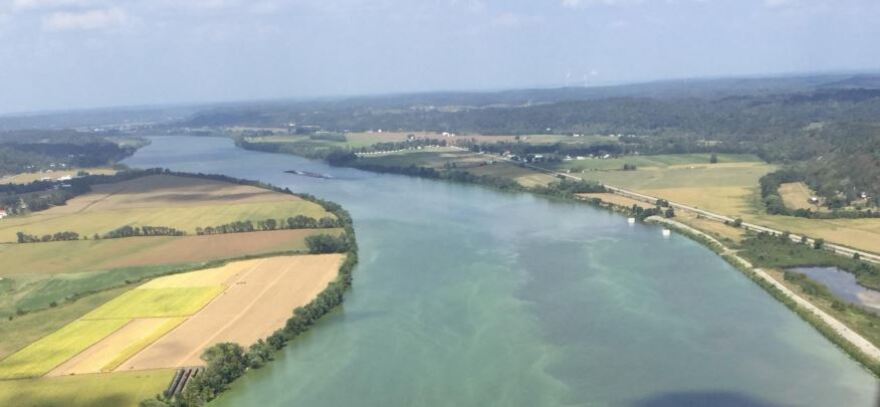
Bloom upstream of the Robert C. Byrd Locks and Dam.
Dr. Gupta says water tests are underway to try to determine what kinds of nutrients are feeding the organisms. He says local health departments may issue a No Contact Advisory if toxin levels exceeded the advisory threshold, or if one or more probable cases of human illness or pet deaths is attributable to the toxin.
Multiple agencies are actively monitoring the algae situation along the Ohio River including the Ohio River Valley Water Sanitation Commission, Ohio Environmental Protection Agency, Kentucky Division of Water, West Virginia Department of Environmental Protection and local health departments.
Generations ago, kudzu was introduced to Appalachia to help control erosion and provide forage for cattle. But then, it kind of just took over. Kudzu is an invasive plant that chokes out native greenery. Some people are fighting back. Folkways Reporter Eliza Benbow spent time with the kudzu warriors in western North Carolina.
On this West Virginia Week, a mine operation in Kanawha County gets a WARN Notice, three Wyoming County Schools will remain closed until next week, and we learn the origins of the Flatwoods Monster.
Each NEST kit includes more than 20 newborn and postpartum essentials, including diapers, wipes, an infant thermometer, postpartum recovery and breastfeeding supplies, and a blood-pressure monitor. Families also receive information on postpartum health, infant safety and care, feeding and nutrition, and programs and resources available to support parents and their babies.
One hundred nine miners and operators at the Panther Creek Mine in Eskdale, in southeastern Kanawha County, are slated to lose their jobs just before Christmas.