Aluminum Plates For Deep Space Win W.Va. 'Coolest' Contest
Aluminum plates that helped keep astronauts on the Artemis II rocket safe won the first ever Coolest Thing Made In West Virginia competition.
Continue Reading Take Me to More NewsAlert (09/29/2026): Our Parkersburg TV transmitter is still undergoing maintenance and remains temporarily inoperative. We apologize for the inconvenience.
All our programming is available via our TV livestreams on our website and WVPB Passport. Thank you for your patience!




To Educate, Inform, and Inspire by Telling West Virginia's Story
Mountain Readers Week will be held Oct. 5-9, 2026! Celebrate and foster a love of reading in children across West Virginia.
Nominate an exceptional West Virginia K-12 teacher today!

On Demand

On Demand

Stream original productions from WVPB

Watch locally produced documentaries & more.

On Demand

On Demand






West Virginia Morning

Inside Appalachia

West Virginia Week

Mountain Stage

Us & Them

The Legislature Today

The Legislature This Week

Send us your comments and questions.

Stream our board meetings.

Check out the latest WVPB news.

Sign up for our newsletter and get weekly updates.

Meet the WVPB staff.

WV Educational Broadcasting Commission, the WVPB Foundation, and the Friends of WVPB.

Come work with us!

Read our annual report and learn how we educate, inform and inspire with your support.

Sponsor impactful and engaging media and entertainment.

Use your IRA to make a gift to WVPB.

Become a member with your gift of $1,000 or more.

Make WVPB part of your legacy.

Manage your membership account.

Learn how you can Protect and Sustain West Virginia Public Broadcasting.
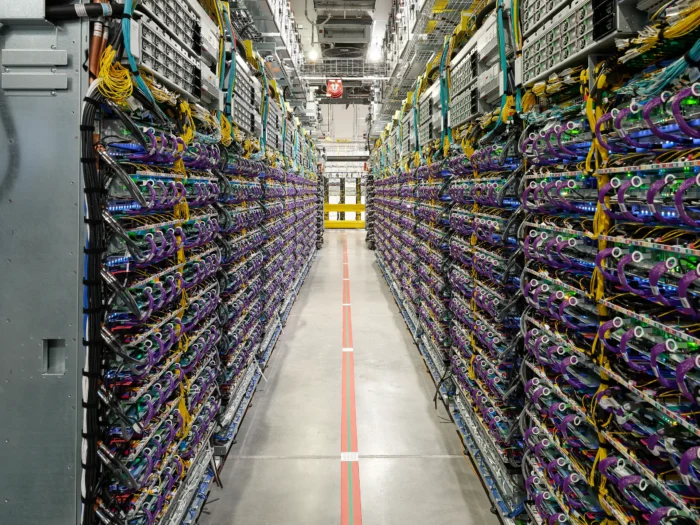
West Virginia Democrats held a press conference in Davis Monday afternoon, the site of the proposed Ridgeline Facility, a natural gas-fired microgrid and data center.
House Minority Leader Del. Sean Hornbuckle, D-Cabell, said he and his party are speaking up to oppose the lack of local control in the rapid development of data center projects.
“We’re not going to allow a hostile takeover in our communities. It’s not going to happen on our watch,” he said. “We all know what House Bill 2014 did, and it’s setting a very dangerous precedent in the state of West Virginia.”
Hornbuckle also identified the effects on water quality and ratepayers as concerns for the party.
“We have seen time and time again in the state of West Virginia of somebody just comes in, dirties up the land, tears up the environment, and leaves us with nothing. It’s unacceptable, and again, we just won’t stand for it,” he said.
Passed in 2025, HB 2014 created a pathway for microgrids – self-contained sites that generate their own power – and high impact data centers to receive state certification. The bill also exempts the same from local control including county or municipal zoning, noise, or lighting ordinances and diverts most property tax revenue to state coffers.
Del. Kayla Young, D-Kanawha, noted that locales like Tucker County will lose out on millions in expected tax revenue.
“They would have gotten all of the money for their commission, for their school board, for their fire, their safety, their EMS,” she said. “They would have gotten 100% of the revenue, but since the bill passed, now they’re only going to get 30% because 50% of that revenue is going to be going straight to Charleston, straight to the state, so they can make higher tax cuts for millionaires.”
Hornbuckle concluded the press conference by calling on colleagues across the aisle to collaborate on a solution to the concerns of locals.
Separately in a press release Tuesday, members of the conservative West Virginia Freedom Caucus condemned the high-voltage MidAtlantic Resiliency Link (MARL) that critics suspect is being built to bring more energy to northern Virginia’s power-hungry data industry.
Sen. Chris Rose, R-Monongalia, and chair of the Senate Energy, Industry and Mining Committee called the project “a clear overreach that prioritizes out-of-state interests over the livelihoods and values of West Virginians” in a letter last year to the West Virginia Public Service Commission (PSC).
Del. Chris Anders, R-Berkeley, said “the cost to West Virginia ratepayers for MARL is now approaching $960 million” and stressed that “ratepayer dollars should not be used to fund transmission lines primarily built to serve out-of-state interests.”
The past week has seen more legislators coming out against these projects. At least seven added their voice against the MARL line during Public Service Commission hearings and, more legislators expressed their frustration over transmission line and data center development during legislative interim meetings this week.
Add WVPB as a preferred source on Google to see more from our team

The West Virginia Extension service is asking volunteer firefighters why departments are struggling to recruit and maintain members and what support firefighters need.
Continue Reading Take Me to More NewsHuntington is one of eight communities nationwide to be awarded a $3-million federal grant to strengthen efforts to help struggling residents.
Continue Reading Take Me to More NewsDirect-to-consumer tests like full-body scans are marketed as a way to catch diseases early and establish a baseline. But there are financial, physical and psychological risks to all medical tests — and in some cases, not getting a test could be better for your health. From the Appalachia + Mid-South Newsroom, HealthQ hosts Cara Anthony and Blake Farmer speak with UCSF Cardiologist Dr. Rita Redberg.
Continue Reading Take Me to More NewsMany of the devices we use in our daily lives run on rechargeable lithium-ion batteries. Be aware that damaged or incorrectly charged batteries can overheat, start a fire, or even explode.
Continue Reading Take Me to More News