


The Old Louisville Demon Leaper’s Mischief In One Of America’s Largest Victorian Neighborhoods
In the late 1800s, tales of a creature that bounds between rooftops emerged in Old Louisville — The Demon Leaper.
Continue Reading Take Me to More NewsAlert (09/29/2026): Our Parkersburg TV transmitter is still undergoing maintenance and remains temporarily inoperative. We apologize for the inconvenience.
All our programming is available via our TV livestreams on our website and WVPB Passport. Thank you for your patience!




To Educate, Inform, and Inspire by Telling West Virginia's Story
Mountain Readers 2026 has concluded! Please fill out our volunteer post-survey.
Nominate an exceptional West Virginia K-12 teacher today!

On Demand

On Demand

Stream original productions from WVPB

Watch locally produced documentaries & more.

On Demand

On Demand






West Virginia Morning

Inside Appalachia

West Virginia Week

Mountain Stage

Us & Them

The Legislature Today

The Legislature This Week

Send us your comments and questions.

Stream our board meetings.

Check out the latest WVPB news.

Sign up for our newsletter and get weekly updates.

Meet the WVPB staff.

WV Educational Broadcasting Commission, the WVPB Foundation, and the Friends of WVPB.

Come work with us!

Read our annual report and learn how we educate, inform and inspire with your support.

Sponsor impactful and engaging media and entertainment.

Use your IRA to make a gift to WVPB.

Become a member with your gift of $1,000 or more.

Make WVPB part of your legacy.

Manage your membership account.

Learn how you can Protect and Sustain West Virginia Public Broadcasting.
It’s been 59 years since the Curtis Freewill Baptist Church in Harpers Ferry has been open with a regular congregation. This historical African-American church was the main building of worship during the days of Storer College, a predominantly black school that first began as a place to teach former slaves and eventually grew into a full-fledged degree-granting institution.
It was open for 88 years until the Supreme Court’s decision over Brown v. Board of Education ended legal segregation in public schools. Storer College lost federal funding and closed its doors in 1955 and the church in 1956. But today, one clergywoman has brought new life into the school’s old church.
Reverend Jackie Dorsey is the pastor of For the Sake of the Soul Christian Church, which is currently using the Curtis Freewill Baptist Church thanks to a special use permit from the National Park Service.
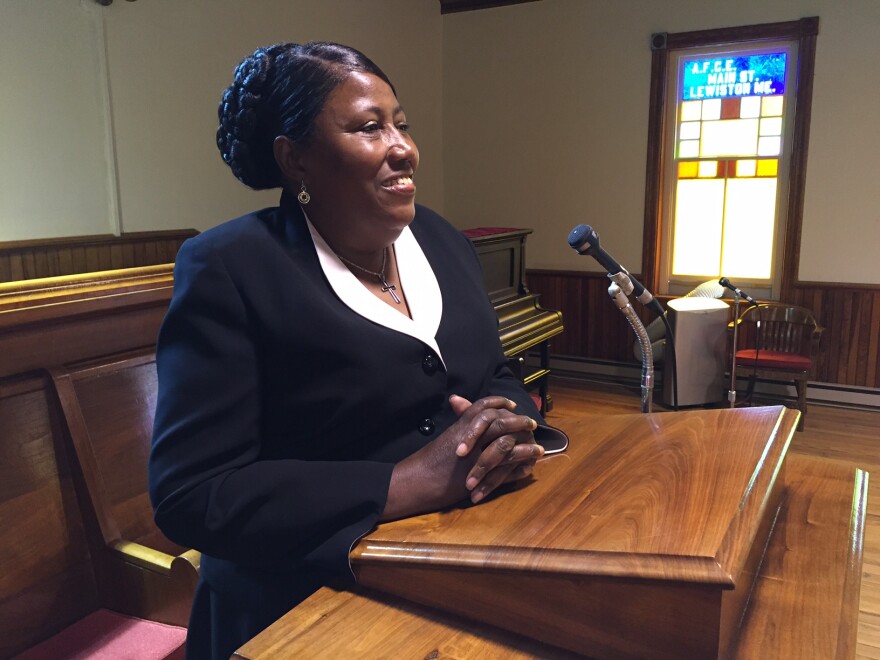
“It’s a big deal for me in the aspect, I know that it’s to some people’s hearing, it’s just a church building, and the main thing is the presence of God is here. That’s the main thing. But I believe in holding onto history, we can’t live in the past, but people should never forget the past,” Dorsey said.
After Storer College closed, the National Park Service turned the grounds and its buildings into a Harpers Ferry National Monument in 1960, restoring many of the buildings and holding a special day each year to honor alums of the college.
Dorsey says she has been pastoring for almost thirty years, but she was always holding services in faraway locations – sometimes traveling two to three hours every Sunday.
Dorsey wanted to pastor closer to home, and she says God led her to the Curtis Freewill Baptist Church.
“I wanted the history of this church to, and this area, to remain in the people’s thoughts, and for people that don’t know about this church and Storer College to come into some knowledge of Harpers Ferry.”
The Beginning of Storer College
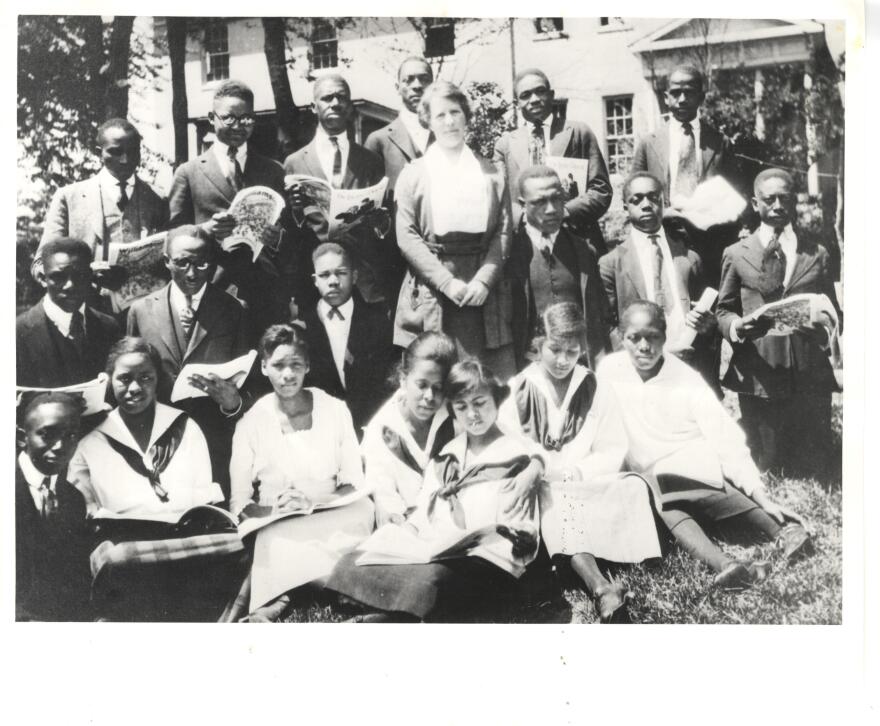
When the Civil War ended on April 9, 1865, there were over 30,000 newly freed slaves in the Shenandoah Valley. It was clear education was needed. With the help from the New England Freewill Baptists and a philanthropist from Maine named John Storer, Storer College officially opened its doors on October 2, 1867.
“Storer was really a very prominent school,” said Guinevere Roper, a park ranger for the Harpers Ferry National Historical Park, “It was one of the first schools in the United States to teach newly freed slaves, and it was one of the very first schools in the state of West Virginia to teach newly freed slaves there. So it was like a little haven to the students that were there at Storer College.”
Eventually Storer would become a teacher’s college, and by 1938, it became a degree-granting college offering a variety of courses in higher education and industrial training.
Storer College was significant in the history of Civil Rights. It was the site of the first American meeting of the Niagara Movement, which was a precursor to the NAACP.
But Roper says at first the school wasn’t well-liked by the community, and some people would throw stones at the students and faculty as they walked to the post office.
“Storer College had a strong academic curriculum that prepared its graduates for the struggle that they would face in this segregated society,” Roper said.
The Legacy
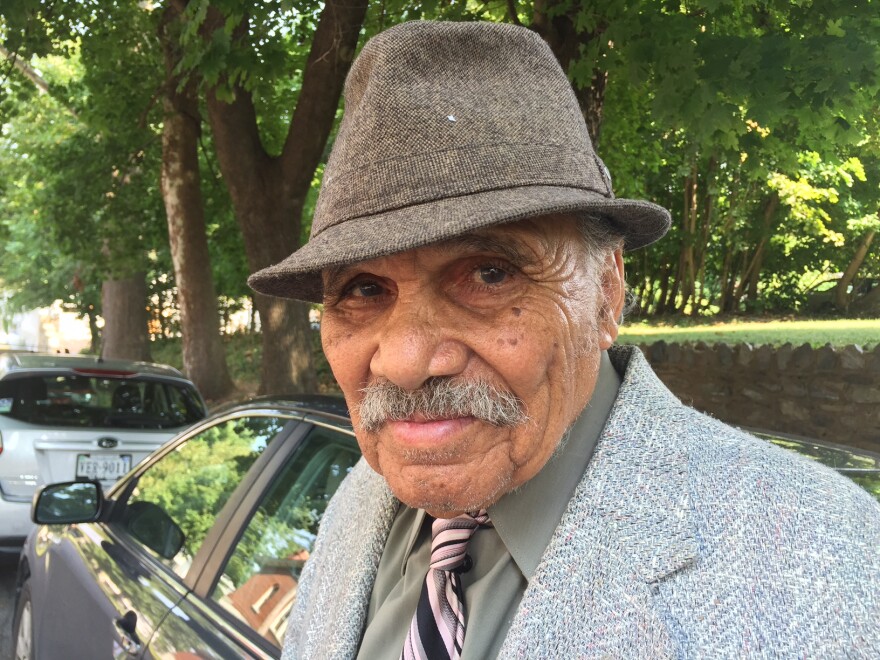
Since Storer College began, many alumni have passed away, but there are some who are still around and are sharing their stories from their Storer College days.
Guinevere Roper’s cousin, Russell Roper, is one of those alums.
Russell Roper was born in 1925 and spent time in the Navy during World War II.
“I used to go down to the college before I started the college,” Roper explained, “see I got back here in January of 46’ and I’d go down to the college with the other guys, see football games, stuff like that, and basketball games.”
Roper went on to play football for Storer himself, and he graduated in 1950. He says the church played a prominent role for the students at Storer, because, after all, the college was a religious school.
“When you passed by, I mean passed through Storer College, if you only stayed there one year or six months, you passed through the church. You was a part of the church, and the church, not you part of the church, the church was a part of you.”
Roper says he was happy to hear the church is holding regular services again. And many people in the Harpers Ferry community feel the same way.
Back at the Curtis Freewill Baptist Church, a woman named Mary Greene sits with her two grandchildren as the congregation sings a hymn.
Greene grew up in Harpers Ferry and so did many in her family. She used to attend this church as a little girl when it was still open. She also had family who attended Storer College.
“It looks the same, it feels the same, you know,” Greene said, “It’s wonderful to know that something so long ago used to be so vibrant, and now it’s reopening.”
Greene says she hopes her grandchildren will learn to appreciate the history of Storer College, the church, and their family history in the area.
For those interested in attending Reverend Dorsey’s services at the Curtis Freewill Baptist Church, services are held on the first, third, and sometimes fifth Sundays of the month if there is one.
Add WVPB as a preferred source on Google to see more from our team

In the late 1800s, tales of a creature that bounds between rooftops emerged in Old Louisville — The Demon Leaper.
Continue Reading Take Me to More NewsAround campfires in Dickson County people tell passed-down tales of two local cryptids — one a werewolf and the other the White Bluff Screamer.
Continue Reading Take Me to More NewsSilas House is a prolific writer who is a vital voice in Appalachia. House’s new book is "The Tulip Poplars." It’s a sweeping novel that chronicles the lives of four people as they navigate friendship and forbidden love in 20th century Kentucky. Inside Appalachia Host Mason Adams recently spoke with House.
Continue Reading Take Me to More NewsAcross much of Appalachia, there’s a hidden world beneath your feet. The region is chock full of ancient cave systems. Some are just little caverns you can walk in and out of. Some are so deep, nobody’s sure where they begin or end. Folkways Reporter Andrea Peterson explored a once-privately owned underground landscape that recently became a Pennsylvania State Park.
Continue Reading Take Me to More News