This week, coal power can be expensive. Utilities run coal-fired power plants harder in the winter and summer when demand is high. Also, two films made in West Virginia shot to the top of Netflix’s streaming charts. The state wants to encourage even more movies to be made in West Virginia by helping keep production costs down. And, an Eastern Kentucky pharmacist serves vegan food for the holidays.
When we talk about invasive species in West Virginia, we’re talking about everything from feral cats and hogs to gypsy moths to Viral Hemorrhagic Septicemia, or VHS (a highly contagious fish pathogen). And when we talk about managing these, we’re talking about practices that effect everyone.
Invasive Species: “alien species whose introduction does or is likely to cause economic or environmental harm or harm to human health,” according to Presidentiall Executive Order 13112 and the 2014 draft-West Virginia Invasive Species Strategic Plan.
Some examples of these species that are found in West Virginia:
Terrestrial Animals:
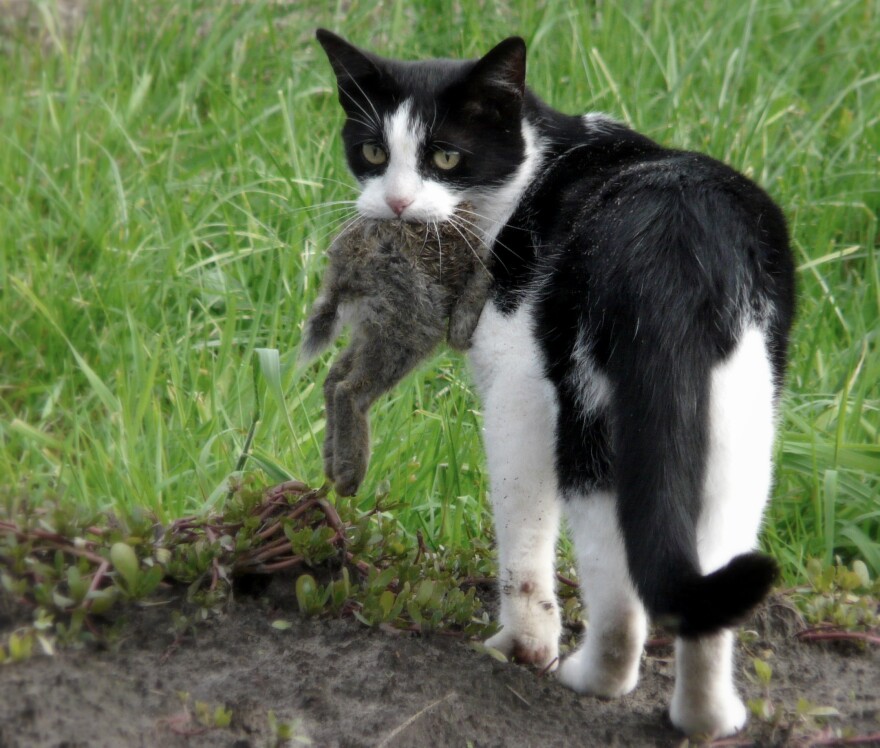
Credit By Eddy Van 3000 from in Flanders fields – Belgiquistan – United Tribes ov Europe (Fred + 1/2 rabbit) [CC-BY-SA-2.0 (https://creativecommons.org/licenses/by-sa/2.0)], / Wikimedia Commons
/
Wikimedia Commons
Feral Cats – One of the top 100 worst invasive species globally, according to Global Invasive Species Database. Kill 1 billion U.S. birds/year.
Feral Hogs – present in small numbers.
Birds: (European starling, European sparrow, Cowbirds) – pose significant threat to songbird populations.
Terrestrial Plants:
Multiflora rose – ornamental
Japanese knotweed
Tree-of-heaven
Autumn Olive
Kudzu – introduced for restorative purposes
Japanese Stiltgrass – introduced accidentally
Garlic Mustard – Introduced food
Insects:
Credit Kelly Oten / bugwood.org
/
bugwood.org
Hemlock Woolly Adelgid – a tiny parasitic bug that is wiping out tens of thousands of Eastern Hemlocks.
Gypsy Moth – introduced in Massachusetts in 1869 for silk production
Emerald Ash Borer – killed between 50 and 100 million trees in the U.S. since 2002, and threatens all 7.5 billion ash trees on the continent.
Hemlock Woolly Adelgid – The loss of hemlocks dramatically changes forest composition, decreases breeding habitat for birds, and exposes high elevation cold water trout streams to increased sunlight and sedimentation
Brown Marmorated Stink Bug – an agricultural pest feeds on at least 170 kinds of ornamental and horticultural crops
Pathogens:
Credit U.S. Fish and Wildlife Service
/
U.S. Fish and Wildlife Service
Little Brown Bat with White-nose syndrome.
Chestnut Blight – virtually eliminated a dominant tree species throughout its range by 1940
White-nose Syndrome – killed over 5.7 million bats in over 20 states in eastern North America
Viral hemorrhagic septicemia – VHS is a highly contagious fish pathogen that was discovered in the Great Lakes in 2002.
Aquatic Species:
Hydrilla – thick-growing, interferes with recreational activities
Yellow Iris – disrupts delicate wetlands
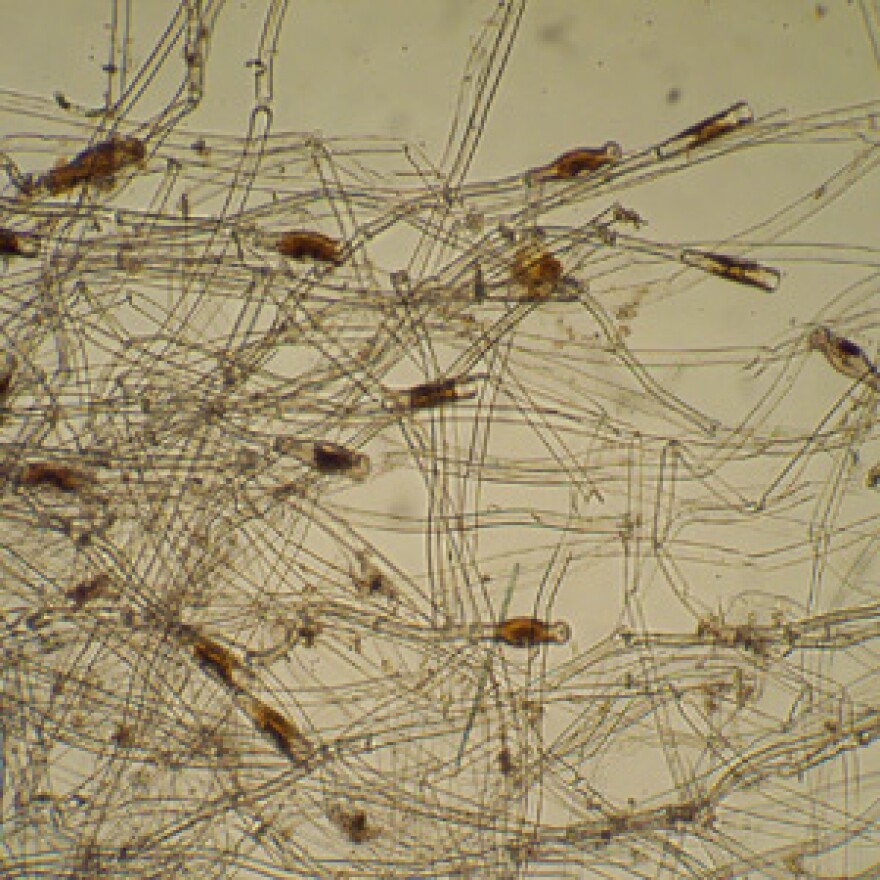
Didymo – single-celled algae that smothers brook trout breeding sites and deprives eggs of oxygen
Zebra Mussels – found in Monongahela, Kanawha, Ohio, and Little Kanawha rivers
Rusty Crayfish – out-competes native species and reduces biodiversity
Silver Carp – leaps out of water and injures boaters.
Credit Tyler Baker / Tennessee Valley Authority
/
Tennessee Valley Authority
Tangled filaments that make up the mat formation of Didymo as seen under a microscope.
On this West Virginia Week, the state budget is headed to Gov. Patrick Morrisey, a statewide public camping ban bill moves forward, and Inside Appalachia visits Good Hot Fish.
On this West Virginia Week, another round of school consolidations in the state, the Republican caucus lays out plans for the upcoming legislative session and a Nashville poet and songwriter channels a connection to LIttle Jimmie Dickens.
...