Aluminum Plates For Deep Space Win W.Va. 'Coolest' Contest
Aluminum plates that helped keep astronauts on the Artemis II rocket safe won the first ever Coolest Thing Made In West Virginia competition.
Continue Reading Take Me to More NewsAlert (09/29/2026): Our Parkersburg TV transmitter is still undergoing maintenance and remains temporarily inoperative. We apologize for the inconvenience.
All our programming is available via our TV livestreams on our website and WVPB Passport. Thank you for your patience!




To Educate, Inform, and Inspire by Telling West Virginia's Story
Mountain Readers Week will be held Oct. 5-9, 2026! Celebrate and foster a love of reading in children across West Virginia.
Nominate an exceptional West Virginia K-12 teacher today!

On Demand

On Demand

Stream original productions from WVPB

Watch locally produced documentaries & more.

On Demand

On Demand





West Virginia Morning
Inside Appalachia
West Virginia Week
Mountain Stage
Us & Them
The Legislature Today
The Legislature This Week

Send us your comments and questions.

Stream our board meetings.

Check out the latest WVPB news.

Sign up for our newsletter and get weekly updates.

Meet the WVPB staff.

WV Educational Broadcasting Commission, the WVPB Foundation, and the Friends of WVPB.

Come work with us!

Read our annual report and learn how we educate, inform and inspire with your support.

Sponsor impactful and engaging media and entertainment.

Use your IRA to make a gift to WVPB.

Become a member with your gift of $1,000 or more.

Make WVPB part of your legacy.

Manage your membership account.

Learn how you can Protect and Sustain West Virginia Public Broadcasting.
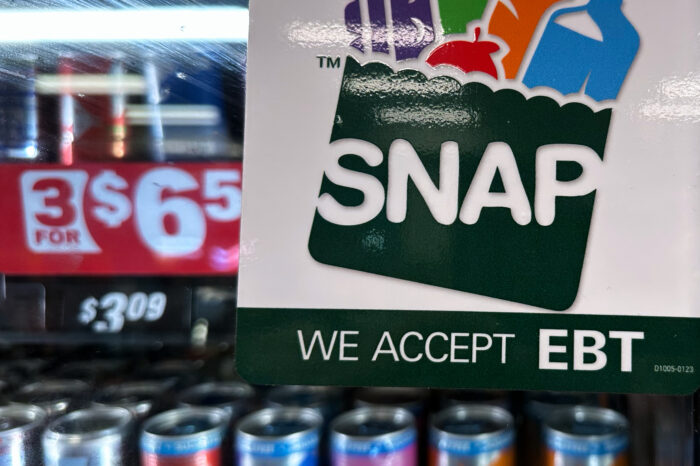
Last year Gov. Patrick Morrisey submitted a waiver to the U.S. Department of Agriculture to remove soda from the state’s Supplemental Nutrition Assistance Program (SNAP).
Monday Judge Amy Berman Jackson in the United States District Court for the District of Columbia ruled that in granting the waiver from West Virginia, as well as others from Colorado, Iowa, Nebraska and Tennessee, the department sidestepped strict requirements for projects aimed towards improving the health of SNAP recipients.
Jeffrey Shinder is one of the attorneys that brought the lawsuit with his firm Shinder Cantor Lerner and alongside nonprofit National Center for Law and Economic Justice. He said the lawsuit did not argue the merits of the restriction of sugary foods and drinks requested in the waivers, but rather how they were achieved.
“I would note Judge Berman Jackson was very clear in her opinion that it was striking to her that all of the waivers, that’s the five that were on the table…they all have the same infirmity, they clearly avoided the portion of the statute where changes to the definition of food could be piloted, which is so much more stringent.”
Shinder said beyond bureaucratic procedure, the lawsuit was about access to food and was brought to protect SNAP recipients’ ability to use their benefits to purchase whatever food they were allowed previously to purchase.
“These are people who are in states where waivers have gone into effect, where their ability to get the food and beverages they need to maintain their health, their ability to work, their ability to support their families has been affected,” he said. “They don’t have other means to buy the food and drinks they need. This was an urgent and critical issue for them.”
In the original complaint Hunter Starks, the plaintiff from West Virginia, argued that they relied on soda as a moderate source of caffeine and the ban affected their “ability to maintain the energy necessary to work, attend school, and care for” their child.
Starks told the court they work part-time and earns approximately $800 every two weeks, which is the household’s only source of income. To the point of proper procedure, Stark also said in their declaration that they were not provided notice of, or any opportunity to comment on, the waiver.
The push to ban sodas in West Virginia was first announced when U.S. Sec. of Health Robert F. Kennedy visited the state in March. At the time Morrisey announced his “Four Pillars of a Healthy West Virginia,” including:
The ban went into effect Jan. 1, 2026 and by March Shinder and his team had filed their suit.
“The court’s ruling is a major step in restoring essential food assistance to the millions of families that rely on SNAP nationwide,” said Katharine Deabler-Meadows, senior attorney at the National Center for Law and Economic Justice in a press release. “This decision makes clear that the USDA cannot bypass the legal guardrails that establish how SNAP must operate across the country. It affirms that families deserve a program that works without confusion.”
Add WVPB as a preferred source on Google to see more from our team
Lesions, sores and an itchy, red rash have affected more than 50 Wyoming County public school students.
Continue Reading Take Me to More NewsWest Virginia will apply to host the country's future United States Space Academy.
Continue Reading Take Me to More NewsThe Campaign Finance Reporting System (CFRS) through the West Virginia Secretary of State’s office is available to the public online.
Continue Reading Take Me to More NewsStories abound of people using large language models, colloquially referred to as artificial intelligence (AI), to write reports, only to discover that the computer used fake sources and made-up references. This interview explores the best way to use AI to get what you want – and not fabricated or false answers that seem real.
Continue Reading Take Me to More News