Aluminum Plates For Deep Space Win W.Va. 'Coolest' Contest
Aluminum plates that helped keep astronauts on the Artemis II rocket safe won the first ever Coolest Thing Made In West Virginia competition.
Continue Reading Take Me to More NewsAlert (09/29/2026): Our Parkersburg TV transmitter is still undergoing maintenance and remains temporarily inoperative. We apologize for the inconvenience.
All our programming is available via our TV livestreams on our website and WVPB Passport. Thank you for your patience!




To Educate, Inform, and Inspire by Telling West Virginia's Story
Mountain Readers Week will be held Oct. 5-9, 2026! Celebrate and foster a love of reading in children across West Virginia.
Nominate an exceptional West Virginia K-12 teacher today!

On Demand

On Demand

Stream original productions from WVPB

Watch locally produced documentaries & more.

On Demand

On Demand





West Virginia Morning
Inside Appalachia
West Virginia Week
Mountain Stage
Us & Them
The Legislature Today
The Legislature This Week

Send us your comments and questions.

Stream our board meetings.

Check out the latest WVPB news.

Sign up for our newsletter and get weekly updates.

Meet the WVPB staff.

WV Educational Broadcasting Commission, the WVPB Foundation, and the Friends of WVPB.

Come work with us!

Read our annual report and learn how we educate, inform and inspire with your support.

Sponsor impactful and engaging media and entertainment.

Use your IRA to make a gift to WVPB.

Become a member with your gift of $1,000 or more.

Make WVPB part of your legacy.

Manage your membership account.

Learn how you can Protect and Sustain West Virginia Public Broadcasting.
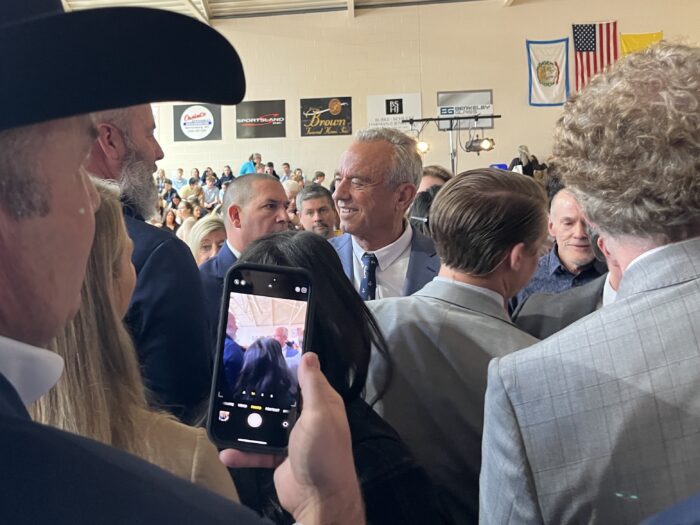
Robert F. Kennedy Jr. said Friday that the Trump administration will support state-led efforts to expand restrictions on the Supplemental Nutrition Assistance Program, or SNAP, following West Virginia officials’ attempt to pare down program eligibility and qualifying purchases.
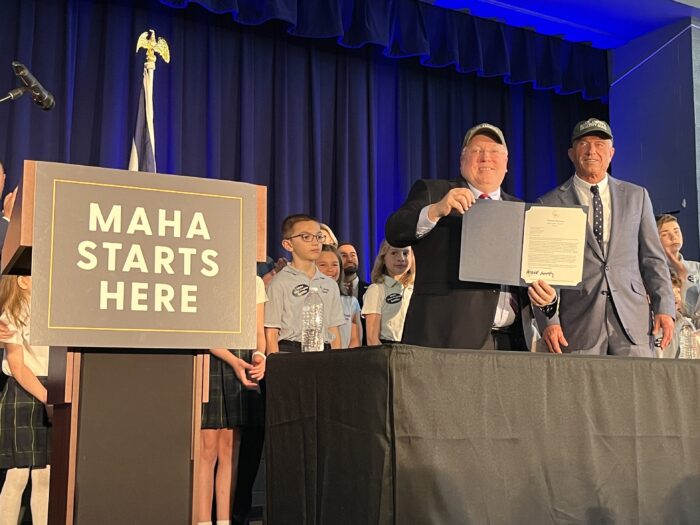
Kennedy currently serves as the nation’s highest-ranking health official, overseeing the U.S. Department of Health and Human Services under President Donald Trump. He joined Gov. Patrick Morrisey at a school in Martinsburg Friday to endorse recent legislative efforts in the state regarding health and nutrition.
Earlier this week, Morrisey signed into law a bill banning certain food dyes from school meals, making West Virginia the first state in the country to do so. Kennedy called it an early step in the effort to “Make America Healthy Again” — a Trump-backed health policy agenda that generally focuses on individual, rather than institutional, approaches to wellness.
“We all need to stand up for ourselves and take care of ourselves. It’s an act of patriotism,” Kennedy told attendees. “If you love this country, you need to start taking care of yourself.”
During his remarks Friday, Morrisey announced additional administrative priorities to “realign SNAP [benefits]” in West Virginia — moves that White House officials say could have an impact beyond state lines.
Scaling down government regulation over health has figured prominently in the early days of Morrisey’s governorship. Since taking office in January, the governor has prioritized things like broadening student vaccine exemptions and reducing state oversight on the establishment of new health care facilities.
On Friday, Morrisey signed a letter of intent requesting that the Trump administration allow West Virginia to bar SNAP participants from purchasing soda and sugary beverages through the program.
“Why should hard-earned federal and state tax dollars be allowed to ignore nutrition?” Morrisey said. “Taxpayer dollars should be targeted toward nutritious foods.”
Kennedy gave the proposal his nod of approval, endorsing efforts to raise standards for food and beverage ingredients at large.
“It’s supposed to be nutrition,” Kennedy said. “It’s not supposed to be food-like substances that are actually poisoning us.”
West Virginia appears to be laying the groundwork for greater state discretion over what qualifies as a SNAP purchase. But it is not alone in weighing changes to the program from a purported public health lens.
Calley Means, a senior health advisor for the White House, told reporters Friday that numerous other governors are considering similar moves. SNAP is not part of the U.S. Department of Health and Human Services, meaning Kennedy would lack the authority to change it, Means said.
But United States Secretary of Agriculture Brooke Rollins does. She oversees the U.S. Department of Agriculture, which administers SNAP on a federal level. And Means said Rollins is receptive to the proposed changes.
“Brooke Rollins has fully, this week, said she’s willing to accept them,” Means said.
Morrisey also said he seeks to expand work and education requirements for SNAP benefit eligibility in West Virginia. This week, the West Virginia Senate passed Senate Bill 249 to do just that, although opponents of the bill worry it could make support harder to access for residents in need.
“I think we can all agree, work is good,” Morrisey said. “Outside of limited exceptions, if you have the ability to work, you should.”
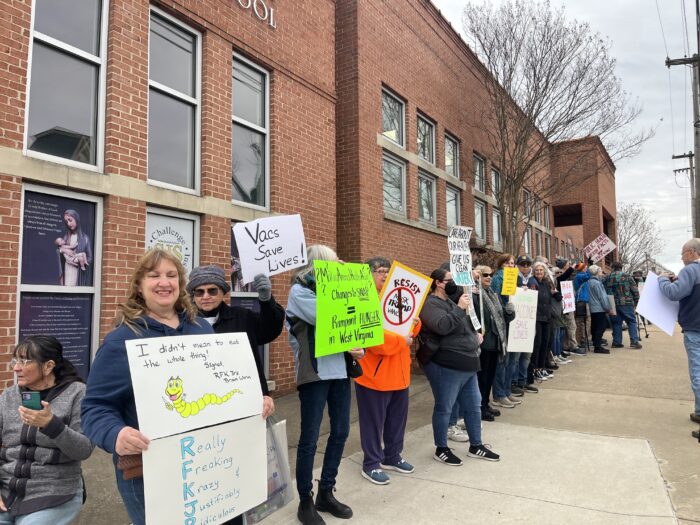
While Kennedy and Morrisey’s views on nutrition seem to align, expanding SNAP restrictions will not come without opposition. Picketers lined the road outside Martinsburg’s St. Joseph School in protest of the event Friday, some brandishing signs calling for the program’s protection.
Meanwhile, Means said raising standards for food and beverage ingredients domestically has received an “absolutely white-hot” response from industry leaders.
Critics include the American Beverage Association, a lobbying group representing the domestic beverage industry.
Senior Vice President Merideth Potter told West Virginia Public Broadcasting that beverage manufacturers have already made strides to improve the nutritional value of their products, with alternatives like “sparkling waters” and “zero-calorie sports drinks.”
Potter added that, aside from Red No. 3, food dyes banned under the new West Virginia bill are deemed safe by the U.S. Food and Drug Administration. She also disputed the idea that restricting beverage purchases would save taxpayers money, because the proposed change does not constitute “reforming or cutting the program.”
“You’re not changing the amount of benefit that beneficiaries receive each month. You’re just telling them what they can and can’t buy,” Potter said. “We really think conversation around restrictions is a sound bite. It’s not an actual solution.”
Potter said companies are concerned other states may follow West Virginia’s charge in expanding SNAP restrictions, which she said would hurt the beverage market as a whole.
Kennedy said representatives from food and beverage companies have asked him to prevent state officials from clamping down on food additive and SNAP restrictions. But he maintained that changes like these are key to public health, and have the full support of the Trump administration.
“They’re terrified of this, of what you’re doing,” Kennedy told audience members. “The message that I want to give the country today, and to all the other governors, is to get in line behind Gov. Morrisey.”
Add WVPB as a preferred source on Google to see more from our team

Lesions, sores and an itchy, red rash have affected more than 50 Wyoming County public school students.
Continue Reading Take Me to More NewsWest Virginia will apply to host the country's future United States Space Academy.
Continue Reading Take Me to More NewsThe Campaign Finance Reporting System (CFRS) through the West Virginia Secretary of State’s office is available to the public online.
Continue Reading Take Me to More NewsStories abound of people using large language models, colloquially referred to as artificial intelligence (AI), to write reports, only to discover that the computer used fake sources and made-up references. This interview explores the best way to use AI to get what you want – and not fabricated or false answers that seem real.
Continue Reading Take Me to More News