


The Mystery Of The Flatwoods Monster
Many cryptids are said to lurk in the shadows of Appalachia, including West Virginia’s Flatwoods Monster.
Continue Reading Take Me to More NewsAlert (09/29/2026): Our Parkersburg TV transmitter is still undergoing maintenance and remains temporarily inoperative. We apologize for the inconvenience.
All our programming is available via our TV livestreams on our website and WVPB Passport. Thank you for your patience!




To Educate, Inform, and Inspire by Telling West Virginia's Story

Mountain Readers Week will be held Oct. 5-9, 2026! Celebrate and foster a love of reading in children across West Virginia.
Nominate an exceptional West Virginia K-12 teacher today!

On Demand

On Demand

Stream original productions from WVPB

Watch locally produced documentaries & more.

On Demand

On Demand






West Virginia Morning

Inside Appalachia

West Virginia Week

Mountain Stage

Us & Them

The Legislature Today

The Legislature This Week

Send us your comments and questions.

Stream our board meetings.

Check out the latest WVPB news.

Sign up for our newsletter and get weekly updates.

Meet the WVPB staff.

WV Educational Broadcasting Commission, the WVPB Foundation, and the Friends of WVPB.

Come work with us!

Read our annual report and learn how we educate, inform and inspire with your support.

Sponsor impactful and engaging media and entertainment.

Use your IRA to make a gift to WVPB.

Become a member with your gift of $1,000 or more.

Make WVPB part of your legacy.

Manage your membership account.

Learn how you can Protect and Sustain West Virginia Public Broadcasting.
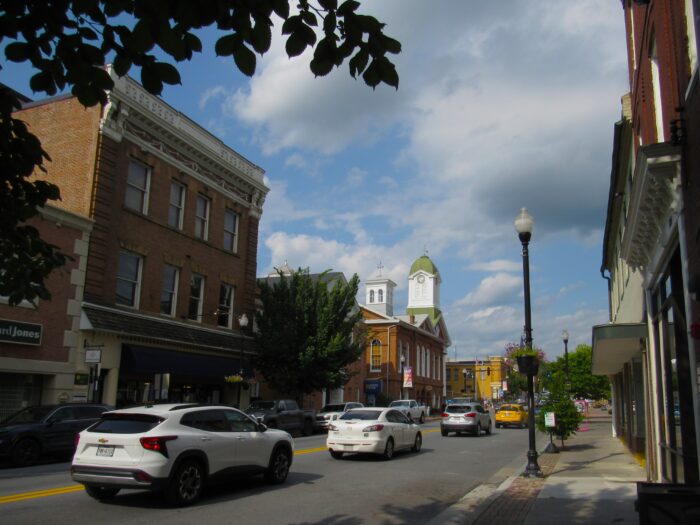
Efforts to reduce vehicular accidents at a troubled Charles Town intersection will soon bring new construction. But first, representatives for the West Virginia Division of Highways (WVDOH) say they want to learn more about the needs, concerns and opinions of the local community.
In July, WVDOH announced plans for a safety improvement project on West Washington Street — a segment of Charles Town’s main downtown road beset by an above-average number of car accidents in recent years. WVDOH said in a press release last month that the project seeks to improve traffic flow at the intersection, which leads directly into the city center.
Proposed modifications for Washington Street include better bicycle and pedestrian access, increased vehicle capacity and “enhanced sight distance,” the press release read.
According to WVDOH, the crash rate for the western segment of Washington Street is 2.5 higher than the state’s average for roadways. From 2017 to 2021, 51 crashes occurred in the area designated for safety improvements, 29% of which caused injuries.
On Aug. 5, WVDOH hosted a public workshop at the nearby Wright Denny Intermediate School where members of the public provided input on the planned upgrades. Residents had the chance to view mock-ups of the improvement project and speak to engineers and planners directly, according to WVDOH.

“We value the input we received from the community,” said Doug Kirk, director of the WVDOH Technical Support Division, in an Aug. 12 press release. “The feedback gathered at the meeting will be carefully considered as we move forward with design and construction planning.”
Now, WVDOH is soliciting written feedback from residents and stakeholders who were unable to attend this month’s meeting. Community members interested in providing comments on the comment can do so on the West Virginia Department of Transportation website.
WVDOH said in its August press release that the safety improvements seek to support “the long-term growth of the Charles Town area,” which is one of the fastest-growing regions in West Virginia.
Meanwhile, the roadway modifications are not the only changes planned for downtown Charles Town.
On the opposite end of Washington Street, members of the Jefferson County government are currently moving out of several disparate county offices, transitioning into a consolidated pair of buildings slightly further from the town center.
The Jefferson County Commission has cited capacity needs and facility improvements as causes for the move, and is now seeking buyers for its Washington Street properties.
Add WVPB as a preferred source on Google to see more from our team

On this West Virginia Week, nuclear power in West Virginia takes a step back, Child Protective Services (CPS) settles with five children, and we make a visit to a fire tower.
Continue Reading Take Me to More NewsLocal leaders continue to promote the state's aviation industry as the country continues to face a shortage of specialized workers including mechanics, technicians and air traffic controllers.
Continue Reading Take Me to More NewsAn autism non-profit says a series of barriers including low Medicaid reimbursement rates have made it all but impossible for the majority of West Virginia children diagnosed with autism to receive the treatment they need.
Continue Reading Take Me to More NewsWest Virginia brought in $16 million more than projected for September, 3% ahead of estimate. For the first three months of the fiscal year, collections are up $62 million with increases in most – but not all -- categories.
Continue Reading Take Me to More News