


'Haunted' Town Already Celebrating Spooky Season
Halloween is still several weeks away, but one West Virginia town is already celebrating the season.
Continue Reading Take Me to More NewsAlert (09/29/2026): Our Parkersburg TV transmitter is still undergoing maintenance and remains temporarily inoperative. We apologize for the inconvenience.
All our programming is available via our TV livestreams on our website and WVPB Passport. Thank you for your patience!




To Educate, Inform, and Inspire by Telling West Virginia's Story

Mountain Readers Week will be held Oct. 5-9, 2026! Celebrate and foster a love of reading in children across West Virginia.

Nominate an exceptional West Virginia K-12 teacher today!

On Demand

On Demand

Stream original productions from WVPB

Watch locally produced documentaries & more.

On Demand

On Demand






West Virginia Morning

Inside Appalachia

West Virginia Week

Mountain Stage

Us & Them

The Legislature Today

The Legislature This Week

Send us your comments and questions.

Stream our board meetings.

Check out the latest WVPB news.

Sign up for our newsletter and get weekly updates.

Meet the WVPB staff.

WV Educational Broadcasting Commission, the WVPB Foundation, and the Friends of WVPB.

Come work with us!

Read our annual report and learn how we educate, inform and inspire with your support.

Sponsor impactful and engaging media and entertainment.

Use your IRA to make a gift to WVPB.

Become a member with your gift of $1,000 or more.

Make WVPB part of your legacy.

Manage your membership account.

Learn how you can Protect and Sustain West Virginia Public Broadcasting.
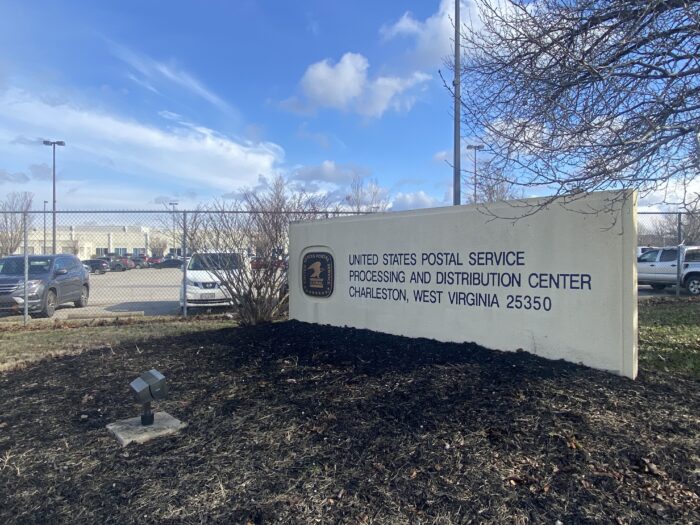
Four workers at the Charleston Processing and Distribution Center ushered in the new month with unexpected letters from their employers.
Sent by facility management May 1, these letters said that the workers would be removed from the work schedule in a matter of days “due to the needs of this facility.”
In subsequent correspondence with workers, management said they were required to reduce the number of temporary workers at the facility by regional officials with the United States Postal Service (USPS), which oversees the Charleston center.
In response, representatives with Charleston’s American Postal Workers Union Local 133 are pursuing grievance claims on behalf of the four workers, as months-long tensions between USPS and local workers continue to flare.
Tim Holstein, union vice president, alleged that the move from management constituted “pretextual” termination — providing a false reason for removing workers to conceal a reason that violates their contracts.
Holstein said this is especially evident in the fact that current employees are struggling to keep up with demands on the facility.
“How can you say you’re letting these employees go due to lack of work — or you don’t need them on the schedule — when you have all this mail that we’re failing on?” he asked.
All four workers are temporary employees with USPS, which means they have fewer protections than full-time, career employees. They can be dismissed for a lack of work, but dismissal would violate their contracts if it was done for “pretextual” reasons.
In the grievance proceedings, Holstein said union representatives are making the case that the dismissal of temporary staff was spurred by the broader effort to reduce mailing operations in West Virginia.
In late 2023, USPS officials announced they would reduce operations and staff at the Charleston facility, which currently serves as West Virginia’s only full USPS mail processing center and handles a significant amount of the state’s shipping and delivery services.
The facility downgrading — part of a ten-year plan to streamline USPS operations nationally — would move certain mail processing services to facilities in the Pittsburgh area, and possibly require some West Virginia staff to relocate.
But the decision was met with swift blowback from workers, community members and elected officials.
Earlier this month, USPS Postmaster General Louis DeJoy announced he would pause delivery network changes until at least 2025 as concern over the USPS plan gained traction nationwide.
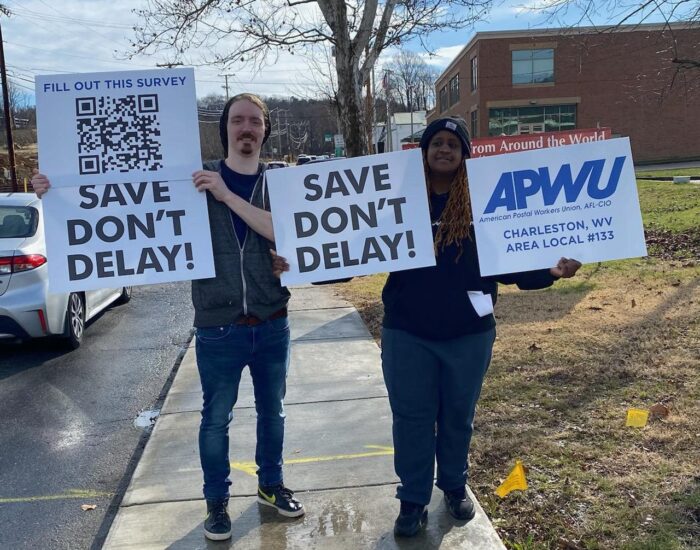
DeJoy’s decision seemingly marked good news for workers, delaying any downsizing planned for the Charleston facility.
But Holstein said the temporary nature of the decision, paired with the reduction in work opportunities at the mail processing center, has only stirred up more concern on the ground.
Holstein alleged that management has kept the temporary workers on staff without providing hours or pay so that they are more likely to quit, and USPS will not have to provide them severance benefits.
“They’re basically putting these employees off the schedule in efforts and hopes that what they’re gonna say is, ‘Screw it, I quit,’ so they’re not responsible,” he said. “Then now they’re off the hook … as far as any low earnings or unemployment benefits.”
In a written statement to West Virginia Public Broadcasting, USPS Spokesperson Naddia Dhalai did not respond to these claims directly. But she said that “operational flexibility” is a key part of the temporary worker position for USPS.
“Like all employers who have a flexible employee category, there is a higher turnover rate with these employees, providing us the opportunity to both capture savings by rightsizing our workforce when making long overdue operational changes and avoiding any career layoffs,” she wrote.
Union workers are bound to a step-by-step grievance procedure established in the union’s collective bargaining agreement.
The first step in these proceedings requires an individual worker to meet with their direct supervisor. Holstein said the union has already completed this step of the process, to no avail.
Local union representatives must then meet with USPS officials. If a decision is not reached, national union representatives must meet with a regional USPS official and come to a resolution, or enter a binding arbitration process.
Holstein said the union’s goal is to get the workers their prior shifts back and secure them compensation for the four hours of work they are guaranteed to receive each day through their contracts. Since receiving the letters, the workers have not received this pay, he said.
But Holstein said the grievance process can be arduous, with barriers to communicating with USPS that can be taxing on staff members undertaking its steps.
“The only thing that’s really becoming difficult for us to fight is the complacency of upper-level management to [not] provide the information that shows they’re wrong,” he said.
Still, Holstein said the union plans to push on with its claims.
“It’s an uphill battle that we fought for a long time,” he said. “It’s nothing unusual to us.”
Add WVPB as a preferred source on Google to see more from our team

West Virginia has seen the largest population decline in the nation - nearly 1.5% - and many of those leaving are young people. In an episode that aired last month, Us & Them host Trey Kay heard from some young people who think they may stay in the state to launch their futures. This month, Kay talks with those who say living their dreams may well require moving away from the Mountain State. We listen to an excerpt from the latest Us & Them.
Continue Reading Take Me to More NewsThey love West Virginia, but love alone may not be enough to keep them here. In the second of two Us & Them episodes, Trey Kay talks with young West Virginians who say they may need to leave in search of careers, community and a place where they can imagine their futures. Their decisions reveal what the Mountain State risks losing when young people cannot see a place for themselves at home.
Continue Reading Take Me to More NewsLocal leaders continue to promote the state's aviation industry as the country continues to face a shortage of specialized workers including mechanics, technicians and air traffic controllers.
Continue Reading Take Me to More NewsMany farmers in our region raise sheep for meat, but not so much for wool. There’s not a great market for it with textile companies overseas, but researchers at Virginia Tech have teamed up with farmers, to figure out how to use wool to insulate houses, potentially creating a new market.
Continue Reading Take Me to More News