


‘Jay’ Rockefeller Dies At 89
Jay Rockefeller, the last member of his family’s political dynasty who served as West Virginia’s governor and later a longtime U.S. senator, has died.
Continue Reading Take Me to More News


To Educate, Inform, and Inspire by Telling West Virginia's Story
Mountain Readers 2026 has concluded! Please fill out our volunteer post-survey.

Nominate an exceptional West Virginia K-12 teacher today!

On Demand

On Demand

Stream original productions from WVPB

Watch locally produced documentaries & more.

On Demand

On Demand




West Virginia Morning

Inside Appalachia
West Virginia Week
Mountain Stage
Us & Them
The Legislature Today
The Legislature This Week

Send us your comments and questions.

Stream our board meetings.

Check out the latest WVPB news.

Sign up for our newsletter and get weekly updates.

Meet the WVPB staff.

WV Educational Broadcasting Commission, the WVPB Foundation, and the Friends of WVPB.

Come work with us!

Read our annual report and learn how we educate, inform and inspire with your support.

Sponsor impactful and engaging media and entertainment.

Use your IRA to make a gift to WVPB.

Become a member with your gift of $1,000 or more.

Make WVPB part of your legacy.

Manage your membership account.

Learn how you can Protect and Sustain West Virginia Public Broadcasting.
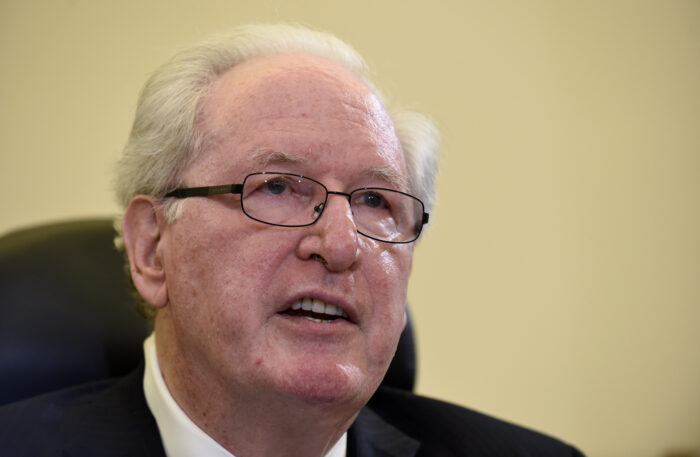
Jay Rockefeller, the last member of his family’s political dynasty who served as West Virginia’s governor and later a longtime U.S. senator, has died. He was 89. Rockefeller died Thursday night at his home in Washington. His death was confirmed by Mary Stewart, vice president for external affairs at WETA, the public broadcasting station where Rockefeller’s wife, Sharon, serves as president and CEO.
Rockefeller came from one of the nation’s richest families to spend a half century in public service in one of the nation’s poorest states. He arrived in 1964 as a worker in an anti-poverty program, was elected governor a dozen years later and served two terms, then spent 30 years as a U.S. senator.
From VISTA volunteer to five-time U.S. senator, John D. Rockefeller IV, known as Jay by most, served West Virginia since the 1960s.
Rockefeller was born in New York City on June 18, 1937, just weeks after the death of his great-grandfather, business tycoon John D. Rockefeller.
He first came to West Virginia as a Volunteers In Service To America (VISTA) volunteer in 1964.
In 1966, he attracted national attention by switching his party affiliation from Republican to Democrat. He was elected to the West Virginia House of Delegates in 1966 and as secretary of state two years later.
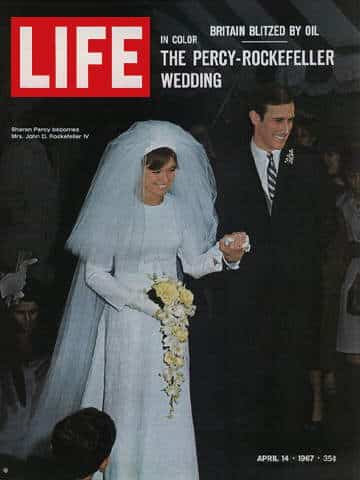
In 1967, Rockefeller married Sharon Lee Percy, daughter of U.S. Sen. Charles Percy of Illinois. Their Chicago wedding was featured on the cover of LIFE magazine. They had four children: John Davison “Jamie” V, Valerie, Charles and Justin Aldrich.
After losing to Arch Moore for governor in 1972 by 72,000 votes, Rockefeller served as president of West Virginia Wesleyan College.
According to the John D. Rockefeller library at West Virginia University (WVU), “Rockefeller’s second run for governor was successful: he beat Republican candidate Cecil Underwood by more than 242,000 votes, the largest majority in state history. Natural disaster, strikes and a worsening economy posed serious challenges during his years as governor. In the spring of 1977, major spring floods in the southern West Virginia counties of McDowell, Wayne, Logan and Mingo wiped entire towns away and made safe housing above flood plains a focus of Rockefeller’s administration.
“The same year saw the beginning of the 111-day national Bituminous Coal Strike of 1977-1978 led by the United Mine Workers of America (UMWA) and the AFL-CIO. Rockefeller refused to call upon the National Guard to suppress the miners’ strike. At its conclusion, President Jimmy Carter appointed Rockefeller to lead the first major federal study of coal mining in America in three decades. Rockefeller served as chair of the President’s Commission on Coal and pushed for a national energy strategy that included Appalachian coal. He also created the West Virginia Board of Coal Mine Health and Safety, reorganized state agencies, and set up senior centers statewide.”
In 1984, Rockefeller defeated Republican John Raese for the U.S. Senate. He won five consecutive terms to that seat where he promoted worker rights and health care issues and pushed to diversify West Virginia’s economy. He stepped down from the senate in 2015, ending nearly 50 years in public service.
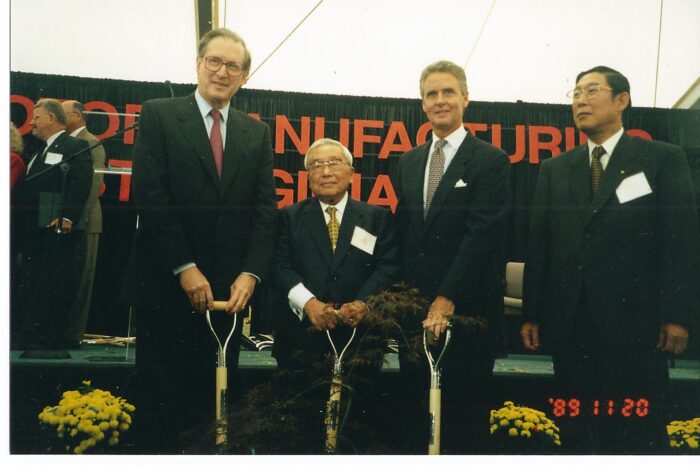
Rockefeller was criticized when he recommended a West Virginia trade office in Nagoya, Japan. The office was later opened in 1990 during Gov. Gaston Caperton’s administration, and Toyota Manufacturing announced it would build a factory in Putnam County in 1996. It opened in 1998 and has continued to expand.
Rockefeller later received Japan’s highest foreign award, the Grand Cordon of the Order of the Rising Sun, for bolstering economic and cultural ties between Japan and West Virginia.
Rockefeller was a lead author on the Children’s Health Insurance Program (CHIP) in 1997, a federal-state program providing low-cost health coverage to millions of children in families with incomes too high for Medicaid.
Per the West Virginia Press Association in 2013, Rockefeller called CHIP one of the most significant accomplishments of his political career while speaking to a group of advocates during a rally at the Schoenbaum Center in Charleston when the program was up for reauthorization.
“Quite simply, fully funding CHIP is a moral imperative,” Rockefeller said. “This program is something I deeply, truly believe in, and I am as deeply proud of CHIP as anything I’ve done in my nearly 50 years in public service. That’s why I will never stop fighting to make sure children across West Virginia get the care they rightfully need and deserve.”
The senator said parents should not have to refuse their child’s needed medical care because of a lack of insurance, or the worry of high healthcare costs.
“Healthcare should be seen as a right, not a privilege. Period,” Rockefeller said. “And nothing is more important than making sure children get the start they need in life. That was my goal when we set out to create CHIP in 1997. And it’s the same today, as we approach a crucial debate about maintaining and strengthening this essential program.”
Rockefeller founded the Blanchette Rockefeller Neurosciences Institute in Morgantown in 1999, to honor his late mother, who passed away after a 10-year battle with Alzheimer’s disease.
The institute evolved to become the Rockefeller Neurosciences Institute. The institute has made critical advances in studies of Alzheimer’s, Parkinson’s and traumatic brain injuries.
West Virginia Public Broadcasting won the 2016 NETA Best Documentary Award for Jay: A Rockefeller’s Journey , a two-hour program tracing the 50-year public service career of Rockefeller, capturing much of the political history of West Virginia, his adopted home.
As one historian states in the film, the Rockefeller name was notorious and despised for more than the first half of the 20th century, and the great grandson of industrial titan John Davison Rockefeller spent his professional career working to rehabilitate that name.
The documentary explores Jay Rockefeller’s influences and motivation, his successes and failures, from early childhood to his arrival in West Virginia through chairmanships of some of the most influential committees in the United States Senate.
After his retirement from the Senate, Rockefeller donated many of his papers and documents to West Virginia University’s West Virginia and Regional History Center and the ‘Jay Rockefeller: A Legacy of Leadership,’ located in Wise Library’s Rockefeller Gallery on the Morgantown campus of West Virginia University opened in 2016. Much of the content is also available online.
The exhibit includes memorabilia from Rockefeller’s early years in West Virginia, his election to the United States Senate, and some of his accomplishments during his long career as a U.S. senator.
Also available are the Rockefeller Legacy Memos, a collection of 12 memos detailing the senator’s work in health care reform; West Virginia’s jobs, economy and industry; children, families and education; and veterans’ affairs.
The university also has a school called the John D. Rockefeller IV School of Policy and Politics.
Add WVPB as a preferred source on Google to see more from our team

Bob Thompson’s annual holiday jazz celebration is back! Joining Thompson on stage is his long-time bandmates Timothy Courts on drums, Ryan Kennedy on guitar, John Inghram on bass, plus special guest vocalist Lena Seikaly with James Moore on trumpet. Buy your tickets today!
Continue Reading Take Me to More NewsThese Dreaming Hills is a new horror and science fiction anthology collecting stories from across Appalachia. Inside Appalachia's Bill Lynch spoke with editor Noah Ashley Blooms about the book.
Continue Reading Take Me to More NewsWest Virginia's Attorney General JB McCuskey continues his campaign against social media companies for putting children at risk. Thursday he announced a lawsuit against Snap Inc., the maker of Snapchat.
Continue Reading Take Me to More NewsVandalia Health and the West Virginia School of Osteopathic Medicine (WVSOM) plan to reopen labor and delivery services at Greenbrier Valley Medical Center, expand clinical training opportunities and establish a rural obstetrics training program.
Continue Reading Take Me to More News