This week, data centers are rapidly expanding into rural parts of Appalachia, and folks say they are having trouble finding information about these projects. Also, artificial intelligence is disrupting human art, including fiber arts like crochet. And folks are pushing back, like they always have — with song.
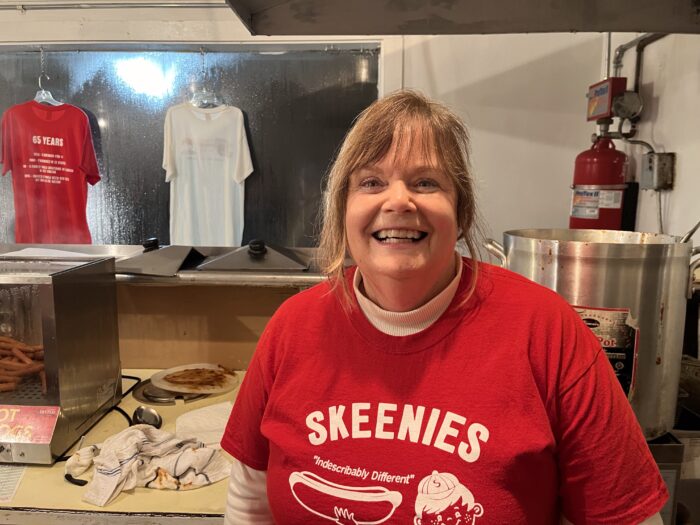
Karen Skeen keeps her family’s famous “indescribably different” hotdog recipe alive with an annual tribute sale.
Photo Credit: Zack Harold/West Virginia Public Broadcasting
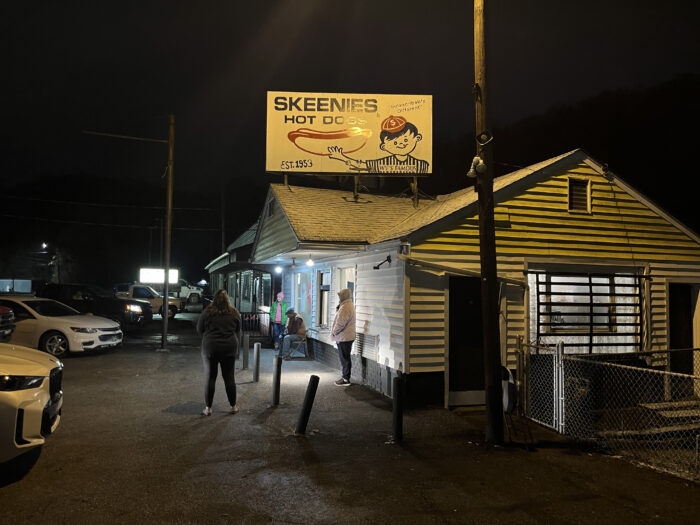
For generations, Skeenies Hot Dogs in Sissonville, West Virginia, was known for serving some of the best slaw dogs around.
The restaurant closed in 2018 — but still comes alive for the annual Skeenies Tribute Sale. Giving devoted Skeenies fans a few days to make up for lost time.
Folkways Reporter Zack Harold has this story.
Workhorses On The Farm
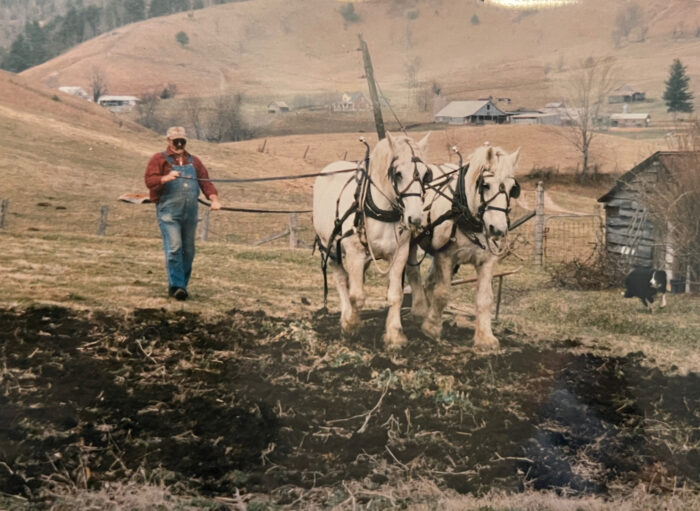
A family photo of Danny Wingate using a team of horses to plow his sister’s garden in Comers Rock, Virginia. Shortly after being interviewed for this story, Wingate passed away.
Courtesy Photo from Clevie Wingate
Before the tractor, farmers in Appalachia relied on workhorses to plow fields and pull their wagons. In southwestern Virginia, the practice has mostly disappeared, often along with the farms themselves. But some farmers? never let go of farming with a horse.
Folkways Reporter Connie Bailey Kitts has this story.
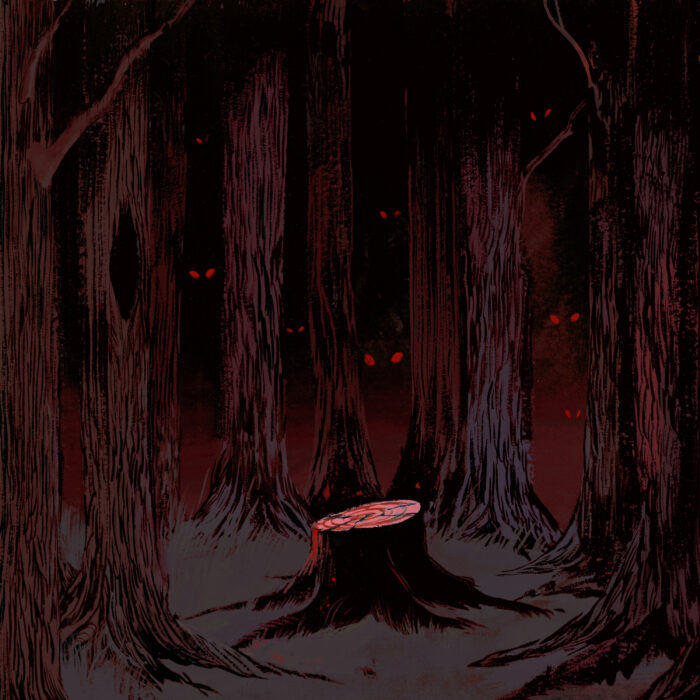
Terrestrials: The Stumpisode
The Stumpisode: The Wild World of Tree Stumps.
Courtesy Photo from Tara Anand/Terrestrials
Host Mason Adams and his family are big fans of a podcast called Terrestrials, on Radiolab for Kids. In an episode last year, Terrestrials featured a piece of Revolutionary war history that led to the founding of a city in West Virginia. The story was part of an episode about stumps.
We hear from Terrestrials creator and host, Lulu Miller.
Rosalie Haizlett’s Book, Tiny Worlds Of The Appalachian Mountains, An Artist’s Journey
Rosalie Haizlett with her book, Tiny Worlds of the Appalachian Mountains, an Artist’s journey.
Courtesy Photo
In 2022, nature artist Rosalie Haizlett set out on a trip to illustrate parts of the Appalachian Mountains that often get overlooked — that is, the tiny birds, reptiles and other critters hiding beneath leaves or up in the trees.
Her illustrations came together as Tiny Worlds of the Appalachian Mountains, an Artist’s journey. The book is full of colorful images and thoughts Haizlett recorded as she spent hours exploring the mountains.
Last fall, Producer Bill Lynch spoke with Haizlett about the book.
------
Our theme music is by Matt Jackfert. Other music this week was provided by Chris Stapleton, Sierra Hull, Steve Earle, Dinosaur Burps, Hazel Dickens, Harvey & Copeland, Tyler Childers and Blue Dot Sessions.
Bill Lynch is our producer. Abby Neff is our associate producer. Our executive producer is Eric Douglas. Kelley Libby is our editor. Our audio mixer is Patrick Stephens.
You can send us an email: InsideAppalachia@wvpublic.org.
This week, data centers are rapidly expanding into rural parts of Appalachia, and folks say they are having trouble finding information about these projects. Also, artificial intelligence is disrupting human art, including fiber arts like crochet. And folks are pushing back, like they always have — with song.
The state's latest license plate features a total of nine mysterious creatures with ties to West Virginia locations, most prominently the Mothman and the Flatwoods Monster.
Inside Appalachia this week explores data centers and artificial intelligence (AI). As part of this special episode, host Mason Adams spoke with Dan Parks, a journalist who writes a Substack called Country Roads News. He's been covering data center development in Tucker County. We listen to an excerpt.
Southern West Virginia has rich but often overlooked musical traditions. Chris Haddox is a WVU professor of sustainable design, but he's also spent years uncovering more information on those overlooked musicians. We spoke with him to learn more about his effort to shine a light on the musical talents of local miners, now with the help of a grant from the Mellon Foundation.