This week, when an award-winning Asheville chef decided to launch a restaurant, she returned to a rich community tradition. Also, the popularity of weaving waxes and wanes. At the moment, it’s having a renaissance. And, during Lent, Yugoslavian fish stew is a local favorite in Charleston, West Virginia.
Us & Them: Three People – Three Stories – One Community
Listen
Share this Article
In Charleston, West Virginia, there’s a monthly live storytelling event called “Three Things” that invites three highly visible members of the community to talk about their careers. The guests are asked to follow a simple prompt: tell the audience about their First, their Favorite and their Future.
Jeff Shirley, the producer and host of “Three Things,” says the freewheeling format “guarantees that we will get three unique approaches to the task from all of our guests.” It also allows the public a unique and barrier-breaking glimpse into the lives of people they may think they already know.
On this episode of Us & Them, host Trey Kay shares a part of his story you might not know about, as does Valicia Leary, executive director of the Children’s Therapy Clinic, and Maurice Cohn, music director of the West Virginia Symphony Orchestra.
This episode of Us & Them is presented with support from the West Virginia Humanities Council, and the CRC Foundation.
Subscribe to Us & Them on Apple Podcasts, NPR One, RadioPublic, Spotify, Stitcher and beyond.
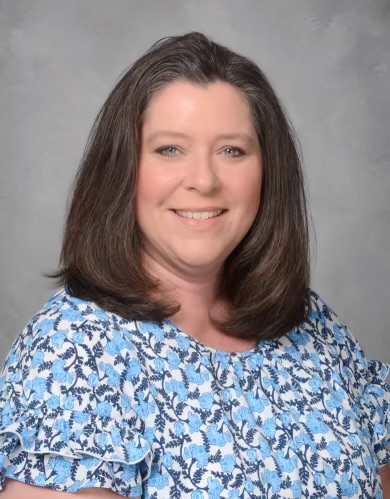
Valicia Leary is the Executive Director of Children’s Therapy Clinic in Charleston, West Virginia
Credit: Digital Pix & Composite, LLC
Children’s Therapy Clinic (CTC) provides therapy services – speech, occupational, physical, and music therapies and social skills groups – to children from birth to 18 years of age who live in Kanawha, Putnam, and surrounding counties in West Virginia. The clients present with a variety of diagnoses such as autism, cerebral palsy, Down syndrome, neurological impairments, developmental delays, and exposure to drugs/alcohol in utero. CTC serves families that lack sufficient income and/or insurance to pay for the therapy their child requires. Services are provided on an income-based sliding-scale fee however, most of their clients have incomes of 200% of the Poverty level or below and receive free services.
“My favorite part of my job is the children, the families, my co-workers, everyone who does the hard work. The therapists teach the children what they need to do, and I get to see the children grow. We have children that come in and they can’t communicate. They might not be able to walk. They might need help interacting with other children. They might come to our social skills groups. So, it’s so much fun to see that growth. My favorite success story, I would have to say, would be my daughter. Elizabeth received therapy for several years. She was able to go to college, navigate campus, and graduate with her degree. And I know it’s because of the things they taught her at the clinic.”
— Valicia Leary
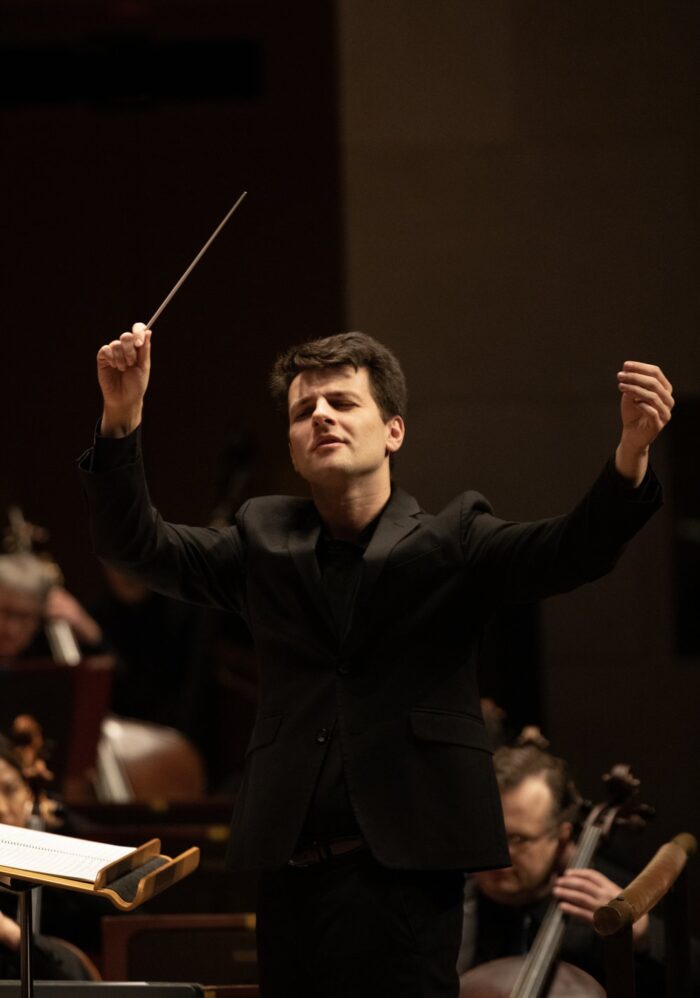
Maurice Cohn is the Music Director of the West Virginia Symphony
Credit: Sylvia Elzafon
A two-time recipient of the Solti Foundation U.S. Career Assistance Award, Maurice Cohn currently serves as Music Director of the West Virginia Symphony and as Artistic Partner and Conductor of New York City’s Camerata Notturna. Recent and upcoming guest conducting engagements include the Cincinnati Symphony, Utah Symphony, Bohuslav Martinů Philharmonic, ensembleNEWSRQ, Omaha Symphony, Amarillo Symphony, Colorado Music Festival, Music in the Mountains Festival, and the Oberlin Conservatory Orchestra.
Maurice completed a three-year tenure as the Assistant Conductor of the Dallas Symphony at the end of the 23/24 season, including his subscription debut in 2023. Other performance highlights with DSO include the world premiere of Mason Bates’s Philharmonia Fantastique, the second ever performance of Gabriela Ortiz’s Yanga, and a concert performance of selections from Terence Blanchard’s Fire Shut Up in My Bones. Concurrent with his time in Dallas, Maurice was appointed Assistant Conductor of the Aspen Music Festival for the 2022 and 2023 seasons.
Maurice spent two summers as a conducting fellow at the Aspen Music Festival, where he received the Robert J. Harth Conducting Prize and the Aspen Conducting Prize, and he received an M.M. in conducting from the Eastman School of Music. He holds a B.M. in cello performance from Oberlin Conservatory and a B.A. from Oberlin College, where he studied history and mathematics. When not conducting or playing cello, you can find him reading mystery novels, playing tennis, or continually searching for the best podcast app.
“I grew up in Galesburg, Illinois, which is a small town about an eight or nine hour drive from here. And I had a group of friends [that], after school. we’d all pile into somebody’s house and have a babysitter. In this group of kids, one of them is named Peter Ortner. He would have been 8 years old, and I would have been 4 [years old]. And, you know, when you’re four and you have a friend who’s eight, I mean, they’re cool. Anything that Peter does, I want to do. And one of the things that Peter got to do is he got to go to Monmouth, Illinois, which is a town maybe 30 minutes away, because he took cello lessons. There was a cello teacher in Monmouth. And so a lot of times we’d have to schlep in the car to take Peter to his cello lesson, which was very exciting because it was a kind of field trip, but also very boring, because then you had to sit and wait for it to be over before you came back. And so I came up with the idea of how to make this less boring, which is to join Peter and also learn how to play the cello. So, I went to my parents and said, ‘I have decided to learn how to play the cello.’ And they said, you’re 4 years old. Don’t be ridiculous.’ And I said, ‘Okay, I’ll ask you tomorrow.’ I don’t know if it was their eventual decision that music is good in a young person’s life, or if they were just really annoyed that I kept asking, but eventually they said yes, and I got cello lessons. And that began my relationship with music.”
— Maurice Cohn
Us & Them host Trey Kay speaking at FestivALL Charleston’s “Three Things in July 2024
Credit: Kristin Harrison
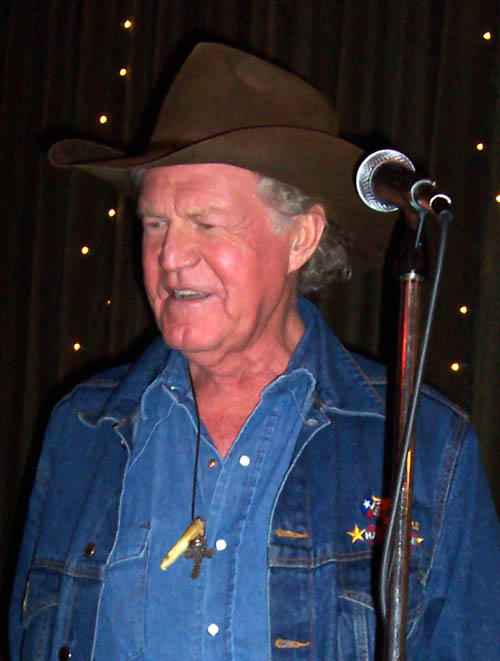
Trey Kay told a story about one of his favorite interviews. It was with country music songwriter Billy Joe Shaver.
“At the time, I was grieving the death of my father. At the time, [Billy Joe] was still grieving the death of his son, who had an overdose of heroin. I was looking for some type of thread to the story that I was [producing] about him and I. As he was talking, he started telling me about his relationship with God and how God had changed his life. And he used all the terms that I had heard here growing up in West Virginia, that had seemed fundamentalist and evangelical and that quite frankly — and I hope I’m not offending anybody — turned me off. But somehow, hearing Billy Joe talk this way, it seemed like he was speaking with a kind of a spiritual connection that seemed to transcend all of those terms. I guess I was trying to say, ‘Well, okay, have you turned from all this honky tonk life that you seem to celebrate so much in your songs and now you’re embracing God?’ And I also said, ‘Do you seem to be somewhat concerned that maybe all of this honky tonk life that you lived might have also contributed to the lifestyle that your son lived and that maybe that led to his death?’ And he says, ‘No, no, man. He said, God, God loves you wherever you are. God loves you if you’s in a church or whether you’s in the honky tonk.’ And that just hit me like a ton of bricks.”
— Trey Kay
Billy Joe Shaver
Listen to the profile that Trey Kay produced about Billy Joe Shaver for Studio 360 back in 2005.
Listen to the Billy Joe Shaver songs that Trey Kay’s dad and his friends would sing as reverently as church hymns:
This week, when an award-winning Asheville chef decided to launch a restaurant, she returned to a rich community tradition. Also, the popularity of weaving waxes and wanes. At the moment, it’s having a renaissance. And, during Lent, Yugoslavian fish stew is a local favorite in Charleston, West Virginia.
WVPB had a conversation with Us & Them host Trey Kay earlier this week on the significance today of the 250th anniversary of America’s founding. This week, WVPB is hosting a special screening event at Marshall University with excerpts from Ken Burns’ The American Revolution, and Kay will lead a panel discussion. We once again hear from Kay, this time speaking with one of the panelists — Marshall University political science professor George Davis — about why revisiting the nation’s founding story still matters.
WVPB will be screening excerpts of Ken Burns’ recent PBS documentary series "The American Revolution" this week at Marshall. Us & Them host Trey Kay will moderate the event, and he spoke recently with WVPB News Director Eric Douglas about why revisiting the nation’s founding story matters today. Also, a bill to temporarily delay moving a child to homeschooling during an active case of abuse or neglect hit a snag in the Senate on Monday.
One of America’s pioneering filmmakers had nothing to do with Hollywood but nevertheless left his mark on the emerging industry. Oscar Micheaux was a homesteader, who then turned his attention to making movies in the early 1900s. He was a Black man who made movies for Black audiences at a time when they weren’t allowed into mainstream, white-only theaters. And for several pivotal years in the 1920s, he operated out of Roanoke, Virginia.