This week, after a disaster, can comics help set the record straight? Also, sifting through Hurricane Helene’s debris, one group tries to reunite keepsakes with their owners, including love letters. And, a cafe in Virginia feeds the hungry and tries to destigmatize homelessness. For its outreach manager, whose brother lived on the streets for years, it’s personal.
Us & Them Encore: Substance Use Disorder — Can You Recover Without A Place To Call Home?
Listen
Share this Article
There are more challenges now for people who live at the intersection of addiction, homelessness and the criminal justice system.
New laws in about a dozen states echo aspects of the 2024 Safer Kentucky Act, which enhances penalties for violent crimes, drug crimes, shoplifting and carjacking, and bans public camping.
On this encore episode of Us & Them, host Trey Kay returns to Kentucky to check on the consequences of the new tough-on-crime law. In cities, the demand for long term and transitional housing remains acute, while in small town Appalachia the access to any social safety net can be far, far away.
This episode of Us & Them is presented with support from The Just Trust.
Subscribe to Us & Them on Apple Podcasts, NPR One, RadioPublic, Spotify, Stitcher and beyond.
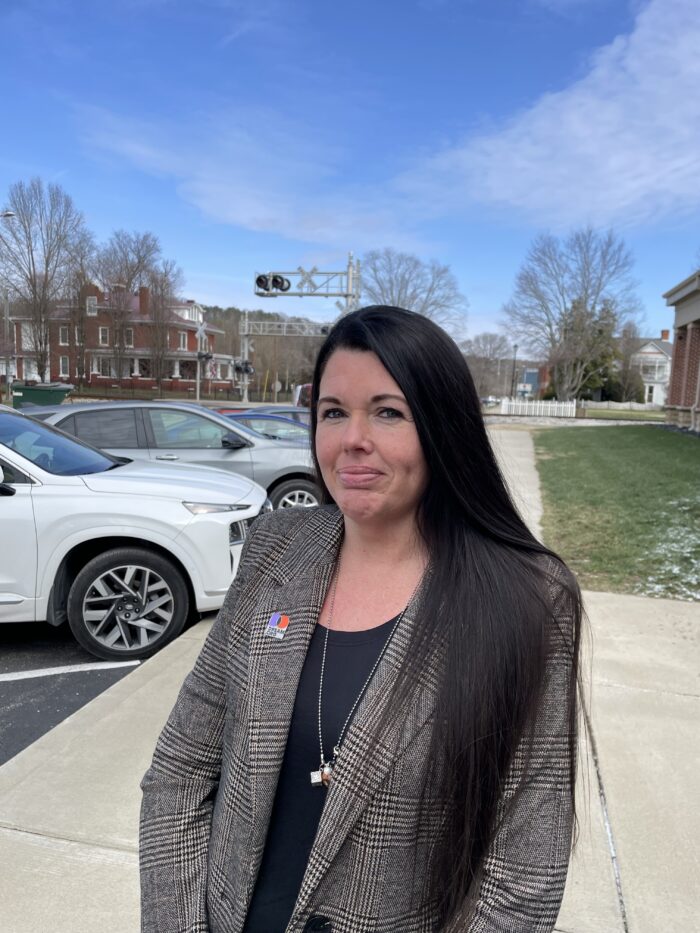
Amanda Hall, senior director of national campaigns at Dream.org, speaks about her experience with addiction, incarceration and recovery. As a teenager, she was sentenced to two five-year terms for drug-related offenses and spent 13 months in prison. After entering treatment, she became a social worker, later led the recovery center where she once received care, and went on to advocate for addiction safety nets in Kentucky. She now helps shape national drug policy and has raised concerns about the Safer Kentucky Act, particularly its ban on public camping and sleeping.
Photo by Trey Kay/West Virginia Public Broadcasting
“I’ll be honest—because we’re smaller, we have fewer unhoused people, but there are whole counties without any shelter. It’ll take us a while to sort through the data, but I’m eager to see it because I truly believe the Safer Kentucky Act is harming Appalachians. I remember burning a lot of bridges in my past; sometimes I got lucky and found a couch or went back to my mom’s house, but not everyone has that opportunity. Instead of providing resources or harm reduction, we’re throwing people in jail. Studies show that within the first two weeks after release, some individuals are 39 times, or even over 120 times, more likely to die of an overdose. It’s very frightening for our population with substance use disorder. It’s really scary.”— Amanda Hall, Senior Director of National Campaigns at Dream.org
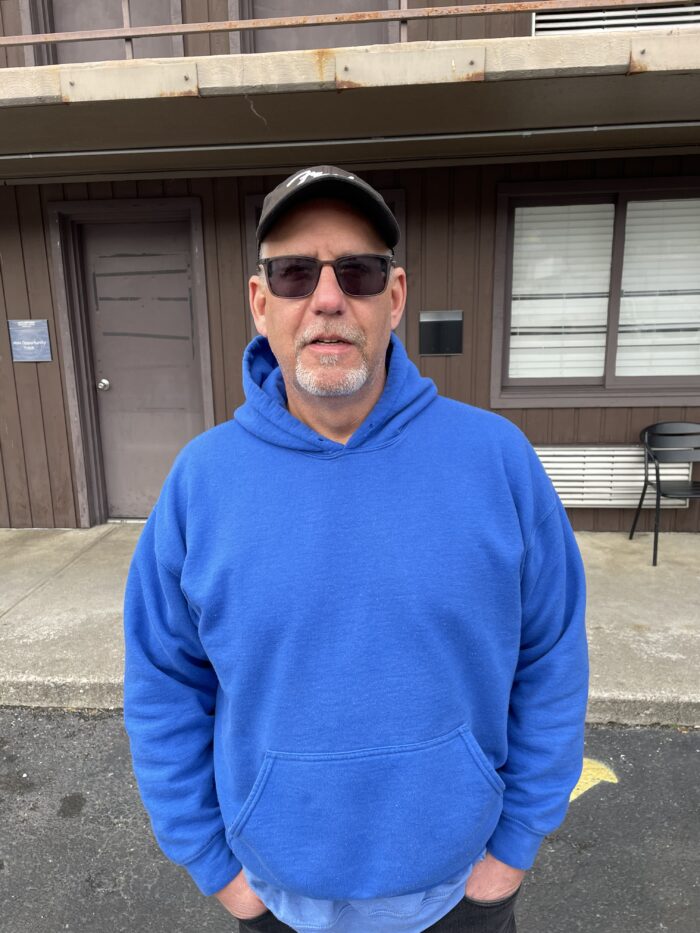
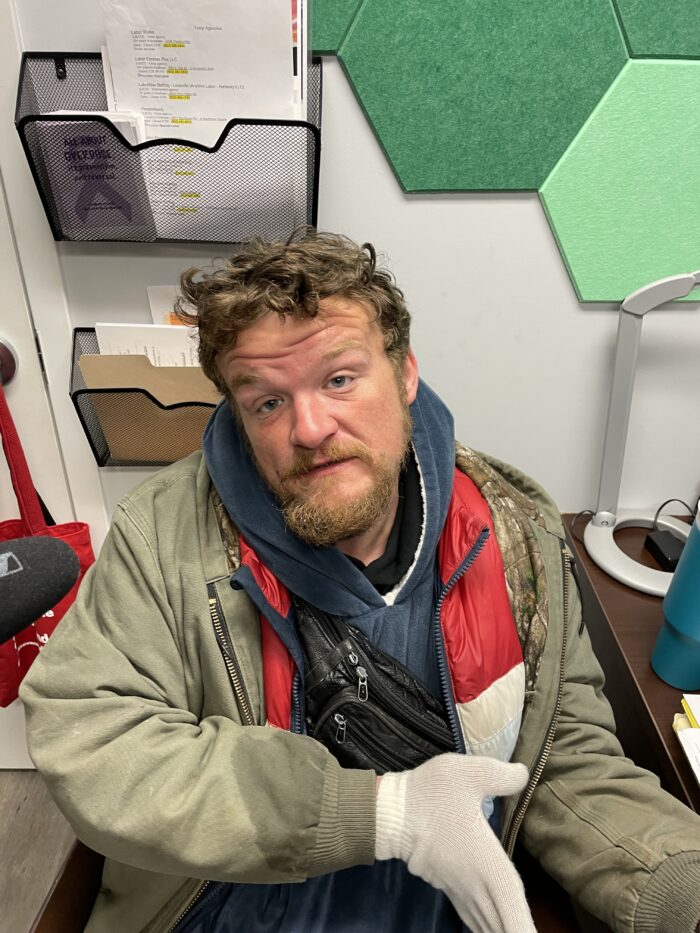
George Wruck, who was living at the Altogether Community Center in Paintsville, Kentucky, speaks about his experience with homelessness. After moving from Florida with his sister to open a general store, he said the business failed and their relationship broke down, leaving him with nowhere to go. Wruck began camping until law enforcement told him it was illegal. He said his substance use disorder is long behind him but that he continues to face financial hardship and depression.
Photo by Trey Kay/West Virginia Public Broadcasting
“I hope people understand that many folks are literally living on the street. It’s today’s society—being disabled for so long means I couldn’t work or get a higher disability paycheck. A lot of people fall on hard times and need help rather than being pushed further down the hole. It’s tough, but I’ll push through it.” — George Wruck, a homeless person living in Paintsville, Ky
Update: George Wruck, who we met in Paintsville, says he is no longer living on the street. He says he and his sister have repaired their relationship, and he is now staying with her.
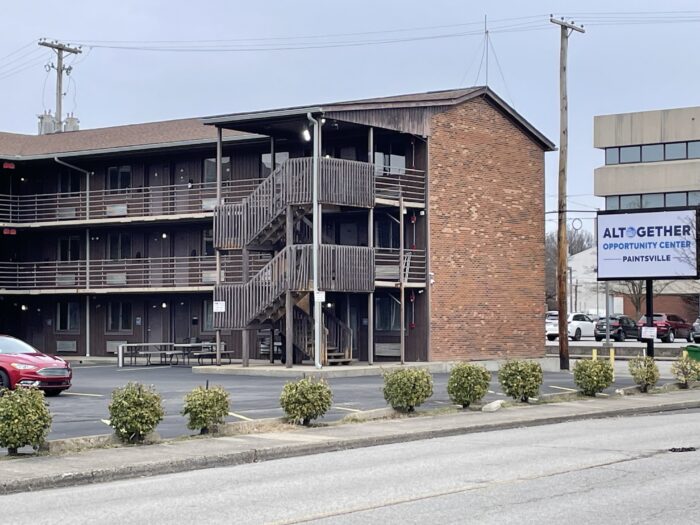
The Altogether Community Center in Paintsville, Kentucky, a former motel, was converted into a warming center, emergency shelter and transitional housing facility for people completing substance use disorder treatment. While it did not provide inpatient care, the center offered short-term housing, access to services, and help with job placement and permanent housing. The Johnson County Fiscal Court voted to close the facility on March 12, 2025.
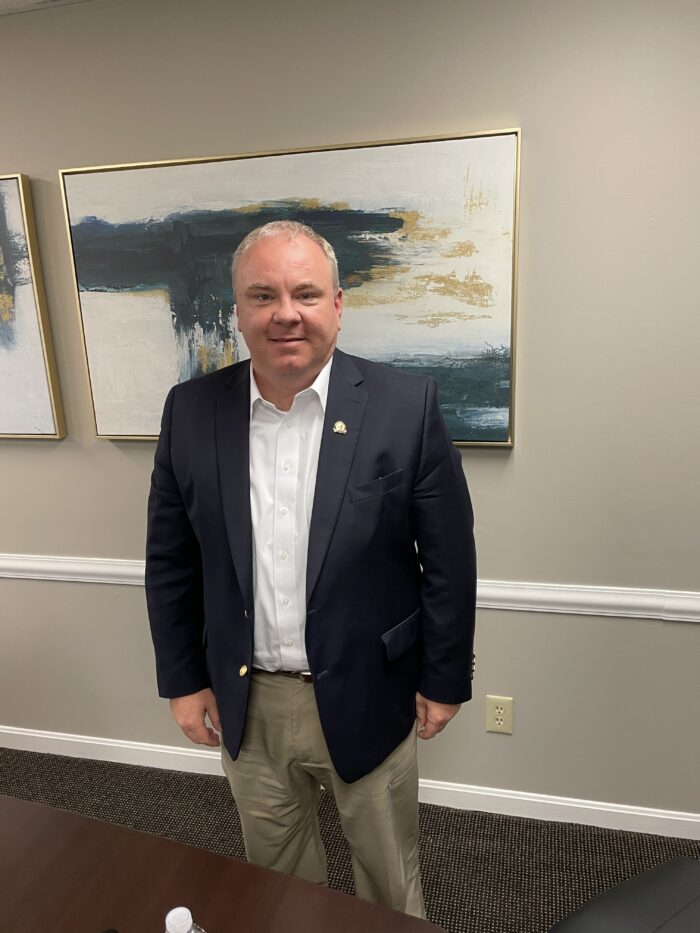
Photo by Trey Kay/West Virginia Public BroadcastingState Rep. Jason Nemes, R-KY, helped to shape the Safer Kentucky Act. Nemes, who represents three counties including Louisville, said he co-authored the law in response to what he described as rising crime rates. The legislation increases penalties for certain violent and drug-related offenses, restricts early release in some cases, and includes provisions that make public camping and sleeping illegal. Nemes said the law is intended to target violent crime and address what he sees as gaps in the current system.
Photo by Trey Kay/West Virginia Public Broadcasting
“While I have a great deal of respect for the advocates, what they’re doing isn’t working. There’s an industry built around homelessness with a lot of money at stake, and they resist change. I understand that we want people to avoid arrest and jail, but that’s ultimately up to them. It’s easy to demagogue on the other side and say, ‘they made homelessness illegal,’ but that’s far from the truth. If you’re going to break the law and encamp without accepting treatment when it’s offered, that won’t be allowed in Kentucky.
The real question is: What are the underlying reasons someone is homeless? Is it a lack of jobs, mental health issues, or substance abuse? That’s what we need to address. If they won’t accept help voluntarily, we’re prepared to get them before a judge and push for involuntary treatment. We’ll do our best to help our people.”— Kentucky State Rep. Jason Nemes
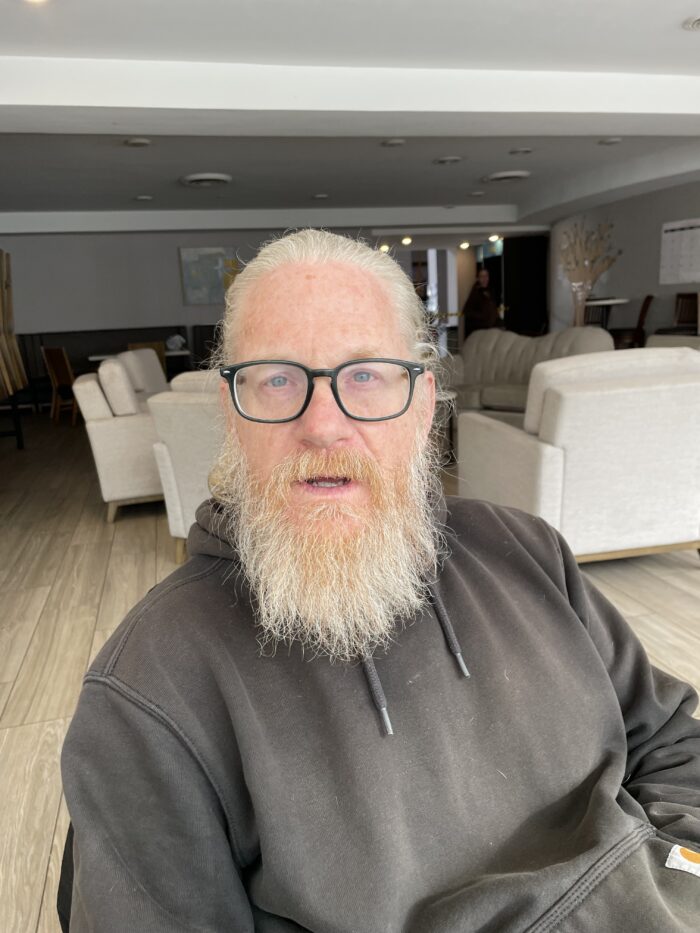
Isaac Chamberlain, who was living on the streets in Louisville, Ky., speaks about his experience with homelessness, illness and substance use disorder. At the time of this interview, he had recently been released from prison, he said he had been diagnosed with three stage 3 cancers and was receiving treatment for hepatitis C. Chamberlain frequently visited VOCAL Kentucky, an advocacy group focused on ending the AIDS epidemic, the war on drugs, mass incarceration and homelessness, to access medication and support. He said he avoided citations for living outdoors by staying out of sight.
Photo by Trey Kay/West Virginia Public Broadcasting
“I do have issues with substance use disorder, but I was just released from prison. I became homeless when the person I was staying with had their house burn down last year — when I came home, there was nothing left. Kentucky was given $35 million for homelessness services, but where is it going? I have three stage 3 cancers and I’m on the streets, and I’m asking for help. I’ve followed all the advice, but our lawmakers won’t help.”
— Isaac Chamberlain, a homeless person living in Louisville, Ky.
Update: Isaac Chamberlain, who we met in Louisville, has died. He was receiving treatment for multiple serious health conditions at the time of our reporting.
Jennifer Twyman, an organizer with VOCAL Kentucky, speaks about her work advocating for people affected by homelessness, substance use disorder and incarceration. Based in Louisville, the grassroots organization focuses on empowering low-income communities and addressing issues related to public health, housing and the criminal justice system.
Photo by Trey Kay/West Virginia Public Broadcasting
“I’m appalled by the new homeless services division of the police department. Every day, they deploy a large presence of sanitation trucks and officers, spending significant resources clearing camps and moving people from place to place. We know these clearings can increase overdoses — I’ve seen data on that — and it’s troubling that this cycle continues. Now there are proposals to use opioid settlement funds to support the court process created to handle these citations. I used opiates for 20 years — that money represents the deaths of many of my friends. They’re taking $750,000 from those funds to support a system that exists because of policies like the Safer Kentucky Act.” — Jennifer Twyman, organizer with VOCAL Kentucky
Donnie Green, founder of the Arthur Street Hotel in Louisville, Kentucky, speaks about his work supporting people experiencing homelessness. Green, who said he was homeless at 23 and remained sober, started the hotel with private donations and has spent decades working in harm reduction.
Photo by Trey Kay/West Virginia Public Broadcasting
“The legislation in place today, including the Safer Kentucky Act, is not new — it has been used elsewhere in the past. To claim that the struggles within our communities, especially among vulnerable populations, are unconnected is, at best, naive and, at worst, negligent.
No one chooses to live on the streets. The rules that allow some people to remain housed are often too burdensome, forcing them back outside. This isn’t a matter of choice; it’s a system that prevents people from securing housing.We must address that issue, or decide that everything is set in stone, with no room for adjustment.” — Donnie Green, advocate for people experiencing homelessness in Louisville, Ky.
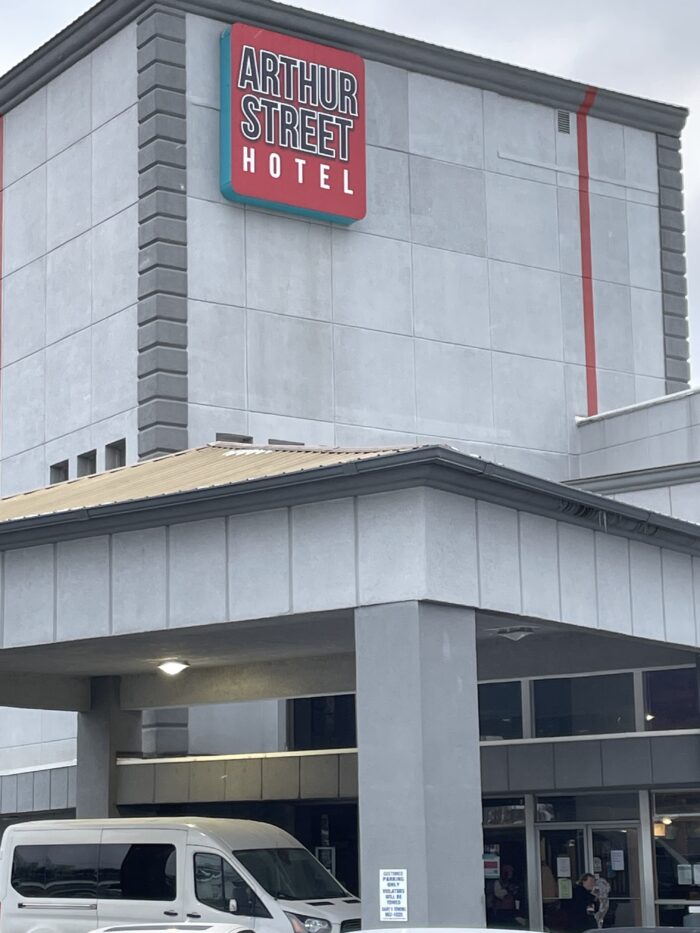
The Arthur Street Hotel in Louisville, Kentucky, speaks to its role supporting people who are homeless. Since opening in October 2022, the facility has helped more than 260 people secure permanent housing. Staff say the program provides “community, advocacy, resources and empowerment” and offers case management to help residents overcome barriers to long-term stability.
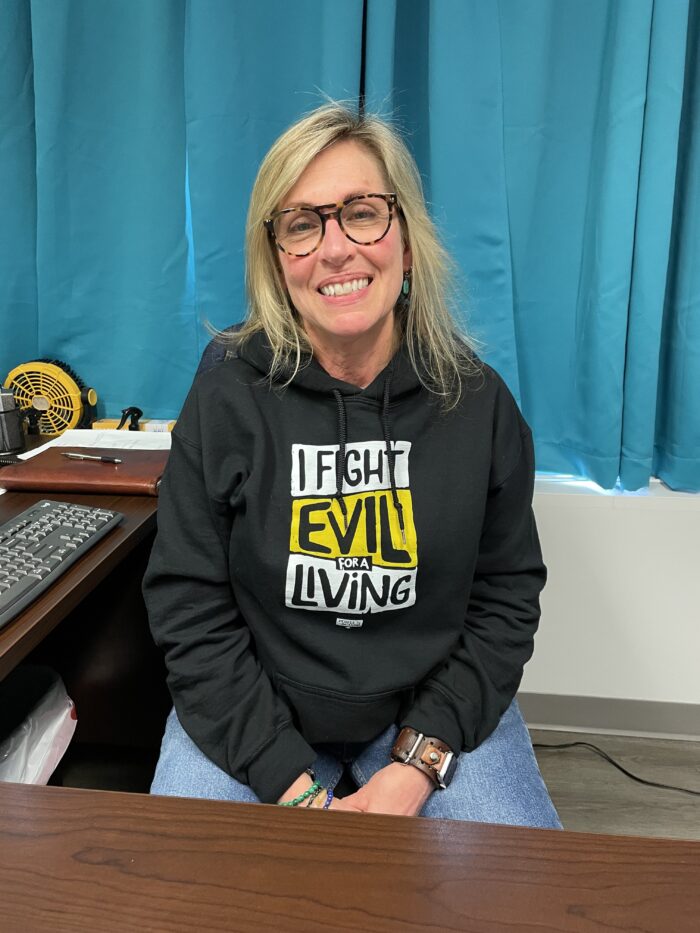
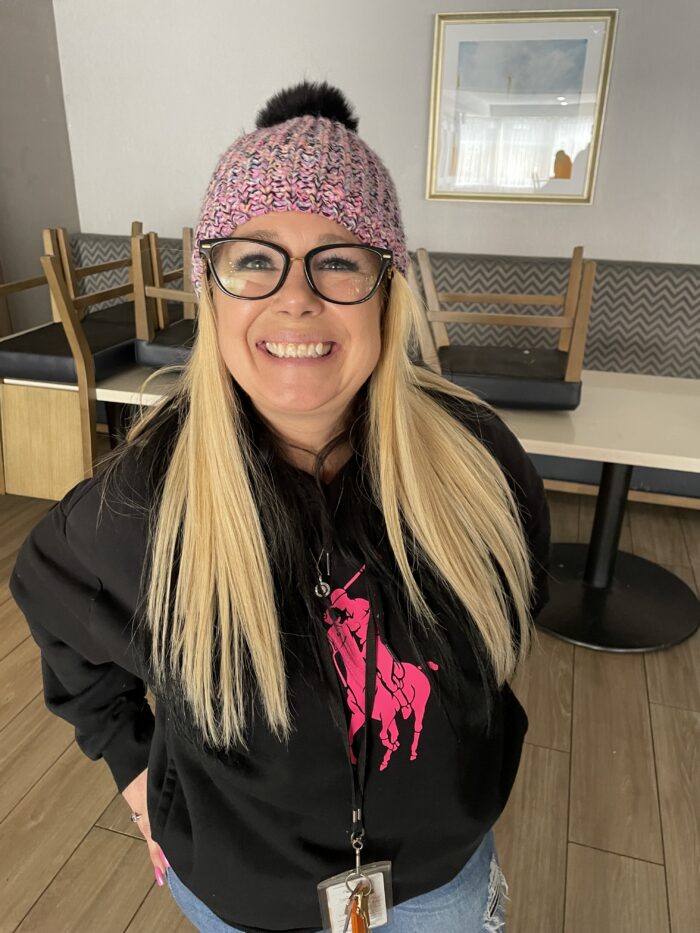
Photo by Trey Kay/West Virginia Public BroadcastingTiny Heron, director of housing services at the Arthur Street Hotel in Louisville, Kentucky, supports people experiencing homelessness and substance use disorder. Heron, who lost her husband to an overdose in 2018, said she is committed to ensuring people have access to shelter, food and dignity.
Photo by Trey Kay/West Virginia Public Broadcasting
“I often hear people refer to us as the ‘homeless hotel’ — or say we have ‘Arthur Street vibes.’ They say negative things about what we do here, and that’s fine — I like to ruffle feathers. What we do is very different. The people we serve have been turned away from every other shelter or organization.”
— Tiny Heron, director of housing services at the Arthur Street Hotel
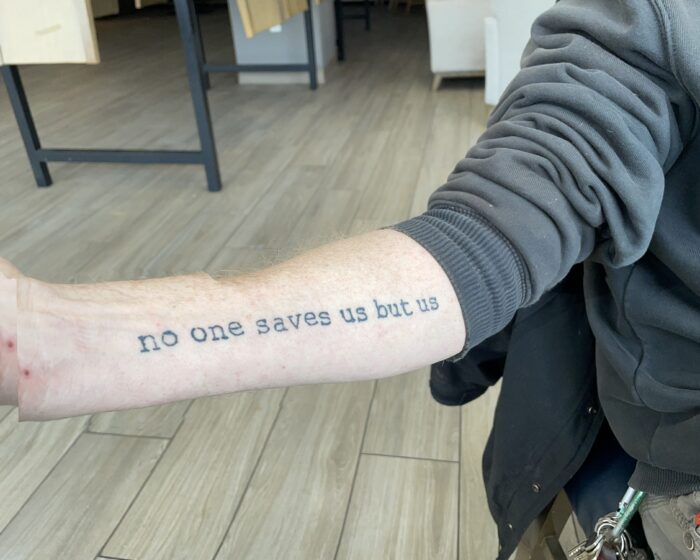
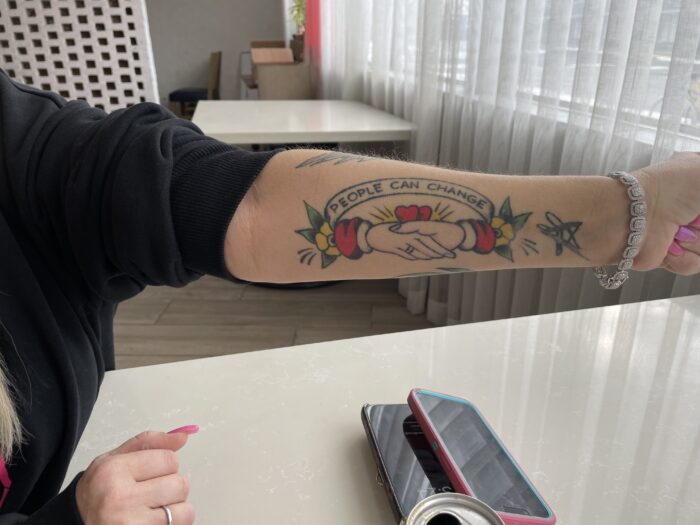
No One Saves Us But Us tattoo.
Photo by Trey Kay/West Virginia Public BroadcastingDonnie Green and Tiny Heron display tattoos on their forearms that reflect personal philosophies shaped by their experiences working with people experiencing homelessness.
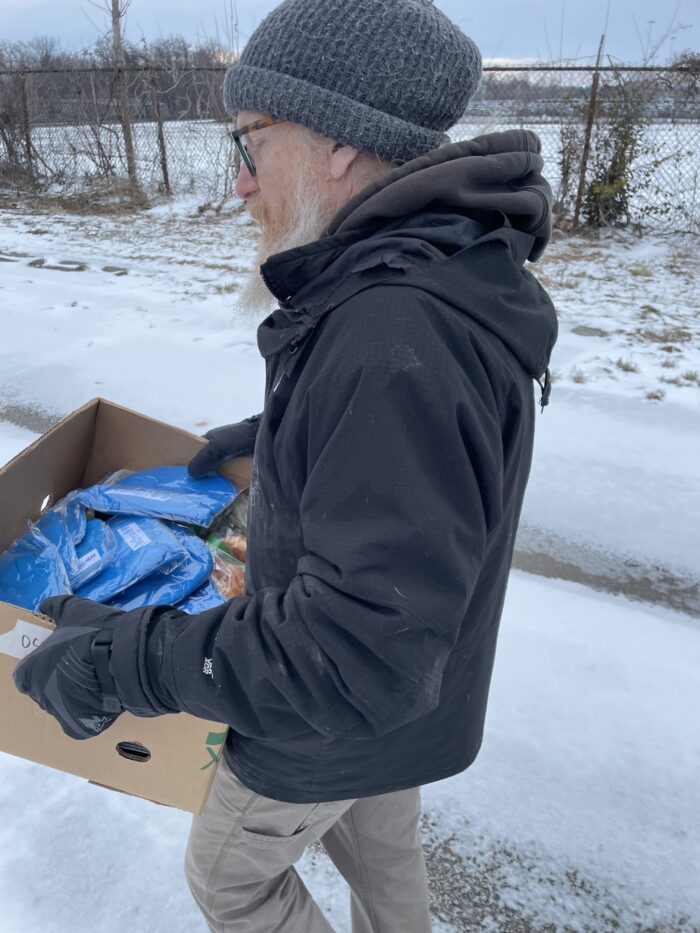
Photo by Trey Kay/West Virginia Public BroadcastingDonnie Green, co-founder of Feed Louisville, delivers food and supplies to a man camping outdoors on a cold February night in Louisville, Kentucky.
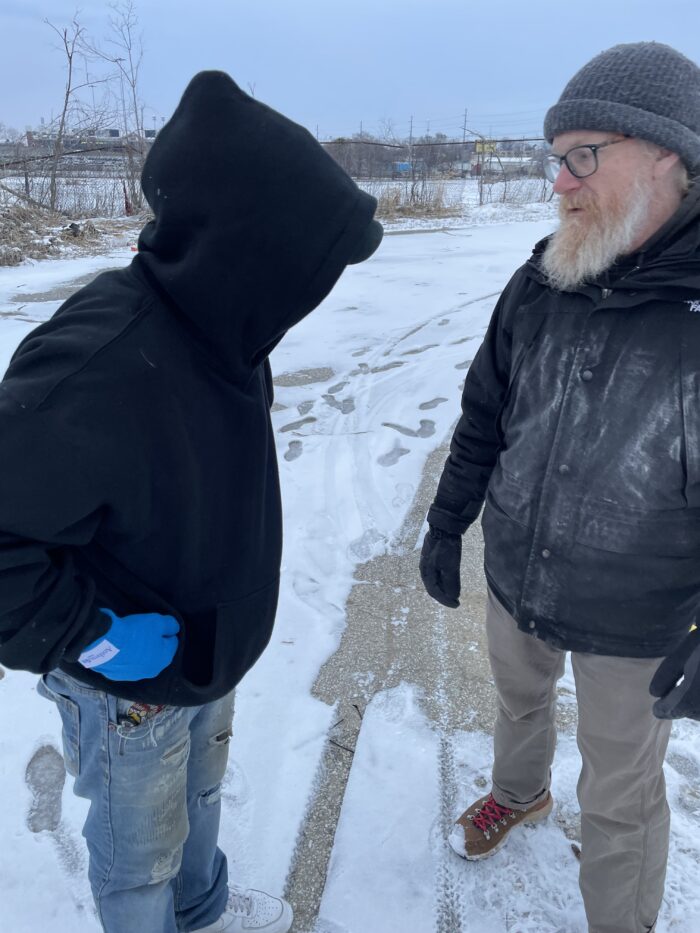
Photo by Trey Kay/West Virginia Public BroadcastingDonnie Green speaks with a man experiencing homelessness about his needs in Louisville, Kentucky.
Photo by Trey Kay/West Virginia Public Broadcasting
Add WVPB as a preferred source on Google to see more from our team
Open Door Café in Wytheville, Virginia uses gardening as a way to feed the hungry while breaking down the stigma of homelessness. For Inside Appalachia, Folkways Reporter Wendy Welch brings us the story about digging into the roots and connecting to more than just the land.
Like many U.S. cities, Morgantown has a growing homeless population with far more people in need than shelters can take in. On this episode of Us & Them, host Trey Kay moderates a community conversation about the city’s camping ban, the shortage of housing and meaningful solutions for the future.
Many people struggle to find affordable housing, and more cities and towns now grapple with growing homeless populations. On the latest episode of Us & Them, host Trey Kay moderates a public conversation in Morgantown about that city’s housing approach.