The Old Louisville Demon Leaper’s Mischief In One Of America’s Largest Victorian Neighborhoods
In the late 1800s, tales of a creature that bounds between rooftops emerged in Old Louisville — The Demon Leaper.
Continue Reading Take Me to More NewsAlert (10/27/2026): Our 88.5 FM signal in Charleston is experiencing intermittent outages. Our engineers are working with our provider to find a solution. We apologize for the inconvenience.
Our radio livestream is available at wvpublic.org and through the WVPB app. Thank you for your patience.




To Educate, Inform, and Inspire by Telling West Virginia's Story

Mountain Readers 2026 has concluded! Please fill out our volunteer post-survey.

Nominate an exceptional West Virginia K-12 teacher today!

On Demand

On Demand

Stream original productions from WVPB

Watch locally produced documentaries & more.

On Demand

On Demand






West Virginia Morning

Inside Appalachia

West Virginia Week

Mountain Stage

Us & Them

The Legislature Today

The Legislature This Week

Send us your comments and questions.

Stream our board meetings.

Check out the latest WVPB news.

Sign up for our newsletter and get weekly updates.

Meet the WVPB staff.

WV Educational Broadcasting Commission, the WVPB Foundation, and the Friends of WVPB.

Come work with us!

Read our annual report and learn how we educate, inform and inspire with your support.

Sponsor impactful and engaging media and entertainment.

Use your IRA to make a gift to WVPB.

Become a member with your gift of $1,000 or more.

Make WVPB part of your legacy.

Manage your membership account.

Learn how you can Protect and Sustain West Virginia Public Broadcasting.

Psychedelic drugs are getting attention from the Trump administration as treatment potentials for some mental health conditions. An executive order from President Trump fast tracks research and access to the drugs, which can carry health risks.
On the latest episode of Us & Them, host Trey Kay checks back on someone who’s been using an illegal psychedelic called ibogaine to help people kick addictions. Ibogaine can alter brain functions and is used in some countries to treat depression, anxiety, PTSD and drug withdrawal symptoms.
Twenty years ago most U.S. doctors wouldn’t touch the drug and politicians stayed away from it but now, the prospects for psychedelics in America may be changing.
This episode of Us & Them is presented with support from the CRC Foundation.
Subscribe to Us & Them on Apple Podcasts, YouTube Music, Spotify, the NPR app and wherever you get your podcasts.
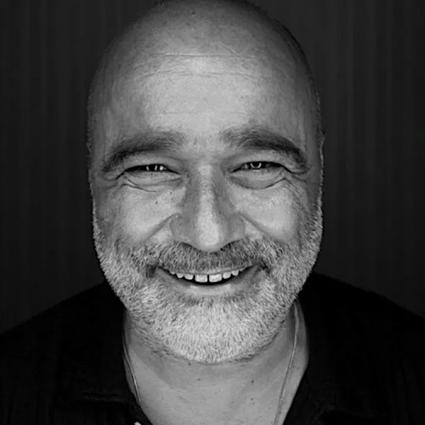
“I think that the best people I’ve ever met are drug users, or so-called addicts or problematic drug users, whether in recovery or out of recovery. And I think there might be something about the sensitivity of people who are in this lifestyle.
— Dimitri Mugianis
I also like transgression. There’s a transgressive quality about drug use, which I think is a rebellious quality… perhaps a revolutionary quality. So I like that.
I love drug users, they’re my people. They’re my people, they’re the people I feel comfortable with. The wit… the street wit.
I think a lot of it is about hurt — really deeply hurt people who are sensitive.
It’s sad, man, I hear sad stories, but I laugh my ass off every day. These are very funny, witty people.”
Learn more about Dimitri Mugianis.
Video of Dimitri Mugianis explaining iboga, a Central African plant whose root bark contains the psychoactive substance ibogaine, which has gained attention for its possible role in addiction recovery and psychedelic-assisted therapy.
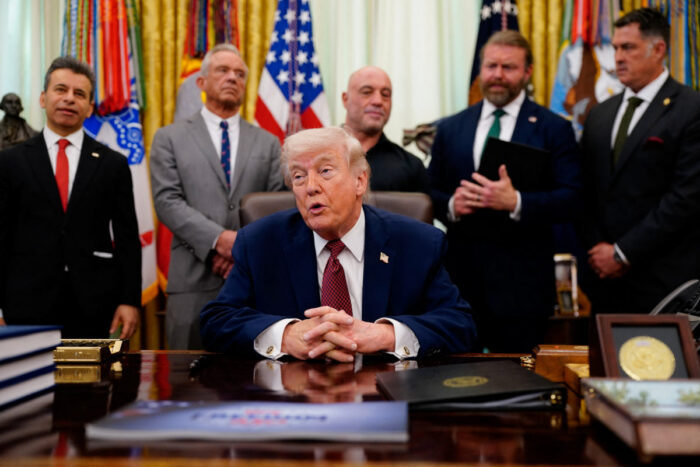
Click here to watch President Donald Trump’s remarks at the White House signing of an executive order directing federal agencies to accelerate research and clinical trials for psychedelic-assisted therapies, including ibogaine.
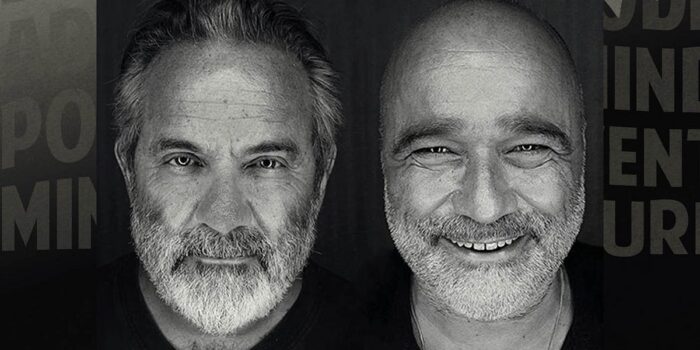
Following President Donald Trump’s executive order expanding research into psychedelic-assisted therapies, Ross Ellenhorn (left) and Dimitri Mugianis (right) wrote about the limits of treating addiction and trauma without broader social support systems.
— Ross Ellenhorn and Dimitri Mugianis, “The contradiction at the heart of Republicans’ embrace of psychedelics,” STAT, April 20, 2026.
“The strongest predictor of sustained recovery from addiction is social support: stable relationships that provide belonging, accountability, and emotional care. People recover when they are held in networks of connection that reinforce a different way of living.
Recovery capital is the scaffolding to ending problematic use and behaviors. Without it, even the most promising treatment struggles to take root.”
Click here to read the full article in STAT.
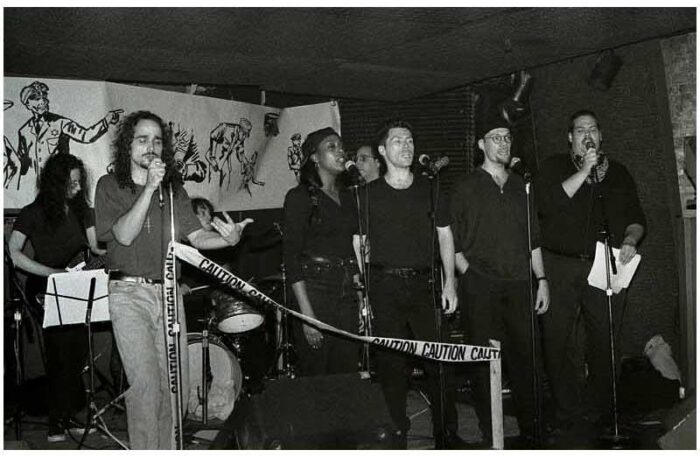

Click to view a video of The Leisure Class perform “I Love More.”

In 2006, Trey Kay collaborated with award-winning audio producer Lu Olkowski to produce a story for the public radio program “This American Life” featuring Dimitri Mugianis. Click to hear “I’m Not a Doctor, But I Play One at the Holiday Inn.”
Add WVPB as a preferred source on Google to see more from our team

From The Allegheny Front, a public radio program based in Pittsburgh, brings us their latest story on the return of black lung disease to Appalachian coal miners.
Continue Reading Take Me to More NewsNearly $1.4 million in funds from the state's Rural Health Transformation Program will be used to help replace a mobile cancer screening unit that serves rural communities.
Continue Reading Take Me to More NewsFlu cases are still low nationwide -- but beginning to increase much sooner than is typical.
Continue Reading Take Me to More NewsStories about cryptids are revived every October in the lead-up to Halloween. Oftentimes, these monsters are said to live in the woods – or some other dark area where they’re difficult to find. Few, if any, can be found leaping along rooftops in one of the country's largest historic preservation districts. For the Appalachia + Mid-South Newsroom, LPM’s Roberto Roldan brings us the story of the Old Louisville Demon Leaper.
Continue Reading Take Me to More News