This week’s encore broadcast of Mountain Stage is a Five Favorites edition featuring a collection of favorite sets from 2005, chosen by our Executive Producer, Adam Harris.
...
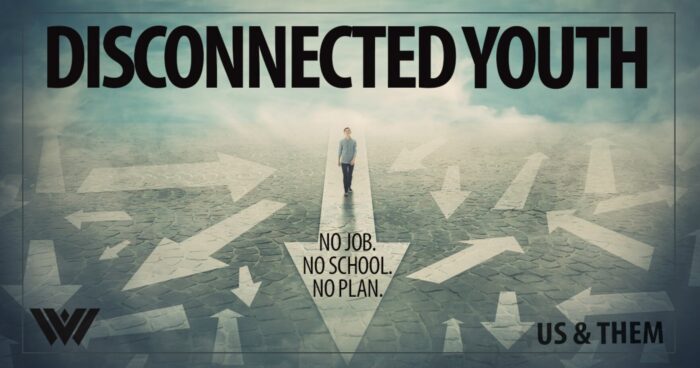
There are so many young people in the U.S. who are not in school, working or training for work, that there’s a name for it. They are ‘disconnected youth,’ and while West Virginia’s rate has dropped in recent years, it’s still one of the highest in the nation.
Just under 12%, or 24,000, young people are in this category, and they can be tough to track down because there’s a stigma attached to this status. However, some programs are trying to bridge the gap – to connect with young people and help them train for a job and a career.
On this Us & Them episode, we’ll find out why some young people get stuck and the things Mountain State leaders say could help this next generation.
This episode of Us & Them is presented with support from the Claude Worthington Benedum Foundation and the West Virginia Humanities Council.
Subscribe to Us & Them on Apple Podcasts, YouTube Music, Spotify, the NPR app and wherever you get your podcasts.
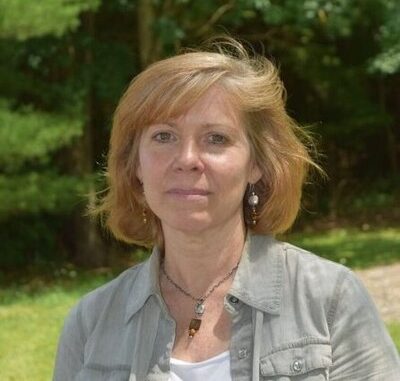
Michelle Phares, formerly director of YouthBuild in Elkins, West Virginia, worked with young people ages 16 to 24 who had become disconnected from school or work. Ferris left YouthBuild in April 2023 and now serves as deputy director of the Beverly Historic Center.
Photo courtesy of Michelle Phares
“A lot of them have not had basic needs met for a while. They haven’t been able to get to the dentist, they haven’t been to a doctor, they need to get eyeglasses, they don’t have a driver’s license, they can’t find their Social Security card or their birth certificate. So, we walk through those things to get them to a stable place, where they then feel comfortable to even be in a classroom and start thinking about their education, start getting marketable job skills.”
— Michelle Ferris
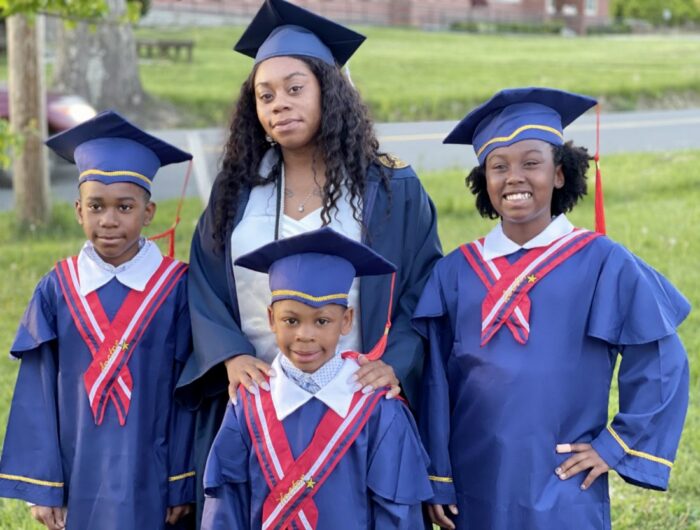
Sharelle Harmon poses with her children, Nehemiah Harmon, Jaidyn Harmon and Saniah Spady, after graduating from West Virginia University in May 2021 with a bachelor’s degree in sociology and political science. Harmon, a 2015 graduate of YouthBuild North Central in Elkins, W.Va., credits YouthBuild and AmeriCorps with helping her rebuild her life and pursue higher education.
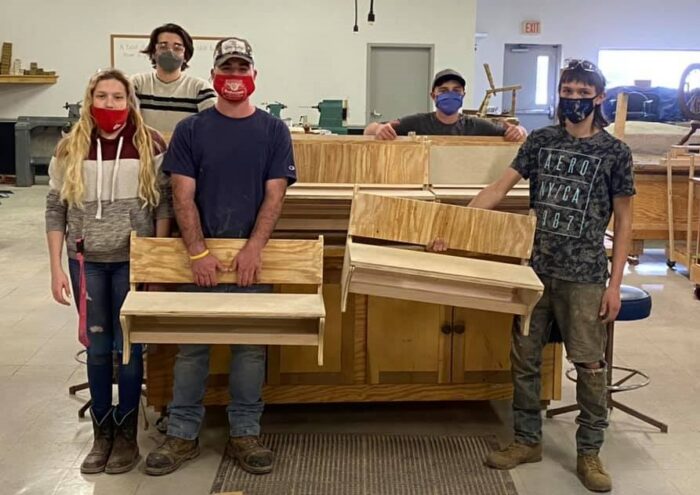
Photo courtesy of The Inter-MountainDayton Eisenhart and fellow YouthBuild crew members show furniture they constructed through the Elkins, West Virginia, program. Eisenhart was in his final year at YouthBuild when Us & Them visited in 2021, learning construction skills while working toward a path into the workforce.
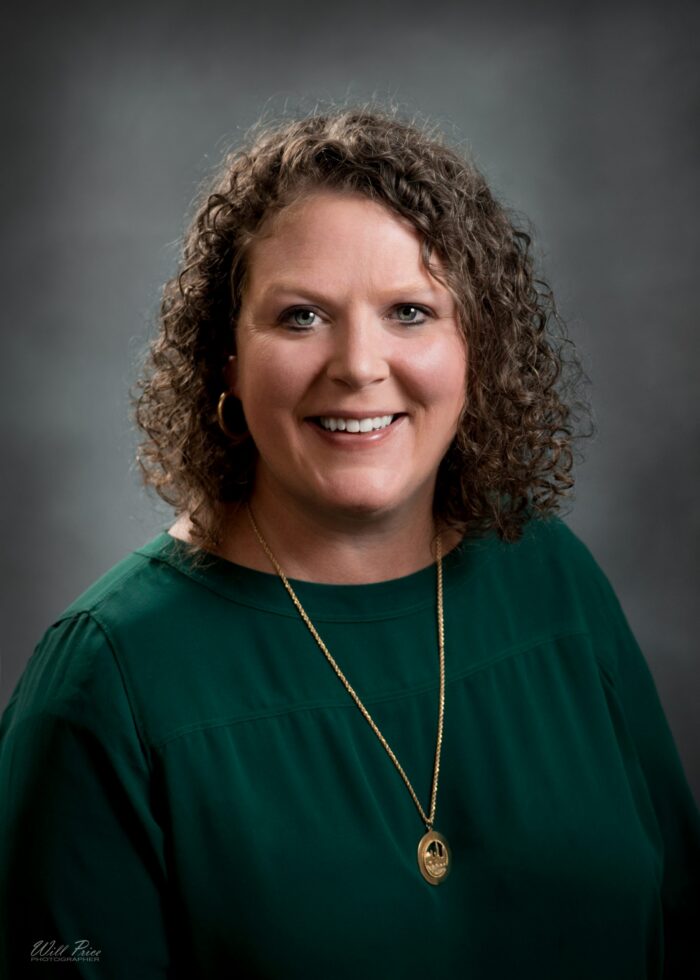
Photo Credit: Michelle PharesSarah Armstrong Tucker, chancellor of the West Virginia Higher Education Policy Commission and the West Virginia Community and Technical College System, spoke with Us & Them about efforts to connect more young West Virginians with education, career training and the workforce.
Photo courtesy of the West Virginia Higher Education Policy Commission
“I generally don’t like to characterize people in a negative connotation, and ‘disconnected youth’ seems to me to be a negative connotation. I’m sure that those students are connected to something. It’s our job to figure out what they’re connected to, to tap into that and to get them to connect to other things.”
— Sarah Armstrong Tucker, chancellor of the West Virginia Higher Education Policy Commission and the West Virginia Community and Technical College System
John Prentice was a therapist with First Steps, a Huntington, West Virginia, day program serving young people experiencing homelessness, when Us & Them interviewed him in 2021. Prentice is now a psychologist with Valley Health Systems in Huntington, where he provides behavioral health and recovery services.
Photo courtesy of Valley Health Systems
“I grew up in Elkins, West Virginia, in a fairly lower, middle class family who had periods of some pretty acute poverty. And as a queer teenager trying to figure out, ‘OK, what comes next out of this tiny town?’ there was a lot of, ‘Where do I go? Where do I look? How do I get connected?’ And if it wasn’t for the social connections that I was fortunate enough to have, there is no way that a lot of this stuff would have happened. … Unless I had people who were like, ‘Oh, here’s how to do this,’ there’s no way I would have gotten the drive to go to college or the push to keep going further.”
— John Prentice
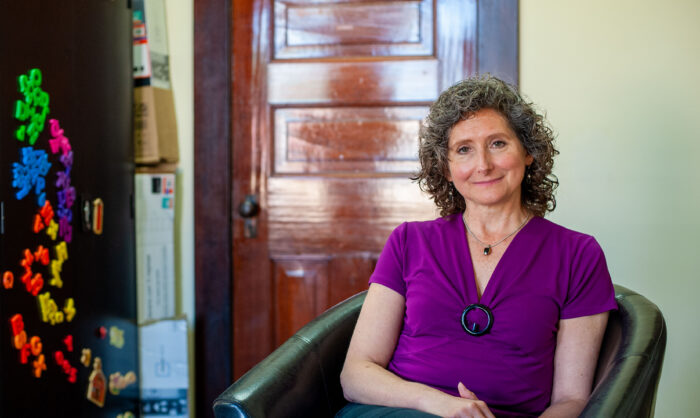
Colleen Moran, a licensed psychologist in Charleston, West Virginia, specializes in working with children and young adults. In the 2021 Us & Them episode, Moran discussed depression, trauma and “learned helplessness” as factors that can leave some young people feeling stuck or disconnected from school and work.
Photo Credit: Kyle Vass
“You don’t fix anything. You provide skills. You teach abilities. You support. You encourage. You guide. We don’t ‘fix’ because these people aren’t broken. They have been through some horrendous experiences, or they have chemical imbalances, or they are in bad situations. They are not broken. They just need help, support and skills.”
— Colleen Moran
Add WVPB as a preferred source on Google to see more from our team
On this West Virginia Morning, about 12% of West Virginia’s young people from 16 to 24 are disconnected youth - not going to school or working. Us & Them looks into why the state has such a high number.
Meta, parent company of social media platforms Facebook and Instagram, has agreed to introduce restrictions for younger users including time limits and content controls.
Three organizations have submitted letters supporting a PSC staff report submitted Aug. 19 that recommends the application for the MARL transmission line be delayed or dismissed.