This week, during the Great Depression, Osage, West Virginia was a raucous river town. It’s sleepier now, but music is keeping the magic alive. Also, a poet remembers growing up in a secret city in Tennessee that was built during World War II. And, rock climbing is usually for warmer months, but some climbers have taken to climbing frozen waterfalls.
In this encore episode of Us & Them, host Trey Kay shares the story of a simple song written more than 250 years ago that now has a profound and universal legacy.
John Newton first wrote the hymn Amazing Grace to connect with Christians and over decades it’s been sung to a number of melodies. However, in addition to its religious origins, it is now a popular folk song and a civil rights anthem which transcends divisions and speaks to people across time and faiths about shared pain, hope and forgiveness.
Newton’s creation may have been inspired by his past as a slave and captain of a slave ship. But today, Amazing Grace is a comforting song of redemption that helps many recover from dark times and see ahead to the light.
This episode of Us & Them is presented with support from the CRC Foundation.
Subscribe to Us & Them on Apple Podcasts, NPR One, RadioPublic, Spotify, Stitcher or wherever you get your podcasts.
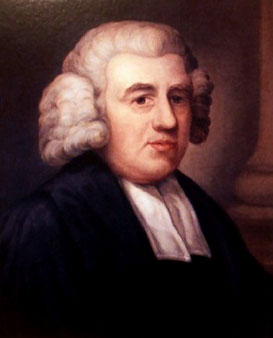
John Newton, an 18th-century Anglican clergyman and former slave ship captain, wrote the words to the hymn “Amazing Grace,” first introduced to his congregation in England in 1773. Newton later described the song as reflecting his spiritual transformation after surviving a violent storm at sea in 1748.
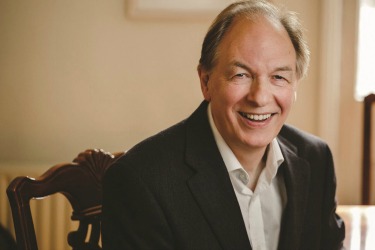
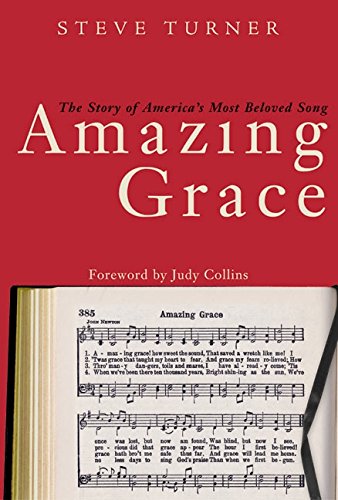
CourtesySteve Turner is an English music journalist, poet and biographer whose work spans popular music, religion and culture. He is the author of Amazing Grace: The Story of America’s Most Beloved Song, which traces the hymn’s origins and enduring influence across musical genres and American life.
Photo courtesy of Ultimato
“He [Newton] has to strap himself to the helm to avoid sliding down the deck. He’s surrounded by darkness, a raging storm and the very real possibility that the ship is going to go down. This isn’t a false alarm — it’s the real thing. It’s at that moment that he becomes a Christian, vowing that if his life is saved, he will pursue a relationship with God.”
— Steve Turner, describing John Newton’s near-death experience aboard a slave-trading ship at sea
“You know, Obama sings at the church in Charleston after the murders … it’s sung when policemen have funerals in New York. It just seems kind of like an all purpose, hopeful song … that’s a very important part of the American mentality, you know, that you can start again, that you come from nothing and succeed, and you can overcome a bad or dubious or hampering past. So all those things are in the song.”
— Steve Turner, on how “Amazing Grace” has come to mark moments of public mourning and American reinvention
Deborah Carlton-Loftis served as executive director of The Hymn Society in the United States and Canada from 2009 to 2017. Founded in 1922, the organization promotes congregational singing and supports the study, performance and creation of hymns across Christian traditions in the U.S. and Canada.
Photo courtesy of Baptist Women in Ministry
“[Amazing Grace] was not very well known, not considered, in England, to be one of [Newton’s] finest hymns, but it came over to the United States and picked up some usage and popularity in the revival meetings of the Second Great Awakening.”
— Deborah Carlton-Loftis
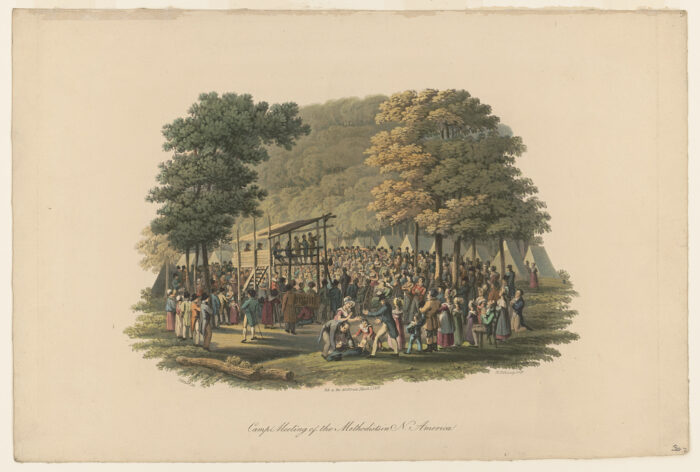
“Camp Meeting of the Methodists in North America,” circa 1819. Outdoor revival gatherings like this were a hallmark of the Second Great Awakening, a Protestant movement that spread from New York through the Ohio Valley and into Kentucky and Tennessee in the early 19th century. Thousands traveled by wagon to attend multiday meetings marked by enthusiastic preaching and communal singing. Music scholars say hymns such as “Amazing Grace” gained popularity in America at these camp meetings, where songs were often sung to multiple tunes and learned quickly by large crowds.
Courtesy of the Library of Congress
“We have documented that both free black persons and white people were together for these outdoor revivals and there was a lot of interchange of musical styles.”
— Deborah Carlton-Loftis
Rev. Matthew J. Watts has served as senior pastor of Grace Bible Church in Charleston, West Virginia, since 1994.
Photo courtesy of Rev. Matthew J. Watts
“Well, I think that the song would have had a great attraction for the African slaves that were in shadow slavery, in bondage … Amazing Grace would have spoke to their desire for an experience of freedom, of one day seeing God face-to-face, of being with him for all of eternity, and no longer subjected to the type of cruel treatment they experienced during slavery.”
— Matthew J. Watts, pastor of Grace Bible Church in Charleston, West Virginia
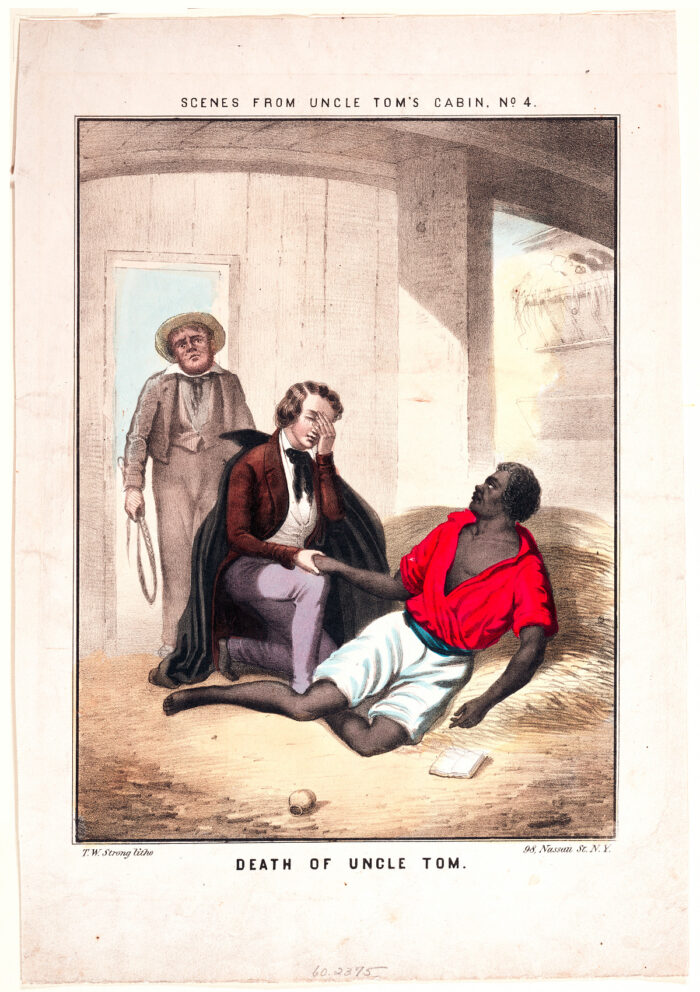
Uncle Tom on his deathbed, as depicted in a 19th-century illustration from Uncle Tom’s Cabin. In Harriet Beecher Stowe’s 1852 novel, the character sings verses commonly associated with “Amazing Grace,” including “When we’ve been there 10,000 years.” Those lines were not written by hymn author John Newton but appear to have been added later, shaped by the fluid, improvisational singing traditions of 19th-century camp revival meetings, where verses from different hymns were often blended together.
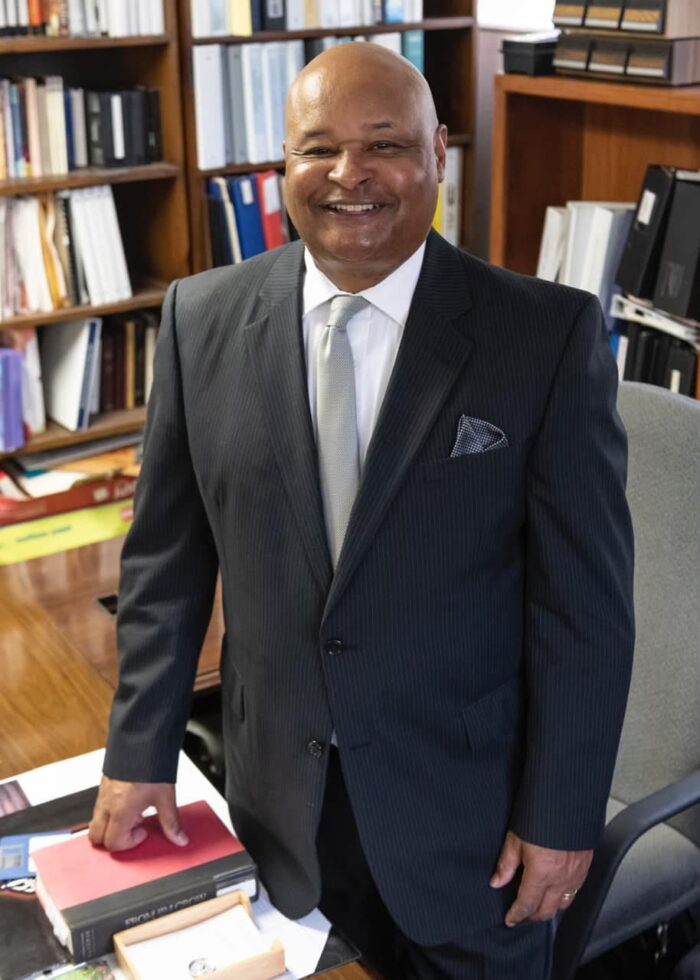
Courtesy of the SmithsonianJames G. Basker teaches English and history at Barnard College. A literary historian, his scholarship spans the history of slavery and abolition, the Black Atlantic, and 18th-century literature and print culture. He is the editor of Amazing Grace: An Anthology of Poems About Slavery, 1660–1810.
Photo courtesy of Jim Basker
“It’s a moment of fusion between traditional, you might say, high society white culture and popular culture, black culture, revival evangelical culture … when [Harriet Beecher Stowe] reached into that scene, and this is a moment of fusion between whites and blacks, it’s a white woman author creating one of the most memorable black characters in all of 19th century literature, she reached for what would be the paradigmatic song from his soul that he might sing on his deathbed, and it’s Amazing Grace.”
— James G. Basker
“[The words of Amazing Grace] appeal without any narrowness. There’s no specific condition, there’s no specific religious faith, there is no specific cultural context. It’s just about that thing that human beings share, which is pain … the imaginative yearning … we’re able to imagine and to yearn for joy and peace, for relief from the miseries of this world … it’s the use of the human imagination, both the creative one that made the song and the receptive interactive one that can identify with it, that lifts us up.”
— James G. Basker, on why “Amazing Grace” resonates across cultures, faiths and moments of suffering
Judy Collins helped bring “Amazing Grace” into the commercial mainstream with her 1970 recording of the hymn. Long before that, the song had circulated widely in American culture — sung at camp revival meetings during the Second Great Awakening, embraced by Black gospel traditions, used during civil rights protests, and performed by folk singers at events like Woodstock. Collins’ recording, released on her album Whales and Nightingales, became the first commercially successful version of the hymn, turning it into a top 40 hit.
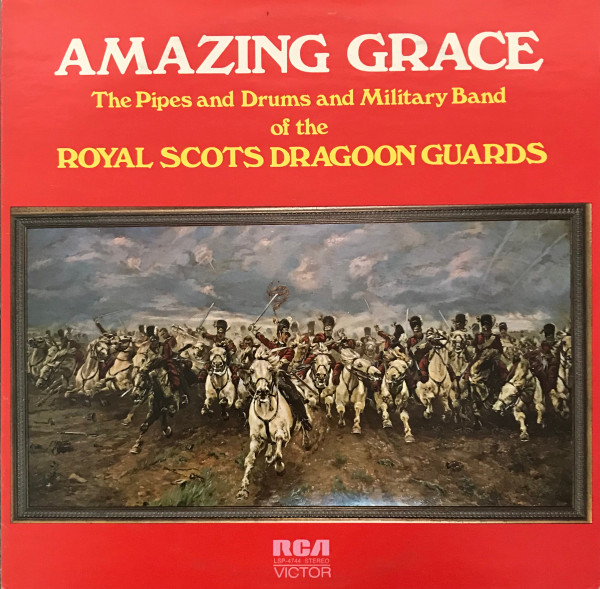
Inspired by Judy Collins’ recording of “Amazing Grace,” a piper with the Royal Scots Dragoon Guards adapted her arrangement for bagpipes. The regiment’s recording became an international hit and helped establish the now-familiar tradition of piping “Amazing Grace” at memorial services for police, firefighters and military personnel.
“I can hear it, you know, I live on the Upper West Side and about a block from me is the Firefighters Memorial on Riverside Drive … every once in a while we hear the bagpipes coming up from the river and we hear them playing ‘Amazing Grace,’ and we see like 5,000 firefighters out there in the street with their uniforms. It’s an amazing thing. It’s very moving … it belongs in these situations because it is regenerating the idea of hope and forgiveness.”
— Judy Collins, describing hearing bagpipes play “Amazing Grace” during Sept. 11 commemorations in New York City
On this West Virginia Week, last winter’s floods are remembered, Trump signs an order aimed at supporting the coal industry, and the federal government wants information on hundreds of thousands of West Virginia voters.
Dels. Johnathan Pinson, R-Mason, and Hollis Lewis, D-Kanawha, tell us about the West Virginia Legislature’s perennial work on child protective and foster care services. We also get a look at both chambers’ first pass at the state budget.
On this episode of The Legislature Today, issues with Child Protective Services (CPS) and the state foster care system are persistent. The West Virginia Legislature faces questions on how to correct the problems that arise every year. News Director Eric Douglas speaks with Dels. Jonathan Pinson, R-Mason, and Hollis Lewis, D-Kanawha, to get their take on the issue.
This week, during the Great Depression, Osage, West Virginia was a raucous river town. It’s sleepier now, but music is keeping the magic alive. Also, a poet remembers growing up in a secret city in Tennessee that was built during World War II. And, rock climbing is usually for warmer months, but some climbers have taken to climbing frozen waterfalls.